
Why is my dog drooling and what should I do?
Are you concerned about excessive salivation in your dog or someone else's, and want to know if it's a symptom of a serious illness? In this article, we'll explore why dogs sometimes drool excessively, how to distinguish the symptoms of illness from the norm, when it's time to take your pet to the vet as soon as possible, and what to do to stop excessive salivation.
Content
Salivary secretion in dogs
Salivation Saliva is a natural process of saliva production that occurs in both humans and animals. The salivary glands located in the oral cavity (parotid, submandibular, and sublingual) produce this unique secretion in response to nerve impulses.
At the same time, the small glands that moisturize the mucous membrane work constantly, and the large ones are “turned on” under the influence of olfactory or taste stimuli, as well as during the process of chewing food.
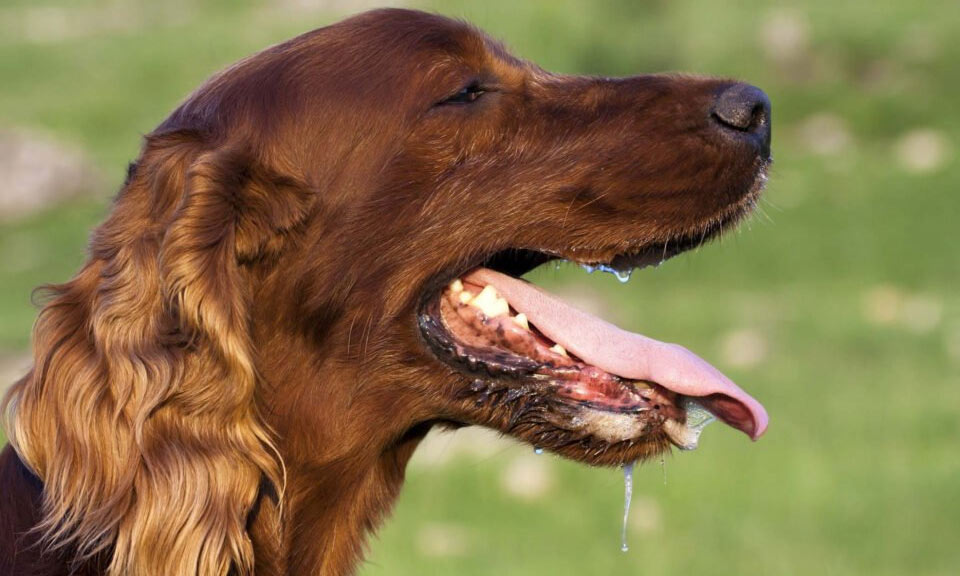
Saliva performs a number of important functions in the body:
- prevents drying of the mucous membrane;
- participates in temperature exchange;
- creates a favorable environment for the formation of healthy microflora;
- ensures softening and adhesion of food during chewing;
- starts the process of food fermentation
- is a natural lubricant that facilitates the movement of the food bolus during swallowing.
Normally, a dog's saliva meets the following parameters:
|
Parameter |
Norm |
|
Color |
transparent or slightly cloudy |
|
Consistency |
varies from liquid to viscous |
|
Viscosity |
slightly higher than that of water |
|
Quantity (per day) |
up to 1 l. |
Interesting fact! While studying animals, scientists have found that salivation virtually ceases during sleep and when the animal is under general anesthesia.
Excessive salivation within normal limits
Understanding how saliva is produced allows us to conclude that excessive salivation in dogs isn't always a sign of illness. Normally, the amount of saliva produced by the glands can increase significantly under the influence of various factors.
Episodic increase in the volume of saliva
Excessive salivation in a completely healthy dog can be caused by the following reasons:
- hunger, as well as the sight or smell of food (it is not for nothing that the expression that a hungry person “drools” has taken root);
- increased physical activity (in some animals, the symptom may suddenly appear during an active walk outside, during or after jogging, or at competitions);
- high air temperature (in hot weather, a dog's drool flows more, but if there is a lack of water, it can become thick and sticky);
- changes in the functioning of the glands during pregnancy;
- change of teeth (in puppies from 4 months to one year of age);
- motion sickness (the most common reason for excessive drooling while traveling in a car).
- emotional reaction (for example, when meeting a familiar person);
- stress, as well as obsessive self-licking due to nervous tension;
- taking certain medications (read the side effects listed in the instructions carefully).
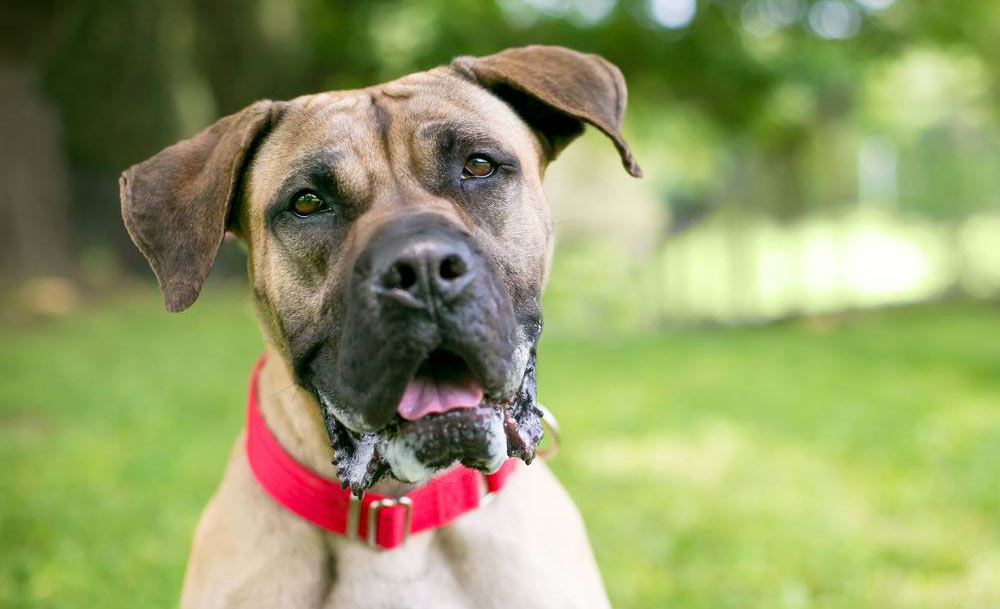
Please note that occasional increases in saliva production can occur in both puppies and adults. However, the quality of the saliva usually remains unchanged, and the condition does not last long. If the trigger is eliminated, salivary gland function quickly returns to normal.
Drooling as a breed characteristic
It is quite possible that the reason why your dog is drooling is simply due to its breed characteristics.
Over the course of more than 10,000 years, humans have developed more than 400 dog breeds, many of which have individual physiological characteristics, including body structure, coat characteristics, skull shape, salivary glands, and many others.
Increased salivation even at rest is normal for:
- Bulldog;
- Boxer;
- Saint Bernard;
- Labrador;
- Mastiff;
- Bullmastiff;
- Cane Corso;
- Bloodhound;
- Doga;
- Newfoundland;
- Pug and many others.
As you can see, the "most drooling breed" ranking includes not only brachycephalic dogs, but also dogs with elongated skulls and highly developed salivary glands, which literally cause saliva to drip from their mouths.
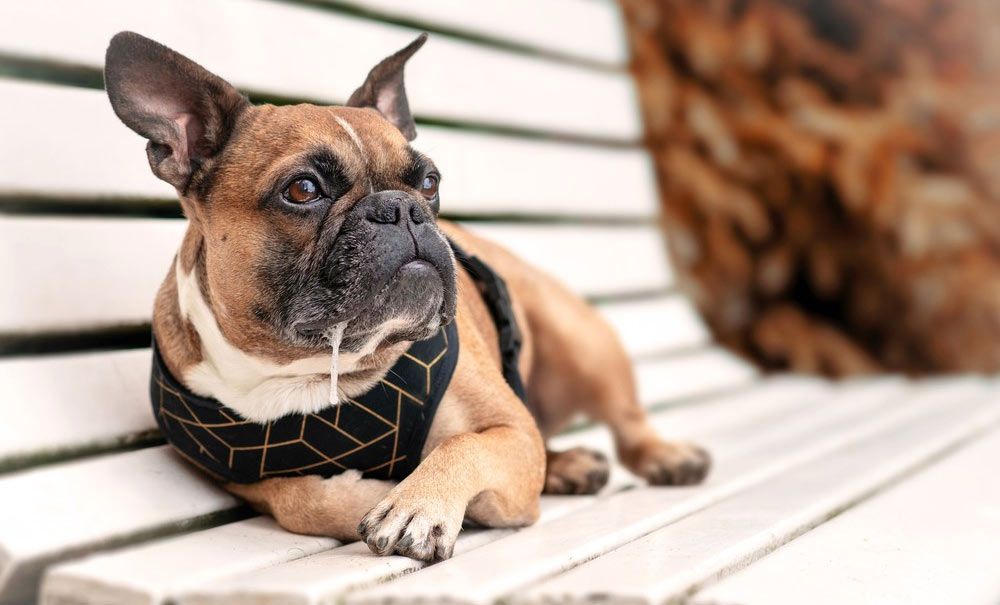
As a rule, such dogs have excessive salivation from puppyhood and do not affect the animal’s health.
If your dog is a "drooling breed," but as a puppy or during the first few years of life, there was no generative activity from the salivary glands, and then suddenly an excessive amount of secretion appears, then you should consult a veterinarian and find out why your dog is drooling.
Hypersalivation (causes of pathological salivation)
Hypersalivation – the medical name for a condition of increased activity of the salivary glands, in which the volume of secretion produced (saliva) increases significantly.
Hypersalivation, as a pathological condition, is said to occur when a dog exhibits significantly increased salivation, leading to the following symptoms:
- salivation in a volume of more than 1 liter per day;
- incessant salivation;
- accumulation of saliva in the mouth;
- dermatitis (pustular rash) on the lower jaw;
- bad breath.
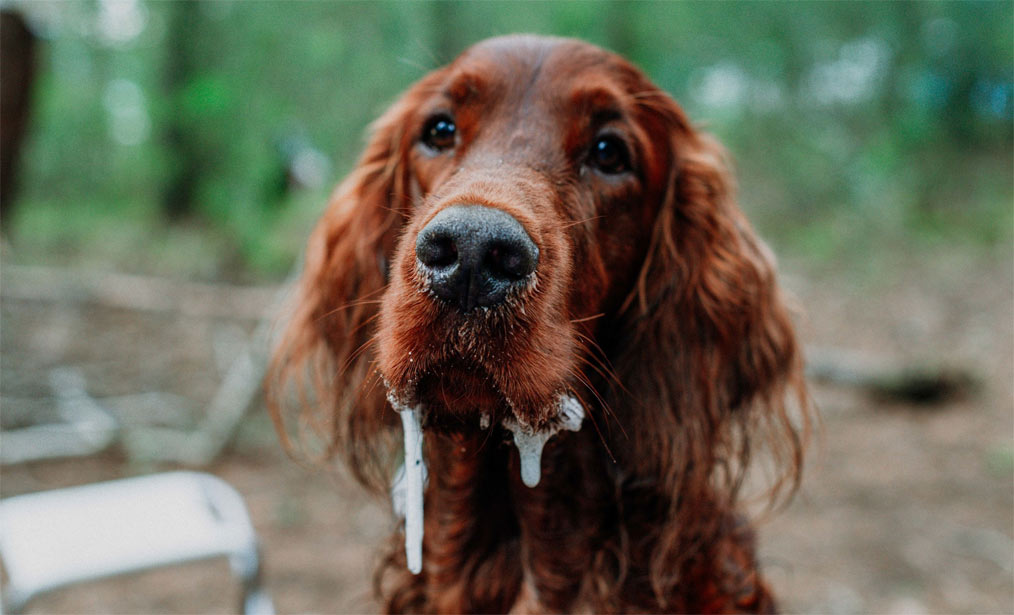
The causes of abnormal salivation in dogs vary widely. In some cases, observing your pet may reveal other symptoms of the underlying condition.
Dangerous symptoms (when emergency care is needed)
As you can see, the causes of excessive salivation in dogs can be very varied, and only a veterinarian can make a correct diagnosis after a full examination of the animal.
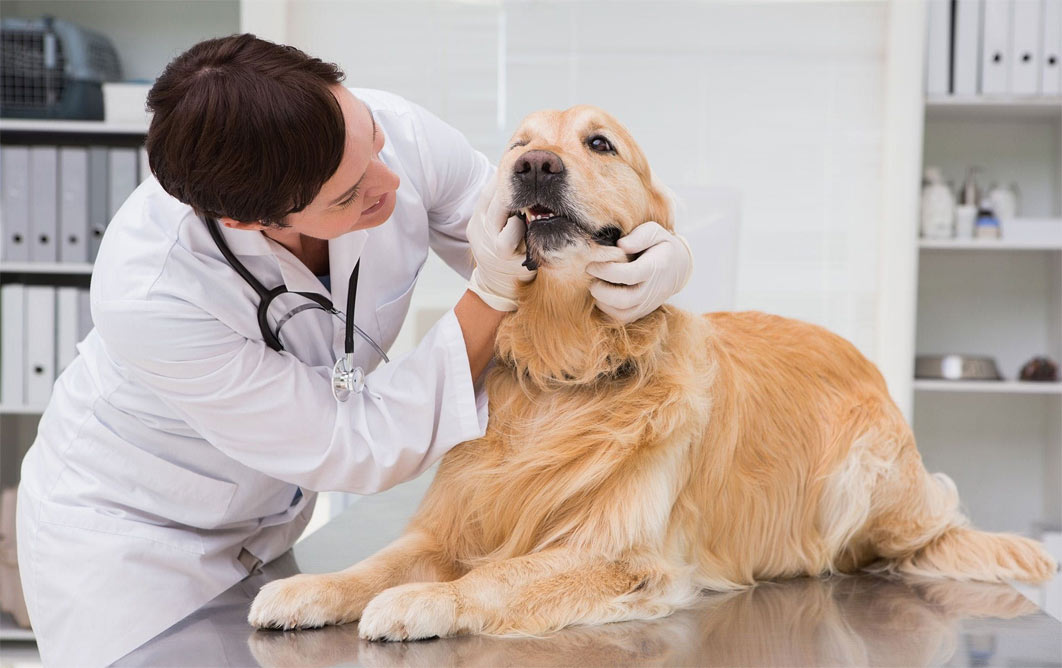
It is important to understand that your pet needs to be taken to the clinic as quickly as possible if, in addition to salivation, you experience:
- persistent diarrhea and vomiting;
- excessive salivation with foam;
- saliva changes its properties (thick, foul-smelling, cloudy, with admixtures of pus or blood);
- neurological symptoms (the dog shakes its head, loses coordination, loses consciousness, convulses);
- respiratory failure (the dog is breathing heavily, choking);
- heart rhythm disturbances.
Veterinarian's advice
To understand what exactly will help reduce salivation in your pet, it is necessary to examine the animal and determine the cause of this symptom.
Read also:
- My dog has a loose tooth: what to do
- Can a dog catch a cold from a person?
- Overbite and underbite in dogs


Add a comment