
Why might a dog have red eyes?
If a dog has red eyes, the cause could be a minor injury, which will heal on its own, or glaucoma, which without treatment will lead to blindness. In any case, the problem shouldn't be ignored. It's crucial to visit a veterinarian if the redness persists for more than 24 hours. Home treatment is strongly discouraged. All that can be done as first aid is to rinse the red eye with saline.

Content
Accompanying symptoms
There are many reasons why a dog's eyes may turn red. To help the veterinarian make an accurate diagnosis, it's important for owners to closely monitor their pet's overall health, as even minor behavioral changes can indicate an underlying medical condition.
The following symptoms should cause particular concern:
- itching in the eye area, causing the dog to rub its face with its paws;
- clouding of the corneal surface;
- constant squinting and frequent blinking;
- general swelling of the muzzle;
- the appearance of purulent or whitish discharge in the inner corners of the eyes;
- increased sensitivity to light;
- asymmetrical pupils.
It's also important to note whether one eye or both are red. It's also important to consider recent events: whether the dog was involved in a fight or had contact with cats or other animals. These details can help you quickly determine the cause of the problem.
5 main causes of pathology
Self-treating your pet is completely inadvisable, as there are dozens of diagnoses whose main symptom is reddened whites of the eyes. Below are the most common conditions.
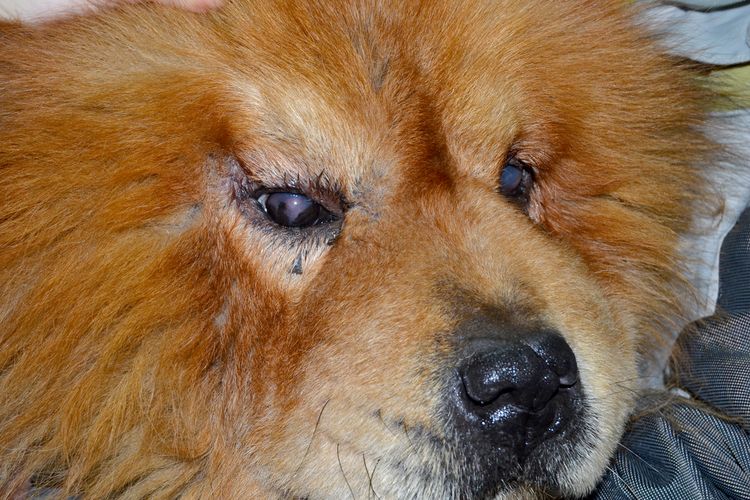
Allergic conjunctivitis
The disease most often develops in the spring and summer, when dogs spend a lot of time outdoors and come into contact with potential allergens. Associated symptoms (watery eyes, sneezing) usually resolve within an hour of the animal entering a clean room.
Treatment methods
If allergic conjunctivitis is confirmed, the dog will need to be given antihistamines. It's also necessary to identify the source of the infection to prevent further contact with the allergen.
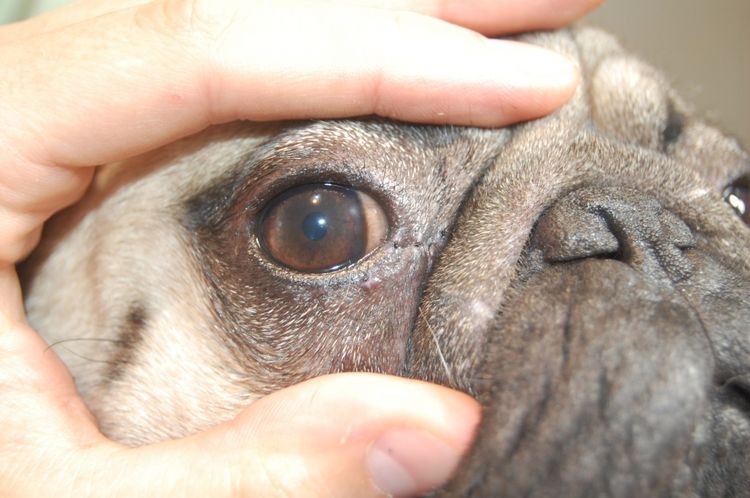
Corneal irritation
Another common cause of eye redness can be mechanical irritation of the cornea. For example, breeds with thin, coarse coats (pinschers, griffons) often suffer from individual hairs scratching their eyes. A foreign body in the eye can also be a cause.
Treatment methods
You can flush your pet's eyes with saline solution. If the veterinarian confirms that the cornea is damaged by coarse hair, you'll need to take your pet to a groomer to have the excess hair trimmed.
Infectious disease
Bacteria entering a scratched eye causes the whites of the eye to become red. The animal may rub its muzzle on the floor and blink frequently.
Treatment methods
Intensive therapy may be necessary (eye irrigation every hour, antibiotics every five to six hours). The corners of the eyes should also be treated with a cotton swab soaked in an antibacterial solution.
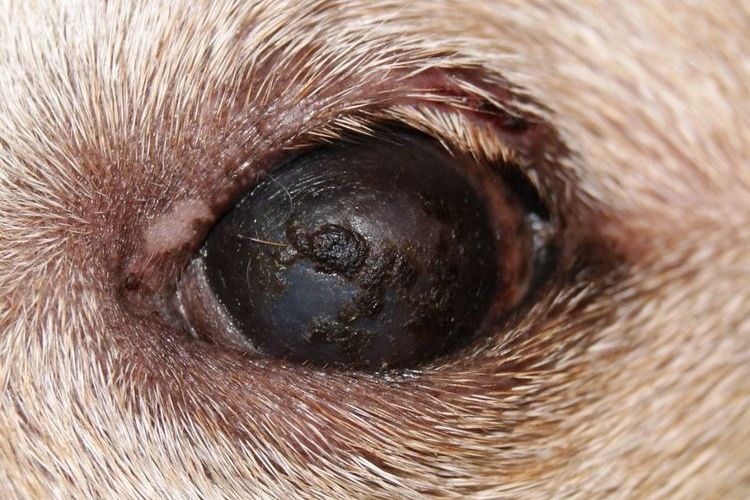
Dry eye syndrome
One of the reasons why a dog has red eyes in both eyes could be blocked tear ducts or a complete absence of tear glands. Additional symptoms accompanying this condition include swelling and corneal cloudiness.
Treatment methods
As a budget (but temporary) solution to the problem, the veterinarian may suggest using special moisturizing dropsHowever, to improve the dog's quality of life in the long term, surgery is recommended.
Cancer diseases
There are several types of cancer that can cause redness in the whites of the eyes in dogs. The most common are lymphoma and reticulosarcoma.
Treatment methods
If oncological disease If the disease is diagnosed at an early stage, chemotherapy and radiation therapy are administered. Otherwise, a course of medication is prescribed to relieve the unpleasant symptoms.
Diagnostic methods
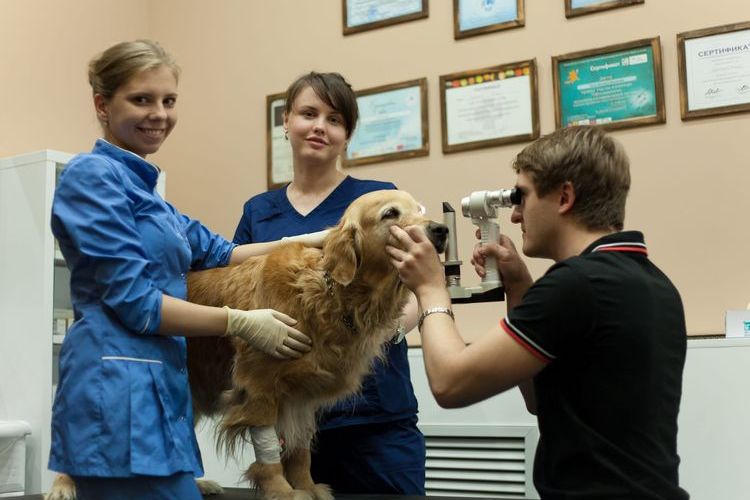
If your dog has red eyes in one or both eyes, you should consult a veterinarian for a diagnosis. It's especially dangerous to ignore professional help if the redness doesn't subside within a few days. Your veterinarian will carefully review your pet's medical history and collect a complete anamnesis.
It is recommended to prepare answers to the following questions in advance:
- When was the redness first noticed?
- Have you noticed a sharp worsening of symptoms over the past few hours?
- Has your pet's behavior changed?
- How often does the dog come into contact with other animals?
After obtaining the initial information, the veterinarian will perform a complete ophthalmological examination. During the examination, the specialist will assess the condition of various parts of the eye, including the conjunctiva, cornea, tear ducts, retina, and eyelids.
A Schirmer test is also performed. During the procedure, the doctor will check the intensity of tear production and confirm or rule out dry eye syndrome. There's no need to worry about pain: the specialist will simply insert a small paper strip between the eyelid and the eye. The strip will act as an irritant. The tears that flow will stain the tester, allowing you to determine the volume of tear fluid.
If glaucoma is suspected, tonometry (measuring the internal pressure of the eye using a special device) is performed. Local anesthesia may be administered to prevent the animal from moving during the procedure.
Fluorescein dye is used to detect microcracks. A small drop of yellow-green dye is placed on the surface of the eye. The damaged areas are illuminated under a special lamp.
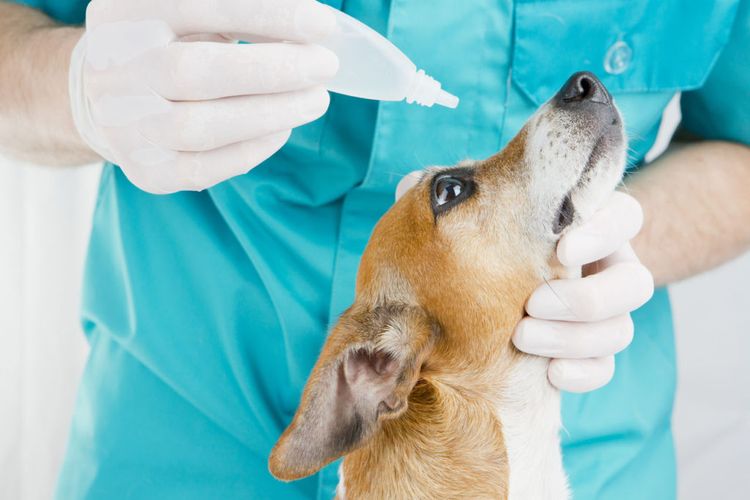
Sometimes a comprehensive blood test is also prescribed. In rare cases, redness in the whites of both eyes can indicate kidney or liver dysfunction, or a hormonal imbalance.
Problem diagnosis
Red eyes in dogs require a careful and professional approach, as this symptom can indicate a variety of diseases. Therefore, diagnosis should be performed by a veterinarian.
Typically, the examination is carried out according to the following algorithm:
- Visual examination. The doctor assesses the color, shape, and general condition of the mucous membrane of the eye, paying attention to redness, irritation, swelling, discharge, and the possible presence of a foreign body.
- A more detailed eye examination. Intraocular pressure is measured to rule out glaucoma. Fluorescein may also be used to check the condition of the cornea and detect any damage or ulcers.
- Laboratory tests. If an infection is suspected, a swab of the eye is taken for microbiological analysis to identify the pathogen and determine the appropriate treatment.
- Additional diagnostics. In some cases, X-rays may be required (for example, if an injury or tumor is suspected), as well as general tests to assess the body's condition and identify systemic diseases.
If the whites of a dog's eyes are red, a full diagnosis is mandatory.
How and with what are pathologies treated?
Treatment of eye redness is possible only after determining the cause and strictly as prescribed by a veterinarian.
Depending on the diagnosis, the following may be used:
- regular rinsing of eyes with boiled water or special agents, such as furacilin solution or veterinary lotions;
- the use of local or systemic medications: antibiotics, antifungals, anti-inflammatory drugs - depending on the nature of the disease;
- surgical intervention in case of mechanical damage or penetration of a foreign body.
Regardless of the cause of eye redness, it's important to provide your dog with a calm and comfortable environment, access to clean water, and a nutritious diet. A balanced diet supports immunity, and regular eye care helps reduce irritation and discomfort.
If a puppy has red eyes
Eye inflammation is less common in puppies than in adult dogs, but it's still a problem that shouldn't be ignored. Young animals' immune systems are still developing, so any infections can be more severe.
Redness of the eyes in a puppy may be accompanied by:
- swelling of the eyelids;
- frequent blinking;
- restlessness, anxiety, or signs of discomfort due to pain or itching.
In general, the approach to diagnosis and treatment in puppies is the same as for adult dogs, but you should consult a veterinarian as soon as possible.
Drug therapy and surgical treatment
Redness of the whites of the eyes is only a symptom of an underlying condition. Therefore, a treatment plan is selected only after a diagnosis has been confirmed. Topical treatments such as ophthalmic ointments, drops, and solutions are prescribed first. Without a prescription, only saline solution, artificial tears, and antibacterial ointments (apply only to the corners of the eyes) can be used. Rinsing should be done 2-3 times a day, artificial tears 5-6 times a day, and ointments should be used no more than twice a day.
To prevent the animal from rubbing its eyes, it should be fitted with a special Elizabethan collar.
If this initial treatment does not help, then it is necessary to immediately take the animal to a veterinary ophthalmologist.
The doctor will prescribe oral medications and, if there is no improvement, refer you for surgery. Don't ignore the specialist's recommendations. If the underlying cause of the problem isn't addressed in the early stages, surgical removal of the eye (enucleation) may be necessary later.
To prevent redness in the whites of a dog's eyes from leading to blindness, it is very important to receive timely veterinary care.
You can also ask our website's staff veterinarian a question, who will answer them as quickly as possible in the comments box below.
Read also:


Add a comment