
Why do cats have hot or cold ears?
The most responsible cat owners closely monitor not only their pets' diet and routine, but also their health. That's why cat owners often wonder why their cat's ears are hot.
It should be noted right away that ears can be hot to the touch for a variety of reasons, and not necessarily related to illness.
Content
Causes of hot ears in cats
One of the causes of hot ears can be simple stress experienced by the animal. The heart begins to beat faster, as a result of which temperature It may jump. In this respect, cats are not much different from humans, who also experience an increase in body temperature when frightened or very excited.
A cat's ears can become hot due to simple overheating. This usually occurs in very hot weather. In this case, make sure to keep your cat cool and give it plenty of water to avoid dehydration.
If you feel your pet's ears are hot, examine them carefully; ear mites can sometimes be the cause. If you notice any suspicious lumps or debris on the ears, treat them immediately with appropriate medication.
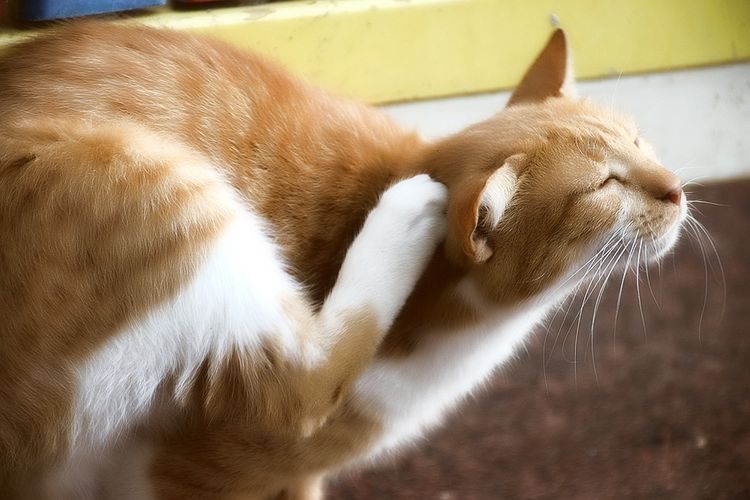
Sometimes a cat's ears may simply feel hot to the touch due to the difference in body temperature between the human and the animal, especially if the owner's hands were cold at the time.
However, if your cat's nose and ears are hot, this could be a sign of an emerging illness. If you suspect your pet is ill, pay attention to its behavior. It typically changes during illness. For example, a cat may sleep constantly, become lethargic, or apathetic. Or, conversely, its behavior may become restless, meowing without reason or pacing around the apartment.
What to do?
If you suspect your cat is unwell, the first step is to take its temperature. Keep in mind that a normal temperature for an adult cat is 38-39 degrees Celsius (100-102 degrees Fahrenheit). In young kittens, the normal temperature can be as high as 40 degrees Celsius (104 degrees Fahrenheit). Hairless cats, for example, have an even higher temperature of 41.5 degrees Celsius (102 degrees Fahrenheit).
What should you do if hot ears are a sign of illness, and what does this mean? The answer is clear: immediately consult a specialist who will examine your cat and prescribe appropriate treatment.
Therefore, it's safe to say that hot or red ears in a cat aren't a cause for alarm. High ear temperature alone isn't a sign of illness. However, if your pet not only has hot ears, but also a dry, hot nose, and changes in behavior and appetite, then it could be the onset of illness.
Why does my cat have cold ears?
Cat owners often notice that their pet's ears are cold. This can be due to several reasons.
Sometimes a cat may simply be feeling unsettled, especially if they're trying to stay close to the radiator or crawl under the blanket. In this case, you can provide your cat with a cozy, soft-lined cat house and place it near the heat source (but not too close!).
Hairless cats are especially prone to cold, so they are dressed in special "cat" sweaters, overalls, etc. It is best to let such cats outside as little as possible during the cold season.
If your pet's ears aren't just cold, but icy cold, and also have an unhealthy bluish tint, this could be a symptom of heart problems. This is typically true for older cats and those who are overweight.
Heart disease is common in purebred cats, often associated with genetic abnormalities. They may also experience difficulty breathing, shortness of breath, and other symptoms.
In addition, the ears can become cold due to dehydration from food. poisoning, accompanied by vomiting. Pregnant cats suffering from toxicosis may also have cold ears.
A pet's ears may remain cold for some time after a surgery, such as spaying or neutering. In addition to these symptoms, the animal may experience weakness, nausea, and impaired heat exchange (which leads to a drop in body temperature). To alleviate the condition, you can wrap your pet in a blanket and place a heating pad or hot water bottle nearby. Typically, after some time, the pet's condition will return to normal, and the ear temperature will return to normal.
Should I be concerned if my ears are cold?
Experts say that cool ears alone don't indicate illness in a cat. If your pet is happy, alert, and has a good appetite, there's likely no reason to worry.
If your cat's behavior changes, such as becoming lethargic, apathetic, or eating poorly, it's best to take them to the veterinarian. A specialist will examine your furry friend, order the necessary tests, and prescribe treatment if necessary.
It is very important to monitor your cat's behavior and spot symptoms of illness in time - in some cases, this can save your pet's life.
Cat owners often worry if their cat has hot ears, considering cold ears normal. However, experts believe that in some cases, cold ears are a more dangerous symptom than hot ones: an elevated body temperature indicates the body is fighting an illness, while a low temperature indicates extreme weakness and exhaustion.
If you want your pet to be happy and healthy, pay attention not only to the temperature of its ears, but also to the behavior and appearance of the animal as a whole.
You can also ask our website's staff veterinarian a question, who will answer them as quickly as possible in the comments box below.
Read also:
- Ear mites (otodectosis) in cats: symptoms and treatment
- Why does a cat drink a lot of water?
- Insecticides: how to use and where to find them?


45 comments
Anastasia
Hello. My little pup is about 3 months old. He's vomiting yellow foam and isn't eating or drinking. He's gagging after drinking water. He has loose stools and bad breath. He's lethargic and can't even meow, and he's completely lost his weight. His belly has sunken in at the sides and his fur has become oily. We dewormed him in two stages about 1.5 months ago (everything was fine). He doesn't respond to food or water. I suspect he might have been injured by a fish bone, as he always greedily attacked any food. He hasn't peed for about 2 days. He doesn't go outside. We have 2 other adult cats at home and they're fine. He breathes heavily.
Daria is a veterinarian
Hello! You shouldn't search for answers online; you should rush your pet to the clinic! It's not eating or drinking, and it's vomiting. This clearly requires IV fluids. If you suspect a foreign body, it won't come out on its own! Surgery is necessary. In any case, without in-person veterinary care, the animal will quickly die!
Yana
Hello. My cat is 11 years old. He's suddenly lost his appetite, his ears and nose are cold, and he's dry. He's not eating, only drinking a little. We went to the vet, had his biochemistry done, and we're waiting for the results. But he still hasn't eaten, even after the injection. He's just sleeping and not responding to his owners. What could it be? He's been eating nothing for two days now.
The day before this, I drank a lot of kefir. And after that, I didn't eat anything else. What could it be? We're still waiting for the results. We're very worried.
Daria is a veterinarian
Hello! Please understand that the information about not eating, cold ears, and a dry nose is too limited for even a tentative diagnosis. More information is needed. Information about deworming (what and when last administered), vaccinations (what and when), what kind of daily feeding (commercial food, then the manufacturer, natural – a complete diet, what the animal eats, or a mixed diet), whether there is contact with other animals or walks outside. Has the cat been using the litter box recently? Any bowel movements or peeing? Has there been any recent vomiting? Has the cat recently lost weight? Has the quality of its fur changed? Did the clinic give it an IV to feed it? It's very good that they took a blood test for biochemistry; it will be possible to assess any problems in the body. I hope they will evaluate the condition of the kidneys. The cat is elderly, and there is a high risk of kidney problems. If your cat's ears and paws are cold, try using a heating pad (not an electric one, as this can also cause burns. A rubber or plastic bottle filled with warm water will suffice. If you use boiling water, wrap it in a towel). Try warming it up. It's important that your kitty drinks water. If it doesn't improve overnight, be sure to give it an IV! And get an ultrasound.
Daria
My cat hurt his tail and the bleeding didn't stop for a long time. When it did, I noticed his ears were cold. What should I do?
Daria is a veterinarian
Hello! There's nothing to be done. Increase the animal's feeding, provide rest and reduce stress, and handle and move it less. I doubt there was significant blood loss; the body will quickly replenish it. The ears shouldn't be very hot; they have many capillaries and heat dissipation is faster there than in other parts of the body.
Nastya
Good afternoon
Second day, six-month-old kitten: poor eating, constantly sleeping, breathing 16 times per minute, pulse 61, nose wet and cold, ears and paw pads cold, unresponsive to toys, but purrs when petted. There are no veterinary clinics nearby, the nearest is a three-hour drive away. What could be causing this? Any advice on what to do?
Daria is a veterinarian
Hello! What about treatments? Vaccinations? Deworming? What about feeding? How about walks? Purring is not an indicator of health. Cats purr not only when they're happy, but also when they're stressed or in pain; it's their own way of soothing themselves. What about the stool?
Margarita
My cat was diagnosed with an intestinal infection. She has been sick for two weeks now, losing her appetite, becoming lethargic, cold, and staying quiet. I feed her with a syringe and sometimes drink on her own. Her stool is loose. I give her Vitom, Enterosgel, and Creo in her food morning and evening. We've had a bunch of tests, an ultrasound, and an x-ray. She's had injections: No-shpa + Suprastin for three days, Cerucal, Ringel Lokka, and Tylosin for five days. We've been taking Vetom for 10 days now. I'm very worried about her. She's about three years old. Before this, everything was fine; we missed her vaccinations and didn't deworm her (there was a pandemic). She was tested for panleukopenia - negative. She also had a biochemistry and a complete blood count. Her ALT-197, AST-153, and LDH-1391 levels were elevated.
Daria is a veterinarian
Hello! Well, liver problems should have been ruled out first. What did the ultrasound show? Everything can't be perfect after such results and prolonged loose stools. Has toxicity been ruled out? Why do you think the animal is cold? Do you measure the animal's body temperature? Instead of Vetom, it's better to give FortiFlora to repopulate the intestines with beneficial microflora. It's important to remember what preceded the animal's illness: new food, stress, any medications/vitamins/supplements, were there any treatments, was the animal sick? Has it had contact with other animals? Does your pet go outside? Has it eaten any plants (houseplants) at home?
Alena
Hello! My cat is 3.5 years old. This morning he was active. But then he jumped from a height of about 1.5 meters (not very well) and after that he became lethargic. He doesn't eat or go to the bathroom. What should I do? We went to the vet, and he said he didn't see any abnormalities. He gave him an injection of some kind of medication. Later, when we got home, the cat was still more or less alert, even ate and drank a little, but then he went limp again. He still hasn't gone to the bathroom. His ears and hind paws are cold. His nose is dry. He allows himself to be touched and picked up. He doesn't meow. He offers his belly to be stroked (apparently it hurts). Now he's dozing. Please tell me what to do?
Daria is a veterinarian
Hello! Well, if the veterinarian didn't find any abnormalities after an in-person examination, how can they suspect anything without seeing him? Perhaps the cat was already lethargic before the jump, which is why he landed so awkwardly. And you shouldn't connect his current condition to the jump (quite the opposite, in fact). What exactly did the vet administer? Painkillers? Vitamins? Antibiotics? Anti-inflammatory drugs? Was it a one-time injection or did they tell him to come back? Did they take his temperature? Does he have access to the outdoors? What's the status of his treatments (vaccinations, deworming)? Are there any other symptoms besides lethargy?
Olga
My cat is 4.5 years old. His left ear is almost always hotter than his right. Sometimes both ears are hot and cold, but the left one is usually hot to the touch. What could be causing this? Thank you in advance for your reply.
Daria is a veterinarian
Hello! If your pet isn't bothered by this and there are no other clinical signs of illness, then there's no need to torment the poor animal with constant petting. It's possible the cat was lying on that side, which is why the ear is warmer. Perhaps the circulatory system is more developed there, which is why it feels warmer. The main thing is that the overall body temperature doesn't rise, there's no discharge or unpleasant odor coming from the ear, restlessness, head shaking, or hearing loss. The rest isn't critical, as it could be physiologically normal for this particular pet (everything is individual): for some, it might always be cold, for others, it might always be hot, and for others, it might vary slightly. Don't forget about your own temperature, which can also affect how you feel.
Xenia
Hello! I have a 3-4 year old cat (we don’t know exactly, we took him as a teenager from the street 3 years ago).
His ears are cold, he sneezes and has become very lethargic. I see that he has lost weight in a week... Although he eats when I bring him to the bowls myself, he doesn’t want to drink. His stool is still normal.
I'm very concerned about his condition. His eyes were festering at first, but I washed them with furacilin and things got better.
How can I treat my cat inexpensively? Please tell me.
There is no free help in our city, and there is no money for paid help (things are very tight right now).
I'm almost certain that he caught a cold because of the drafts that his neighbors have been creating in the apartment for the last 3 months.
Daria is a veterinarian
Hello! If you're so sure it's just a cold from a draft, then all you need to do is rest, warmth, antibiotics (a 5-day course), vitamins, and immune-boosting medications (the simplest ones are Fosfosal/Vitosal/Katosal/Uberin or other similar ones). It's a shame he's not drinking. Force him to drink, often, but in small amounts (with a syringe, of course, without a needle). Take his temperature. If the eyes continue to ooze, in addition to wiping with Furacilin, antibiotic drops are necessary (Tobradex, for example, as it also contains a hormone that quickly reduces inflammation).
Inna
Hello! My cat is 1.3 years old. She gave birth in March and has recovered well. After we gave away her first kitten, she was very worried and lost 1 kg. We gave away her last kitten a month ago. She's lost even more weight. She's lost 1.5 kg in total. She's eating, using the bathroom normally, and is playful, and her heat cycles are normal. However, she's not gaining weight. She's skinny, her ears and paws are cold, and her fur has changed. We haven't changed her food. What should I do?
Daria is a veterinarian
Hello! Well, if your cat has really lost that much weight, that's a lot! A checkup is definitely necessary. What exactly are you feeding her (what brand of food)? How many times a day are you feeding her, and what are the portion sizes? A blood chemistry panel and an ultrasound of her internal organs (especially a gynecological checkup, just in case there were any post-partum pathologies). Rule out anemia. Introduce vitamins into her diet (a shot of Catosal would be a good idea; it stimulates appetite and immunity and helps restore blood formation). Have you dewormed her lately?
Inna
Hello! That's exactly it, we dewormed him, and he has an appetite. He's eating and playing. I'm feeding him Chicopee CNL BEAUTY with salmon, a super-premium food. I've been feeding him this food for a long time, just changing the flavors. Our cat still lives with us on the same food. He's not thin, just normal weight, not neutered, 4.5 kg. We haven't had an ultrasound or blood tests.
Daria is a veterinarian
Hello again! So, is the cat you share your home having the same problems? Has he also lost weight or stayed the same? And was your cat initially of normal build, or was she a little overweight (in which case she might lose a lot of weight; I've had overweight patients who were put on a diet and lost 3-4 kg, but slowly). Try finding a higher-fat food for your cat—one with more calories. Or increase her portions; she might be lacking calories now (especially after giving birth, she needed to eat more).
Daria is a veterinarian
And again – iron supplements, vitamin B12 (check the mucous membrane in her mouth; if it's pale, give her these supplements to rule out anemia). Another possibility is that her hormonal balance changed after giving birth, and that's what her body type is (you need to know what her parents were like; they might have been slim, too). This is about weight.
Now, the ears and paws. Observe how the kitten breathes; is there any shortness of breath after physical activity (running, playing). Is there any swelling at the end of the day? Did the lambing proceed normally (was it not difficult)? Heart problems need to be ruled out. Were there any problems with thermoregulation before the weight loss and birth? Perhaps you just didn't notice? Many people have this from birth (cold hands and feet, simply a spasm of the capillaries or a lack of them), and there's no treatment for it. It's just a characteristic.
Tanya
He doesn't drink water, doesn't want to eat chicken, broth, stomachs, kefir, canned tuna, water everywhere in the house, all over the apartment, I'm constantly watching, but his nose is warm, he's not in the mood, I give him a drink myself, his mood improves, he pees.
Daria is a veterinarian
Hello! Why did you write this without punctuation? Half of it is completely unclear. Either the cat isn't eating at all, or it's just the listed foods that aren't eating. It's unclear what the exact temperature is (a warm nose isn't an indicator; you need to take it rectally). Has the kitten been dewormed? Has it been vaccinated? Are there any other clinical signs besides lethargy and refusal to eat? Perhaps vomiting, diarrhea, or constipation? How much does the kitten pee? Does it urinate easily? Does it go outside for walks?
Irina
Hello! My cat is 10 years old. She had surgery yesterday (for a mammary tumor). She's still recovering from the anesthesia, walking around a bit, then falling asleep. This happens every 10 minutes. Her ears are cool, her nose is a bit dry, and she still won't drink water on her own. She either lies down next to me or goes off to a separate spot. Could you please tell me how to help her?
Daria is a veterinarian
Hello! The animal needed to be placed closer to warmth (the radiators are no longer working, so a heating pad and a blanket or throw nearby will suffice, as they retain heat for a long time). Thermoregulation after anesthesia can take a long time to return to normal (especially if the animal is weakened). Warm the animal, and its metabolism will gradually speed up, which will eventually lead to its appetite returning. If possible, give a little warm broth through a syringe without the needle to provide the body with light and warm food. You can gently massage the paws and back to get the blood flowing and stimulate the nerve endings. Avoid touching the suture area.
Irina
Thanks a lot
Daria is a veterinarian
You're welcome. How is the animal feeling now? Has it improved?
Catherine
Good afternoon.
Last night (about 30 hours ago), we gave the kitten his second vaccination: for infections and the Nabivac rabies vaccine. Before that, the kitten had two instances of "soft stool." The vet said it could have been because the kitten was given yogurt to try (a drop was placed on her finger).
In the evening after the vaccinations, the kitten played very little, was significantly less active before bed, and had an elevated body temperature.
Today he's had three bowel movements already, and his stools are soft. He's weak—he doesn't play at all and sleeps a lot. His ears and nose are cold, but his nose is dry. Sometimes he makes a sound, like hiccups. And when he sleeps (on his back), he makes a clicking or thumping sound in his stomach. If you put your hand there, you can feel a "thump" when the sound occurs.
Until the day of his vaccination, I fed him dry food and pâté. Since the day of his vaccination, I stopped giving him pâté and only fed him dry food. He doesn't go outside, but sometimes he plays in his shoes (we haven't yet weaned him off this activity).
Abyssinian breed.
Daria is a veterinarian
Hello! A change in your pet's normal condition for 2-3 days after vaccination is normal. It's just like with people. Think about yourself or small children (if you have any): how you feel ill for a couple of days after a vaccination, with a slight fever, chills, lethargy, weakness, and loss of appetite. This is how the body "meets" a foreign protein—an inactivated pathogen. Don't change the food abruptly. Stick with a good-quality commercial one (not Whiskas, Friskies, Felix, or other cheap "food"). Gurgling in the stomach is most likely due to an upset stomach. Give probiotics/prebiotics, like Fortiflora, with the food. Observe. If the condition doesn't improve within 72 hours after the vaccination (the kitten is still lethargic), then take it to the clinic for an examination. Were you dewormed before the vaccination? And how old is the kitten?
Patya
Hello! I adopted a kitten two days ago. It's a female and looks about 1.5 to 2 months old. I haven't bathed her yet, as I heard that you can't bathe her before she's 3 months old. Yesterday she was very active, exploring everything, never sitting still for a minute, and seemed to have adapted well. But she didn't eat much. This morning she's been very lethargic. She only ate a piece of sausage, played a bit, and then ate nothing else. She refuses water and has been sleeping since the morning. If you wake her, she goes back to sleep. Her nose and ears are cool, and she doesn't seem to have a fever. I'm going to the vet tomorrow. Could you please tell me what this could be? Is it dangerous for her health?
Daria is a veterinarian
Hello! How can we tell if it's dangerous without an examination? The kitten might have caught a cold after a bath, it might be stress, or it might have an infection (it's a stray, after all). Sausage isn't the best food for a growing kitten. Parasites still need to be eliminated. But you'll still need to examine it, listen to its breathing, and take its temperature. The clinic should do all of this. They'll prescribe treatment if needed.
Aliya
Hello! My cat is vomiting, his nose and gums are white, and his ears are cold. He's lethargic and not eating or drinking. He's 7 months old. What should I do?
Dasha is a veterinarian
Hello! I need to get to the clinic urgently for an in-person examination: a complete blood count, biochemistry panel, and an ultrasound. The cat needs to be on an IV for support. What type of vomiting is he experiencing? Foam, bile, before or after meals (when did it start), how long has this been going on? What are you feeding him? When and what were his deworming and vaccinations administered? Is there access to the outdoors?
Irina
Hello, Yesterday I applied In-Ap to his withers. He licked it off, I don't know how much. He didn't sleep all night, he was lethargic, he didn't drink water, his ears were cool. In the morning I gave him half a tablet of charcoal with hair removal paste. He licked it off and also ate some liquid food. I can't get him to the vet. What should I do?
Dasha is a veterinarian
Hello! Give your cat more water to drink. Give charcoal every 2-3 hours (1 tablet per 10 kg of body weight) and monitor their general condition. Lethargy, drowsiness, vomiting, and excessive salivation may occur. At the clinic, they would give you a detoxifying injection. This would help flush out the toxins more quickly. For future reference: if you're treating an animal, apply it directly to the skin (parting the fur) and to areas where the tongue can't reach (maybe even the chest or armpits, depending on how flexible your cat is). Observe how they wash themselves and where their tongue can't reach, so you know where their "blind spots" are in the future.
Catherine
Hello!
My cat vomited food and worms three days ago (we forgot to give him a deworming pill). After we gave him the deworming pill, his condition worsened. Two days ago, he vomited yellow liquid with white foam and stopped eating. Yesterday we took him to the vet, who said it was poisoning and prescribed injections and ointment.
Today, when he vomited, a tooth also fell out (5 months), he doesn’t eat anything, his ears are cold. What should I do?
Dasha is a veterinarian
Hello! Ointment for poisoning???? Could you please elaborate on what kind of medication it is and what purpose it was prescribed for? In cases of severe worm infestation, administering an anthelmintic can worsen the condition (especially if the animal hasn't had a bowel movement for 24 hours). Or perhaps there was an overdose, which is why the cat is feeling unwell.
Losing teeth at this age is normal. Animals, like humans, lose their baby teeth to permanent ones, so there's no need to worry. Are your ears cold? What were they like before? Also, with poisoning, body temperature drops (to slow down metabolism and reduce the absorption of toxins). Give charcoal (1/4 tablet three times a day for no more than 10 days in a row, one hour before or after feeding or other medications), probiotics, and prebiotics. Detoxification IVs may be needed.
Kate
Good afternoon. We have four cats, and one of them has been acting lethargic: his tail is hanging low, he won't eat dry food or drink, but he readily licks the sauce off his wet food (we buy good ones). He doesn't vomit or hide, but he often sleeps on the radiator or in our arms (to get warm), and his ears are cool (but his paws are warm). The day before, he fell off the bed while we were playing with him, but not on his paws, but rather on his side. I felt him - he clearly doesn't seem to be in any pain, but he's cold. We'll take him to the vet only on Tuesday (no one in our city is open until Tuesday). What do you think could have happened? Could there be something wrong with his heart? What should we check? Could he have hurt himself falling off the bed? Maybe he hit his teeth when he fell? The cat is two years old; he had an umbilical hernia as a puppy (he had surgery). Thank you so much for your reply! We're just worried about the little one.
Dasha is a veterinarian
Hello! Did your cat start feeling cold after a fall, or has he been experiencing this symptom for a while now? Perhaps he suffered a serious injury (bruise), which is why he's feeling unwell. Is he vomiting? Is there any loss of coordination? Are his pupils the same shape and do they react normally to light? Guessing what's wrong without an in-person examination and further testing is pointless. Wait until Tuesday; a veterinarian will be able to make a diagnosis after an examination.
P.S. If you have heart problems, visible mucous membranes (the conjunctiva of the eyes, in the mouth) and the tongue may take on a bluish tint or, conversely, become extremely pale. Shortness of breath (sometimes a shallow cough) may develop after mild physical exertion. Swelling (in the subchest area and extremities) may occur by evening, but this is not easy to diagnose. If your chosen clinic has the necessary equipment, request an ultrasound (the doctor will examine more than just your heart) and an ECG.
Svetlana
Good evening! My cat's ears are cold, and I hear wheezing occasionally. He hasn't eaten since the morning. He lies down all the time, mostly on his stomach. Just yesterday he was active. Three years ago, he had a complicated lung operation. Fluid was found, and one lung wouldn't heal. Could this be related to the after-effects of the operation?
Dasha is a veterinarian
Hello! Your pet needs to be examined. X-rays, biochemistry, and a complete blood count (CBC) should be performed. It's impossible to simply say what's wrong with your cat. It absolutely needs to be examined, especially if wheezing is audible. Lung complications (relapse) must be ruled out. Try to seek help from a veterinarian as soon as possible at a clinic with X-ray and ultrasound capabilities and an in-house lab for blood tests.
Irina
Good night!
I noticed that the cat's ears are cold and she eats very little.
At least today.
My cat is the mother of two charming kittens, the kittens were born on February 22.
The cat has always been a picky eater, but today she didn't touch the pate, dry food, or cream. I'm starting to worry.
My little ones have gained a lot of weight today (we weigh ourselves every evening).
First-born cat.
What should I do tomorrow, how can I make her eat?
Dasha is a veterinarian
Hello! You can't force her to eat. Perhaps she's stressed? Have you taken her to the vet? Were there any postpartum complications? How did she handle the birth? It's important to rule out postpartum complications. Alternatively, she may not like the food (or have a change in taste preferences). Switch to food for nursing cats (super-premium or holistic foods) or exclusively natural food (warm soups without salt or spices, cereals, meat). Make sure your cat drinks (this is very important), but not milk. You can add a small amount of glucose solution (the kind you buy at the pharmacy, not store-bought sugar) to boiled fresh water for energy.
Anastasia
Hello, my cat vomited foam this morning, and again later in the evening after she tried to eat her food. Her ears are cold, she's clinging to the radiator, not drinking water, and peeing very little. She hasn't had a bowel movement since yesterday evening. Could this be a sign of something bad? She's 3 months old and eats wet food from a bag.
Dasha is a veterinarian
Hello! Firstly, I suspect the kitten is fed Whiskas/KitKat-type food or some other budget option. This is not pet food. The diet needs to be changed to a higher-quality, more nutritious one. Secondly, it's unlikely the kitten has been vaccinated. Have you dewormed it? Take its temperature rectally (preferably with an electronic thermometer; it has a thin tip, perfect for a kitten). Force-feed water (using a syringe without a needle). Instead of water, you can use chamomile tea (1 teaspoon of chamomile flowers poured into 0.5 liters of water) or solutions to restore the salt balance (Vetom, Regidron, for example). The kitten is small and prone to both infectious diseases (the mother's immune system is no longer protecting) and eating foreign objects (could it choke on something or eat something inedible?). Therefore, there's only one piece of advice: rush to the vet. It's better to rule out danger and provide prompt assistance than to lose the kitten waiting for a miracle.
Add a comment