
Why does a cat have dirty ears?
Even long-haired cats clean themselves with such diligence that one can only envy them. They reach the most inaccessible places, but not their ears—only humans can clean those.
Dirt inside the ears is a common sign of illness, namely the presence of a parasite known as ear miteLet's figure out how to combat this phenomenon and save your pet from the fate of a perpetually dirty-eared cat.
Content
Meet the Parasite
Ear mites are tiny parasites that live and reproduce in the ears of cats and other animals. Animals become infected through direct contact with an infected animal or its personal items. In some cases, humans act as hosts. The parasite waits for its victims, lingering on clothing and even hands.
How does infection occur?
The mite attaches itself to the cat's external ear canal and immediately begins feeding on the epidermis of the inner ear. The skin is damaged, and fluid begins to leak from the damaged areas. This dried fluid is the notorious mite.
How to treat
Ear mite, aka otodectosis, are treated in various ways. Among the known methods, the following are worth mentioning:
- insecticidal spray, and if the ticks have moved to the body, drops on the withers;
- ear cleaner;
- drops;
- ointment.

If you're choosing between drops or a spray, it's better to choose the spray. It can be used not only on your cat's dirty ears but also in the animal's main area, such as a box. When choosing a product, the following are preferred:
- Dermatozol.
- Psoroptol.
- Fipronil.
- Cyodrin.
Essentially, there's a fairly wide selection of sprays for skin parasites. So, you'll probably find something at the store. There's no particular priority in this regard.
The key here is not to confuse ear mites with another condition. For example, a yeast infection in a cat's ears produces similar symptoms—dark discharge (exudate). Incorrect use of ear mite medications can easily worsen the situation. Therefore, if you're unsure, consult a veterinarian.
Other causes of dirty ears
Some cat breeds have large ears, which are natural dust collectors. This is also a common problem in Sphynx cats. However, even a normal ear can become clogged with dust over time, settling in the auricle. If too much dirt accumulates, the animal's internal defenses kick in. This involves increased earwax production, resulting in a buildup of dirt.
In some cases, the activity of the cerumen gland is unaffected by external irritants, so dirty ears can occur in cats that are constantly kept in a clean home. This most often affects breeds with little or no hair on their ears, which is the animal's natural defense against external influences. Such ears should be cleaned regularly.
My cat has dirty ears, what should I do?
What do you do with dirt? Remove it properly. The question is how to do it correctly without harming your cat. Let's look at step-by-step instructions for properly cleaning dirty ears in cats.
The main rule is to take your time and do everything carefully. Remember, you're working on an important and sensitive area of the cat's body.
First, bend your cat's ear back, trying to turn it as far as possible, but until it resists naturally. If you're using gel or ointment, don't squeeze it into the ear. Use a cotton swab dipped in the medication for this.
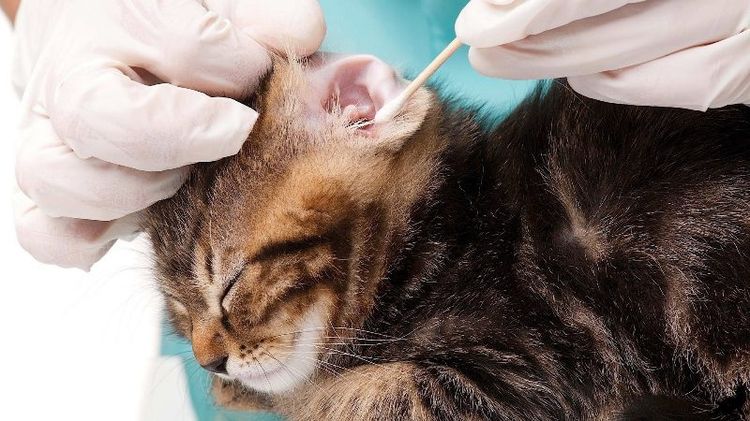
There's a common misconception that it's possible to rupture an animal's eardrum—this is a myth. Naturally, you don't need to push the cotton swab all the way into your pet's ear; a depth of one centimeter is sufficient. However, caution is still necessary, as clumsy handling can cause pain.
The next trick is to move the swab outward. Failure to do this can simply push the dirt deeper into the animal's ear.
If a mite or other ear infection is to blame for your cat's dirty ears, hold off on premature "treatment." In this case, take your cat to the veterinarian before cleaning. A diagnosis and veterinarian's advice are essential in this case, as the effectiveness of treatment depends on proper cleaning.
Now you know why your cat's ears are dirty inside, and you can easily solve the problem of cleaning them. What's more, all the suggested procedures are extremely simple and accessible. They won't take much of your time, and your pet will be very grateful.
You can also ask our website's staff veterinarian a question, who will answer them as quickly as possible in the comments box below.
Read also:
- Do cats and kittens need their ears cleaned and how to do it correctly?
- How often can you bathe cats?
- Dermatitis in cats


48 comments
Christina
Hello, could gum inflammation be the cause of the dirt in her ears? My cat has tartar... we made an appointment for a cleaning... but I noticed dirt in her ears.
Daria is a veterinarian
Hello!
I hope you have already solved the problem and now your ears and teeth are in perfect condition.
There's no connection between ear dirt and gum inflammation. And ear dirt varies from person to person. Therefore, an in-person examination by a veterinarian will clarify the cause.
Only fresh breath for your cat!
Anastasia
Hello. My stray cat has mites. I realized it because the windowsill was covered in brown spots, and he was scratching his ears. I also took a frying pan and placed it on black paper and saw movement. We recently got a kitten and he has the same discharge from his ears. There's no lab in our city. I called the vet, and she said it was mites and needed something to treat ear mites. I bought Bars for the second time and have already used the drops for both cats. The problem is that there's a discharge deep inside their ears, and when I rub their ears, it comes out. If I understand correctly, you can't clean their ears immediately after using the drops. So, how can I tell if these drops are working?
Daria is a veterinarian
Hello!
We hope that now your cats have clean ears and are living a wonderful life without any problems.
The problem of otodectosis is quite common, and there are many myths and misconceptions about it.
What are the key points in treating ears in animals?
1. Diagnosis. It's essential to conduct a diagnosis of ear discharge to accurately determine the cause. Yes, it could be ear mites, but in addition to itching, a large amount of discharge could also indicate a bacterial or mixed otitis, in which case treatment will differ from the simple treatment of otodectosis.
2. Cleaning the ear canal of all debris. This procedure is performed in a clinic using an otoscope. It is impossible to perform this procedure effectively at home.
3. Prescribe appropriate treatment. There's no point in putting ear mite drops in dirty, uncleaned ears; it's useless. In fact, ear drops are no longer used to treat otodectosis. Ear mites are cunning creatures, and they live not only in the ears but all over the body. Therefore, relapses often occur after using ear drops. We recommend using combination drops applied to the withers.
If your cat is an outdoor cat, the key to preventing ear mites is regular monthly treatment against ectoparasites.
Clean ears to your cats!
Irina
Hello, I have a Bambino cat, she'll be a year old in May. I clean her ears once a week, but they get dirty very quickly. Is this a characteristic of hairless breeds? Otherwise, there are no problems with her ears, except that they are always dirty.
Daria is a veterinarian
Hello! The contents of the ears should be sent for microscopy. If no pathogens (mites, bacteria, or fungi) are found, then nothing needs to be done. It's possible this is a reaction to over-frequent cleaning, an inappropriate lotion, or an allergic reaction to some food (but then there would be itching). In short, it's not worthwhile to assume this is normal for the breed without further testing. Ruling out pathology means confirming the norm.
Anna
My kitten is 2 months old, a Scottish Fold, and is scratching his ears. There is periodic black-brown dirt inside. What treatment would you recommend?
Daria is a veterinarian
Hello! The contents of the ears need to be examined under a microscope. Only then can we decide how to help the kitten. If it's ear mites, antiparasitic medications will be needed. If it's simply an inflammation, antibiotics will be needed. If it's an allergy, we'll need to find the cause—an allergen (food, medications, vitamins, or something in the environment—although cats rarely develop allergies to these things). Without a diagnosis, treatment will be difficult.
Natalia
My cat's ears were very dirty. I cleaned them with a cotton swab soaked in warm water. In the evening, his ears became dirty again and an unpleasant odor appeared, and one ear seemed to be leaking. He doesn't scratch his ears much, only occasionally. What could it be? Thank you!
Daria is a veterinarian
Hello! Well, judging by the ear drainage, it's likely your pet has an otitis. The exact type of infection will need to be determined during an examination. Definitely don't clean the ears with water. Use hydrogen peroxide or chlorhexidine (which is even better), dampen a cotton ball, wring it out (don't let any excess get into the ear), and wipe the ear canal, removing dirt and discharge. Don't use swabs! They'll push the discharge even deeper or injure already inflamed tissue. Antibiotics are essential. Drops and oral antibiotics (intramuscular or at least tablets) for 5-7 days. It's best to have your pet examined.
Maria
Good evening. My cat has black dirt. When he was little, he had a tick. The pharmacy recommended Otoferonol Plus. We gave him some drops. After a while, his ears started turning black again. He scratches his ears, but he doesn't really scratch.
Daria is a veterinarian
Hello! There are several possibilities. Either it's a mite again, because you didn't fully treat the animal and stopped giving medication as soon as it started feeling better. Or it's increased secretion due to inflammation or an allergic reaction (but then the ears would be itchy and there would be discharge). A scraping would confirm or rule out a scabies mite. If the diagnosis is confirmed, then use special drops (you can choose Inspector, Advocate, or Frontline, any of them) and treat your pet for the mite. You can also inject medications from the avermectin group (Ivermek, Ivermectin, Otodectin, etc.).
Evgeny
Hello, our cat has very dirty ears. When he scratches them, he meows constantly. It seems to be in pain. What could it be? We adopted him from someone else and he's about 3 to 6 months old.
Daria is a veterinarian
Hello! You need to examine the ear, request a scraping, and look under a microscope. It could be a simple otitis or otodectosis (a parasitic infection). Otitis can be bacterial or fungal. As you can imagine, the treatment plan will vary. For otodectosis, special drops are prescribed (depending on the selection at your local veterinary pharmacy). Some people choose ear drops, others apply them to the withers (for example, Stronghold, Advocate, Inspector, Frontline, Nexgard), and gently scrape away any crusts from the ear. Otitis requires antibiotic therapy (I'm not a fan of using ear drops for otitis; why add extra fluid if the ear is already soggy?). So, a definitive diagnosis is needed.
Elena
The kitten is 2 months old and his ears are dirty. He is a brush.
Daria is a veterinarian
Hello! An in-person examination at a clinic with additional tests, such as scrapings and cultures, is necessary. It's important to rule out parasitic otitis (otodectosis), bacterial, or even allergic otitis. It's important to look at the color of the discharge, and whether the animal is itching or restless. Therefore, a much more detailed history is needed: what the animal eats, where it roams, how it's kept, and whether it's been treated for fleas and parasites. At least this bare minimum needs to be learned. Then, decide whether treatment is necessary or if the discharge is normal. Perhaps a change in food would resolve the issue on its own.
Catherine
Hello. I got a two-month-old kitten. There's a lot of brown (black) dirt coming out of his ears, and there's also brown (black) dirt in his eyes. What's wrong? What should I do?
Daria is a veterinarian
Hello! Take it to the clinic for tests and swabs. Rule out ear mites and conjunctivitis. The kitten needs to be dewormed. You can use the same drops as Advocate/Inspector/Strongold/Frontline, which also kill fleas, ear mites, subcutaneous mites, and intestinal worms. Just be sure the kitten doesn't lick the medication off its withers after applying it, otherwise it will be poisoned. But the eyes should still be examined.
Catherine
We used Stronghole drops. Today is the third day after applying them.
Daria is a veterinarian
Did the ear discharge increase after applying the drops? Are you using a special ear lotion? If the discharge has increased, become thicker, and brown, then it's likely ear mites are crawling out and dying. After using similar drops, if the animal is sick, the discharge increases. How long has the animal had discharge from its eyes and ears? Has it been seen by a vet?
Paul
Good evening, we adopted a one-month-old kitten. We dewormed him with Parazitsid Plus suspension and treated him for external parasites with spot-on biodrops. I'm very concerned about the condition of his ears; they're dirty. He doesn't scratch them or shake his head, but the dirt keeps coming back after every ear cleaning. We live in a small village and don't have a vet. How can we tell if he has yeast or fungus? What should we do? How can we help him? Thank you for your reply.
Dasha is a veterinarian
Hello! At home, you can't tell if it's fungi, yeast, parasites, bacteria, or just dirt. What factors influence the breed, age, living conditions, and feeding habits? The color of the discharge, the consistency (dry or gray), how quickly the dirt accumulates after gentle cleaning (how often you clean it), and how you clean it? Have you used any special ear lotions?
Paul
Thank you so much for your reply. We hired a car today and took him to the vet. A swab showed a tick. The kitten is one month old and eats natural food. He was prescribed Stronghold.
Dasha is a veterinarian
Hello! Stronghold can be replaced with Advocate, Inspector, or Frontline. The drops work the same way. Some people use them on the withers, but I prefer to use them in the ears—they work faster. Just clean thoroughly, and preferably not with a cotton swab, otherwise you'll push the dirt even deeper. And don't be alarmed when you start treating. Over the first few days or weeks, the dirt will increase. This is normal. Dying ticks will crawl out before they die, which is why there will be more dirt. First, clean the ears thoroughly, and then apply the drops.
Paul
Thank you so much for the advice. All medications are for two months, but our little troublemaker is only a month old. What should I do? Should I treat him with half the dose or wait until he's two months old?
Daria is a veterinarian
Hello! If you can, find Fipronil Spray; it's suitable for kittens 2 weeks and older. If you can't find it, try other medications, but at half the dosage. Keep adsorbents and antihistamines (at least Suprastin) on hand, as individual intolerance can develop even in an adult animal. Don't delay treatment, otherwise the mites will multiply and "eat away" the eardrum.
Julia
Our cat has a lot of dark dirt in his ears, but he doesn't complain, only when you stroke his head he starts shaking his head.
Dasha is a veterinarian
Hello! It wouldn't hurt to take your dog's ears to the vet. They'll examine the discharge from the ears microscopically. First, we need to rule out ear mites (called otodectosis). Then, we need to rule out ear infections of various etiologies. It's not normal for the ears to be dirty. And if the dog is shaking its head, it's likely the animal is bothering you.
Regina
Hello, my cat (he is a domestic cat) has very dirty ears, breed: Scottish Fold, we went to the vet, he prescribed ear cleaning and Surolan drops, but for some reason they do not help, he has a runny nose and tears. On June 18, 2018, the cat had surgery, was diagnosed with stenosis of the nostrils, they enlarged the nostrils, since then the snot and tears continue ... .. Please tell me how to help my cat?
Dasha is a veterinarian
Hello! The nostrils have been widened, but don't forget about the nasolacrimal duct. It can cause watery eyes (brachycephalics often suffer from this due to their short muzzles). Regarding the runny nose and watery eyes, consult your surgeon; they'll know best how the surgery and healing process went. What about the ears? Are they just dirty? Any itching? Have you checked for ear mites?
Tatiana
Good morning. My cat's ears are very dirty, he shakes his head and scratches them. We went to the vet: there are no mites, we took him for a bacterial culture, no bacteria, no cocci, no yeast, all clear. But his ears are getting worse and worse. What could it be? There is no odor coming from his ears.
Dasha is a veterinarian
Hello! Have you ruled out allergies? What are you feeding him? It's possible he's having an allergic reaction, which is why his ears are itchy. Try a general blood test; if there's an allergy, the vet will know from the results. Is there another lab in town? I'd recommend retesting for ticks (if there was a bacterial infection, the ears would smell and an ear infection would develop).
Lily
Hello, we adopted a kitten, and his poop is really dirty... We don't know what to do... I can take a photo...
Dasha is a veterinarian
Hello! Have you tried cleaning the ears? Is your cat itching? A photo won't give a complete picture of what's going on. A general examination and tests are needed. It could just be dirt, or it could be ear mites (otodectosis). What symptoms are your cat showing? Dirty ears alone aren't cause for concern, but if an unpleasant odor, itching, redness, or heat develops, or your cat shakes its head or becomes restless, then you should definitely take it to the vet.
Samat
Hello, I bought a cat and she ran away into the street for two days, then I found her, washed her, fed her and saw black things in her ears that looked like dirt. What should I do?
Dasha is a veterinarian
Hello! Carefully remove some of this "dirt" with a cotton swab, then shake it off onto a clean white sheet of paper. If blackheads appear, it's mites and you need comprehensive treatment for ear mites. If they don't appear, it's most likely just dirt. Gently wipe with hydrogen peroxide, being careful not to pour it into the ear. You can soak a cotton swab in it, wring it out (it shouldn't drip), and place it in the ear canal for a couple of minutes to soak. Then gently wipe away the dirt. Don't use cotton swabs, as this will only push the dirt deeper. Observe your pet for any itching or restlessness.
Alena
Hello! We adopted a British shorthair kitten, and his ears are very dirty inside, covered in black dirt, and he's scratching. What should we do?
Dasha is a veterinarian
Hello! Go to the clinic. Have them take a scraping. The kitten most likely has ear mites. But we need to rule out otitis. Ear mites are easily treated if they're not in advanced stages.
Oksana
Good evening, could you please tell me if a pet's ear mites can be transmitted to humans?
Dasha is a veterinarian
Hello! People do not get otodectosis from animals.
Svetlana
My cat has one clean ear and the other dirty. I cleaned it, but after 3 days it's dirty again, with some pieces of greasy wax. What is it?
Dasha is a veterinarian
Hello! What kind of odor is coming from the ear? How is your pet generally feeling? Is itching? Shaking its head? What's its body temperature? Take your pet to the veterinarian. It's important to rule out otitis (inflammatory ear infection) and ear mites. Be sure to see a veterinarian; you need not only a diagnosis but also an effective treatment plan to prevent the condition from progressing and hearing loss.
Vadim
Hello. I have a British Shorthair kitten, and the left edge of his ear has darkened. Please help me and suggest a solution to this problem.
Dasha is a veterinarian
Hello! Your pet needs to be examined in person by a veterinarian. It's not entirely clear whether the ear edges have simply darkened (the skin) or have dried out and darkened. This is why an in-person visit is necessary. Frostbite (maybe your kitten has been outside), vitamin deficiencies, and parasitic infections need to be ruled out. A complete blood count and biochemical analysis are also required. Without a complete medical history and an in-person examination with additional tests, a diagnosis cannot be made, and therefore, treatment cannot be prescribed.
Sveta
Hello, my cat has a dark coating in her ears. She's 4 months old, we adopted her from a shelter, and we noticed she was scratching her ears. What could it be?
Dasha is a veterinarian
Good afternoon. Your kitten needs to be taken to the vet. It's possible he has ear mites. The diagnosis needs to be confirmed. In any case, after an in-person examination and additional testing, the veterinarian will prescribe an effective treatment plan. I can write a treatment plan for ear mites, but what if it turns out to be otitis (including allergic or fungal)? The prescribed treatment won't lead to a recovery. Therefore, take your kitten to the vet for an in-person examination.
Angela
Hello! My cat is 3.5 months old, a Siberian. Her ears are constantly dirty, but it doesn't look like ear mites. We adopted her from a shelter when she was young, and she turned out to have ear mites. The symptoms and wax color are familiar to me. Well, this isn't the case with my cat. She has normal, light-colored wax, and she doesn't scratch her ears or anything. Should I be concerned?
Dasha is a veterinarian
Hello! Please schedule an in-person appointment. Even normal increased earwax production can indicate the onset of a disease. It's better to be sure your pet is healthy than to try to cure it later. After examining your pet, your veterinarian will determine whether your pet is healthy or needs treatment. They will also rule out ear mites and otitis (including fungal and allergic ear infections). Don't use any medications yourself, and don't clean the ear with cotton swabs (you could push wax deeper into the ear, which will eventually cause a plug). Your veterinarian will show you how to do this correctly.
Add a comment