
Why dogs can't eat pork
Most dog owners know that feeding their pet pork is highly undesirable. However, not everyone understands the reason for this ban and whether it's so categorical. After all, domestic dogs' closest relatives in the wild—wolves—eat boar, so why shouldn't they eat pork?
Content
False and true reasons for the ban
When discussing the ban on pork, dog owners often cite the following arguments. But are all of them justified?
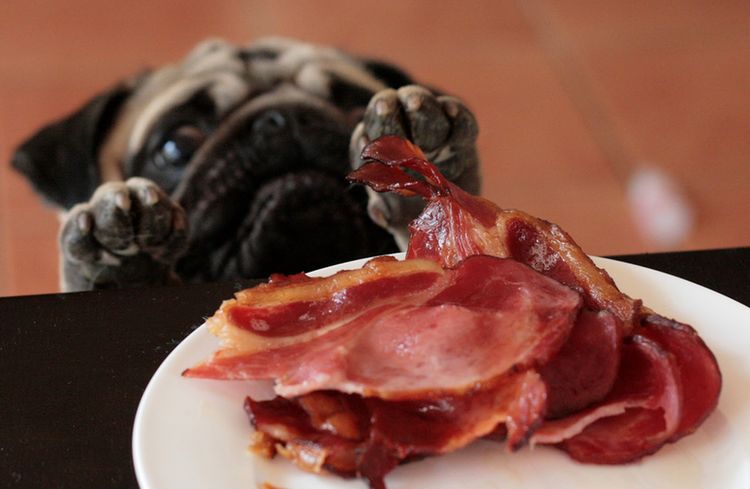
Pork is too often contaminated with parasites.
Unfortunately, this is true. Currently, pig farms often fail to adhere to sanitary standards for animal welfare, veterinary inspections, and breeding practices. As a result, subsequent generations of pigs fail to develop immunity to a number of diseases. These animals can carry diseases such as:
- helminthiasis (and its varieties) – infection of the dog’s digestive system with worms;
- Pork tapeworm is a relatively rare but very dangerous disease that causes weight loss, stunted growth, and various central nervous system damage.
- Aujeszky's disease (also known as "latent rabies") – the illness progresses very quickly (1-2 days) and is usually fatal. The main symptoms are severe itching of the head and face and profuse salivation.
- Trichinellosis occurs when a dog eats raw contaminated meat and is characterized by diarrhea, abdominal pain, and fever. The larvae of the causative organism, Trichinella, are extremely resilient and can even survive heat-treated meat.
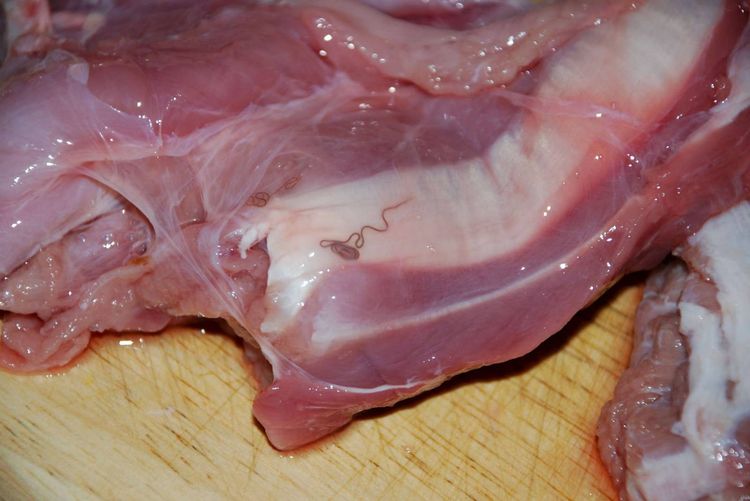
Please note! If a dog eats raw pork infected with these parasites, the risk of infection is almost 100%. You can significantly reduce the risk by boiling the pork in boiling water for an hour.
Pork meat causes digestive upset
Pork is also harmful to dogs due to its high fat content. Large quantities of this meat are difficult for dogs to digest and can cause intestinal problems. This occurs because dogs lack the enzymes needed to break down pork fat. Regular consumption of pork leads to diseases and conditions such as:
- enteritis;
- cardiovascular diseases;
- diabetes mellitus;
- liver and kidney problems;
- dangerous metabolic disorders.
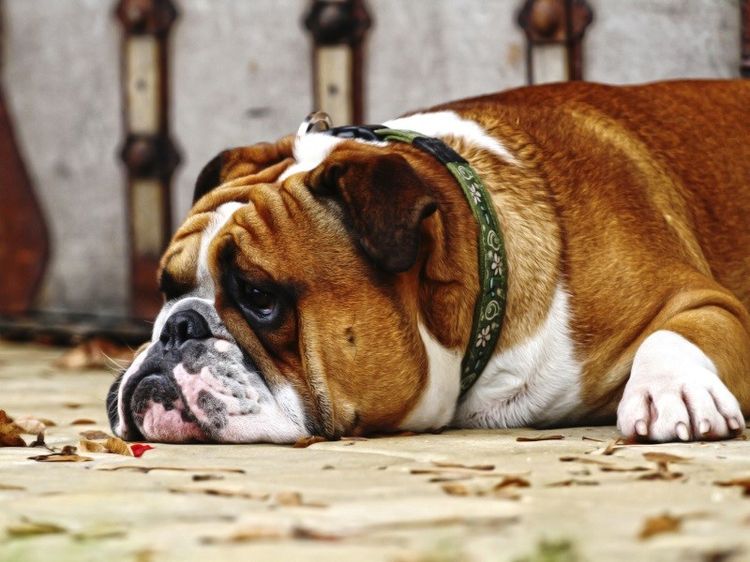
When ingested, unsplit pork fat enters the bloodstream, which increases cholesterol, promoting plaque formation, and leads to obesity internal organsAll this has a negative impact on the dog's behavior: it may become sedentary and passive.
Pork can cause intestinal volvulus.
But this argument hardly has any right to exist. After all, volvulus Typically, this occurs due to physical activity on a full stomach. The dog's diet plays no role here. Intestinal volvulus most often occurs in young shepherds, so their diet and exercise regimen must be carefully planned.
Recommendations for dog owners
However, pork shouldn't be a complete and utter taboo. While it shouldn't be included in a dog's daily diet, it's still okay to indulge them occasionally, perhaps as a treat. During winter, animals need fat to protect them from the cold, so once a week, they can be treated to lean slices of pork. When planning your four-legged friend's menu, it's recommended to adhere to the following guidelines and recommendations:
- Don't give it to the dog raw pork – as mentioned above, it can be contaminated with parasites. The same applies to offal.
- Dogs can be given boiled lean pork, but only occasionally and in small quantities. Preference should be given to organ meats, such as pork heart, lungs, and other cooked meats.
- Deep freezing meat does not guarantee its safety – and this applies not only to pork.
- Try to choose meat that has passed a sanitary inspection to ensure it is free of parasites.
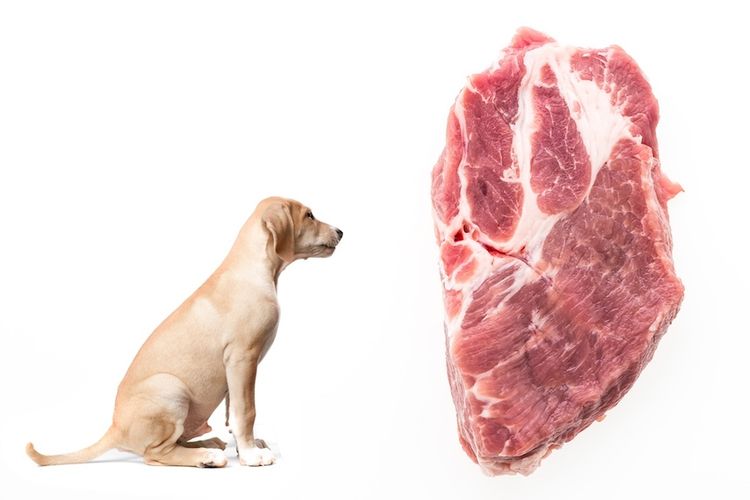
It's worth noting that dog handlers and veterinarians are no longer so strict about this type of meat. Pork contains nutrients beneficial for dogs, including iron, vitamins, amino acids, zinc, and so on. Therefore, in moderation, it won't cause harm. The main thing is to choose meat with as little fat as possible and avoid overindulging.
It's also important to monitor your pet's condition after eating pork, as every dog is unique. As with any dog care matter, owners should exercise care, caution, and a moderate level of discretion.
Read also:
- What cereals can and cannot be given to dogs?
- How to choose food for a dog?
- Can you feed bones to a dog?




5 comments
Oksana
I adopted a 3-year-old beagle. His previous owners had him on "Immune Defense" dry food. They warned him he was allergic to chicken. In my experience, the allergy isn't to the actual chicken, but to the "chicken flavor" in dry food, including "diet" varieties and treats.
We switched to a natural diet. That is, whatever we eat, the pet eats, plus by-products.
In everything, you need to keep to the golden mean: don't keep yourself, your children, or your pets in an aquarium, but don't "gobble" everything in sight. Then everything will be fine.
I periodically give Kostochka vitamins, and there were also some that were divided into daytime and evening doses. These vitamins are easily found on Ozon and are quite reasonably priced.
We occasionally get ear infections due to rain or swimming. He sometimes reacts to new training treats. I switched to dried lungs—the best option.
Some veterinarians try to get the dog hooked on dry "elite diet" food, but the dog won't eat it, and if it does, its belly turns red before your eyes.
Therefore, natural food is the best option. The main thing is to keep your pet in good physical condition, and not fatten it up like a pig.
May happiness be with us!
marina
They're slowly weaning them onto dry food. I've had Rottweilers my whole life. We always eat pork. We can't afford beef. We rarely eat chicken. We eat everything. And the funniest thing is that even though they tell us we're strictly forbidden, we love it. And there's no diarrhea.
Let's always deworm, and together. Eat everything and don't listen to these pseudo-scientists.
Daria is a veterinarian
Hello! When your pet starts having gastrointestinal problems (pancreas, liver) in about four or five years, remember the clinics staffed by "poor scientists." If you don't want dry food, don't feed it—no one's forcing you. But feeding something that's not recommended for your pet's health is just because you think it's right... Doctors spend years studying, improving their qualifications, constantly reading new articles, books, and studies to better help your pets. And you call them "poor scientists"...
You wouldn't feed someone fatty foods if their doctor told them they shouldn't? Yes, they want them, they love them, but they can't.
Guest
No, that's fine: people eat pork, but dogs can't because they'll get trichinella. So you're saying we buy meat with trichinella in the stores (and the veterinary inspection is apparently just a place to stand), or that we feel sorry for the dogs, and let their owners die. Incredible writing; I haven't seen something so "smart" in a long time.
Irina
I've always been puzzled by this approach. We eat pork. Why can't we give our dog the thermally processed, lean meat we buy for ourselves? If I feed her veal tenderloin, I'll go broke. We also feed her chicken, even though they say you can't have chicken because you'll be allergic to it. We cook both beef and pork offal.
Add a comment