
Why dogs can't eat chocolate
Chocolate is one of the foods that should not be fed to dogs. However, many owners don't understand the full danger of this treat to their pets' health, even though its consumption can not only cause serious poisoning but also be fatal. The lack of understanding of why dogs shouldn't eat chocolate is usually based on three fundamental principles: a basic lack of understanding of canine physiology, an irresponsible attitude toward the animal, and a reluctance to deny their four-legged friend their favorite treat.

Content
Harm
Chocolate contains the plant alkaloid theobromine, which is found in cocoa beans. Therefore, the higher the percentage of cocoa in a product, the higher the concentration of this substance.
Important! Theobromine has a similar effect on humans as caffeine: in moderate amounts, it invigorates, increases blood flow, and stimulates heart function. The alkaloid also has a similar effect on animals, but with significantly greater potency.
As a result, dogs experience the following problems after eating chocolate:
- the load on the central nervous system increases;
- depression develops;
- the heart rate increases sharply, causing tachycardia or arrhythmia;
- diarrhea appears or excessive urination, which is fraught with rapid dehydration.
To understand why dogs can't eat chocolate while humans can, it's important to understand the differences in digestive processes. In the human body, theobromine is broken down into harmless components by a special enzyme produced by the liver. Animals lack this enzyme, significantly slowing down this breakdown. As a result, the alkaloid remains in the blood for almost 24 hours, causing extremely negative effects on vital organs and systems. If a dog regularly consumes chocolate, the substance accumulates in the body, causing irreversible damage.
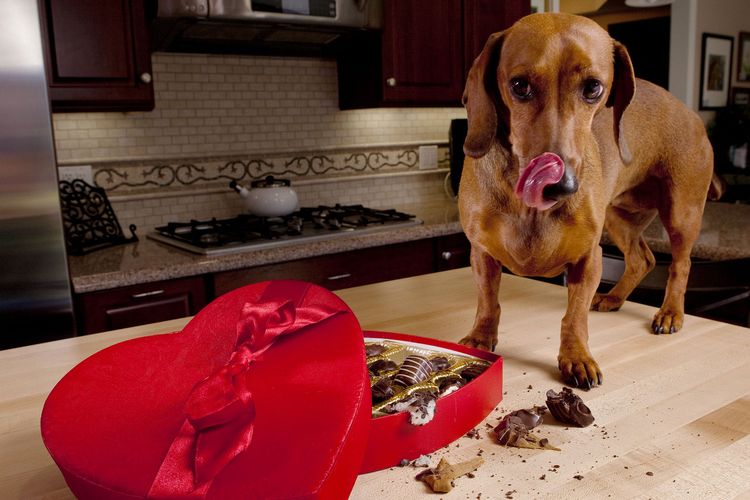
Another reason, Why you shouldn't give sweets to dogs Sugar puts stress on the pancreas and often leads to the development of diabetes. Furthermore, manufacturers often add various flavorings, flavor enhancers, and other chemical additives to such products, which are also unsuitable for dogs.
Toxic dose
Given pets' love of chocolate sweets and their potential health risks, many dog owners often wonder whether dogs can eat chocolate, even in small quantities. Experts are unanimous on this issue and strongly recommend eliminating this product from their pet's diet entirely.
Each chocolate bar has a different cocoa content and corresponding amount of theobromine. For this reason, it's impossible to accurately calculate the toxic dose for a specific dog. The following data is usually used as a rough guide:
- poisoning can occur when consuming 15–75 mg of chocolate per 1 kg of dog weight;
- A fatal outcome is possible if 100–200 mg/1 kg enters the body.
-
Dark chocolate and cocoa powder contain between 5 and 28 mg of methylxanthine per gram—the most dangerous forms.
-
Milk chocolate - about 2-3 mg/g, less toxic but may cause problems in small dogs.
-
White chocolate contains almost no theobromine, but remains harmful due to the high sugar and fat content, which cause pancreatitis.
Dimensional chart:
| Product type | Theobromine (mg/g) |
|---|---|
| Cocoa powder | 15–28 |
| Dark chocolate | 5–6 |
| Milk chocolate | 2–3 |
| White chocolate | ~0 (but harmful for other reasons) |
Such wide variations are explained by differences in the amount of cocoa. Dark chocolate is considered the most dangerous in this regard.
Biochemistry: Slow Metabolism as a Cause of Poisoning
Dogs are unable to effectively metabolize theobromine, the main toxin in chocolate. Its bioavailability reaches 77%, with peak blood concentrations occurring 2–4 hours after ingestion. Its half-life is up to 17.5 hours, which is many times longer than that of humans.
Medically, theobromine acts as a cardiac and central nervous system stimulant. Toxic doses can cause arrhythmias, agitation, seizures, and, in severe cases, death.
Signs of poisoning
The first ones symptoms of dog poisoning The effects of chocolate don't manifest immediately, but rather 3-4 hours after consumption. They manifest themselves through various symptoms, the main ones being:
- hyperactivity;
- vomiting, diarrhea;
- intense thirst;
- frequent urination;
- rapid breathing;
- muscle tremor;
- irregular heartbeat.
Without treatment, the animal may develop seizures, internal bleeding, and heart attack. But the main reason why dogs shouldn't be given chocolate is the high risk of coma or death.

First aid
If your dog has eaten a piece of chocolate, you should consult a veterinarian immediately. In such cases, the vet will perform a gastric lavage and administer adsorbents, and, if necessary, conduct tests and prescribe treatment. Therapeutic measures are aimed at reducing the negative effects of theobromine on the central nervous system and heart, preventing dehydration, and maintaining normal internal organ function.
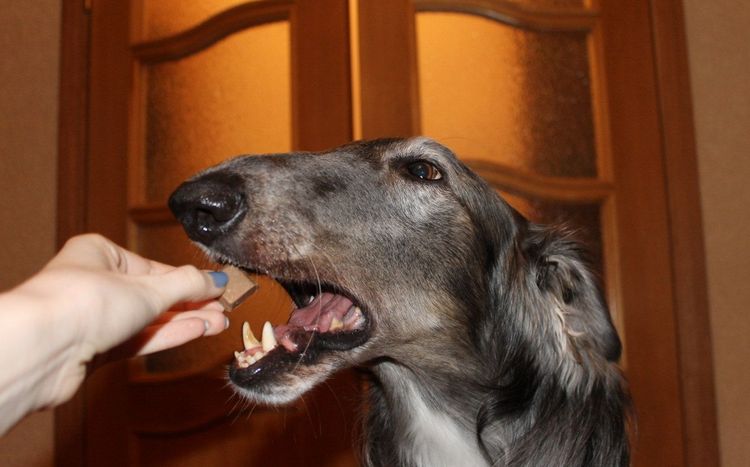
You can often see photos online of various dog breeds holding chocolate bars. Often, this is simply the photographer's ill-conceived idea, unaware of whether dogs can be given chocolate. On the other hand, such images can be advertising, as special "dog" chocolate bars are now available, made using a special technology with minimal sugar and cocoa content. These treats can and should be given to your pets instead of "human" sweets. In general, to maintain your dog's health, avoid feeding them from your table. After all, even the healthiest foods that bring pleasure to humans can significantly worsen their condition.
Why even a small piece is dangerous
Even small doses are dangerous: in small dogs, just 20 mg of theobromine per 1 kg of weight can cause symptoms, while in many dogs, around 100–200 mg/kg can be fatal.
Toxicity comparison:
-
A 20 kg dog can be poisoned by less than 240 g of dark chocolate.
-
For LD50, 100–200 mg/kg of theobromine is taken, and the amount of chocolate in grams corresponds to the concentrations in the table above.
Seasonal Increase in Danger: Holidays and Chocolate
Chocolate poisoning is a common problem during the holidays: Halloween, Christmas, Easter – when chocolate becomes more readily available.
A UK study has found that cases of poisoning in dogs rise sharply in December.
The Dogs Trust recommends using vegetable treat hunts instead of Easter eggs: cucumbers, carrots, broccoli - instead of chocolate.
Helpful tips for owners
-
Safe storage: Keep chocolate out of reach.
-
Keep your guests informed: especially during holidays. Remind them: "Nothing from the table."
-
Treat Substitute: Pumpkin or fruit treats are a healthy alternative.
-
React quickly: don't wait for symptoms to appear – call the clinic at the slightest suspicion.
Read also:
- What vegetables and fruits can you give to a dog?
- Can dogs eat tangerines?
- What cereals can and cannot be given to dogs?




Add a comment