
Why does a dog stick out its tongue?
Everyone is familiar with the fact that sometimes dogs stick out their tongues and their breathing becomes deep and rapid. We sometimes don't even pay attention to this peculiarity of our four-legged friends, and we don't think about why a dog sticks out its tongue. Let's dot the i's and cross the t's and find out why a dog might behave this strangely. There are two main reasons why a dog might behave this way: unbearable heat and severe stress.
Let's take a closer look at what these two reasons mean and how to distinguish them.
Content
High ambient temperature
For many, even experienced breeders, it comes as a revelation that their pets are not sweatThis is due to the specific structure of the skin and the thick fur that covers the entire body.
Dogs have virtually no sweat glands: only a very small number of them are located on the pads of their paws, as well as on the leather of their nose.
However, these glands are woefully inadequate for emergency cooling—liquid barely evaporates, meaning the dog doesn't cool down. So what can be done? How can we quickly and effectively cool the animal's surface?
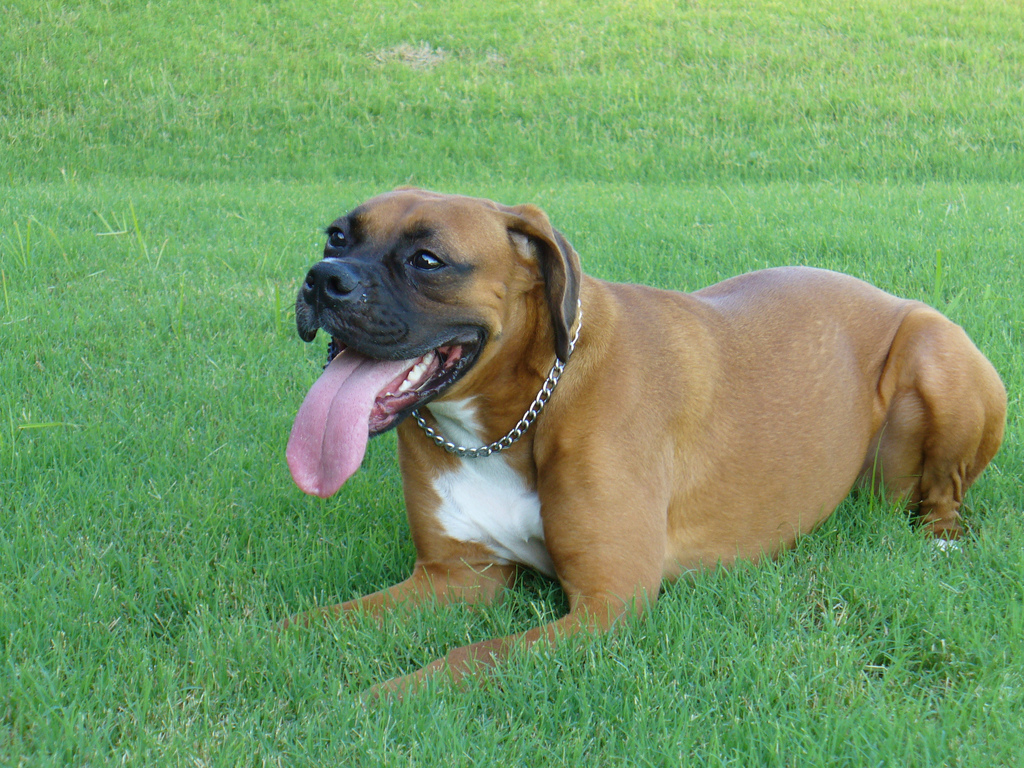
Nature has created a unique mechanism that allows for adequate cooling without sweat glands. The larynx and tongue, which have a significant surface area, are used to evaporate body moisture. Combined with rapid breathing, which further evaporates moisture and thus cools, this creates a fairly effective way to cool the body. This is the main reason why... the dog is showing off his heat language - she is simply saving herself from heat stroke.
If you notice your dog panting and sticking out its tongue in the summer heat, you should quickly give it water and shelter it from the heat as soon as possible. Water will help prevent dehydration and maintain its natural "refrigerator."
The best time to walk on hot days is in the morning or evening, when the sun isn't as scorching. If possible, it's best to walk near a body of water so your pet can run into the water and cool off at any time.
It's also worth paying close attention to the choice of muzzle: it's important to remember that after physical activity and in hot weather, the dog will absolutely need to stick its tongue out and do a good "poop."
Note! Among the many dog breeds, there are some that are almost impossible to see with their tongues hanging out, even on the hottest day. These include the Chinese Crested, Peruvian Hairless, and Mexican Hairless. Due to their lack of hair, they rely solely on the perspiration emitted from their body to cool themselves.
Stress for your pet
Another reason for frequent heavy breathing can be stress – this is a normal reaction of a dog’s body to a stressful situation.
This behavior is often accompanied by profuse salivation. In this case, it's essential to eliminate the cause of the irritation, and over time, your dog will calm down and return to normal.
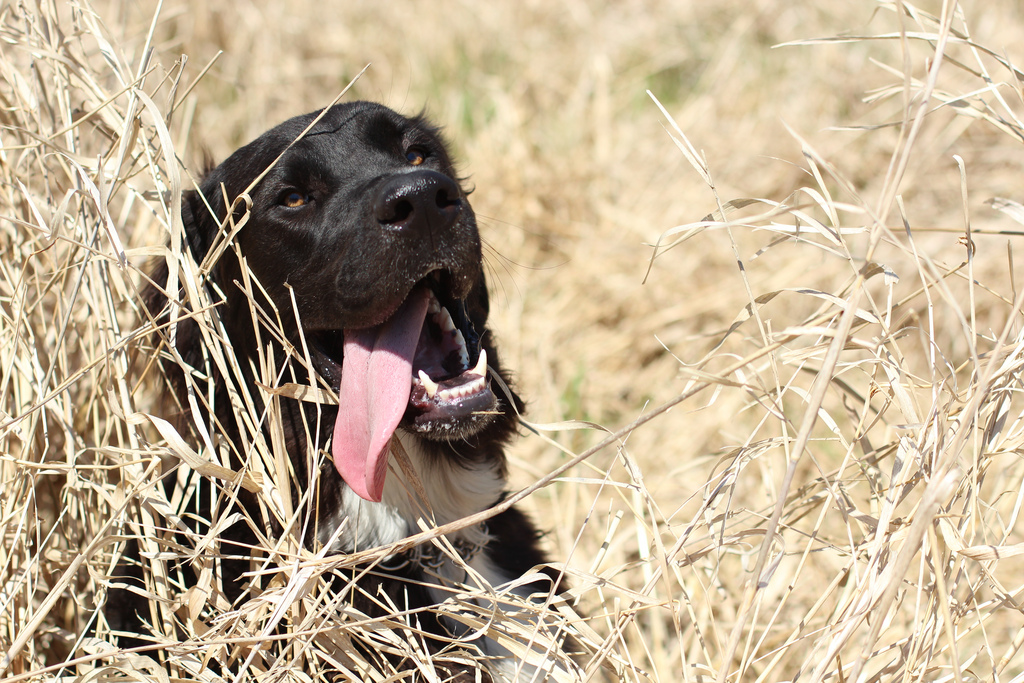
Emotional Signals: Language as a Mood Marker
When a dog sticks out its tongue, it may be a way to show relaxation rather than tension:
-
A slight tongue sticking out to the right or left is a sign of comfort. This is how attachment-oriented dogs express themselves.
-
When in a good mood, the tongue may flutter at the corners of the mouth - this is not just relaxation, but also increased jaw tone.
-
The tongue folds are clearly visible when smiling in Border Collies, Spaniels and short-haired dogs, especially in the sun.
Anatomy and breed nuances
Why does my dog always have his tongue hanging out?
-
In brachycephalic dogs (pugs, bulldogs), this is sometimes due to a shortened palate and jaw shape—part of the tongue simply doesn't fit in the mouth. Those with slit noses become very overheated, and the tongue constantly swells.
-
In long-haired and small dogs (Chihuahuas, Yorkies), the tip of the tongue may stick out for no apparent reason - most often they have a shortened lower jaw, and the tongue does not close completely.
-
Older dogs often stick out the tip of their tongue constantly - this is a sign of loss of muscle elasticity, an erroneous recurrence of dental congestion, or residual transfer of the bite shape.
Signals of overheating, thirst, overexcitement
Dogs instinctively respond with their tongues:
-
After an active walk or play, the dog sticks out its tongue 4–5 cm—this is an objective sign of overheating and initial thirst.
-
Excitement: from anticipation of a walk, food, play - the tongue also becomes longer, the paws move more often, the muscles tense.
-
If a dog begins to actively stick out its tongue after stress, fear, or a change in environment, this is a sign of emotional arousal, which is relieved through thermoregulation.
Why does a dog stick out the tip of its tongue: subtle signals
Sometimes the pet only slightly sticks out the tip of the tongue:
-
This behavior is often observed in states of mild concentration, such as while watching a bird or playing. It's a half-asleep, half-relaxed gesture.
-
In pregnant bitches, this may be a genetic trait or a reaction to hormonal changes.
-
It occurs in animals with anemia: the tongue protrudes slightly - a signal of deterioration in general health, decreased blood supply to the oral cavity.
Table: Interpretation of different forms of language
| Type of protrusion | Possible cause | Owner's actions |
|---|---|---|
| Constantly protruding tongue | Breed, anatomy, age | Check your mouth, see a dentist if necessary |
| Active stretching after activity | Thermoregulation, thirst | Provide water, coolness, reduce stress |
| A slight protrusion from the corner of the mouth | Comfort signal | Confirm calm, give attention |
| Long tongue after stress | Emotional arousal | Calm down, create a comfortable environment |
| The tip of the tongue is concentration. | Focus when observing or thinking | Don't distract, you can reward with a treat |
| The tongue is visible in the elderly woman | Age, muscle weakness | A veterinary examination may be helpful. |
Other reasons
It's also worth noting that sticking out their tongue is a sign of positive mood. This could be playful or friendly, joy at a meeting, an attempt to get a treat, or a demonstration of goodwill. Dogs may also stand on their hind legs and attempt to lick a person or lightly touch a surface they're sniffing with their tongue. In this way, they mark something they like as "their own," so they can recognize it more quickly and know how to treat it. And if the dog is also drooling, it fully demonstrates the sincerity of their feelings, even if it may seem unpleasant on the owner's part.
Some dogs are physically unable to keep their tongue inside their mouth due to their buildings Jaw and oral cavity damage or missing teeth. This condition is called "hanging tongue syndrome." Constantly exposed to air, your pet's tongue will become dry, especially in hot, dry weather, causing pain and even cracking. To alleviate this, you can periodically lubricate your pet's tongue with olive oil or give them ice cubes to lick.
A protruding tongue accompanied by rapid breathing can be a side effect of certain medications. However, when prescribing such medications, experienced veterinarians usually warn dog owners about the potential consequences.
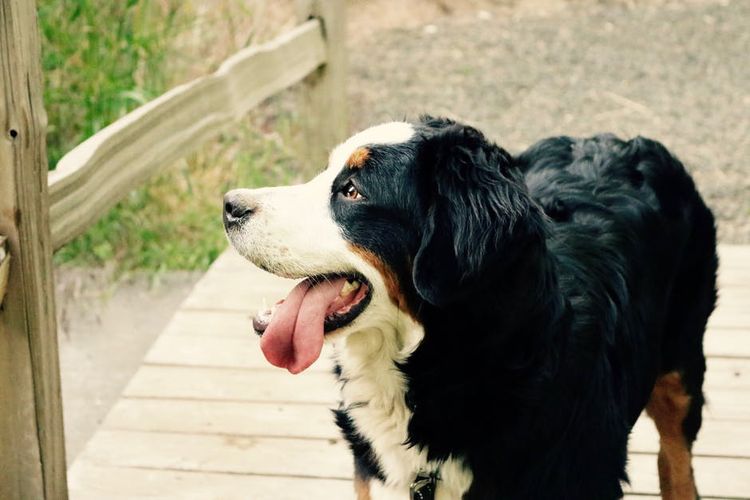
Here are the main reasons why a dog may stick out its tongue and breathe deeply. In rare cases, this behavior can indicate an underlying medical condition, but it shouldn't be ignored. If the dog is lying down, breathing lightly, and its tongue is sticking out, it could be poisoning or some other health issue.
After ruling out heat and stress, and if you notice no improvement in your dog's condition, you should immediately consult a veterinarian, preferably a professional—they can quickly determine the true cause of your dog's condition. This is especially true if the tongue is also dry. To make a proper diagnosis and prescribe treatment, the veterinarian will need to know what your pet recently ate, what they did on a walk, and how they behaved at home the day before.
When to be wary
Sometimes language is a red flag:
-
A bright red, tightly pressed tongue and even a tongue hood are signs of overheating and first aid must be provided immediately.
-
A white or bluish tip is a sign of possible anemia or oxygen starvation.
-
A very pointed, flaccid tongue is a sign of neurological disorders, dental abscesses, and lymphatosis.
Veterinarian's advice
For regular and unexplained tongue protrusion:
-
Perform a basic oral and dental examination;
-
Check the respiratory system - x-ray, hearing?
-
Assess the general condition - blood test, ECG, tests for overheating.
With the right approach, the owner can not only eliminate the potential problem, but also create a comfortable environment for the dog based on behavior and physiology.
Read also:
- Folk remedies for fleas in cats and dogs
- My dog was stung by a bee: what to do
- Why do cats stick out the tip of their tongue?


Add a comment