
Why does a dog lick its owner?
There are no definitive reasons why a dog licks its owner. For some pets, it's an act of affection, for others, it's a biological instinct, ingrained in them by nature. But this habit has other explanations as well, and in some cases, it causes significant discomfort, something a person might want to get rid of.
Content
- 1 Possible reasons
- 2 Biological roots and licking instincts
- 3 About individual parts of the body
- 4 How to wean?
- 5 Differences by age, breed and temperament
- 6 Licking as a signal of discomfort or illness
- 7 Empathy, mirroring behavior and emotional support
- 8 When and How to React (Scenarios and Recommendations)
- 9 Common mistakes owners make that reinforce the licking habit
- 10 Table of approaches to behavior correction
- 11 Summary and recommendations for owners
Possible reasons
- Boredom, loneliness. If a pet doesn't get enough attention, it may nuzzle or lick its owner when they're sitting quietly or getting ready to sleep.
- Grooming. Dogs have a keen sense of smell, so they can detect odors that aren't always noticeable to humans. If a dog dislikes the scent, or if it finds it particularly attractive, it will try to remove it by licking the person.
- Submission. Wolves typically demonstrate obedience by crawling up to their leader and licking his paw. In domestic animals, this behavior can be associated with harsh punishments: the dog begins to fear the person, thus demonstrating its submission and fear.
- Possessiveness. This is especially evident in the presence of strangers, when the dog, through demonstrative licking, marks its owner with its scent. This is a declaration of belonging to the same "pack" as its owner, and permission to intrude so closely into their personal space. If this is accompanied by friction against the legs, it indicates jealousy and the belief that other people are claiming its owner.
- Upset, stressful situations. Whining, trying to get into bed at night, and licking a family member are signs of anxiety or stress. This could be caused by a thunderstorm, fireworks, or other stressful situations.
- Maternal care. This theory is linked to puppyhood, when female dogs lick their puppies to keep their fur clean, maintain hygiene, and promote normal development. Even later, they continue to lick their offspring to maintain a sense of family. Thus, the habit of licking a favorite object is established from childhood, demonstrating belonging to the same "family."
- Hunger. Foxes, wolves, and some dog breeds may lick their mother's face after she's finished eating, asking for more food. This behavior may be a reminder to refill the bowl.
- Attracting attention. After all, when a dog approaches a person and starts a "conversation," it often evokes affection and a desire to pet or play with the pet.
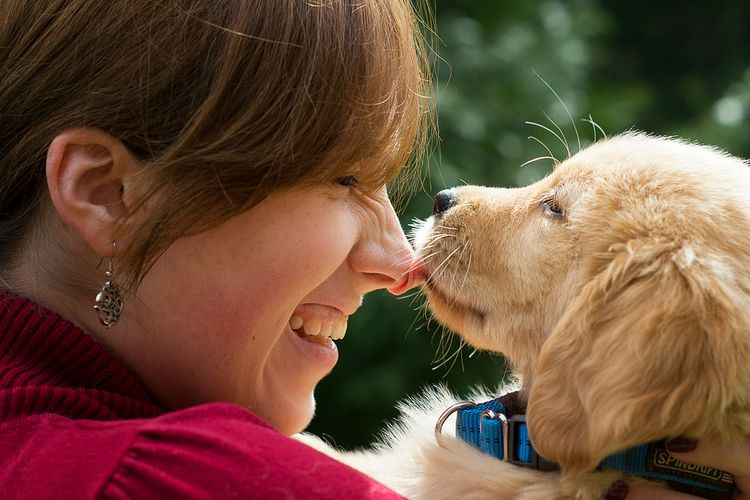
Biological roots and licking instincts
Licking isn't just a "cute gesture"—it's deeply rooted in the biology of canines. Mothers constantly lick their puppies for cleanliness, digestion stimulation, movement, and safety. These early "kisses" become embedded in neural circuits and later transform into a form of communication.
Hormones play a role: oxytocin (the "bondage" hormone) secretions are enhanced by mutual contact—touching, licking, and petting stimulate it. So, licking isn't just a demonstration, but also a physiological reinforcement of the bond between dog and human.
Moreover, when a dog licks, areas associated with satisfaction and relief (reducing anxiety) are activated in the brain. Therefore, during stressful moments, a pet can "self-soothe" through licking—of itself, its owner, and surrounding objects.
About individual parts of the body
The way a dog licks different parts of a person's body can also reveal certain conclusions about its condition and emotions:
- Feet – they have a distinctive odor, especially when the owner has just taken off their shoes and hasn't had time to shower. Dogs perceive this odor as a dangerous sign, attracting the attention of other animals, so it's important to remove it quickly to "protect" the owner. Another theory as to why dogs lick their owners' feet is a possible deficiency in chlorine and sodium, which are essential for gastrointestinal function and hydrochloric acid production. By licking the sweat off their feet, the animal is attempting to compensate for the deficiency.
- Hands can also have an enticing odor, especially if they've recently been saturated with treats. Pets often receive tasty "rewards" from their hands, so they lick the "pleasant scent." Furthermore, hands can sometimes get abrasions, which dogs treat with the only remedy available to them—their own saliva.
- The face – similar to hands – often smells like food, especially after a recent lunch or dinner. If a dog is hungry, it may try to lick its owner's cheeks or lips. But if there's food in the bowl, it may simply be bored, showing its joy by trying to lick from forehead to chin.
How to wean?
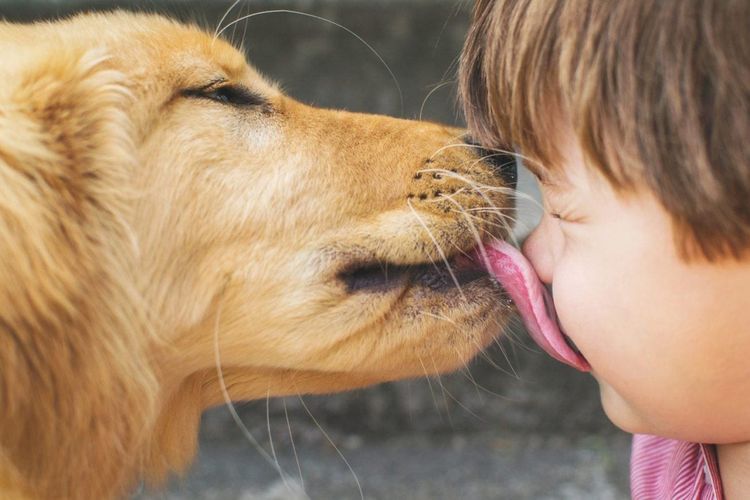
A dog licking its owner may seem cute from the outside. But when this happens regularly and the pet is large, it can cause discomfort for many. In this case, the first step is to address the underlying cause:
- when you are jealous, pet the dog more often and walk with him;
- when alone - spend more time together, be sure to give toys when you have to leave the house;
- in case of stress – remove the source of stress or show that it does not pose a danger;
- in case of fear – change the approach to education without using harsh methods of punishment;
- If you feel hungry, review your diet to ensure it is balanced and there are no possible nutrient deficiencies.
Differences by age, breed and temperament
Not all dogs are equally prone to licking. Here are some things to look out for:
| Factor | How does it affect | Examples |
|---|---|---|
| Age | Puppies lick more actively than adults. | A young dog will kiss its owner more often, an adult dog – less often. |
| Breed / size | Small breeds often show contact through licking, large breeds - less so. | Chihuahuas and Spitz are prone to frequent "kisses", but larger dogs do so less often. |
| Temperament/anxiety | More emotional, anxious dogs lick more often | Dogs are labile, fearful, and sensitive to stress. |
| Socialization experience | Lack of contact, fear, and moving can increase licking. | A dog that has moved to a new home may lick its owner more often in an attempt to bond. |
Adding this explanatory block will allow the reader to see that the cause may be unique to their dog.
Licking as a signal of discomfort or illness
Sometimes frequent or obsessive licking is not just a habit, but a symptom:
-
A deficiency of trace elements or vitamins, especially sodium, magnesium, and zinc, can push an animal to lick its skin, hands, and feet in search of a salty taste.
-
Gastrointestinal problems or nausea: Salivation often increases with dyspepsia, and the dog may try to lick the owner (or objects) to calm down.
-
Pain: If your pet is experiencing discomfort in a joint or muscle, licking can be a way to distract or relieve tension.
-
Hormonal imbalances: False pregnancy or hormonal imbalance in females can manifest itself as strange licking.
-
Behavioral disorders, such as compulsive licking (due to anxiety or frustration) – when an animal “eats away stress” in this way.
Important: If licking suddenly becomes frequent, obsessive, or accompanied by other symptoms (loss of appetite, lethargy, vomiting, or diarrhea), you should consult a veterinarian.
Empathy, mirroring behavior and emotional support
Dogs sense their owner's emotional state: sadness, anxiety, stress. In some cases, licking is not just an expression of affection, but a form of comfort:
-
If you are in a bad mood or crying, the dog may lick you, trying to “hear”, “feel”, “comfort”.
-
When sick, in pain, or tired, a dog may show increased attention to licking, trying to “help.”
-
Some breeds have developed the ability to “mirror behavior”: they react to your condition physically (bending over, licking), as a reflection of your pain or discomfort.
This kind of display can strengthen emotional connection, but it is important to be careful that it does not become excessive or intrusive.
When and How to React (Scenarios and Recommendations)
At home, with affection
If a dog starts licking when you pet it:
-
Gently move away and stop petting.
-
Don't shout, don't scare - just stop paying attention
-
After a second, offer an alternative: a toy, a treat
In the presence of guests
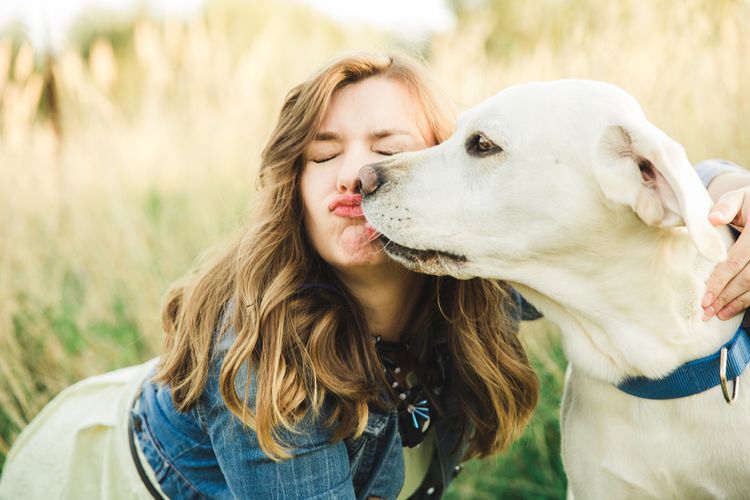
When a guest is present, a dog may increase its licking to show "I'm my human":
-
Prepare the command “no” or “stop”, use a calm tone
-
Stop contact, distract the dog
-
Reward when the dog behaves calmly
On a walk
If a dog tries to lick its owner's hands on the street:
-
Immediately give the command “come to me” and switch to the task (game, performing a trick)
-
Keep the leash slightly shorter to control the approach
-
Licking as a request for contact - do not ignore the need, but redirect it to another interaction
Common mistakes owners make that reinforce the licking habit
-
Gives in to affection immediately after licking - the animal receives positive reinforcement
-
The irregularity of prohibitions: sometimes they scold, sometimes they allow – disrupts behavior
-
Lack of alternatives: no games, mental stimulation, physical activity
-
Ignoring stress factors (hustle and bustle, noise, strangers)
-
They don't monitor their health: if the cause is physiological, behavioral modification won't help.
Table of approaches to behavior correction
| Approach | What to do | When to apply | Advantages / Limitations |
|---|---|---|---|
| Ignoring licking | Do not react, turn away, stop contact | with mild obsession | reduces reinforcement, but requires patience |
| Redirecting attention | Offer a toy, command, game | at the first signs of licking | quickly switches focus |
| Using the stop command | Enter one word: “no”, “stop”, “enough” | during training | subject to a training course |
| Positive reinforcement | Praise and give treats when he doesn't lick | constantly | shapes the desired behavior |
| Increasing incentives | More walks, games, mental tasks | Always | reduces "excess energy" |
| Medical examination | Checking for diseases, imbalances, deficiencies | with a sharp increase in licking | excludes physiological causes |
Summary and recommendations for owners
The behavior of "why does a dog lick its owner?" is multifaceted. It's not only a manifestation of affection, but also a means of communication, disinfection, marking, emotional connection, and even self-soothing.
To correct unwanted or excessive licking:
-
Monitor your dog's health (vitamins, gastrointestinal tract, pain)
-
Provide her with variety - walks, games, mental challenges
-
Be consistent in your response, enter commands, redirect
-
Don't ignore her emotional state, but guide her behavior gently.
-
If you suspect behavioral disorders or obsessive behavior, contact a specialist.
By incorporating these blocks, your article will become deeper, more comprehensive, and more capacious. You can integrate some of this material into existing sections, add interheadings, examples, stories, and images—and your text will be compelling, answering the question "why does a dog lick its owner" not only in everyday life but also in a popular science context.
If constant licking becomes a bad habit, you'll have to put in the effort to break it. This will require consistency, patience, and knowledge of an important training rule: an animal reinforces behavior that is rewarded. If it's not allowed to lick your face or hands, then no one else should, under any circumstances. To be successful, every family member must support the training process. Ignoring is a good approach in this situation, but avoid yelling or hitting. When your pet begins to show excessive affection, stop paying attention to it. If this isn't enough, you can leave it in another room. For animals that are familiar with commands, saying "no" or "no!" can also be effective.
It's important to remember that even a trained dog is not immune to emotions. After a long separation from its owner, it will likely lose control and joyfully rush to lick him from head to toe.
Read also:
- Why are commuter trains called dogs?
- How dogs helped people during the war
- Ultrasonic dog repeller: which is best?


Add a comment