
Why does my dog dig holes in my yard and what should I do?
Many owners notice that their pets seem to enjoy actively digging the ground with their paws. While some find this activity enjoyable, others find it a source of nuisance. Today, we'll discuss why dogs dig holes in the yard, what to do to stop this behavior, and whether it's even worth addressing.
Content
Why does a dog dig the ground?
There are many reasons why four-legged friends dig, so to understand why your dog is digging holes in the yard, just watch your pet for a while.
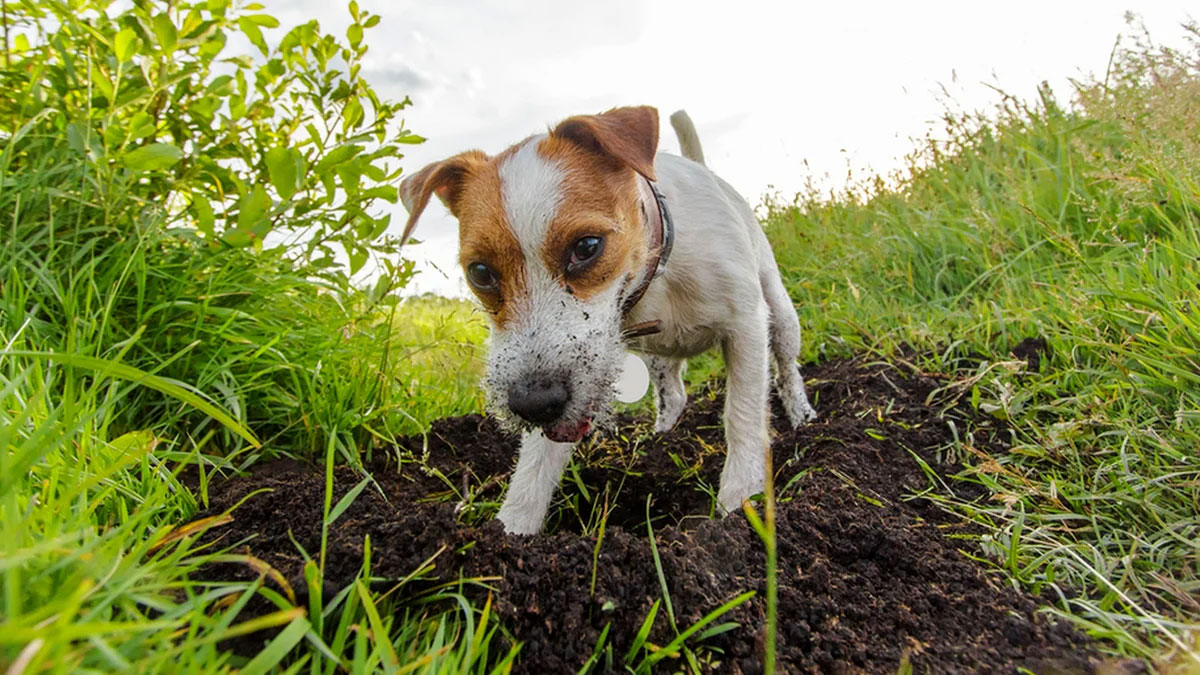
Among the most common reasons for this behavior, scientists highlight:
- physiological;
- instinctive;
- psychological.
Interesting fact! Unlike cats, dogs don't dig holes to relieve themselves.
Reason #1 – Active Entertainment
Many dogs really enjoy digging holes in the ground. If you watch your pet, you'll immediately notice that they're thoroughly engrossed in the process—they actively dig with their paws and nose, run around the hole, and may even add to the interaction by throwing a rock, stick, or other object into the hole.
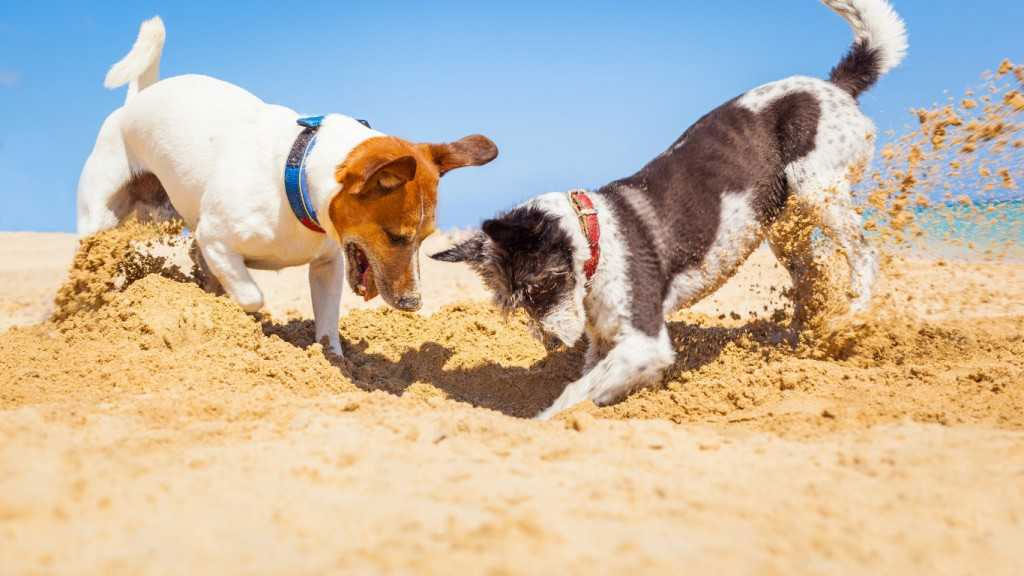
This kind of entertainment does not pose any threat to the animal's health, but many owners do not like it, as they have to regularly find time to clean up holes dug in front of the house, damaged flower beds, or garden beds in their garden.
Reason #2 – Cooling off on a hot day
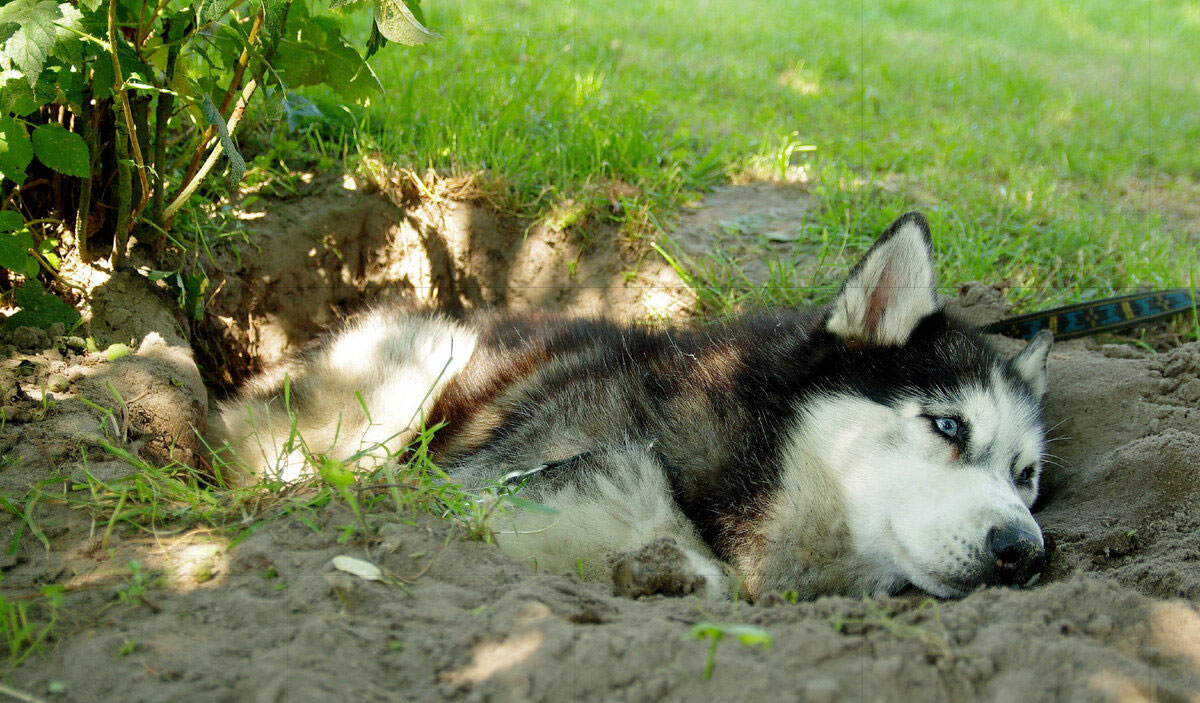
A dog living in the yard may dig a hole near the kennel or in a shady corner of the garden and then lie down to sleep in it during the midday heat.
This behavior is quite understandable, because in a freshly dug hole:
- safe (the dog has better control over the entrance to the owl shelter);
- cool (the ground at a depth of 30 m or more is damp and significantly cooler than on the surface);
- there is no wind.
Reason #3 – Digging a tunnel for escape
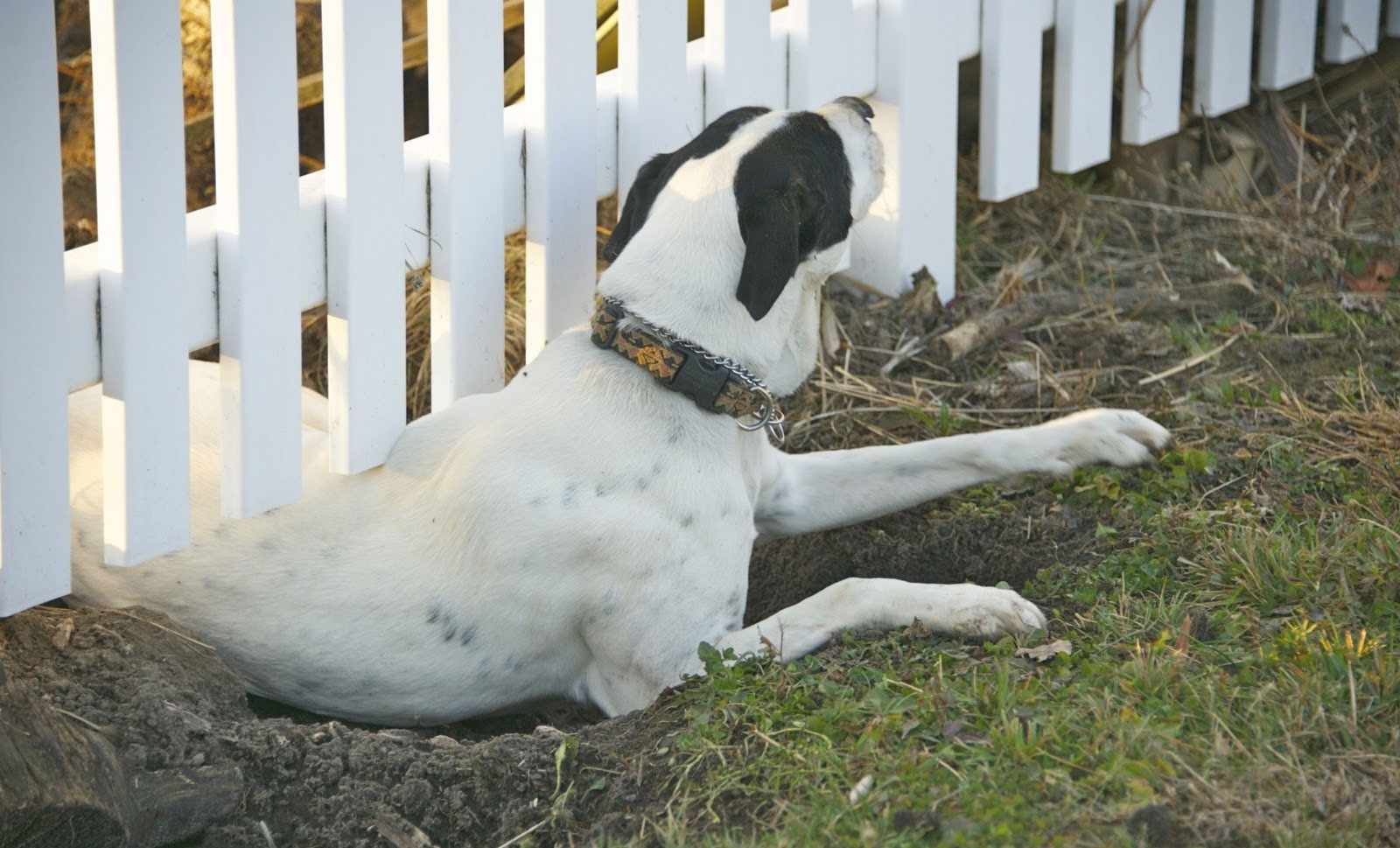
If a dog is kept in a pen or enclosed area, it may be strongly attracted to the space beyond the fence. Dogs may be especially active in their escape plans if they smell a "lady on the prowl" living in a neighboring property or even in a house far away.
Interesting fact! Dogs can detect a scent up to 1 km away from its source.
Reason #4 – approaching labor
In the last weeks of pregnancy, dogs may dig holes in secluded corners of the garden.
People don't always understand why a dog would do this when there's a cozy place prepared in advance by the owner. But instinct tells the expectant mother to dig a cozy nest for her babies, where she and the babies will be as safe as possible after birth.
Reason #5 – Tags
To mark, a dog doesn't dig a deep hole, but simply vigorously scratches the ground with its hind legs. This activity leaves a secretion on the ground, secreted by glands located on the inside of its paws.
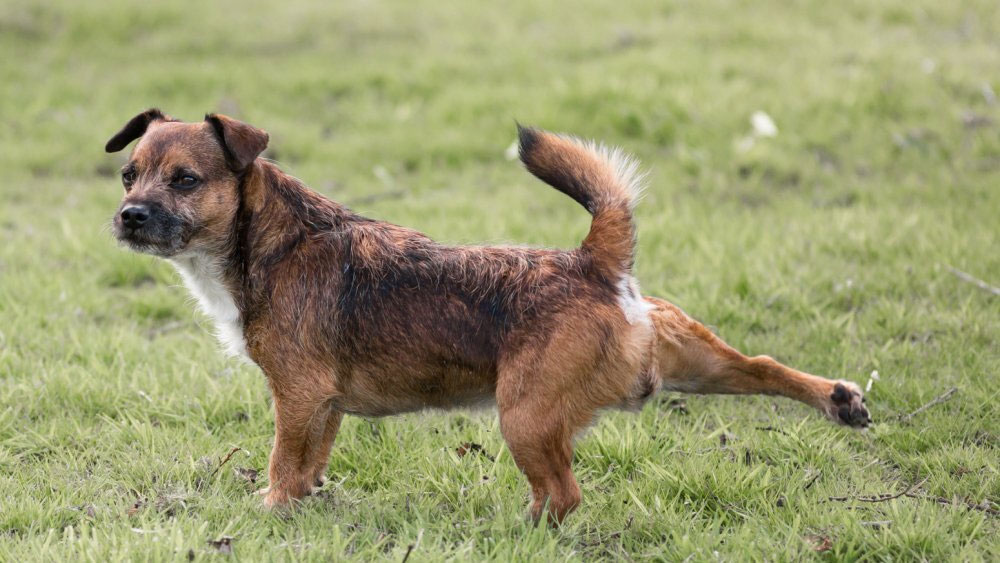
Interesting fact! Both sexes mark their territory in this manner.
Reason #6 – soil smell
The answer to why dogs dig holes in garden beds may lie in the fertilizer used. Often, the smell of organic fertilizer attracts animals, and they begin digging in hopes of finding its source.
The same reason can make a dog rummage around in flower pots that are in the house or on the veranda.
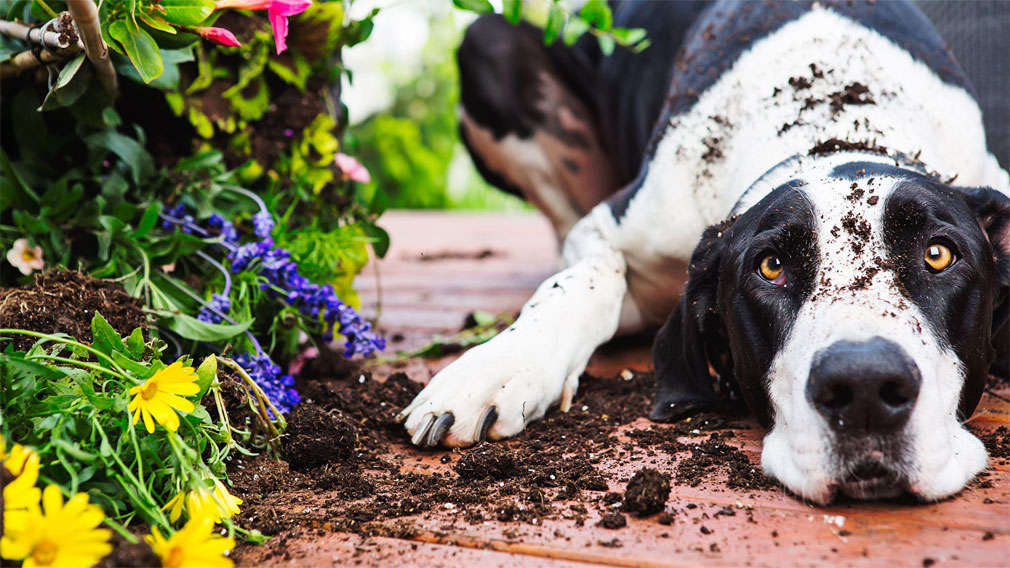
Be careful! Some types of fertilizers can be toxic to dogs or cause a contact allergic reaction.
Reason #7 – the desire to treat or hide food
A hungry dog with access to a bed of root vegetables may dig with abandon to get sweet young carrots.
In the wild, dogs also dig holes to hide toys or uneaten food (such as a large bone). Apartment-dwelling pets may similarly "bury" a precious morsel in their owner's bed, under the carpet, or in another hidden spot.
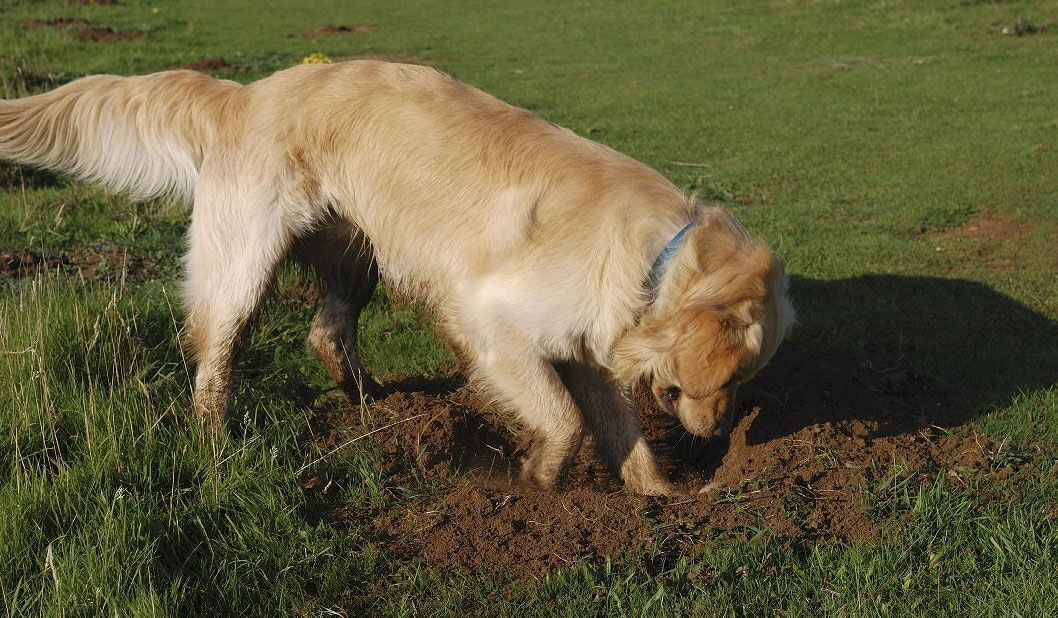
If you notice your dog digging the floor in your apartment or burying food in the garden, consider slightly reducing its daily portion and increasing its physical activity.
Reason #8 – The hunter instinct
Natural hunters may dig around the area to find a beetle, rodent, or lizard hidden underground.
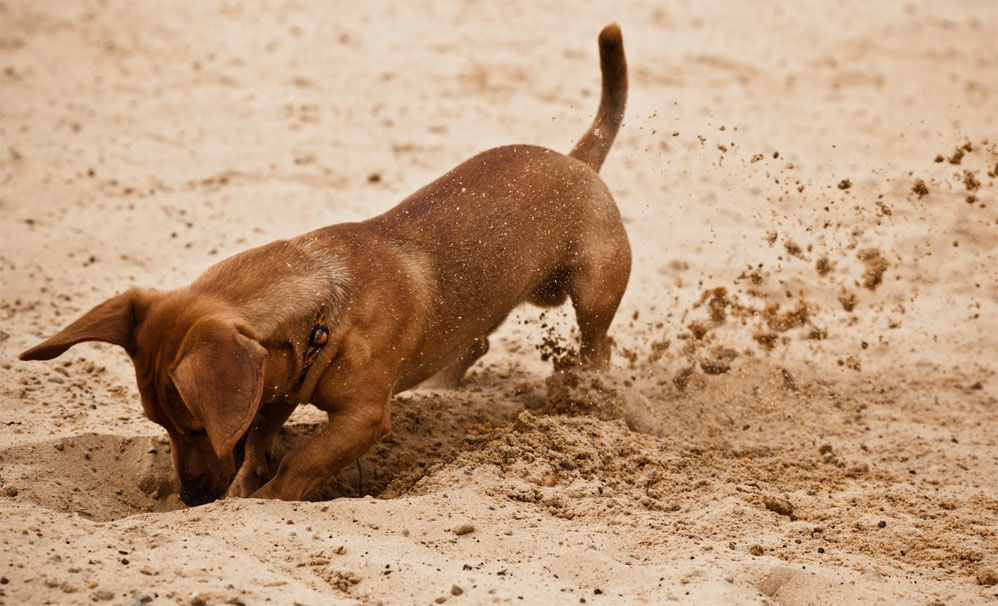
Breeds genetically predisposed to digging
Dog behavior is largely dependent on instincts, many of which are genetically determined in the breed's representatives, taking into account the centuries-old experience of their ancestors, who were used by humans to perform certain tasks.
The list of breeds genetically predisposed to digging includes almost all hunters (burrow dogs, hounds), terriers:
- Dachshunds;
- Beagles;
- Basset Hounds;
- Miniature Schnauzers;
- almost all Terriers;
- Kurzhaars;
- Griffins;
- Husky;
- Malamutes;
- Border Collie;
- Australian Shepherds.
If you are the owner of this breed, then the answer to the question of why a dog digs not only the ground, but also the floor in the apartment, is quite simple - it is an instinct ingrained over centuries.
How to stop a dog from digging holes
If you don't like your pet's behavior, you should first understand why your dog is digging holes in the yard or damaging your floors, and then decide what to do about it.
It is unlikely that it will be possible to completely wean an animal from digging if we are talking about a hunting instinct that has become ingrained and has developed into a persistent habit of entertaining itself with “digging”.
This is why it's best to use various methods to wean your dog off digging holes at an early age, as soon as you notice your pet's interest in this activity.
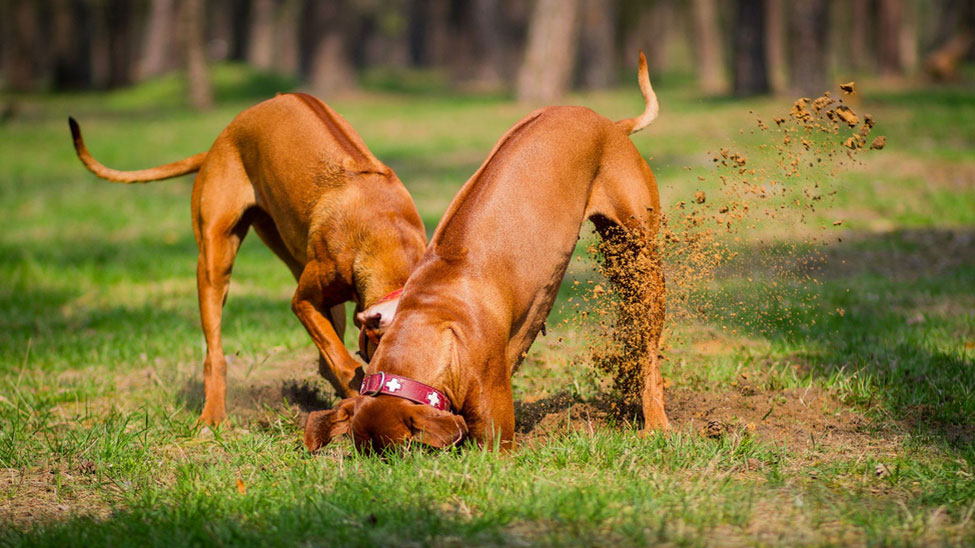
Breeders recommend trying the following methods to combat unwanted behavior:
- Training. Many hunting dogs happily enjoy digging in the woods or on the beach, but they don't damage lawns or garden beds at home, understanding that this is prohibited.
- Treating a plot of land or an area in an apartment with a product whose smell will repel the dog.
- Installation of fences on the site that will separate the areas permitted and prohibited for dogs.
- Create a floor in the enclosure that the dog cannot dig under, as well as a shaded area where the pet will feel comfortable during hot hours.
- Installing a fence with a foundation that your pet won't be able to dig under.
Breeders' Advice
Read also:
- My dog is biting its claws: why and what to do
- Why does a dog snore and what to do?
- What do dogs think about?


Add a comment