
Why does a dog ride on its butt?
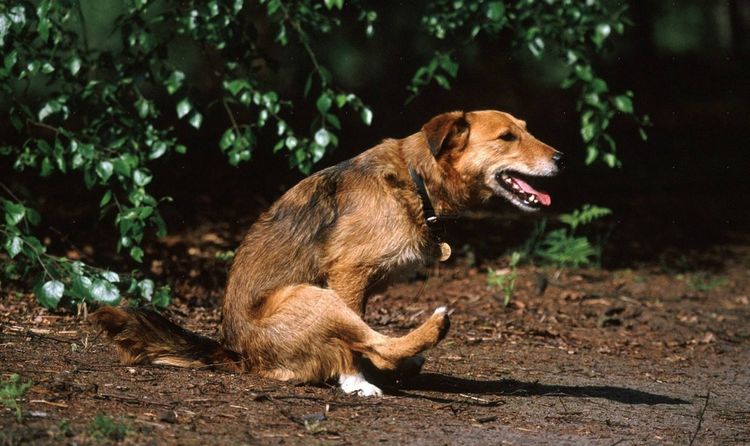
When a dog scoots, it's most often because of itching or pain. This can be unpleasant, especially when the pet "wipes" fecal residue on carpets or floors. However, there's no need to scold the animal for this behavior. It's far more important to consult a veterinarian and determine why the dog is scooting, as in rare cases, this symptom can be a sign of a serious illness, including cancer. However, there's no need to worry ahead of time—in most cases, this behavior simply indicates the animal's desire for cleanliness. Some clean dogs prefer to clean their anal area by rubbing it against a surface rather than using their tongue.
Content
Parasites
Even regular deworming A veterinarian cannot guarantee the absence of parasites in a pet's body. Tapeworms, roundworms, and other helminths can actively multiply in feces and cause severe itching in the anal area. If a dog scoots, it simply means they're trying to scratch a hard-to-reach spot and relieve discomfort.
To make a preliminary diagnosis, the owner should carefully examine the feces for white larvae and threads. If the initial diagnosis confirms a helminthic infestation, deworming with veterinary medications is necessary. Avoid experimenting with feeding your pet garlic or pumpkin seeds. A veterinarian or professional pharmacist will prescribe safe yet effective medications.
Sometimes, itching in the anal area can be caused by a flea infestation. This symptom can be most intense immediately after bathing the animal (the parasites seek dry spots and congregate on the face and genitals). Simply wash the dog with a special shampoo.
Problems with the anal glands
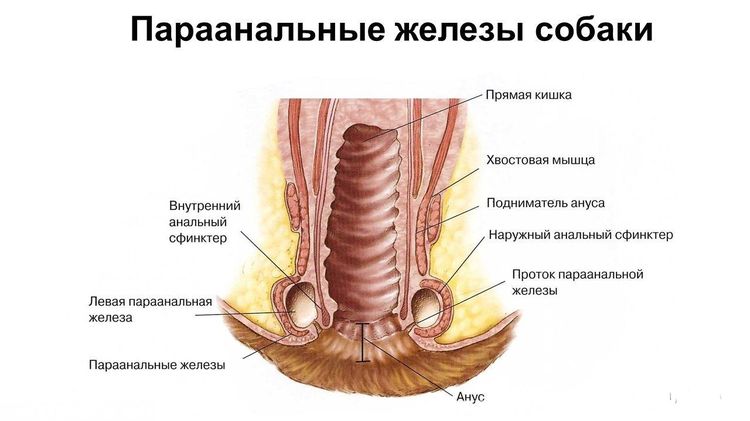
If a dog scoots but doesn't have worms, it's likely that the anal glands are blocked or inflamed. Small breeds are particularly susceptible to this problem. The anal glands are located on either side of the animal's anus and look like small sacs.
The skin sacs contain a special secretion used to mark territory and attract females. In a healthy animal, the fluid accumulated in the glands is released during defecation. However, sometimes the secretion accumulates within the sacs for a long time and begins to press on the surrounding tissue, causing discomfort. As a result, the dog tries to clear the glands by pressing them against a hard surface (particularly the floor). Sometimes, the animal may also rub its bottom against corners or walls.
The exact causes of blocked glands are unknown. However, the problem most often occurs after prolonged diarrhea. Additionally, the animal may begin licking the area under its tail and whining during defecation. If the owner notices small, symmetrical swellings near the anus, the first thing to do is gently apply pressure to them. You can also wash your pet with warm, soapy water. If the swelling does not subside within a few hours, consult a veterinarian. Ignoring the abnormalities can lead to infection of the fluid in the glands. Ultimately, a surgeon will have to remove them completely.
Rectal prolapse
Rectal prolapse is diagnosed when the outermost portion of the colon protrudes from the anus. This condition can develop after a dog has suffered from severe diarrhea or constipation for a long time. The animal will feel constant pressure in the anal area, causing it to instinctively try to push the protruding intestine back into place. However, treating such a serious problem on your own is impossible. It's essential to consult a veterinarian who:
- will straighten the intestine and suture the sphincter muscles to prevent recurrence;
- select a wet diet or medications to soften the stool (this will help reduce tension);
- will perform an operation to excise the lower part of the intestine if a relapse does occur.
If a lump is clearly visible under the dog's tail or the skin near the anus is swollen, any folk remedies are strictly prohibited. There is a small chance that cancer has developed.
Post-grooming dermatitis
Itching, restlessness, the dog squirming on its bottom, or trying to bite itself—if this condition appears immediately after grooming or a few days later, it's most likely post-grooming dermatitis.
Additional symptoms:The problem is most common in Yorkies and Pomeranians, as well as all breeds that are trimmed (wire-haired terriers, dachshunds, griffons, schnauzers). However, post-grooming dermatitis can occur in dogs of any breed if the pet was severely neglected before the procedure or if the grooming was performed incorrectly. Furthermore, some animals with very sensitive skin may react even to properly groomed dogs. These dogs require a personalized approach.
Trimming the genital area inevitably causes microtrauma (pulling a hair somewhere), and later, the trimmed hairs can prick the skin and cause significant discomfort. This is often the reason why a dog scoots on the floor or carpet. The pet begins licking the irritated area, creating a warm, moist environment favorable for the development of pathogenic microflora.
Diagnostics:Based on the results of an examination and interview with the owner by a dermatologist. Depending on the severity of the condition, additional testing (smear microscopy) may be necessary.
Treatment:The treatment is selected depending on the severity of the inflammation, which can be either local or systemic. Proper hygiene of the perianal area is essential, and antifungal, antibacterial, and antipruritic therapy are most often prescribed. Without timely treatment, the situation can become dangerous.
Prevention:Regular grooming by a trusted professional who knows your pet's needs.
One of the harmless reasons why a dog scoots is itching after a groomer's haircut.
Insect bite
Severe itching and attempts to scratch the back, the dog wiping its bottom on the floor or carpet - these symptoms can appear after an insect bite.
Additional symptoms:In short-haired and hairless dogs, redness and swelling at the bite site are usually clearly visible.
Diagnostics:is carried out on the basis of examination, palpation and anamnesis.
Treatment:Mosquito bites usually resolve on their own, but if a dog is stung by, for example, a wasp, medications to relieve itching and swelling may be needed. In some cases, a severe individual reaction can be life-threatening.
If you notice swelling increasing and the itching not subsiding, be sure to consult a veterinarian. Drooling and facial swelling require an immediate visit to the vet.
Prevention:use repellents, if possible, avoid places where mosquitoes, midges, wasps and bees congregate.
Sticking or getting foreign objects stuck in the anus area
In long-haired dogs, especially those with thick fur, seemingly unnoticeable objects can become lodged in the fur, causing constant irritation. These can include burrs, chewing gum, poplar buds, and other debris. Sometimes, after eating hair or thread, they can also become lodged in the anal area.
Additional symptoms:This problem is especially common in dogs with thick double coats, such as Spitz.
Diagnostics:based on the results of examination and palpation.
Treatment:Put on a glove and gently try to remove the foreign object. If this causes your dog pain or significant distress, be sure to consult a veterinarian. If your pet is crawling on the floor or carpet, carefully inspect its fur—sometimes a simple brushing or removal of stuck-on dirt can completely solve the problem.
Prevention:Timely grooming, a balanced diet, and making sure the dog doesn't pick up foreign objects on the street.
How to independently identify the cause of the deviation
Don't immediately schedule a vet appointment after your pet has "slid" on its bottom on the floor. It's quite possible your pet is simply removing feces stuck in its fur. First, try to independently identify the underlying causes of your dog's bottom-sliding behavior.
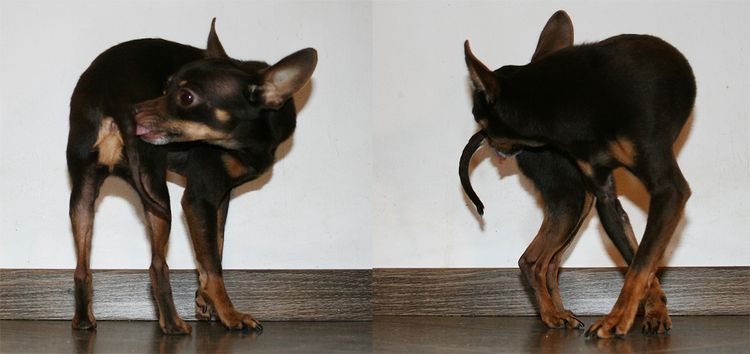
Put on clean rubber gloves and carefully examine your pet's rectal area. The anus and surrounding fur should be clean and free of any matted areas. Sometimes a dog scratches its buttocks simply because feces have caked the fur, causing a constant nagging pain. You should also carefully inspect and palpate the anal glands. Any growths or subcutaneous tumors should be a concern. Also, pay attention to any unpleasant odor coming from under the tail. A persistent putrid odor that persists even after washing the dog indicates an infection in the secretions.
If a small protrusion protrudes from the anus itself, this indicates a rectal prolapse. If possible, the animal's feces should be examined to rule out or confirm the presence of worms. Only a veterinarian can determine the type of parasite through analysis. However, the presence of tiny, white worms in the feces can help rule out other causes of itching.
Research in the clinic
Only a veterinarian can determine the exact cause of a dog's buttocks and prescribe treatment. During the first appointment, the specialist will assess the animal's general condition and conduct a thorough rectal examination. Sometimes a simple palpation is sufficient, but in more advanced cases, the specialist may perform a colonoscopy. If swelling of the anal glands is clearly visible, the specialist will collect a small amount of fluid for cytological examination. If subcutaneous growths of an unspecified nature are detected under the tail, a biopsy, ultrasound, and CT scan are performed. A comprehensive set of tests will help confirm or rule out cancer at the earliest possible stage.
Can anal itching be prevented?
Although discomfort under the tail isn't always a sign of a serious illness, it's important to pay close attention to preventative measures. First, owners of long-haired dog breeds should regularly check to ensure feces don't become tangled in the animal's fur. You can consult a groomer to trim off any excess. Regular deworming and anal gland flushing are also essential, especially for dogs that have previously been tangled. suffered from inflammationSimple hygiene procedures can help prevent many unpleasant illnesses and complications.
You can also ask our website's staff veterinarian a question, who will answer them as quickly as possible in the comments box below.
Read also:
- Paranal glands in dogs: treatment of inflammation, cleaning
- How often should a dog be dewormed?
- Skin parasites in dogs


17 comments
Anna
The dog is 4 years old. She's a Jack Russell Terrier. Eight months after giving birth, she started crawling on the floor and whining. This hadn't happened before. She was wormed. We went to the vet. She had the glands on her butt cleaned out. But she's crawling again! And she's started crawling on her butt more. There are no fistulas or wounds on her skin. Everything is clean. We feed her properly and walk her a lot.
Daria is a veterinarian
Hello! What exactly are you feeding? Is there fiber in the diet? Is it dry food only or natural food? If natural food, then vegetables should be introduced to stimulate intestinal motility. Have you seen inflammation and blockage of the anal glands? If not, there's no need to deworm them, as frequent deworming will lead to them becoming unaccustomed to emptying themselves and will cause them to become permanently blocked. Deworm them again as a preventative measure. If you dewormed them a month ago, that doesn't mean your pet is fully protected until the next deworming in two months.
Kate
Hello, we gave away a one-month-old puppy, a Baloon/Yorkie mix. He constantly scoots and whines, sleeps a lot, and eats little. There are no feces stuck to him, and we were told that their mother was regularly dewormed, so the puppies can't have parasites. There are no infections, but when I check on him, he starts whining and trying to vomit. His stool is sometimes loose, sometimes normal. Should I wait or take him to the vet?
Daria is a veterinarian
Hello! Definitely take your pet in for an in-person examination. Never take people's word for anything they've done themselves (dewormed, vaccinated), especially if they're from unscrupulous breeders. In 95% of cases (if not more), puppies and kittens are wormed. However! If your pet has diarrhea, don't deworm them. First, stop the diarrhea (diarrhea, not loose stools; this is very important), and then deworm. But still, take your puppy in for an examination to rule out infectious diseases. Deworm them, be sure to get a veterinary passport, and keep up with age-appropriate vaccinations.
Marina
The glands are clear, we saw the doctor. The cause is unclear.
Marina
Good afternoon. We dewormed our dog, and he started rolling around on his bottom. What's causing this?
Daria is a veterinarian
Hello! What exactly did you deworm? Was there a repeat deworming? How long after deworming did these symptoms appear? What are you feeding your pet? Is there any itching (maybe still itchy)? Is there loose stool or inflammation near the anus (reddened skin)? Did the parasites come out after the deworming? Have you ruled out the possibility of an allergen?
Catherine
Hello! My puppy is a month old and has started rolling around on his bottom and whining when he goes to the bathroom. I checked his stool and didn't see anything suspicious. Since he's still young, I can't take him to the vet. What could it be?
Daria is a veterinarian
Hello! Forgive me, but this is nonsense and the excuse that the animal is small and therefore can't be taken to the vet. It's precisely because the animal is small that it should be the first to see a vet! Newborns are rushed to the pediatrician or called to the house at the slightest problem, so why should a puppy be any worse? You didn't specify his age. But if he's about six weeks old, then you should start by deworming him. He's squirming on his butt because of the itching. This often happens when the animal has hookworms, which lay eggs in the perianal fold.
Diana
The dog once slid on its butt. We adopted it recently, and the breeder claims it's been fully vaccinated and dewormed. There doesn't seem to be anything suspicious under its tail, and it's never done that before.
Is it possible that he was simply removing the remaining feces in this way?
The stool is normal, we feed Proplan
Daria is a veterinarian
Hello! I'll be blunt but honest: never trust breeders' words. Does the animal have a passport with a note indicating deworming? And it shouldn't just be a note, but one certified by the signature and seal of the institution/veterinarian (if they're a sole proprietor). If there's nothing like that, then you can safely assume nothing happened. Test the animal yourself, but use a good, broad-spectrum product (for both tapeworms and roundworms). Trust only what you've done yourself! If the symptoms persist, we'll look for another cause.
Irina
Hello, my dog is sliding on his bottom on the floor and has a large red spot in his groin. What should I do?
Daria is a veterinarian
Hello! So, what should we do? Take him to the vet. We're ruling out worms, an allergic reaction, and inflammation of the anal glands, for starters. What's this spot? What does it look like? A large spot doesn't appear in one day; it always gets bigger gradually. How long has it been like this? What are you feeding him? How long has it been since he was treated for parasites? Is there any inflammation/redness/discharge near the anus? In one case, deworming will help; in another, a change in diet or discontinuing certain vitamins/supplements/medications; in a third, antibiotics or surgery. As you can see, there are many possibilities. And we can't rule out this: the squirming on the butt and the red spot are unrelated, and these are completely different problems for the animal.
Nina
Hello. My Chihuahua puppy sometimes scoots, but more often he chews himself and has developed dandruff. What could this be?
Daria is a veterinarian
Hello! Have you dewormed your puppy? What are you feeding him? Is there any inflammation near the anus? It's possible the anal glands are clogged, since it's bothering the puppy. But these symptoms are most often associated with worm infestation.
Karina
Hello, a week ago I gave my Chihuahua puppy Helmimax, and today I noticed that he tried to move his bottom on the floor several times. Please tell me, does he have worms despite the deworming medication, or could it be something else?
Dasha is a veterinarian
Hello! This is why anthelmintics are administered twice, separated by 10-14 days. The first administration kills adult parasites that can reproduce, while the larvae and intermediate stages remain in the animal. A second administration kills the mature parasites (larvae develop into adults within 10-14 days, but are not yet capable of reproduction). This means that the second administration of the anthelmintic kills all parasites sensitive to the active ingredient. If you suspect your puppy has parasites after administering the medication once, be sure to repeat the deworming treatment! Also, check to make sure you've administered the correct dosage (not too low, and that the puppy has taken the full dose).
Add a comment