
Why does a dog eat dandelions?
With the arrival of spring, dog forums inevitably start asking why dogs eat dandelions. What's so appealing about these yellow flowers, given that there's so much other vegetation around?
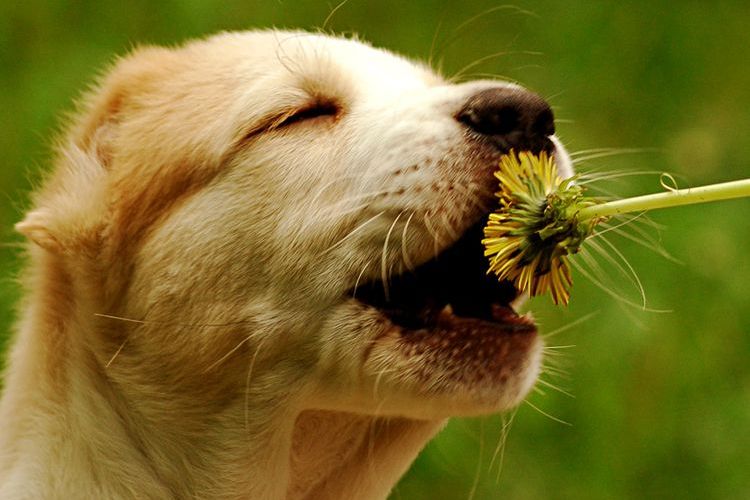
Grass in dogs' diets
While humans seek vitamins in vegetables, fruits, and greens, dogs graze on the lawn for a completely different reason. They don't play with the grass, don't try to extract vitamins from it, which are already abundant in their food, and don't brush their teeth; they simply address internal organ problems. Dogs are predators by nature and know when it's time to heal, so their stomachs are always ready to accept coarse food.
- Cleansing the body. Common wheatgrass is suitable for this purpose. The dog tears it with its teeth and swallows it almost whole. Once in the stomach, the unchewed grass irritates the stomach lining, triggering the gag reflex. This is how the animal gets rid of undigested food.
- Bowel cleansing. Grass is a source of fiber and water, essential for normal bowel function. By grazing on grass, dogs regulate their bowel movements. To prove this, an experiment was conducted: some animals were fed a diet that stimulated bowel upset, while others were fed regular food. These dogs were the ones who couldn't tear themselves away from the grass during walks.
- Unusual taste preferences. Some eat plain lawn grass, others only like flowers, and still others seek out plants with a strong scent.
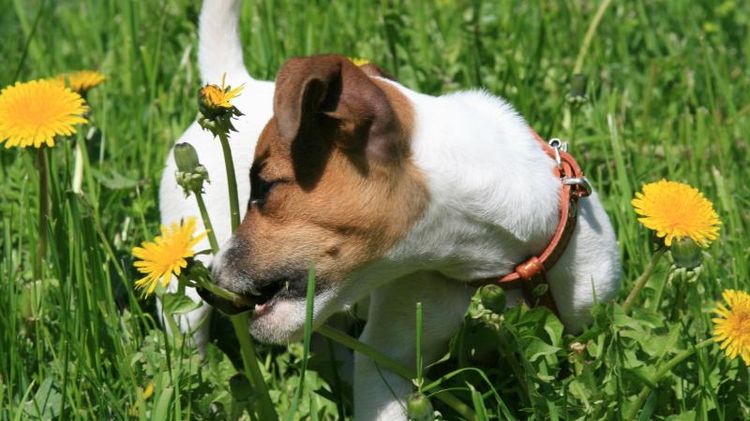
Beneficial properties of dandelion
If a dog eats it, it's normal. This plant is beneficial not only for animals but also for humans.
- Dandelion is rich in calcium, so don't worry if your puppy frolics in the yellow meadow. This way, your little pet gets an extra dose of this bone-healthy mineral.
- Dandelions are a source of luteolin, a flavonoid that inhibits the growth of cancer cells. This is why dandelions are safe and appropriate for older dogs.
- A treasure trove of antioxidants. If your dog grazes on a lawn with dandelions and eats them in large quantities, have your pet's liver examined. It's possible the animal is trying to normalize bile flow and improve digestion. These flowers are especially beneficial during medication treatment.
- Dandelion is a natural diuretic. Its leaves contain substances with diuretic and disinfectant properties. If your dog eats the flowers, watch how they urinate afterwards.
- Contains pectin and gallic acid, which have antidiarrheal properties. If your dog has loose stools, then she can eat dandelions in unlimited quantities.
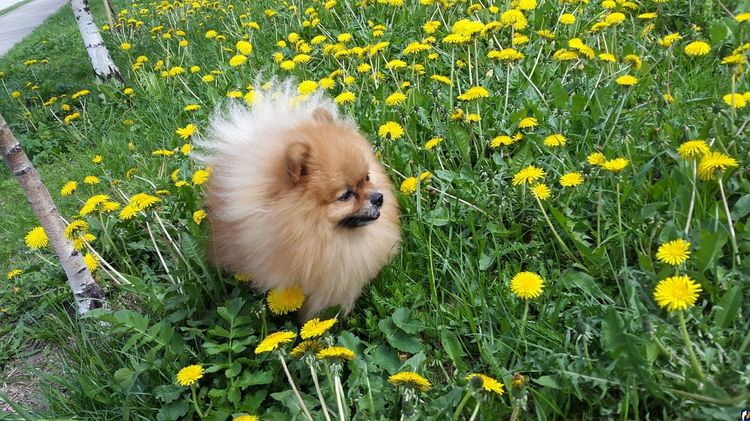
- Dandelion is rich in iron in its chemical composition. The leaves contain especially large amounts of this element. It's possible that the animal is starting to anemiaThe dog becomes less playful, its fur becomes dull, its mucous membranes become pale, and its appetite decreases. Iron deficiency anemia in dogs is generally rare, but if your pet eats dandelions, have it checked by a veterinarian to avoid more serious blood problems.
- A natural antidepressant. The juice of this plant contains magnesium, which has a positive effect on the nervous system. Perhaps the dog is trying to perk up with dandelions.
- Anthelmintic meansBy eating yellow flowers, the animal self-medicates and gets rid of parasites.
How to give dandelion to a dog
- Be mindful of where you walk. To ensure the plant retains all its beneficial properties, lawns with bright yellow flowers should be kept away from roads.
- Your pet may eat both leaves and flowers. This shouldn't be a concern, as different parts of the plant contain different substances. The only thing to watch for is the color of your pet's stool.
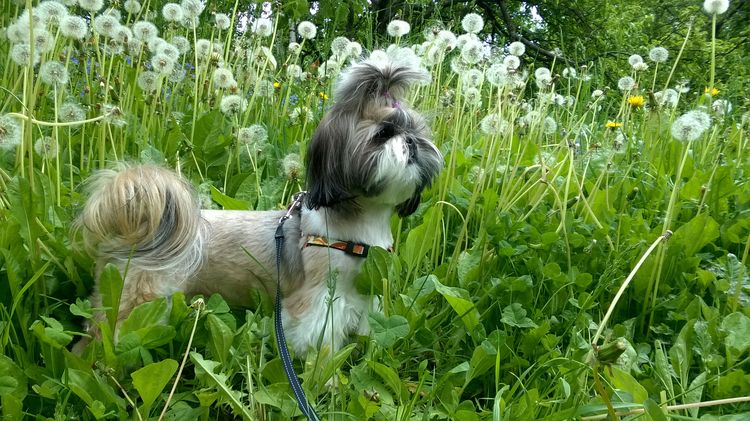
- The plant's roots contain many beneficial substances. It's often compared to ginseng root. Be careful not to let your dog dig or eat the roots along with the soil. It's better to dry the root and add it, crushed, to your pet's food.
- You can also dry the leaves. The powder will retain all the nutrients. Dogs are unlikely to eat freshly cut leaves, and slightly wilted leaves are better for digestion.
- If you want to preserve the herb for future use, pick the leaves before flowering. They have a less bitter taste and are where all the beneficial properties are concentrated.
- The plant's juice is beneficial for nursing female dogs. Both the leaves and decoctions can be given.
- It is not recommended to feed freshly cut stems and flowers, as they secrete a white milky substance containing a rubbery emulsion. High concentrations of this milky substance in the intestines can cause spasms.
- The nutrient content of the herb varies depending on the season. For cleansing the body, it's best to use the spring harvest; in summer, the juice has the highest vitamin concentration, and as autumn approaches, inulin is produced, making dandelion a natural probiotic.
Read also:
- Dog Eats Its Own Poop: Why and What to Do
- Why does the dog eat dirt?
- Why and what for do dogs eat grass?
We recommend


1 comment
Irinka
Our Biglusha crunches dandelions with great pleasure, both yellow and parachutes.
Add a comment