
Why is my dog breathing rapidly and what should I do?
Every owner should be able to quickly assess their pet's condition, so today we'll discuss the physics of breathing in animals. In this article, we'll explore in detail why dogs sometimes breathe rapidly, what may be causing shortness of breath, what can be done at home to alleviate the condition, and what symptoms indicate the need for emergency care.
Content
Physics of breathing
The dog's respiratory system is designed to supply tissues with oxygen and remove waste products from the body, and consists of:
- upper respiratory tract - mouth, nasal cavity, pharynx and upper segment of the larynx;
- lower respiratory tract – the lower part of the larynx, trachea, bronchi and lungs.
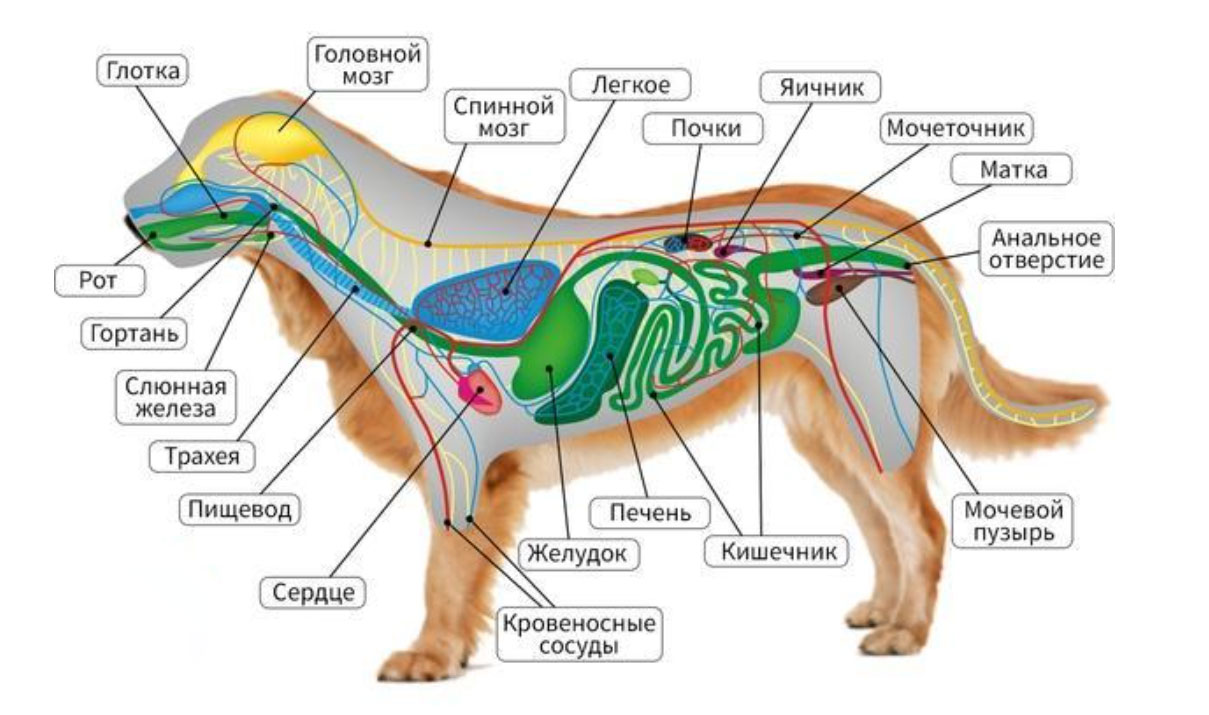
Breathing is one of the body's vital functions, the disruption of which affects the functioning of the cardiovascular, nervous and endocrine systems, and in severe cases can lead to the death of the animal.
That is why, if you notice rapid breathing in a dog or other disturbances, it is worth finding out the cause of this symptom.
Respiratory disorders that occur in dogs of any breed include:
- reverse sneezing;
- snorting through the nose;
- tachypnea (the dog breathes rapidly);
- shortness of breath;
- heavy breathing and wheezing;
- weak, shallow breathing;
- respiratory arrest.
In this article, we'll discuss tachypnea specifically and explore why dogs breathe rapidly while at rest and where the line between normal and symptomatic breathing is drawn.
Normal respiratory rate
A dog's respiratory rate is measured at rest. Normally, it ranges from 14 to 30 times per minute.
Such a wide range of the norm is established taking into account the fact that the respiratory rate may differ in different animals, taking into account the following factors:
- age (the puppy breathes faster than an adult dog of the same breed);
- size (small breeds have a higher breathing rate, so a Pomeranian or York breathes more often than a Shepherd or Retriever);
- gender (in females, breathing is faster);
- body positions (it is more difficult for a dog to breathe when it is lying down or sitting than when it is standing);
- environment (in hot weather breathing becomes more rapid);
- states of the nervous system (when a dog is nervous, its breathing quickens);
- health conditions (There are many diseases that cause a dog to breathe heavily or have some difficulty breathing).
You can also measure your dog's respiratory rate at home by laying them on their side. Important! Your pet should be resting (preferably even sleeping). Count the number of breaths taken in 30 seconds by counting the number of breaths taken in 30 seconds, then multiplying the result by 2.
For more information on how to calculate a dog's respiratory rate, watch this video:
https://www.youtube.com/watch?v=iKhT04PN6ig
If you notice a warning sign, it's important to understand why your dog is breathing rapidly, so as not to miss a dangerous illness. Often, prompt treatment can save an animal's life and allow it to live a normal life, despite the diagnosis.
Rapid breathing
Tachypnea (polypnea) is a medical term used to describe an animal's condition that occurs due to rapid breathing.
Rapid breathing usually manifests itself with the following symptoms:
- the dog breathes frequently with its mouth open and its tongue hanging out;
- greedily gasps for air with his mouth, licks his lips due to dry mucous membranes;
- the nostrils flare strongly when breathing;
- periodically takes deep breaths through the mouth or nose;
- breathing may be noisy and hoarse;
- the pet rushes about, cannot find a place for itself (tachypnea can cause panic attacks);
- the heartbeat quickens (tachycardia occurs);
- Paleness of the mucous membranes may occur (due to lack of oxygen);
- Manifestations from the nervous system are also possible (sometimes it happens that during an attack the dog trembles slightly or shakes its whole body).

Although it may look scary when a dog is shaking and breathing rapidly, tachypnea is not always a symptom of a dangerous disease.
Harmless situations
There are situations in which rapid breathing is a normal variant for animals.
Brachycephalic type
Breeders and veterinarians know that brachycephalic dogs (Pugs, Boxers, Pekingese, and other dogs with flattened faces) often suffer from breathing problems. But inexperienced owners may be surprised to learn that their dog may snore, breathe heavily, and sniffle at night while sleeping, or even suffer from shortness of breath during the day, as well as a number of more serious problems.

Why this happens we describe in detail in the article “Brachycephalic syndrome in dogs".
When tachypnea is a disease syndrome
Important! Understanding why a dog is breathing heavily, wheezing in its sleep, shaking with rapid breathing, or tiring very quickly during exercise is only possible through a thorough examination.
The symptoms of many truly dangerous diseases are not clearly expressed (especially in the early stages), and modern diagnostic equipment is often required to make a diagnosis.
In veterinary medicine, all diseases accompanied by rapid breathing are divided into respiratory (affecting the upper or lower respiratory tract) and non-respiratory (the cause of which lies outside the respiratory system).

Dangerous symptoms
It is important to take your animal to the clinic as soon as possible if any of the following symptoms are observed along with rapid breathing:
- there was an injury;
- the dog is shaking violently;
- there is nausea or vomiting (the pet constantly licks itself, vomits);
- there is diarrhea (especially in puppies and weakened elderly individuals);
- a cough appears (the dog tries to regurgitate phlegm);
- decreased appetite or refusal to eat;
- there is severe fatigue;
- the dog drinks a lot, and the volume and frequency of urination also increases;
- the pet walks poorly and loses coordination of movements;
- The mucous membranes in the mouth have a pale or bluish tint.
A visit to the doctor should be immediate if similar symptoms are observed in a small puppy, a dog after birth, or an animal already suffering from chronic diseases.
Read also:


Add a comment