
Why you shouldn't kiss cats
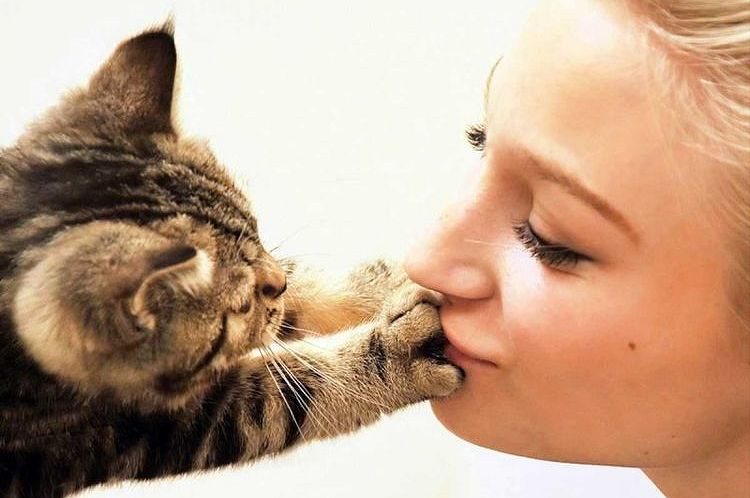
Some cat owners' love for their pets is so intense that they're even willing to kiss them. However, such affection can lead to unpleasant consequences.
Content
Health hazard
Although cats are considered among the cleanest animals, they carry a host of pathogens on their fur. Even if a pet was acquired from a reputable source with all the necessary health documents, never leaves the apartment, and currently appears healthy, it can still transmit dangerous diseases to humans.
Doctors warn that some diseases in rare cases lead to disability, and sometimes even death!
Toxoplasmosis
The most common "reward" you can get from over-loving your cat. The infection is caused by parasites called toxoplasmaThe disease manifests itself as redness of the eyes, nasal discharge, and bowel upset.
When first exposed to parasites, a cat suffers from fever, coughing, shortness of breath, trembling paws, and purulent discharge from the eyes. Regardless of the stage of the disease, the animal can infect humans. Once in the human body, the parasites multiply and destroy brain cells and internal organs.
The initial symptoms of toxoplasmosis are similar to those of a cold. Chronic symptoms include abdominal pain, changes in heart rate, memory loss, apathy, decreased performance, a fever of up to 37.5 degrees Celsius, visual impairment, dizziness, menstrual irregularities, and impotence. Toxoplasma is especially dangerous for pregnant women, as the parasite can penetrate the placenta and cause malformations and/or death of the fetus, as well as miscarriage.
Felinosis
Not all cats enthusiastically accept kisses from their owners; some may scratch or bite in response. If the skin is affected, felinosis (also known as cat scratch disease). The pathogens are present in the mucous membranes of a cat's mouth. It takes up to 40 days from the moment of infection to the appearance of the first symptoms. Initially, a rash appears at the site of the scratch; after a few days, the pimples fill with pus, and after a couple of weeks, the lymph nodes enlarge and become painful.
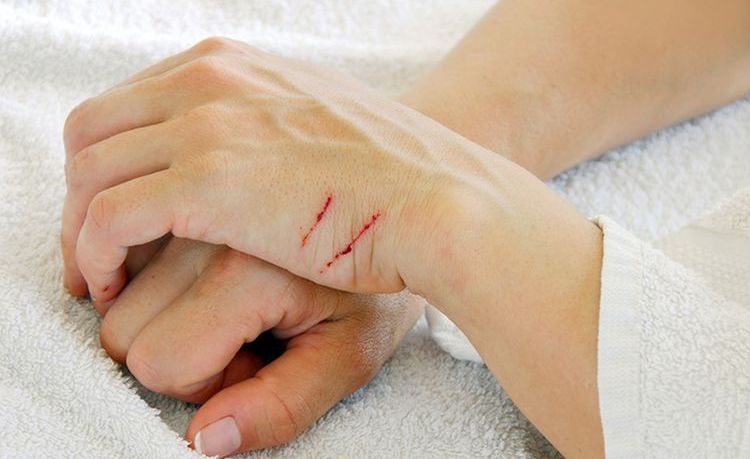
All of this is accompanied by headaches, fever, and chills. The illness usually resolves on its own after some time, but complications are possible in rare cases.
Infection through wounds and scratches
If your pet licks the wound, it's a separate risk. Saliva contains bacteria that can causecellulite,sepsisand other serious infections, especially if a person has a weakened immune system
Salmonellosis
You can also become infected with such a dangerous disease as salmonellosisThe infection is caused by a microorganism that remains viable for up to six months. It is not affected by ultraviolet radiation and is killed only by high (at least 100 degrees Celsius) and low (below -85 degrees Celsius) temperatures, and by treatment with aggressive disinfectants (but only after 20 minutes). An animal may be infected by vomiting, diarrhea, lethargy, irregular heartbeat, and salivation. Young animals typically have a severe case of the disease, while adults experience a milder course.

In humans, symptoms of salmonellosis include fever, abdominal pain, upset stomach, dizziness, and a coated tongue. There are three types: asymptomatic, generalized, and septic (the most dangerous) salmonellosis, which can be fatal if left untreated.
Helminthiasis
As a token of gratitude for a kiss, a domestic cat may give the cat helminths. Kittens are especially dangerous, as various parasites are especially prone to infestation in young animals. If a pet eats a lot but fails to gain weight, but instead rapidly loses weight, this is one sign that uninvited guests have taken up residence. Symptoms of infection also include lethargy, bowel changes, hair loss, bloating, and more.

Skin rashes and swollen lymph nodes indicate a helminth infestation. If left untreated, nausea, abdominal pain, gastrointestinal problems, enlarged internal organs, and joint and muscle pain are possible.
Ringworm
Representatives of long-haired breeds often suffer from a disease known as ringwormFungi remain dangerous for up to 5 years. The first symptoms are redness and a rash on the pet's body. These then develop into spots and crust over. After this, hair stops growing in the affected areas, and oily scales appear on the skin. The affected person appears lethargic and tired, and if not treated promptly, humans can become infected. Children under 14 and young women are most vulnerable.
Rabies
Of course, it's unlikely that any sane person would think of kissing stray cats, but it's still worth warning. Stray animals are often carriers rabiesThis dangerous disease kills approximately 55,000 people worldwide each year. The most frightening thing is that there is still no vaccine for it. It is transmitted primarily by dogs, but felines can also be carriers. It is transmitted through saliva from a bite or by contact with broken skin. If such contact occurs, rabies vaccination is required immediately.
Psychological comfort of the pet
Cats can perceive kisses as an annoying intrusion. The face is an extremely sensitive area, and excessive physical contact can cause stress, aggression, or fear. An alternative is an "air kiss": a slow gaze, blinking, and affectionate words—cats read this and perceive it much more calmly.
Folk beliefs
Superstitious people believe it's forbidden to kiss cats because they possess mystical powers. According to legend, kissing a cat even once on the face will cause the person to be possessed by the evil spirit that inhabits the cat. After this, the person becomes a hostage, a slave to the cat. They will be unable to love anyone, will lose strength, will become depressed, and will be willing to commit any act, even the most reckless, for their pet.
Fun fact: In the US, parents tell their children that if they kiss a cat, they will wake up in the morning and find they have whiskers!
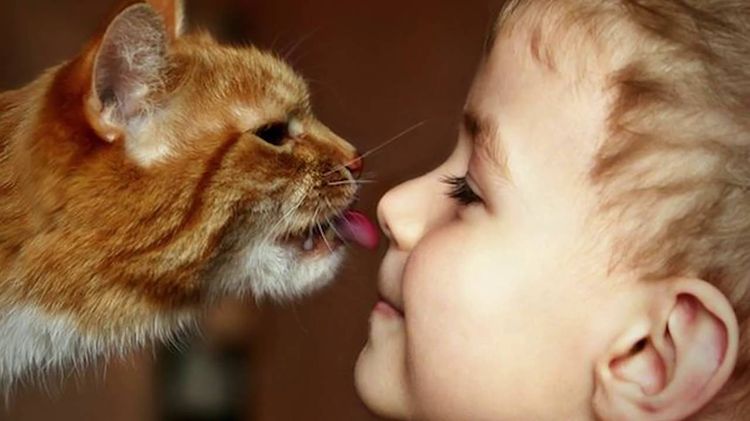
There's another superstition that, once you learn about it, you're unlikely to want to kiss a cat. The fact is that people who forcefully kiss a cat can anger it, and in revenge, it will start doing harm—missing the litter box, disturbing your sleep, and damaging things.
Chart: Additional risks of kissing a cat
| Cause | Problem or effect |
|---|---|
| Latent infections | Campylobacter, Giardia, and MRSA can be transmitted even from a healthy-looking cat. |
| Capnocytophaga (meningitis) | Infection is possible through saliva, especially from kittens. |
| Infections without symptoms | Toxoplasmosis, cryptosporidiosis, salmonellosis - often hidden, but dangerous when kissed |
| Licking the wound | Risk of parasitic and bacterial infections, including sepsis |
| Violation of psychological comfort | A cat can sense stress and react defensively. |
Practical recommendations for owners
To avoid risks, you can follow these rules:
-
Don't kiss a cat on the face, especially in the area of the mouth, nose and eyes.
-
When hugging or being affectionate, choose less sensitive areas, such as the back or ears.
-
If you lick the wound, wash the wound and consult a doctor.
-
Pet care should include parasite prevention, diagnostics, and vaccinations, especially if you have children, elderly, or pregnant pets with you.
-
Teach children hygiene: after contact with a cat, be sure to wash your hands.
How to avoid unpleasant consequences
Even if you don't kiss cats, there still exists danger of infection one of the listed infections. However, there are several measures you can take to protect yourself and your loved ones:
- Don't forget to take your pet to the veterinarian regularly to diagnose the disease in its early stages. Regularly give it antihistamines and treat skin irritations. parasites (fleas carry many diseases). Get vaccinated.
- Don't spoil your pet with raw meat; choose food responsibly, opting for high-quality food from trusted brands.
- Do not tease animals, especially when they are eating or sleeping.
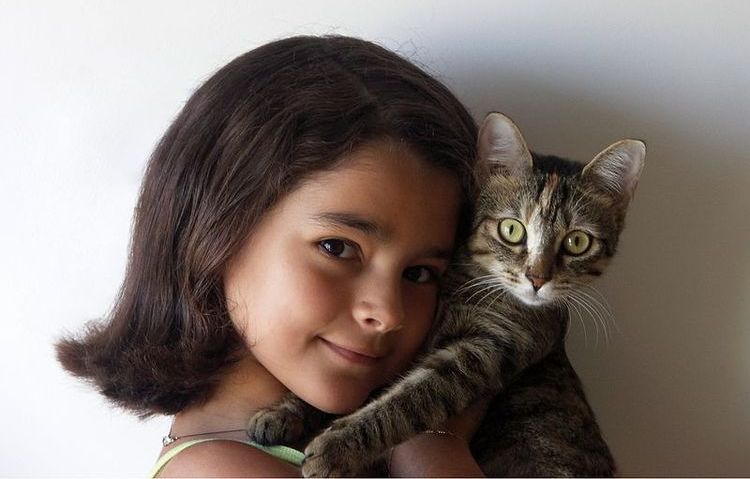
- Don't be aggressive towards your pet – don't yell at it, hit it, or swing at it. Make sure children don't pull its tail or poke objects in its face.
- Clean the cat's litter box daily, always wearing gloves. Afterward, wash your hands thoroughly with antimicrobial soap.
- Regularly wet clean the hallway – the soles of your shoes can carry a lot of germs into your apartment, which your little brothers are so vulnerable to.
Even if all these recommendations are followed, there are groups of people who are advised to minimize contact with cats. These include: newborns, pregnant women, HIV-infected individuals, those undergoing or recently undergoing chemotherapy, and those taking anabolic steroids.
Video About why you shouldn't kiss cats:
Read also:
- Signs of rabies in humans after a cat bite
- Opisthorchiasis in cats
- Scabies in cats: symptoms and treatment


6 comments
Alena
Such nonsense...with kisses and mysticism...I'm completely nuts
Even a fool could understand the whole thing, about bacteria and all that. Well, excuse me, kids play in the sandbox and we walk barefoot on the beach. And what, do we disinfect our feet? Right there... everyone's so sterile, it's sickening. I wish we lived on another planet, far away, from all those who love our planet and animals. We've always kissed our pets, and we always will. They're such neat freaks, unlike some members of the human race.
Natalia
I got ringworm from a stray kitten, nothing special. It was easily treated with terbinafine ointments. My husband, who was laughing at the "ringworm team," slept with me the whole time, and the kitten slept on him. My husband didn't get sick at all.
Daria is a veterinarian
Hello! I also had a case of ringworm as a student, due to my inexperience =) The kittens I picked up also gave me spots. When my boyfriend applied the ointment to my back, he laughed and called me "my leopard." He didn't care, but I got infected. My immune system is weak, so I caught it. Now, unlike my colleagues, I'm comfortable working with ringworm; immunity after recovery lasts up to 7 years =) That's why I'm the first to examine animals suspected of being infected; not only will I avoid getting it again, but I'll also "renew" my immunity. It's been almost 10 years since I had ringworm, and I've seen hundreds of patients with ringworm, and not a single relapse. But owners often bring their pets because their children get sick. Then we find out who brought the infection home from their pets.
Tamara
In the section on rabies, the author writes that a vaccine hasn't been invented yet. At the same time, he explains that if you've been in contact with a rabid animal, you need to get vaccinated. And a vaccination is a vaccine. The author needs to be careful in expressing their thoughts correctly. Otherwise, the author doesn't have the necessary training.
root
The author probably wanted to say that treatment methods for those already ill have not yet been found, and a vaccine against rabies has existed since 1886.
Catherine
Safety precautions: "give your pet antihistamines regularly"—I hope that's a mistake? Perhaps they meant anthelmintics?
Add a comment