
Science and Mysticism: Why You Shouldn't Look a Cat in the Eye
Many have heard, more than once, that you shouldn't look into a cat's bottomless eyes, but few people consider why. Let's take a closer look at all the reasons why you shouldn't stare into a cat's eyes.
Content
The main reasons why you shouldn't look a cat in the eye
All the main reasons for this statement can be conditionally divided into two main groups, so to speak, by meaning:
- Scientific
- Mystical
Let's discuss each of these groups in more detail and find out all the reasons behind this unusual sign.
Scientific justification
Everyone knows that cats are notorious predators that live in prides in the wild. Domestic cats, although they lack large packs, have retained all the habits and behavior of their wild relatives. Thus, it becomes clear that the behavior of different pack members signifies very specific intentions.
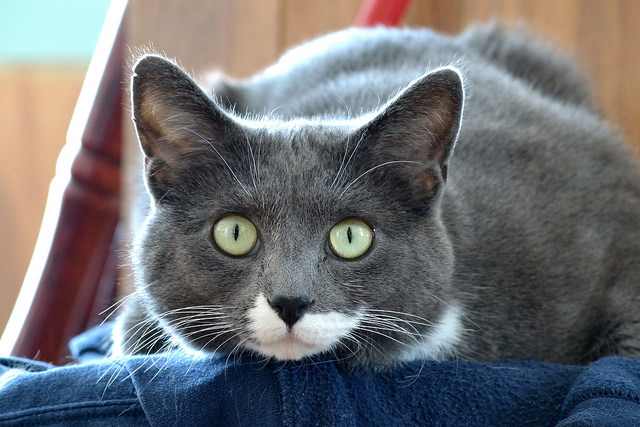
Let's imagine that your pet perceives you and your family members as fellow big cats, sharing the same territory. Wild cats in a pride always have a dominant animal, the dominant one who owns the territory and guards it, receiving all the females in return. Similarly, your domestic cat seeks his place in the pack—he may mark his territory or show off his temper.
This brings us to the main reason why you shouldn't look cats in the eye: they perceive a direct, unblinking gaze as an open threat or a challenge to a fight. Think of stray cats during a fight – they stare at their opponent, even while moving, because looking away means they've conceded defeat. Incidentally, using this technique can show your pet who's boss and break their stubborn streak. By winning a staring contest, you'll establish your dominance and dominance, and the cat will have to accept that humans are the boss in the house.
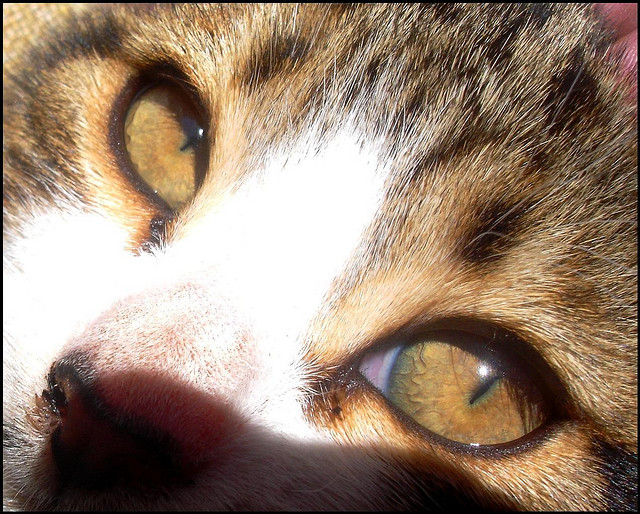
However, sometimes a cat responds to a direct, piercing gaze with outright aggression—as in nature. In this case, the cat may scratch you, believing you're about to attack, and may attack first.
But not all cats react aggressively to prolonged human gaze: if it comes from a loving and cherished owner, they may stare back for a long time. When a pet no longer enjoys or becomes bored with this activity, they simply avert their gaze or move to another location. It's worth noting that a properly trained cat, loved and cared for by its owners, is incapable of causing them any harm, either overtly or covertly, even if the gaze directed at it is unfriendly.
Therefore, if there is no need for a teaching moment, there is no need to check again why you can’t look into the cat’s eyes – you will only unnecessarily disturb and upset your pet.
Mystical beliefs
Besides the basic scientific explanation, there are many unrealistic, far-fetched reasons why it's absolutely forbidden to look into a cat's eyes. This is most likely due to the unusual structure of the eye—the vertical pupil and the lack of visible white create the impression of a huge, unique eye. People in ancient times saw no other eyes like these, and therefore, looking into a cat's eyes was considered bad luck.
Moreover, folklore has always ascribed magical powers to cats—just recall the various evil spirits that cats have always accompanied. From this, it becomes clear that a cat's eyes, specifically their attentive, unmoving gaze, were imbued with all sorts of magical properties. So, to avoid contact with evil spirits, people created the belief that one should not look into a cat's eyes.
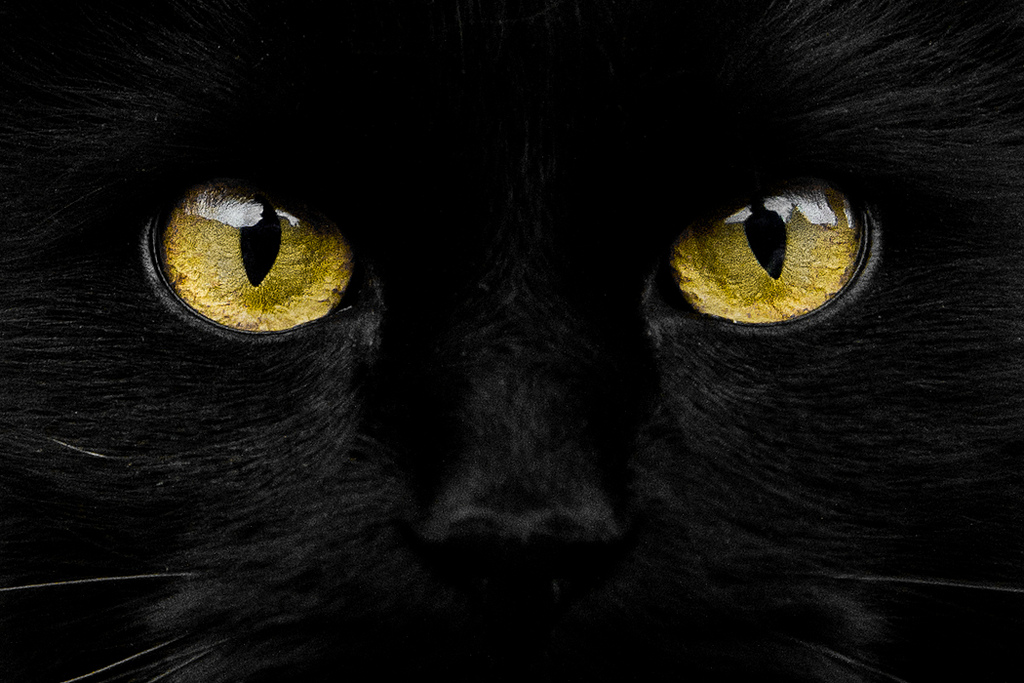
Black cats were generally considered the devil's accomplices and witches' helpers, and accordingly, they were treated with a specific attitude. During the Inquisition, black cats were exterminated, so it's no surprise that people were afraid to look them in the eye—it was believed that a witch or sorcerer could influence people through their cat.
We can also recall ancient Egypt, where the cat became a deity and was also a symbol the other worldEven domestic cats were believed to have a continuous connection with the spirit world, and therefore could bring some of that energy into our world. Therefore, the Egyptians avoided looking into cats' eyes, trying to protect themselves from the influence of otherworldly forces.
Features of anatomy
Some scientists, debunking the above myths and facts, have identified the reasons why people often can't stand prolonged visual contact with a cat's eye. It's all about anatomy—the human eye can see things using its central and peripheral vision separately. When looking at a specific object, others around it are blurred or completely ignored. To clearly see an object in the distance, the eye must shift its gaze.
In cats, both parts of the visual system can practically merge and work in the same direction. Therefore, a pet's eyes can survey all visible objects in a single, unified field of view, and she doesn't have to focus on a single object of interest to examine it closely. When it seems like your pet is staring off into the distance and not noticing anything around her, you can be sure that she's actually aware of everything going on around her and can react to the slightest movement at any moment.
Because of these anatomical features, a cat can react aggressively to a direct, incomprehensible gaze from a person.
These are all the main reasons why you shouldn't look a cat in the eye. Which of them is worth considering is up to you. If you believe in mysticism and superstitions, you shouldn't peer into the bottomless depths of your pet's eyes. If mysticism is a superstition for you, then it's worth remembering the scientific explanation for this fact and trying not to worry your pet unnecessarily.
Owners of stray cats needn't worry about their pets behaving inappropriately, as a direct human gaze means nothing to them. The reason for this fearlessness remains unclear—perhaps they hope to receive a treat from humans as a reward for their patience.
Read also:
- Sleeping on their owner: why do cats do it?
- Signs about cats
- In which countries do black cats bring good luck?


Add a comment