
Why you shouldn't pull cats' tails
Independent and proud, cats also make the most affectionate and loving companions. They are easy to tame and quickly adapt to their new home. These sweet creatures love to be petted on the neck and back, but experienced owners know better than to touch their tails. Let's find out whether it's okay to touch a cat's tail, and why it's appropriate or not.
Content
Why do cats have tails?
The tail is a very important part of the body for domestic felines. It truly helps cats navigate and coordinate their movements. Thanks to these functions, cats can:
- climb trees freely;
- jump and stay at a height;
- when falling from a height, land successfully on your feet;
- squeeze through narrow openings;
- walk on narrow surfaces;
- catch small rodents and insects.
Of course, there are tailless and short-tailed cat breeds whose representatives balance well and land on surfaces without the aid of a tail. Most likely, their small tail is sufficient, and it is also significant. However, long-tailed cats are still more agile and nimble than their relatives.
Cats' tails help them express their emotions and feelings. You've probably noticed more than once how your pet greets you with a happy expression, holding its tail up high. Sitting with its tail curled around its paws is also a good sign, hinting at a friendly disposition. However, when preparing for some reckless action, an animal will usually flick its tail back and forth. A very frightened or aggressive cat is usually identified by a tail with ruffled fur.
Thanks to this fluffy appendage, heat-loving cats keep warm by curling up into a ball and covering themselves with it.
What is a cat's tail?
All curious owners and their children wondering whether it's okay to pull a cat's tail should understand that it's the most sensitive part of the animal's body. The tail is an elongated extension of the cat's spine, which contains numerous nerve endings. It also consists of vertebrae and blood vessels. The tail's end is very painful. Animals typically yank their tails away when humans try to touch them. Important nerve endings connected to the spinal cord pass through the tail, so any stimulation directly impacts the animal's well-being.
Why you shouldn't pull a cat's tail
More reasonable people often have a completely different question: why do this at all? Unfortunately, some owners like to pull cats by the tail, trying to catch and punish an errant animal. Small and ill-mannered children also do this, wanting to have fun with their pet. In this case, it's important to explain to the little ones that cats experience terrible pain and forbid them from touching the sensitive area.
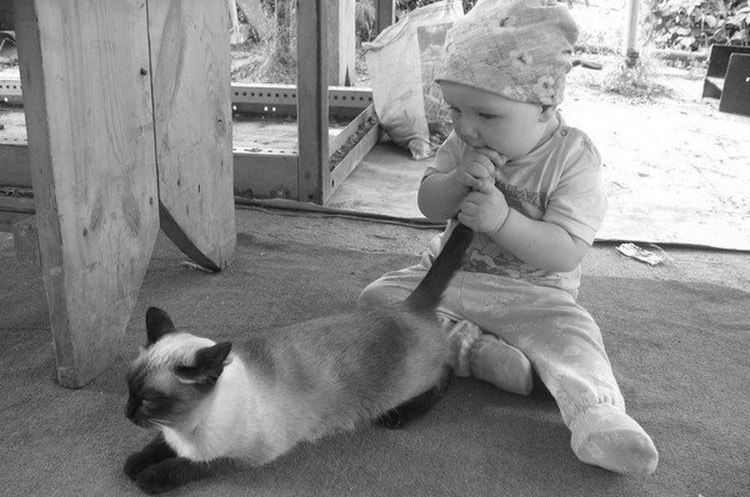
Tail injuries can lead to serious neurological damage.
Intermittent or sudden tugging of an animal's tail can stretch or even rupture the nerves that support the hind legs, intestines, and bladder. This can cause temporary, if not permanent, disability. will lose the ability to move, will be unable to control urination and defecation, and will experience pain. The injured tail will drag around as if it were a lifeless body part. In such cases, the spinal extension often has to be amputated.
The tail is easily broken and difficult to treat and heal. Pulling or tugging too hard on the animal's tail can inadvertently damage the spine. This could leave the animal partially or completely paralyzed, leaving it permanently disabled.
Psychological consequences for the cat
In addition to physical injury, tail pulling causes severe stress to the animal. Cats are sensitive creatures, and rough handling can trigger feelings of fear and mistrust.
This may manifest itself as:
-
aggression towards the owner;
-
avoiding contact;
-
increased anxiety;
-
sleep and eating disorders.
A cat can remember a negative experience for a long time, and it can be difficult to restore trust after such actions.
Features of the vulnerable tail in kittens
Kittens are especially susceptible to tail injuries. Their skeletal and nervous systems are still developing, so any sudden movement can have long-term consequences.
It's important to explain to children that a tail is a part of an animal's body and should not be handled roughly. Instead, children can be taught how to handle their pets gently and appropriately.
For clarity, we provide a comparative table of what can happen if the tail is handled incorrectly.
| Action | Possible consequences |
|---|---|
| A sharp jerk | Spinal injury, pain, stress |
| Frequent grabbing | Chronic nerve damage, distrust of people |
| Tail strike | Fracture, loss of mobility |
How to properly handle a cat
To avoid problems, it is important to follow the rules of communication with your pet.
Recommendations:
-
do not touch the tail or use it to restrain the animal;
-
lift the cat only by supporting it under the chest and hind legs;
-
teach children to handle things with care;
-
Monitor the condition of the tail and if you suspect injury, contact a veterinarian.
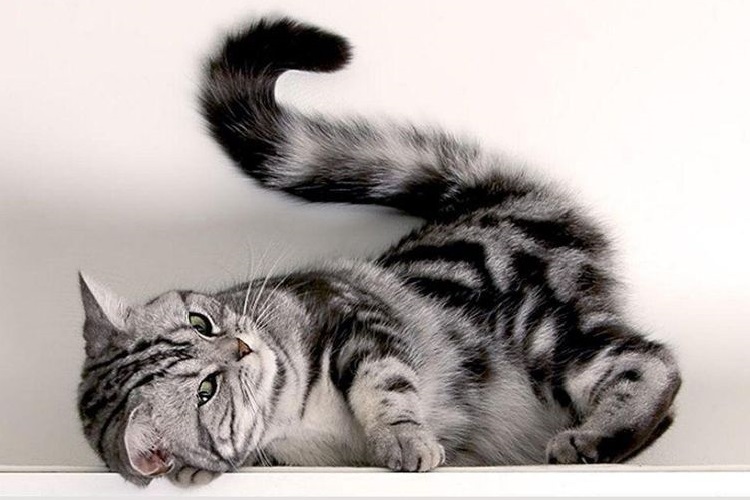
What to do if your dog's tail is injured
If your cat's tail is accidentally pulled and it becomes restless, doesn't put weight on its paws, or its tail hangs motionless, it's important to take it to the veterinarian immediately.
Diagnostic methods include:
-
X-ray to assess bone integrity;
-
neurological examination;
-
tests to rule out complications.
Treatment can range from rest and anti-inflammatory medications to surgery in severe cases.
Why is it important to respect your pet's boundaries?
A cat perceives its tail as part of its body, and any touching of it should be gentle and careful. Playing with its tail violates the animal's personal boundaries. Respect for your pet and concern for its psychological well-being build trust and foster a harmonious relationship between humans and cats.
Owners should remember why pulling a cat's tail is not recommended: not only does it cause pain, but it can also have serious health consequences. The tail is an important organ involved in movement, communication, and nervous system regulation. Gentle handling, proper training of children, and attention to the cat's cues will help maintain the cat's health and make life with them more comfortable.
So, here's the answer to the question of why you shouldn't pull a cat's tail. If your cat doesn't mind, you can, of course, gently stroke its tail, but tugging or pulling it is strictly prohibited under any circumstances.
Read also:
- What injuries can a cat suffer from falling from a height?
- Is it necessary to play with a cat and how to do it correctly?
- My cat broke its tail: what to do


Add a comment