
Why do people love cats?
There's no definitive answer to why people love cats so much. There are many explanations, from the obvious to the unexpected and original. Everyone chooses their own version or comes up with their own explanation for this special affection for these amazing animals.
Psychological facts
Forgiving early morning wake-ups, scratches on legs, the habit of using furniture as a scratching post, and other "perks" of having a cat in the house is something more than what these pets offer in return. People love them because they allow them to:
- Get a "source" of daily fun. Cats are unlikely to have many rivals in their ability to amuse people, as they can strike funny, endearing poses, fall asleep in unexpected places, and create other reasons to smile.
-
Evolutionary connection with humans. Cats began living alongside humans around 9,000 years ago, when early farmers in the Middle East noticed their ability to hunt rodents that threatened grain supplies. A unique symbiosis developed: unlike dogs, which humans domesticated for guarding and hunting, cats chose to live alongside humans. They have retained many traits of their wild ancestors, including independence and hunting instincts, making them attractive to those who value unobtrusive companions. Cats don't require constant attention like dogs and can easily adapt to small living spaces, making them ideal for modern apartments. Their ability to care for themselves, such as using a litter box, makes them convenient pets for busy people and city dwellers.
- Give your care. Sometimes you might think that one of a cat's primary purposes is to be an object of care and love. Their main weapons—their muzzle with a neat nose and large eyes, and their soft fur that constantly begs to be petted and cuddled—can turn on love for these animals even in adults.
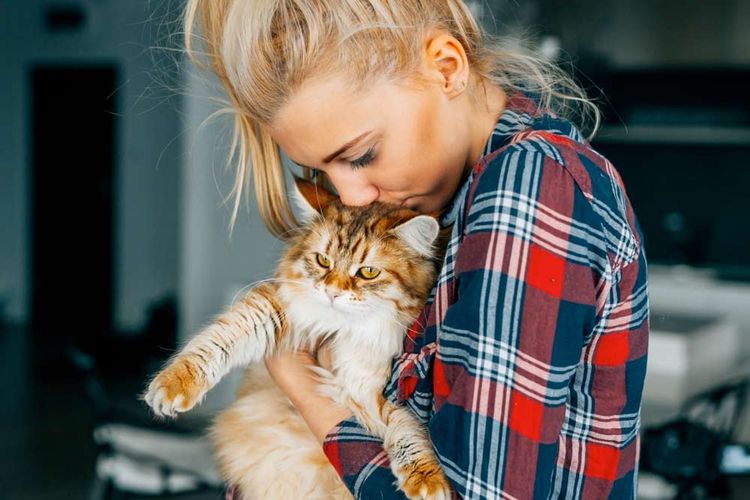
- Heal your sore spots. Bioenergetics experts believe that the positive aura of cats can relieve fatigue and migraines, have a beneficial effect on normalizing blood pressure and pulse, and reduce pain in diseased internal organs.
- To feel needed. Cats are good at sensing when their owners are upset or angry, so they're ready to come to them for comfort. Their purring also has a calming effect. It's not for nothing that they say: a dog is man's best friend, a cat is a soulmate.
- Remember literary works. Throughout history, Russian writers have made these animals the protagonists of their works, imbuing them with intelligence and cunning. Take, for example, Behemoth the cat from Mikhail Bulgakov's "The Master and Margarita" or the learned cat from Lukomorye in Alexander Pushkin's novel.
- To awaken or realize parental instincts. It is precisely this meowing that fuels love for cats and care for those in need. Moreover, meowing is sometimes described as mimicry of a baby's cry. Indeed, life with these pets is in many ways reminiscent of life with a child, although for some, this "humanization" of animals is perceived as a surrogate motherhood.
- Remember femininity. For some, a cat's grace, elegance, beauty, and ability to show its claws at the right time are the embodiment of feminine nature. Not without reason. cat tattoos — is one of the most popular topics.

Scientists studying human and animal behavior believe that a love for cats is genetically determined. In ancient times, large felines posed the greatest danger to humans, so it was important to observe them and study their habits. Love and admiration became a byproduct of such observations and were ingrained over many years of coexistence.
Rational reasons
But people's love for cats can be explained by more than just emotional and psychological factors. It's reinforced by other positive, but more rational, factors:
- Simple content. Due to their small size (compared to dogs), most cats will feel comfortable in apartments of any size. Furthermore, they don't require regular bathing or walking; they only require proper feeding, regular litter box changes, and occasional brushing.
- Aesthetic appeal. The variety of breeds and colors allows everyone to choose a pet according to their own preferences.
- Independence. Again, compared to dogs, cats don't require constant attention. Even with a busy work schedule, they're happy to wait quietly for their owner to come home.
- Possibility to leave the animal for several days. Of course, some cats may behave unpredictably when left alone at home. But most cats prefer to sleep in a favorite spot or observe the world around them from a windowsill. However, by keeping more food "in reserve," you don't have to worry about overeating. Often, cats independently regulate the required portion size each time they approach the bowl.
How to show your cat your love: video
Read also:
- What is the name for excessive love of cats?
- Why do cats leave home?
- How to find common ground with a cat


Add a comment