
Why are cats afraid of vacuum cleaners?
You've recently adopted a furry pet and noticed that they react sensitively to loud, shrill noises from household appliances and equipment. A powerful vacuum cleaner is especially alarming. You're wondering why cats are afraid of vacuum cleaners, what makes them run away in panic and hide in corners, and whether it's possible to train pets to tolerate the eerie sounds of a vacuum cleaner. Let's explore these questions in detail.
Content
Reasons why a cat runs away from a vacuum cleaner
Of course, not all cats are terrified of noise. There are some who are quite indifferent to it, as well as brave ones who try to engage in combat with the mechanical monster. But still, most domestic felinesfeel fearwhen cleaning is taking place in the house.
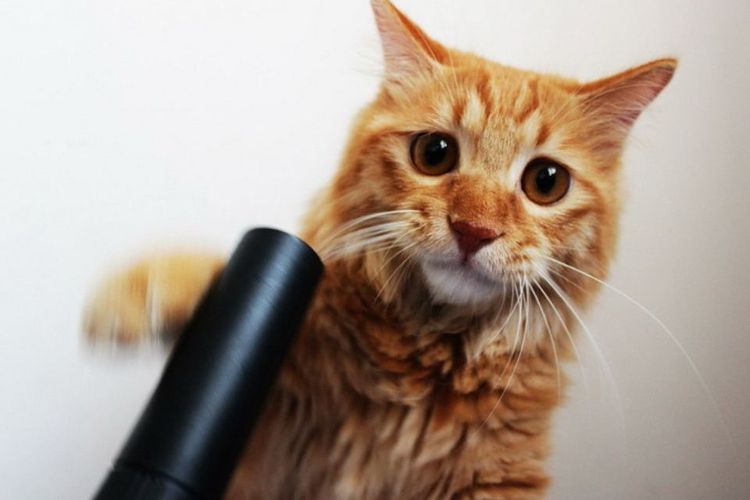
Several valid explanations have been identified as to why cats are afraid of vacuum cleaners and run away from them:
- The loud vibrating sound is the main reason pets hate vacuum cleaners—the noise they make. Nature has gifted these brave hunters with exceptionally sensitive hearing. Thanks to it, they can detect the slightest movements and sounds, down to the faintest squeak and the faintest rustling. A running vacuum cleaner puts intense pressure on a cat's sensitive eardrums, which are very sensitive to loud sounds. The impact of a powerful machine sucking up dust on cats is comparable to the impact of a jet engine on a human, as if the aircraft were flying directly overhead.
- A heightened sense of touch – cats' paw pads are extremely sensitive to even the slightest vibrations. Therefore, these animals, endowed with seismic hearing, are able to detect the approach of various natural disasters, including earthquakes. The vibrations emitted by a vacuum cleaner are also acutely perceived by pets as a warning of imminent danger.
- Visual perception – try to imagine how cats see a vacuum cleaner. A huge monster with an extended hose, like a writhing snake, trying to devour everything around it. Who wouldn't be scared?
- Dust allergyMany inexpensive dust vacuums not only "swallow" dust but also partially "spit" it back out. Dust can be an allergen for both humans and cats, causing a reaction such as sneezing, coughing, and watery eyes. Animals that recognize these unpleasant consequences of using a vacuum cleaner will try to stay away from it.
- An unknown moving object. Cats are territorial and curious animals. To them, a vacuum cleaner is a strange piece of metal, suddenly appearing and moving, causing stress. Moreover, to the naked eye, it looks like an aggressive stranger.
- Negative memories. If the cat was previously woken by noise or, conversely, had a vacuum cleaner used on it, an emotional trigger has formed that can persist for years. Such phobias are extremely difficult to cure.
How to tell if your cat is afraid of a vacuum cleaner
The symptoms are exactly the same as those of normal stress reactions, but are especially noticeable:
-
dilated pupils and retracted posture;
-
hissing, loud meowing or attempts at aggression;
-
sudden escapes and attempts to hide;
-
body trembling or freezing in motionlessness;
-
possible aggression when trying to pick up the pet.
The role of robotic vacuum cleaners
Automatic robots are quieter and don't create harsh vibrations. Cats often perceive them as neutral or even like toys. This makes the task easier—cleaning can be done stress-free, allowing the cat to observe from a distance.
Mistakes to Avoid
-
You can't hide a vacuum cleaneruntil the cat gets used to it - the absence of a familiar sight will increase the fear.
-
Don't turn it on suddenly— a sudden start triggers a phobia, especially if the cat is already experiencing a nervous moment (sleep, food).
-
Don't force contact— It’s better to wait until the cat itself shows interest or calmly settles down nearby.
-
Don't use technology as a toy.- aiming a vacuum cleaner at a cat or trying to "clean" its fur is a serious mistake that causes persistent fear.
How to reconcile a cat with a vacuum cleaner
The sounds of other household appliances, such as televisions, are also unpleasant for cats, but they get used to them much more quickly. So how can you accustom your pet to the sound of a vacuum cleaner so that it stops escaping?
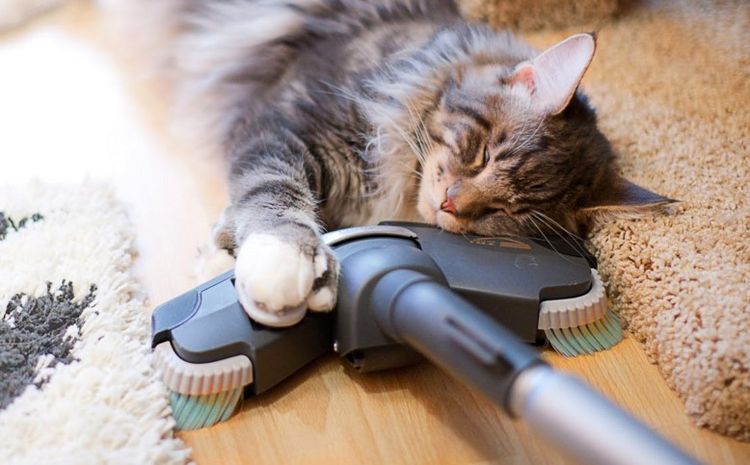
Knowing why cats are afraid of vacuum cleaners, experienced breeders offer several recommendations that, if followed, can help, if not eliminate, then at least reduce the animals' fear of them:
- At first, do not hide the device from your pet: let it get used to its appearance;
- To help a timid cat get used to the vacuum cleaner faster, leave a saucer of treats for your pet near the machine;
- After a short period of reconciliation, start turning on the device at low power for short periods of time, gradually increasing it and the cleaning time;
- Never try to amuse yourself by trying to “vacuum” your cat – these cruel games will only further traumatize the animal;
- If the vacuum cleaner and cat don't get along, it's best to isolate your pet in an adjacent room while you're cleaning.
Below is a table of effective steps for adaptation:
| Stage | What to do | What to look out for |
|---|---|---|
|
Leave the switched-off device near the cat and reward it with treats. | Let the cat sniff it and feel the smell. |
|
Turn on the vacuum cleaner from a distance (in the next room) | Start with 10-20 seconds |
|
Increase the duration and decrease the distance | Watch for reactions and emotions |
|
Give your cat a safe place to hide. | Never pull it out by force. |
|
Use a quiet mode or a robot vacuum cleaner | Provide treats and stay close |
This technique requires time and patience: adaptation can take from several days to months, especially if the fear is deep.
Please note that under no circumstances should you forcefully accustom your cat to the sounds of a vacuum cleaner, no matter how much you may want to.
When to see a veterinarian
If fear is causing your cat significant distress—refusing to eat, changing toilet habits, aggression, or repeated wheezing—it's best to consult a veterinarian. They may recommend pheromone drops or mild, natural calming agents.
Read also:
- How long do domestic cats live? What influences their lifespan?
- Calming music for cats
- Why do cats sneeze?


1 comment
Olga
We've made friends with both the cat and the cat vacuum cleaner. They even came to have them cleaned. It's an adrenaline rush, a massage, and refreshing. But gently, of course, so as not to hurt, and not for long.
Add a comment