
Why does my cat pee blood?
If your cat is urinating blood, it's time to seek immediate veterinary attention. This is a clear indication of serious illness or injury. Determining the cause of hematuria on your own is virtually impossible, so don't skip a visit to a specialized clinic.
Content
The main reasons why a cat pees blood
It's important to understand that hematuria is only a symptom, not a disease. Therefore, without determining why your cat is urinating blood, starting any treatment is futile. There are two types of hematuria: microscopic (when blood cells in the urine are visible only under a microscope) and macroscopic (when the urine has a characteristic scarlet red color).
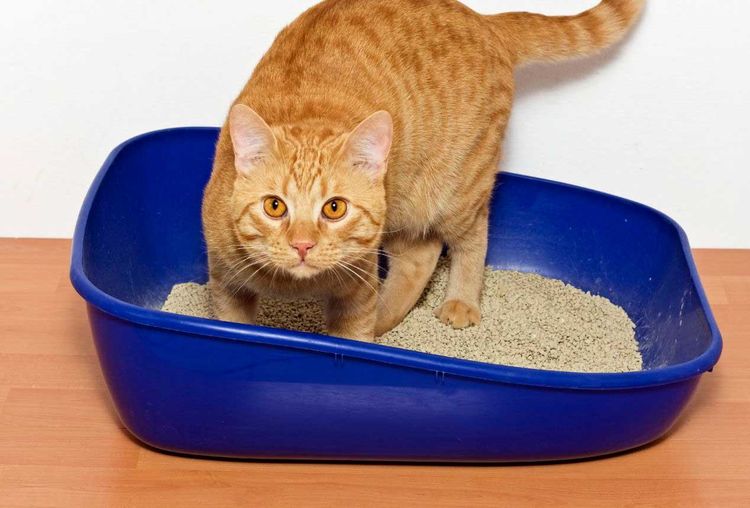
The main reasons that provoke deviation:
- kidney stones;
- tumors of the genitourinary system;
- glomerulonephritis;
- injury, fall from a great height;
- blood clotting disorders;
- thrombocytopenia;
- rat poison poisoning;
- infectious diseases;
- the presence of malignant or benign tumors;
- taking certain medications.
If your cat has fallen and is urinating blood, it's likely that the bladder is damaged. This is especially dangerous if thick, bloody mucus leaks from the urethra. This condition can be fatal, so seek veterinary attention immediately. You may also notice your cat urinating blood "little by little" after removing the catheter. This problem usually resolves after the cat urinates on its own for the first time. Otherwise, a bacterial infection should be suspected.
About 20% of cases of hematuria in cats have an unknown cause. If the veterinarian cannot identify the actual trigger, the diagnosis is idiopathic cystitis.
Diagnosis and symptoms of hematuria
To determine why a cat is urinating blood, a veterinarian will conduct a full examination and ask the animal to describe the symptoms that occurred when the abnormality appeared. Hematuria is often accompanied by:
- pollakiuria (frequent excretion of small amounts of urine);
- manifestation of obvious discomfort during urination (meowing, trembling in the limbs, tail);
- constant licking of the genital area;
- lethargy;
- restless behavior;
- loss of appetite.
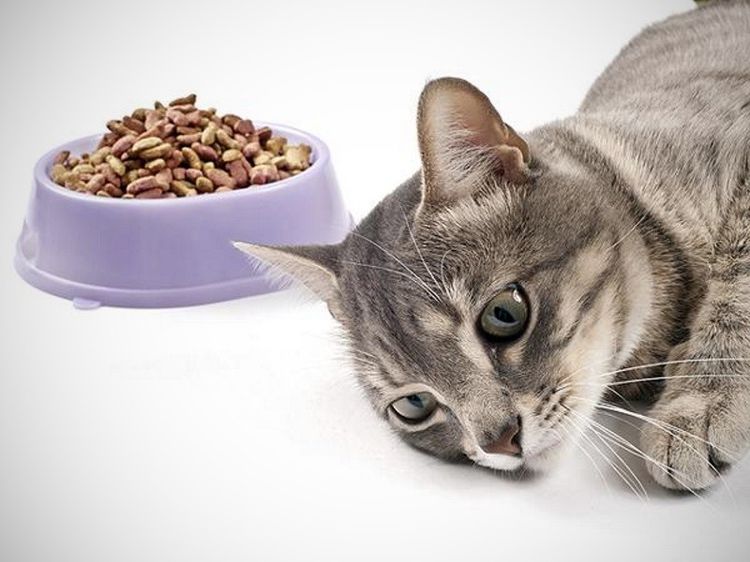
Determining the cause of the abnormal urine output on your own is nearly impossible. It's only possible to guess the trigger. For example, if blood clots are passing, the problem lies in lower urinary tract diseases or minor injuries. If the urine is uniformly scarlet, the cat most likely has problems with the kidneys, ureters, or bladder.
The veterinarian will definitely prescribe several diagnostic tests that will help make a final diagnosis.
- Urine analysis. The presence of leukocytes in the urine may indicate infectious diseases. But protein in urine is a sign of kidney disease.
- Blood analysis (biochemical and complete). Additionally, tests to determine blood clotting rate may be performed.
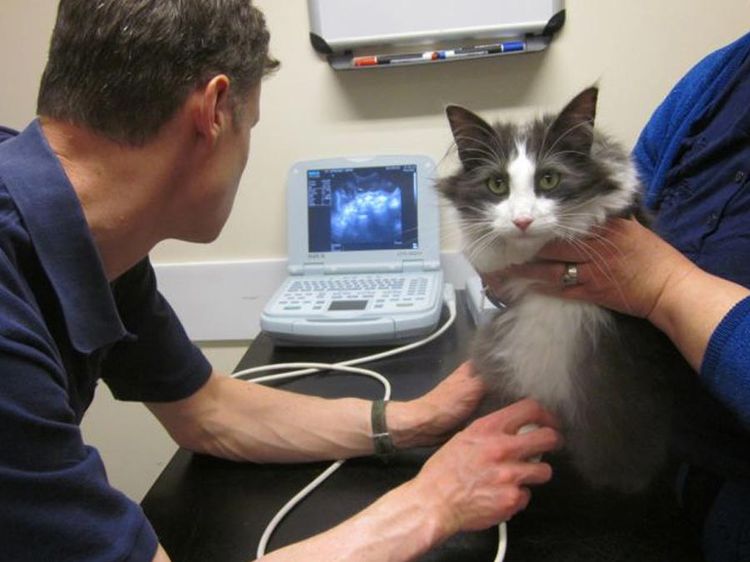
- An abdominal ultrasound examination is performed to assess kidney size and detect sand, stones, and tumors.
- Intravenous pyelography and urethrography. This is a contrast X-ray examination of the kidneys, ureters, and bladder. At the beginning of the procedure, the animal is injected with a contrast material, which collects in the kidneys and urinary tract. This allows the veterinarian to create an image with darkened areas indicating potential abnormalities.
Conservative treatment methods for hematuria
As mentioned above, veterinarians typically select treatment based on the diagnosis. Hematuria, as a symptom, resolves on its own. If an infection is diagnosed, antibiotics are prescribed. If the infection is accompanied by inflammation, steroids may also be prescribed.
Since there are many causes of blood in the urine, it's important to know at least the most basic treatment methods. For example, if urine pH is abnormal during testing, the cat should be switched to a special diet and its water intake increased. In rare cases, supplements to increase urine acidity are prescribed. However, such therapy is a short-term measure; in the long term, these supplements will cause more harm than good.
A fairly common cause of hematuria is accidental poison ingestion by cats. Most commonly, pets ingest rat or mouse poison. Poisoning can be recognized by the following symptoms:
- vomit;
- diarrhea;
- general lethargy;
- increased salivation;
- the appearance of foam at the mouth.
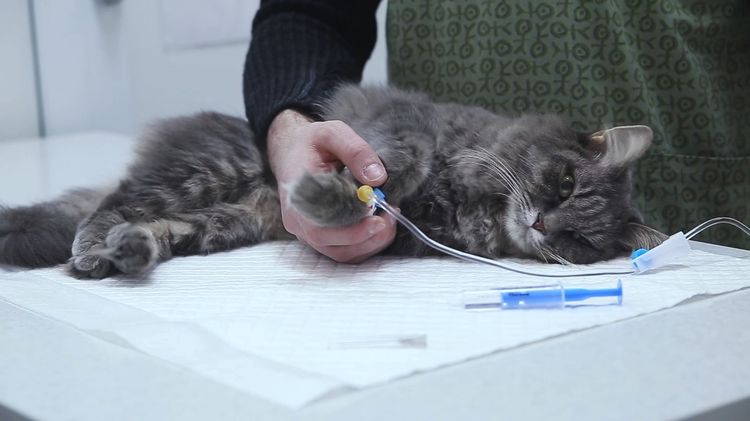
Even if you're absolutely certain there are no rodenticides in the house, it's important to give your cat plenty of absorbent water. Once the veterinarian confirms poisoning, the animal will be given intravenous saline and high doses of vitamin K.
If a cat urinates blood after a fall, first aid includes immobilizing the animal and applying a cool heating pad to the lower body. Since a fall can also cause fractures, dislocations, and concussions, in addition to damage to the urinary system, it's important to entrust the primary course of treatment to a specialist.
Surgical treatment methods
Veterinary surgery may be required to remove stones and tumors from the bladder. A surgeon should also be consulted if blood appears in the urine of a female cat who has recently had a difficult birth with ruptures. Male cats may also require surgical intervention after an unsuccessful ureostomy. However, it's important to remember that urethral dilation does not guarantee the problem will not recur.
Animals diagnosed with a cancerous or benign tumor will also require inpatient treatment. Unfortunately, cancers in veterinary medicine are diagnosed at a relatively late stage, after the animal has been treated with antibiotics but continues to suffer from hematuria.
How to help an animal with home remedies
The presence of blood in a cat's urine requires veterinary attention in any case. Even the most effective home remedies will alleviate the unpleasant symptom, but will not address the root cause of the problem. Therefore, the remedies below should be considered only as temporary relief for your pet.
- Apple cider vinegar. If you're certain that hematuria is caused by a bladder infection (for example, a relapse), you can give your cat a weak apple cider vinegar solution. This natural anti-inflammatory remedy eliminates virtually all unpleasant symptoms. The easiest way to administer the vinegar is by adding half a teaspoon to 200 milliliters of water. If your pet is reluctant to drink the strong-smelling home remedy, you'll need to administer the vinegar solution with a syringe.
- Cranberry extract. Numerous scientific studies have proven that cranberry juice contains special compounds that prevent the proliferation of pathogenic bacteria in the bladder. This is why many super-premium foods contain cranberry extract. To help your cat fight off infections, it is recommended to add 3-4 cranberries to their daily diet. If your cat spits out the berries, you can add a few grams of natural cranberry juice to their water.
Please note! Cranberry acidifies your pet's urine. Before using this home remedy, conduct a simple urine pH test.
Although blood in the urine is a rather dangerous symptom of genitourinary diseases, with timely diagnosis and proper treatment, dealing with the problem is not difficult.
You can also ask our website's staff veterinarian a question, who will answer them as quickly as possible in the comments box below.
Read also:


32 comments
Olga
Hello. My cat has urolithiasis. We went to the clinic, had a catheter inserted, urine drained, and then had three days of IV drips, antibiotics, and No-Spa with Platyphylline. Then I gave him Kotervin for a week. Nine days later, his urine is still pink, he urinates frequently, dribbling in different places, and sometimes meows after urinating. I started giving him Stopcystitis yesterday. His condition is still concerning. What do you recommend?
Daria is a veterinarian
Hello! I recommend a bladder ultrasound to assess the bladder wall and the presence or absence of sand or stones in the bladder. Perhaps a tumor or swelling is interfering with normal urine flow. All this KotErvin, HealthyKidneys, and so on are pure homeopathy. They have no evidence base in VETERINARY MEDICINE. Anti-inflammatory medications should be administered in a course to relieve swelling and pain, then the urine will flow more steadily. If urine is not released normally but remains in the bladder for a long time, its concentration becomes more "aggressive," resulting in increased inflammation.
Agatha
My cat is 11 months old and yesterday he started urinating blood. I give him dry food, maybe that's why. But when I gave him liquid food in bags, everything was fine with him. He's not lethargic, he plays, eats, although yesterday he drank a lot of water. Please tell me what's the reason for my cat's diarrhea.
Daria is a veterinarian
Hello! Which brand of food is this? Yes, it's most likely the food. And that's very bad. It's important to rule out cystitis and urolithiasis. Wet food contains more moisture, so the urine is less concentrated, and if there's sand, it's easier to pass from the bladder. With dry food, you need to make sure your pet drinks plenty of clean water. This is usually where the problem arises. Cats don't drink enough, their urine becomes more concentrated, inflammation (cystitis) develops, and stones can form, their sharp edges scratching the inflamed and swollen mucous membrane. Therefore, it's best to have an ultrasound and a general clinical urine analysis. It's also important to understand what kind of food it is. Either therapeutic or preventative feeding for urolithiasis will be required.
Maria
Hello, my cat fell from the 7th floor. During an ultrasound, there were clear signs of blood in his bladder. The vet said there was a minor injury, but surgery wouldn't be necessary; everything would be back to normal in 1-2 weeks. It's been two weeks now, and my cat is still urinating blood, but the blood has become darker. My question is: should I wait longer or should I still undergo surgery or some kind of medication?
I'd also like to ask you for advice. After a fall, my cat wouldn't stand up on his hind legs or move his tail. We saw a doctor who took an X-ray of his spine. He initially mentioned a crack, then a fracture. The X-ray showed no visible signs of a fracture or crack. It felt like there was a dislocation at the 12th and 13th feet. We went to another clinic to see a surgeon. He looked at the same X-rays and also didn't notice any signs of a fracture or crack in my cat's back. He suggested it could be a dislocation or more likely a bruise. He prescribed anti-inflammatory and pain medication (Onsior), saying that progress should be seen after six days of treatment, but there has been no improvement. My cat is also in pain at the site of his back injury, the hump hasn't gone away, his hind legs aren't holding up properly, and he doesn't move his tail. The only thing that gives me hope for his recovery is that he twitches his back legs when we wash him. He crawls using his front paws. What specialist should I consult about this problem?
Daria is a veterinarian
Hello! If your cat urinates and defecates deliberately, rather than involuntarily, that's very good. If it's uncontrollable, the prognosis is unfavorable and cautious. If there's a spinal injury, it's not recommended to disturb the animal excessively, carry it, or bend it in any way. If there are specialists in your city, see a neurologist (a CT or MRI if available, although an X-ray would also be able to detect a herniated disc or something similar causing a hump). You could also see a traumatologist, but they specialize in extremities. For now, it's best to see a neurologist to evaluate the spine itself and determine whether there are any spinal cord injuries. This should be addressed first. If they do an X-ray, you can inquire about suspected bladder microtrauma. They might also do an X-ray with contrast (contrast will be injected into the bladder, and if there's an injury, the X-ray will show the contrast beyond the bladder).
Valery
My 3.5-year-old cat fell from the 9th floor, and there's absolutely no way to take him to the vet. He survived, but fell into the bushes. I think his paw is broken. He peed blood once last night and hasn't peed since. He's not eating or drinking. What should I do? He can walk on three legs, and his spine seems to be intact. I'm very concerned about his internal organs. Please answer.
Daria is a veterinarian
Hello! Your pet has at least a fracture, and you haven't taken it to the vet? Your pet is urinating blood. There's a risk of bladder rupture, not to mention internal organ contusion. Will you be treating it at home? High-altitude injuries aren't always detected in a clinic in time, much less saved. X-rays and ultrasounds can't be performed remotely. Your pet needs to be taken to the vet immediately. It's possible that the high-altitude injury will require euthanasia.
Anastasia
Hello. My cat is 7 years old and neutered. He's started going to the toilet outside the litter box.
I caught him, poked him with my nose, and he peed himself, light pink. Is that blood?
What should I do? Could it just be fear?
Daria is a veterinarian
Hello! A cat won't pee light pink out of fear over something unexpected. You're expecting a too-quick reaction to punishment. The cause needs to be looked for elsewhere: urine and blood tests, an ultrasound. What are you feeding? Does your cat have access to the outdoors? Has there been any hypothermia? Blows? Constant stress? Perhaps you were given certain vitamins or "colored" foods? In short, a diagnosis cannot be made without a medical history and an in-person examination with tests and visual diagnostics. However, in the future, poking cats with your nose is useless, especially if it happened accidentally (they couldn't fit into the litter box, the litter was dirty, something prevented them from getting into the litter box completely, etc.). Otherwise, they'll continue to poop constantly, out of spite.
Alexey
Hello. Our cat fell from the 5th floor. He's one year old. We took him to the vet, and they did an abdominal ultrasound. They said his bladder was damaged because he was peeing blood. They prescribed injections of etamsylate and meloxivet. We've been giving them, but the peeing blood hasn't stopped. It's been three days. He has an appetite. He's even trying to play, but he's lethargic. Please tell me if he needs anything else, and how long this will last. Thanks in advance.
Daria is a veterinarian
Hello! The animal has been prescribed hemostatic agents and an anti-inflammatory with analgesic properties. It would be a good idea to have another ultrasound to check for any delayed effects from the injury. You could also consider adding medications that stimulate hematopoiesis (Huberin, Katozal, Vitosal, and their analogs, which contain vitamin B12 and butophosphan) and calcium supplements (which are also necessary for normal blood clotting). Have you ruled out any internal organ contusions, given the considerable altitude? Is there any blood in the urine? When is the next appointment scheduled? Has a blood test been done to rule out anemia (you never know, there could be some bleeding going on somewhere inside the body)?
Karina
My cat fell from the fourth floor and had blood in the toilet that evening, but the blood was gone by morning. He has an appetite. He's in good health, just very calm for now. Could he have sustained internal organ damage, and how can I tell?
Daria is a veterinarian
Hello! There is certainly a risk of internal organ damage from a fall from a height. It's a very high risk, in fact. The only way to know is through X-ray and/or ultrasound. You won't be able to determine this at home, and complications may develop later (not always related to the fall). Internal organ contusion will definitely occur, but I hope we avoid organ rupture and internal bleeding. I hope for the best. Stay safe!
Alena
Hello. Our 11-month-old cat fell from the 5th floor. We immediately took her to the vet, where they examined her, did an x-ray, and massaged her. They said she had a bruise (they didn't specify what) and that she wouldn't eat for three days, but overall, she's lucky and doing well. They prescribed antibiotics as a last resort, in case she doesn't start eating at all. But she started eating little by little on the 4th day, and her appetite returned on the 6th. Meanwhile, she's been wet with blood and trying to go to the bathroom, but it's been a while. The first few days, it was clear she had a bruise, but it's already the 7th day! And she's still wet with a small amount of blood. Could this continue for so long? We haven't started the antibiotic injections yet, because the vet said it was a last resort. If she doesn't eat, I don't know how that could be related to the bruise.
Daria is a veterinarian
Hello! Much depends on what exactly was injured. It could be the kidneys, or perhaps the bladder itself. It's important to rule out serious bleeding. It would be a good idea to have your pet get another X-ray or even an ultrasound (which is safer, as it doesn't involve harmful radiation) to assess the progress. See if there's any improvement. In general, add vitamins to the diet (K3, B12) and enrich it with micro- and macronutrients (to improve blood clotting). Etamsylate or Dicynone can be helpful; they can be used as hemostatic agents.
Svetlana
Hello! My 9-year-old cat has been urinating blood. We took her to the vet, where she had a fluid injection and a dialysis. An ultrasound showed a 4-mega-meter stone, and we spent 5 days at the clinic treating her. We're getting her a new one, and the doctor just recommended Purina Pro Plan Urinary. We're giving her medication for healthy kidneys. Three days later, blood in her urine returned. They also prescribed popavirin injections twice a day and some hemostatic medication. We took it for two days, and today she peed seven times with blood. What should we do? Is this how the stone is passing? What steps should we take? How can we help our cat?
Daria is a veterinarian
Hello! Yes, blood is a sign that the mucous membrane is being damaged by the sharp edges of a struvite stone. Since it's large, the process will be lengthy. It might be better to have surgery to prevent the stone from obstructing the ureter. I don't see antibiotics prescribed in the treatment regimen. No-shpa tablets (1/4 tablet) can be taken 3 times a day to relieve spasms and facilitate emptying the bladder. Dicynone can be used as an antiseptic. However, with this condition, treatment will take more than 5 days. Follow the prescribed treatment regimen completely, without missing any medications.
Svetlana
The story continues: I had surgery, and it turns out there are no stones, but there is a growth practically all the way around my bladder. The doctor said he's never seen anything like this before, and said it looks like polyps, but it's definitely not. Could you please tell me what this could be? And what should we do?
Daria is a veterinarian
Hello! I'd like to have the tissue examined by histology and a biopsy. I'm sure I need to rule out neoplasia or growths. Have you had a complete blood count? Are your lymphocytes and platelets normal? I haven't encountered this myself, so I'd refer you to an oncologist to rule out any other pathologies within their specialty. If they can't find work for me, I'll have to work with more experienced specialists.
Honestly, if you know a human urologist or surgeon, you could ask them (the tissue structure is essentially the same). Human doctors have more patients (people tend to be more compassionate and visit doctors, but they rarely bring their pets, so many clinical cases remain unstudied or veterinary specialists don't encounter them). Perhaps a human doctor can suggest something else besides my options.
By the way, have you tested your pet for a viral infection?
Alena
Hello. My 10-year-old male cat, Kostratus, can't pee properly, sits down several times, and today we noticed blood in the snow after urinating. He's lethargic and eating poorly. What could be wrong?
Daria is a veterinarian
Hello! It could be cystitis, but it's more likely a urolithiasis. To confirm the diagnosis, a bladder ultrasound and a urinalysis are needed (at the clinic, they'll perform a catheterization to empty the overflowing bladder). A stone may be blocking the urinary tract, preventing normal urine flow. It may also be scratching the urethral lining, causing bleeding.
Margarita
My cat fell from the 9th floor. He's eating normally, but his urination is bloody. How long can the bleeding continue? An abdominal ultrasound is scheduled for the next day.
Daria is a veterinarian
Hello! Why didn't you admit me to an emergency room immediately after I presented? Doesn't the clinic handle such emergencies? A day is too long! If there's internal bleeding, it's a matter of hours, even minutes. Surgery is absolutely necessary. Asking how long the bleeding will continue after such an injury is like guessing how long it will rain—forgive the analogy. It's crucial for you to get to the clinic for an ultrasound and X-ray as soon as possible! Ask to be seen at the clinic and explain the urgency!
Vetch
Hello, my cat is 14 years old, they said she has kidney problems, but is it possible at this age to hope for recovery or should I put her to sleep and not torture her?
Dasha is a veterinarian
Hello! What kind of kidney problems exactly? You can't just give out prognoses without knowing what exactly is wrong with the animal. Nephritis, pyelonephritis, nephrosis, renal failure, hydronephrosis, a tumor, or something else—what exactly? In one case, treatment and diet adjustments are possible, but in another, only euthanasia would be humane. Did the veterinarian who told you the cat has kidney problems really not provide a prognosis?
Ivan
Hello, I need help. This morning, I discovered scarlet urine in my 7-8 month old cat's litter box. She's not bothered by anything, as she's acting normal, running, jumping, eating, and so on. The only thing she doesn't like is being touched in the pelvic area. Thank you in advance. P.S. I'm writing from work, so I can't see a vet right now, so please understand. Thank you.
Dasha is a veterinarian
Hello! Does your pet feel restless when petted from above or in the abdominal area? How exactly does this restlessness manifest itself: meowing, struggling, biting, arching, or something else? Take their temperature and have them examined (ultrasound, blood, and urine). Red blood indicates fresh bleeding, so immediate action is necessary. Self-medication is dangerous. If your pet is outdoors, there's a risk of a tick bite (although you can bring this bloodsucker home on your belongings), which can lead to piroplasmosis (urine also turns red, but the temperature rises and the animal becomes lethargic).
Olga
Good afternoon! Please help me with some advice!
Our cat is already 11 years old, not spayed, an indoor cat, has never had male cats, and eats mostly Gourmet wet food. Generally, she has had no health problems. However, recently she has started meowing periodically at night.
And over the past week he often sits on the litter box and urinates little by little.
Today I was taken to the clinic: an external examination did not show anything serious, the doctor did not suggest an ultrasound; he presumably said it was cystitis, gave me an intramuscular injection of antibiotics and told me to bring a urine sample the day after tomorrow (they did not take blood).
But the cat feels bad, and in the morning she walks around meowing again, and today we noticed blood in the urine (we hadn’t noticed it before).
Please tell me if bleeding can be caused by antibiotics and how to alleviate the condition.
Should I wait until Tuesday or go to another clinic?
Thanks in advance for your reply.
Dasha is a veterinarian
Hello! Ideally, you should have an ultrasound and a urine test (it's best to have the urine sample taken before the antibiotics were administered, so the inflammation in the kidneys and bladder could be immediately visible). The blood could have been caused by inflammation in the bladder, or it could have been due to injury from sand or stones (if the animal has urolithiasis). The antibiotics administered by the veterinarian did not cause any blood.
Relieve spasms (No-Spa, Papaverine), Kot Ervin, or Kanefron—like homeopathy for cystitis. But you need to insist on additional tests to establish a diagnosis and choose an effective treatment.
Natalia
Tell me what to do? My cat started urinating with blood. The blood is bright red, so I took him to the vet. We were treated for five days. There's no blood, but he's constantly urinating involuntarily. The clinic couldn't diagnose him. This had never happened before. Then he disappeared for two days, and then these problems started. The doctor said everything would recover, but it's been four days since the injections, and he's still urinating involuntarily. What should I do?
Dasha is a veterinarian
Treatment and finding the cause—that's what needs to be done. Perhaps your cat has a cold and needs a longer course of antibiotics. You haven't described what exactly you injected, the doses, or whether you followed the instructions exactly. You also haven't described any other symptoms (fatigue, fever, poor appetite, vomiting, or anything else). Have you had any tests done? Was an ultrasound performed?
Add a comment