
Why does a cat cough?
Why is my cat coughing? The cough reflex can be caused by a variety of reasons. In some cases, it's normal, but with accompanying symptoms, it can indicate an underlying medical condition. Why is your pet coughing? When should you urgently take your pet to the vet?
Content
How does a cat cough?
The cough reflex in these animals is somewhat different from a normal cough in humans. Why does a cat cough as if it's choking? This is because the respiratory muscles contract when mucus accumulates in the lungs or when a foreign body is present, causing the glottis to open, creating the sensation that the animal is choking and trying to vomit.
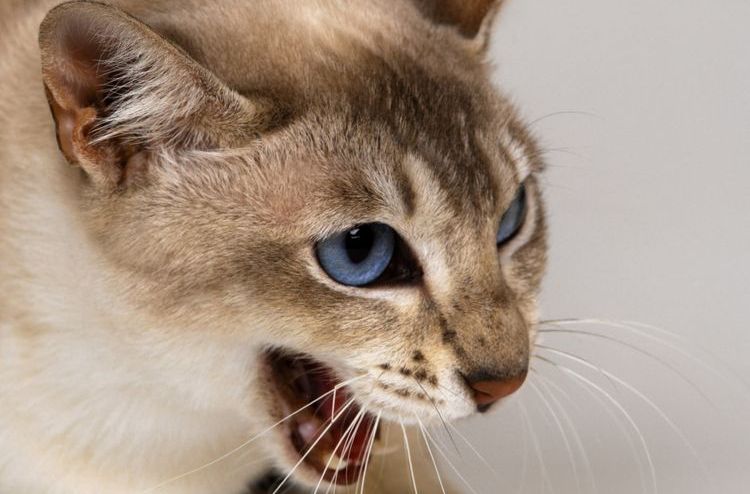
Unlike humans, cats cough by extending their throat forward, arching their back, and producing a distinctive coughing sound. This condition requires a thorough diagnosis, as it indicates a respiratory tract disorder.
Below are the main causes of cough.
The presence of a hairball in the stomach
When a cat licks its fur, hair particles enter the stomach and gradually form a dense hairball, called a trichobezoar. This hairball irritates the stomach lining, causing the cat to try to expel it.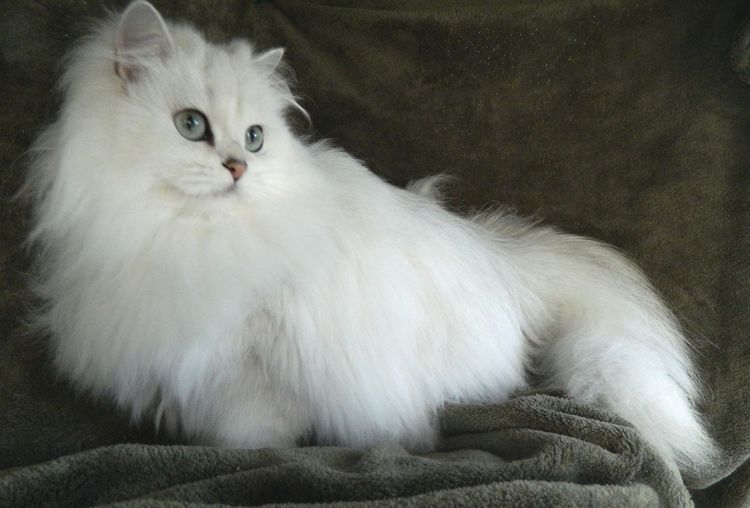
This phenomenon is considered normal and occurs periodically in all pets, especially those with long hair. In this case, a specialist may recommend a special food or hairball-dissolving paste; using these remedies will significantly reduce the coughing.
Throat injuries
If your pet's main diet consists of fish or poultry with bones, there's a risk of damaging the mucous membrane if they eat these foods carelessly. Another danger is pet toys, which can easily be chewed into pieces and accidentally swallowed.
Microtraumas can cause a persistent sore throat, which resolves on its own over time. If the injury is severe or the sore throat persists for a long time, consult a specialist who will examine your pet's throat and prescribe antibacterial and healing medications.
Viral diseases
Your the cat sneezes Is your cat coughing and has watery eyes? This could indicate a viral disease, which often affects animals with weakened immune systems. The most common viruses are herpes and calicivirus. Irritation of the mucous membrane triggers a natural cough reflex.
Associated symptoms of such pathologies include a runny nose, elevated body temperature, as well as lacrimation and inflammation of the eyeball.
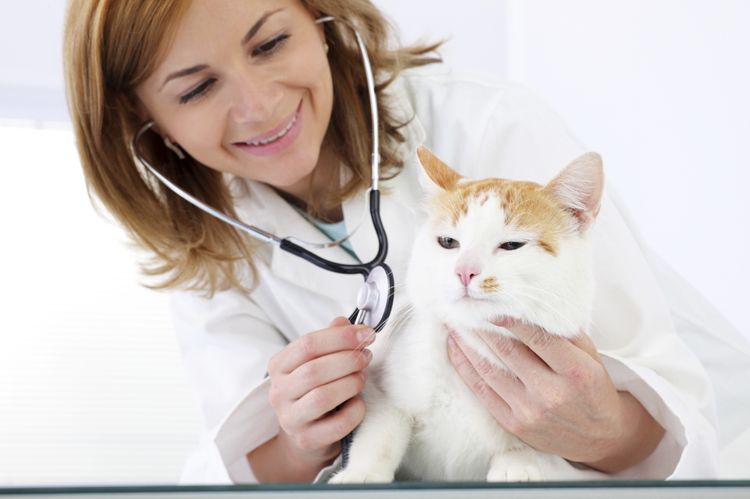
If symptoms don't resolve on their own within a few days, your cat should be examined by a veterinarian, as self-treatment can only worsen the condition and lead to complications. The only preventative measure against viruses is vaccination during childhood.
The presence of helminths in the body
Even if your pet does not go outside, it can still become infected with helminthiasis, that is, wormsThe thing is, people bring parasites in from the street, even on their clothes and shoes, and cats love to greet their owners at the door and happily rub against them!
In this case, there's a high risk of infection, as helminth larvae penetrate the stomach and multiply throughout the body, including the respiratory system. The result is a sore throat, coughing, increased appetite, and weight loss. After laboratory testing, the veterinarian will prescribe appropriate treatment.
Pneumonia
Pneumonia isn't limited to humans; cats also suffer from this dangerous disease. The main symptoms are elevated body temperature, loss of interest in food, and a dry cough.
Moreover, the pathology develops rapidly: the animal may begin coughing literally the next day after contact with cold water; walks on the balcony in winter also pose a danger.
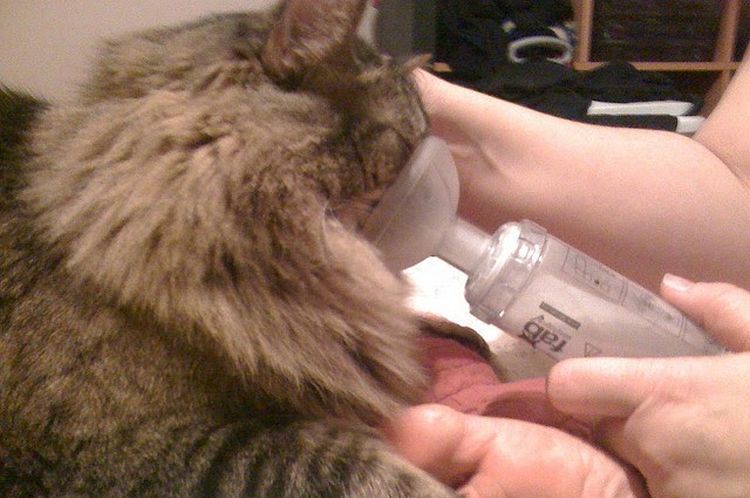
It is worth noting that cats pneumonia It rarely occurs as an independent disease; much more often, it is a complication of other serious pathologies (for example, heart failure), which is why a veterinarian must conduct a comprehensive diagnosis.
Asthmatic diseases
Coughing with this pathology occurs in fits and starts, and during the cough reflex the animal may begin to choke.
What to do if your animal is coughing?
Many cat owners often wonder what to give their cat for a cough. Unfortunately, such conditions cannot be treated at home, as only a specialist can determine the true cause of the cough reflex after performing an X-ray, ultrasound, and laboratory diagnostics.
That is why, if the cough continues for several days, and the animal becomes apathetic and refuses its favorite food, it is necessary to show it to the veterinarian as soon as possible.
Basic principles of diagnosis and treatment of cough in cats
Diagnosis of the disease includes the following studies:
- Clinical examination (the doctor pays attention to the general condition of the animal, measures body temperature, examines the mucous membrane of the oral cavity and the eyeball).
- Laboratory tests. Blood and urine tests are mandatory, which help identify inflammatory processes in the body.
- Examination of internal organs (X-ray of the respiratory system, cardiogram to detect cardiovascular pathologies, etc.).
For asthmatic conditions, the doctor prescribes courses of antihistamines and hormonal medications, and corticosteroids are often used. However, treatment for bronchial asthma is lengthy, and often the animal will need to be given courses of medication for the rest of its life to maintain a stable condition. In most cases, asthma is It is a seasonal disease, so it is recommended to give medication twice a year – in spring and autumn.
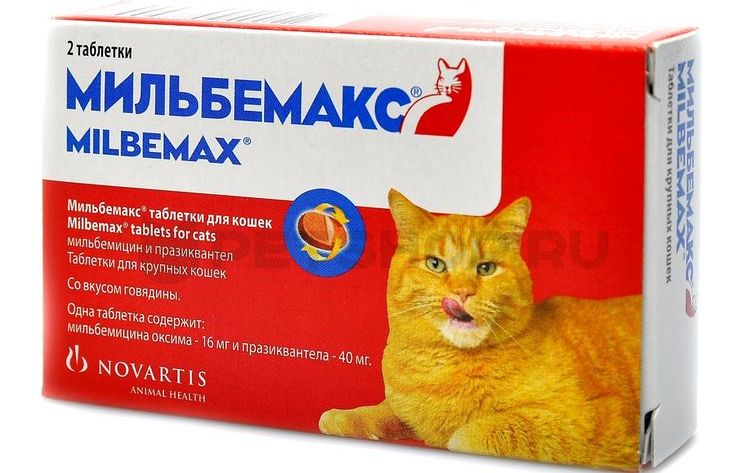
Invasive cough reflex, that is, when infected with helminths, is treated with deworming medications, which should be given to the cat every six months (thereby providing not only treatment but also reliable prevention of this disease).
Coughs caused by viral infections can be successfully treated with modern antibacterial medications, as well as expectorants. Within a few days of such therapy, the animal's condition will improve, and the coughing will become significantly less frequent. However, in some cases, administering medications that suppress the cough reflex is not recommended: this is done to ensure that all pathogens leave the body as quickly as possible.
Preventive measures
How can you prevent your cat's cough? Preventative measures will help keep your pet healthy:
- Strengthening the immune system is crucial. Twice a year, during periods of exacerbation of chronic illnesses, your cat should take vitamin supplements recommended by your veterinarian. Modern vitamins for animals have a rich and pleasant taste, so your pet will happily eat the aromatic tablet.
- Timely prevention against the occurrence of helminths will help avoid infection.
- Avoid hypothermia of the animal: prolonged stay on the balcony in freezing temperatures is not allowed.
- Keep your cat up-to-date on vaccinations against diseases such as distemper, laryngotracheitis, and so on. This will help your cat grow up strong and healthy.
Therefore, a cat's cough in most cases indicates a medical condition. Self-medication can lead to unwanted complications and even death, so if you notice a deterioration in your pet's health, schedule an appointment with a qualified veterinarian as soon as possible.
Any questions? You can ask our website's staff veterinarian in the comments below, who will answer them as quickly as possible.
Read also:
- Pulmonary edema in cats
- What to do if your cat is breathing heavily with its mouth open
- Diseases of elderly cats


13 comments
Elena
Hello, please help! My cat is 1 year and approximately 1-2 months old. I haven't had any vaccinations. Over the past two months, my cat has been having one serious accident! He got into a fight with another cat and seriously injured his back paw. It was infected, and just as the paw was starting to heal, he managed to cut his other paw (he was probably in shock, just like me). Now his paws haven't fully healed yet, and he's lost his voice after two weeks. Today, he developed a runny nose with discharge, and I think he has a fever. Overall, it's a complete mess; I've never had such a problematic cat. Please help. How can I help him?
Daria is a veterinarian
Hello! Well, first, we need to take the temperature to determine if there is one. Were antibiotics used? How were the wounds treated? It's possible that the cat licked its injured paw, as it was festering, meaning bacteria. These bacteria could have entered the mouth during licking and led to inflammation there (the immune system is apparently severely weakened). Furthermore, pathogens are carried throughout the body via the bloodstream, which can trigger inflammation in other organ systems. Infection from other animals is also possible.
Daria is a veterinarian
Regarding the loss of voice: is the cat a "screamer"? Could it have lost its voice? Perhaps it drank cold water? Speaking of drinking, is it drinking? Has its behavior changed? Is there any aggression or, conversely, excessive affection? The animal is unvaccinated, wanders the streets, interacts with other cats, and fights. Are you worried about rabies? The animal needs to be taken to a clinic and thoroughly examined! It's good if it's just a common cold; even viruses and bacteria can be eliminated if treated promptly. But rabies is incurable! Take the animal for a vaccination immediately after two weeks of recovery!
Lyudmila
Good afternoon! My cat (a Thai breed) occasionally coughs (wheezes), usually rarely, a few times a month. This morning, the coughing was persistent and repeated a couple of times. In 2012, she was diagnosed with bronchitis and tracheitis and treated. In 2014, we also went to the vet about the cough. They did an x-ray, but nothing serious. They suspected asthma. They told us to get an x-ray every 3-4 months. Should I take her to the vet for an x-ray?
Daria is a veterinarian
Hello! Well, in 2014 (five years ago), you were told to get checked more often (at least once every six months, at least once a year, not every quarter, since X-rays aren't that safe, and there's the concept of an annual effective dose). But with asthma, it wasn't really a wheeze, more like a whistling sound, because the bronchial lumen narrows significantly. And the attack itself wouldn't stop; medication would be necessary. This is most likely a recurrence of bronchitis or tracheitis. But you need to get checked, at least to listen to your breathing, and an X-ray wouldn't hurt to rule out more serious pathologies. Have you had parasite treatments?
Lyudmila
We drive out parasites once every six months.
I also think her bronchitis is getting worse. Is it becoming chronic? It's when the house gets chilly and she starts coughing in the winter. But if it's bronchitis or tracheitis, would it just be one coughing fit? Her general condition isn't changing; she's eating and running around as usual.
Is an X-ray done specifically for the lungs? Or is the entire body always X-rayed? We just did one last year to check for an obstruction (she was vomiting and hadn't eaten anything). They didn't say anything was wrong with her lungs back then.
Daria is a veterinarian
Hello again! Once every six months isn't enough. The recommended treatment plan is at least once every three months. With the chronic form, the symptoms aren't as pronounced as with the acute form. The temperature should have risen again, but if it really is chronic, the rise was minor and only lasted a couple of days. Next comes the "residual" cough. They'll do a chest X-ray, but the whole body will be exposed. No one will put a lead apron on the animal. Last year, they might not have mentioned it because there weren't any problems, or because they only looked at the intestines and didn't even look at the chest area. After the X-ray, introduce calcium-rich foods (kefir, sour cream, or, at a pinch, low-fat milk) into the animal's diet for at least a week.
Kate
Good afternoon, my cat has a cough and then wheezes for a couple of minutes, is this serious and how can I help her?
Daria is a veterinarian
Hello! The best thing you can do is have your pet examined by a veterinarian. It could be bronchitis, which is progressing to pneumonia (hence the wheezing). It could also be an infectious disease, requiring urgent antibiotic therapy and specific serums, immunostimulants/immunomodulators, and antivirals. Listen to your pet's lungs (breathing) to see how harsh they are. A complete blood count will also reveal whether there's a viral infection or just inflammation. Only after a thorough examination can a treatment plan be adjusted.
Tanya
My cat has a severe runny nose. What should I do at home? She's almost a year old. She probably has a cold.
Daria is a veterinarian
Hello! Are you so sure it's just a cold? Have you ruled out infectious diseases and an allergic reaction yourself? In any case, the animal should be given a course of antibiotics (intramuscular injections are best, at least amoxicillin-based, fortunately, there are plenty of medications containing it as an active ingredient and readily available in human pharmacies). Add vitamins and metabolic "stimulants," and MAYBE the animal will recover after 5 days of therapy. But that's assuming it's just a cold! Not a serious medical condition.
Vetch
Hello. Please help! My cat is 1 year and 2 months old and has a progressive, paroxysmal cough. His lungs are inflamed (X-ray). We gave him Sumamed as prescribed for 15 days, then he recommended Unidox Solutab. The cough has gotten worse. We checked his heart (ultrasound) and it's normal. We gave him deworming medication. He's a mixed breed cat (looks like a Russian Blue, but is fluffy). There were suggestions of allergies (we fed him Hill's ZD). Tests showed mycoplasmosis. He doesn't have Bordetella or rhinotracheitis. He's a house cat, but he hasn't been vaccinated against anything (he had a weak immune system as a puppy). Please help, what should I do and what else could it be?
Dasha is a veterinarian
Hello! It's possible that this cough is caused by mycoplasma. To help your pet, you first need to treat these insidious microorganisms. Have you tested positive for chlamydia and toxoplasmosis (using PCR testing)? Please understand that mycoplasma treatment isn't quick, as these aren't common pathogens. They are similar to both bacteria and viruses (obligate parasites, like chlamydia). Therefore, treatment often takes 3-4 weeks. Sumamed is generally suitable for treatment. As for the worsening cough, well, that's often a good sign (sputum is easier to clear). For pneumonia, anti-inflammatory medications, antibiotics, and physical therapy wouldn't hurt. If it were an allergy, there would also be watery eyes, a runny nose, itching, and possibly a skin rash. You would also notice an increase in eosinophils in your blood test.
Add a comment