
Why do cats bury food?
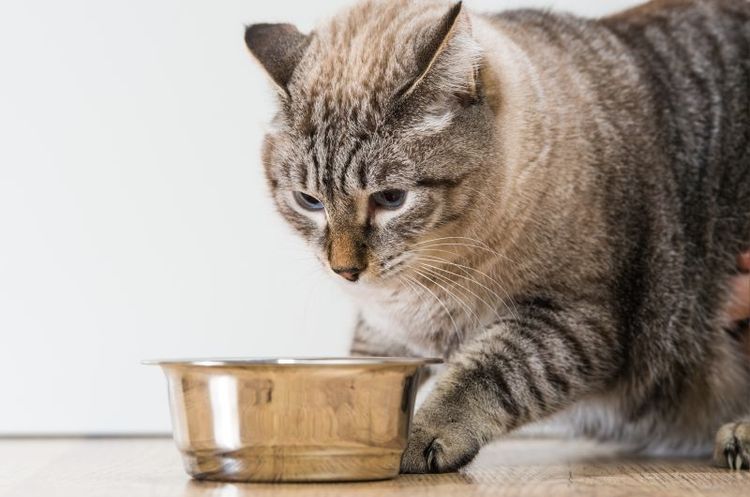
The sight of cats diligently attempting to bury their food bowls is endearing to some owners, but alarming to others. This might seem like a normal occurrence, but some pets try to hide the remains of their breakfast, hiding them in the most unexpected places around the apartment. So why do cats bury food? The easiest way to determine this is by observing your pet's behavior and taking into account the manifestation of an ancient instinct.
The behavior of four-legged pets is determined by two global factors: innate instincts and acquired habits.
Ancient instincts
Unconditioned reflexes essential for survival are inherited by all living creatures. Cats are among the domesticated animals in whom these reflexes are most acute. The desire to bury a food bowl is one of these ancient instincts. In the wild, their wild relatives use this method to hide leftover food from competitors. This allows them to satisfy one of their most fundamental needs: hunger. After all, a wild cat doesn't return from every hunt with prey in its mouth. Having a cache of food stashed away is vital for them.
Competitors living in the house can also provoke a pet to display hoarding behavior. This is because wild cats living in prides always maintain a chain of command. In domestic settings, when a pack consists of members of different families, this chain of command is often broken.
The second unconditional instinct that can explain why a cat buries its food bowl with its paw is the desire for cleanliness. Cats are natural predators who cannot reveal their location by scent. By hiding food scraps with a pungent, attractive scent, a wild cat achieves two goals: minimizing the risk of being detected by prey and camouflaging itself from a larger predator prowling nearby.
A natural instinct to maintain cleanliness can be triggered when an animal detects an unpleasant odor. Unable to dispose of the "nasty" in the trash, they have no choice but to bury it deep.
Cats most often react this way to cheap dry food with a strong, sour odor. A pet may try to bury the food bowl if the food has become damp during long-term storage.
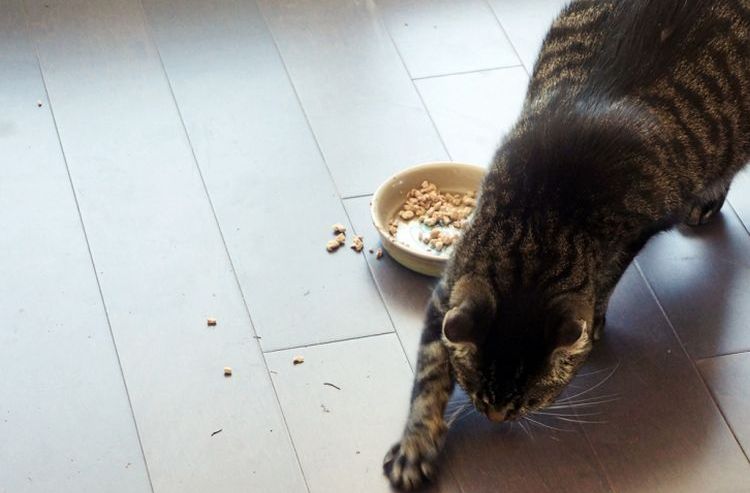
If at any point your pet starts refusing high-quality dry food, don't rush to replace it. This could be temporary. After all, cats, like people, are quite moody. Your pet may simply be temporarily changing its taste preferences, taking some "fasting" days.
By emptying the bowl with a paw and moving the food to another area, the animal may signal that the feeding area is uncomfortable. The only way to solve this problem is to "listen" to these signals and move the bowl to a secluded corner where no one will disturb it during the meal. Read about what a bowl should be like on our website. the right bowl for a cat.
Acquired habits
A very common occurrence is when a cat, after eating, tries to dig up its supposedly hidden food rather than bury it. It diligently scratches the floor, trying to "dig up" more food. This behavior is explained by the animal's desire for satiety. However, this doesn't necessarily mean the animal is currently hungry.
This is often the behavior of cats found on the street, who experienced hunger as young cubs. Their habit of hoarding food is a result of life experience. By hiding food "for a rainy day," they protect themselves from the pangs of hunger ingrained in their subconscious.
But even in this case, don't indulge your pet. You should still clear the plate after each meal and feed according to a schedule. Just gradually increase the portion and observe whether the behavior changes.
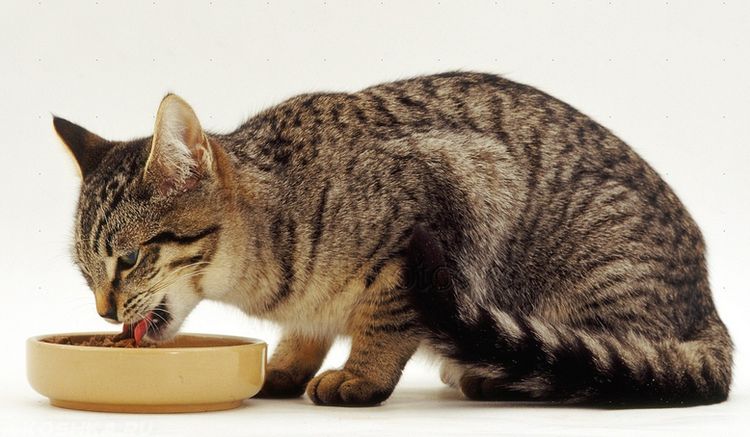
Some cats may experience increased digging or burying of their food bowl after eating in the fall and spring. Veterinarians explain this avitaminosis, which stimulates appetite.
Important note! Constant hunger can also be caused by parasites. Therefore, don't neglect quarterly deworming.
Any habit is the result of life experience, not only positive but also negative. For example, domestic cats, trained from puppyhood to use a litter box, clearly know that it is forbidden to use a toilet anywhere else. As kittens, they likely learned the full consequences of inappropriate behavior.
The same thing happens with the food bowl. Fearing the owner's wrath if the water bottle placed next to the bowl is knocked over and the owner might think the cat has urinated in the wrong place, pets often try to hide the puddle by burying it or covering it with food scraps.
Read also:
- How to make friends between a cat and a dog in an apartment
- Who is smarter: cats or dogs?
- Why you shouldn't kiss cats


Add a comment