
Why do cats sleep at their owners' feet?
Many cat owners complain that their pets seem to be constantly trying to climb onto the bed. And no amount of beds, houses, boxes, or other sleeping "apartments," which often cost a pretty penny, can entice their feline attention. So why does this picky pet choose to sleep at their owner's feet? What motivates them, and how can this strange behavior be explained? There are several theories.
Content
- 1 Why do cats choose their owner's feet?
- 2 Instincts and biological reasons
- 3 Psychological aspect and attachment to a person
- 4 How temperature affects cat behavior
- 5 Behavioral Signals: When It May Be a Sign of Stress
- 6 The main reasons why cats sleep at your feet
- 7 Tips for owners: how to ensure comfort and not disturb yourself
- 8 Why doesn't a cat always sleep at your feet?
Why do cats choose their owner's feet?
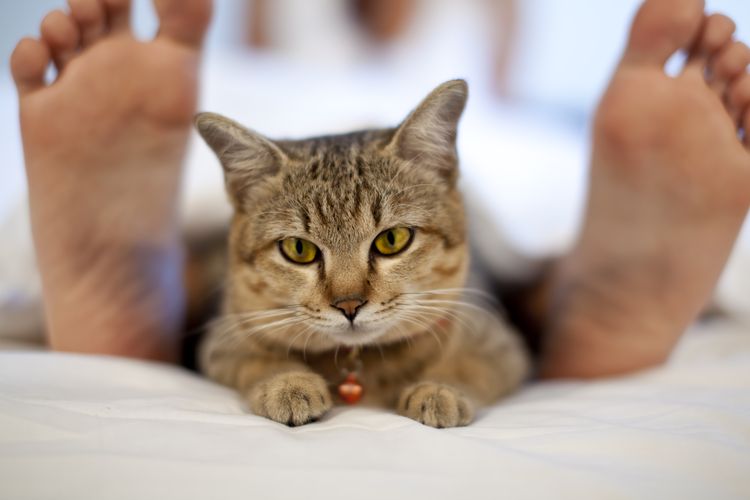
For many cat owners, waking up in the morning to a furry weight at their feet has become a familiar occurrence. But choosing this resting spot has more than just an emotional explanation. Feet move less than the head or arms, which creates a feeling of security and stability for the cat. The animal instinctively seeks a spot where it won't be accidentally crushed or moved during sleep.
Also, the feet often stay warmer because of the blanket, and warmth is a key factor for cats when choosing a sleeping place.
Instincts and biological reasons
The ancestors of domestic cats slept in secluded places where they were less likely to be attacked by predators. The position at the feet of their owner resembles these conditions: the animal controls the territory and, in case of danger, can quickly leave the area or awaken the owner.
The cat senses the rhythm of its breathing and leg movements, perceiving them as the "pulse of the house," which provides additional reassurance. In some cases, this behavior indicates that the pet perceives its owner as a leader, someone with whom it feels safe.
Psychological aspect and attachment to a person
A cat sleeping at your feet is a sign of trust. Unlike cats who sleep on a pillow at your head, this choice of feet indicates balance: the animal wants to be close but doesn't intrude on its owner's personal space. This is especially true for cats with independent personalities who prefer distant contact.
It is believed that this choice is also associated with an emotional connection: the cat feels the owner's scent and warmth, but leaves itself a zone of freedom.
How temperature affects cat behavior
Temperature plays an important role. The blanket's foot area maintains an optimal temperature—not too hot or too cold—which is ideal for cats' thermoregulation. During the hot months, many cats prefer to sleep separately, but in winter, they return to the foot area.
Table of the influence of temperature on a cat's choice of sleeping place:
| Season | Cat behavior | Likelihood of sleeping at your feet |
|---|---|---|
| Winter | Looking for the warmest places | High |
| Spring | Can move around the bed | Average |
| Summer | Seeks cool surfaces | Low |
| Autumn | Again, he is drawn to warm places | High |
 Behavioral Signals: When It May Be a Sign of Stress
Sometimes sleeping at your feet can be associated not only with comfort but also with anxiety. If a cat suddenly starts sleeping exclusively at your feet, although it never did so before, this may indicate:
-
moving or changing the environment;
-
the appearance of a new pet or person;
-
increased noise levels or stress.
In these cases, the cat seeks stability and support, and the owner’s legs become a “refuge” for it.
The main reasons why cats sleep at your feet
Esoteric
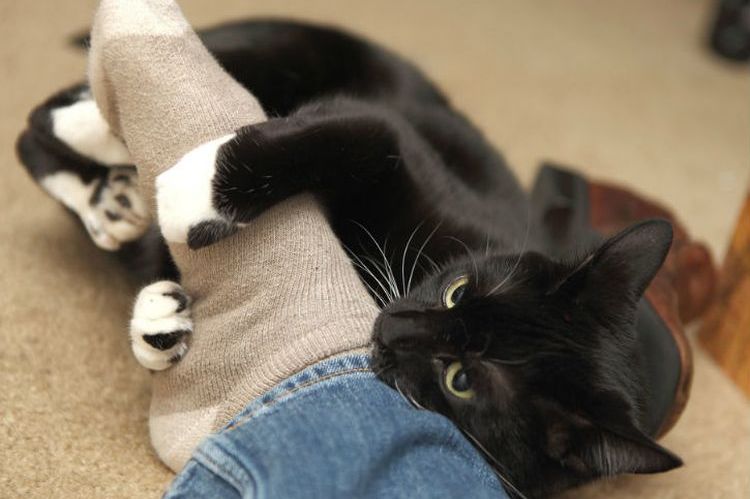
According to bioenergetics experts, humans draw energy from the cosmos through their heads. As it passes through the body, some of the positive charge becomes "contaminated" and negative. Negative energy exits through the feet into the earth. Being naturally sensitive to geomagnetic fluctuations, cats have the ability to cleanse clogged auras and neutralize negativity.
They intuitively identify their owners' most problematic areas and, just as unconsciously, heal the "holes" in their energy fields. There are many cases where people confidently claim that their furry pet healers helped them get rid of varicose veins and other ailments related to poor circulation in the lower extremities.
Biological
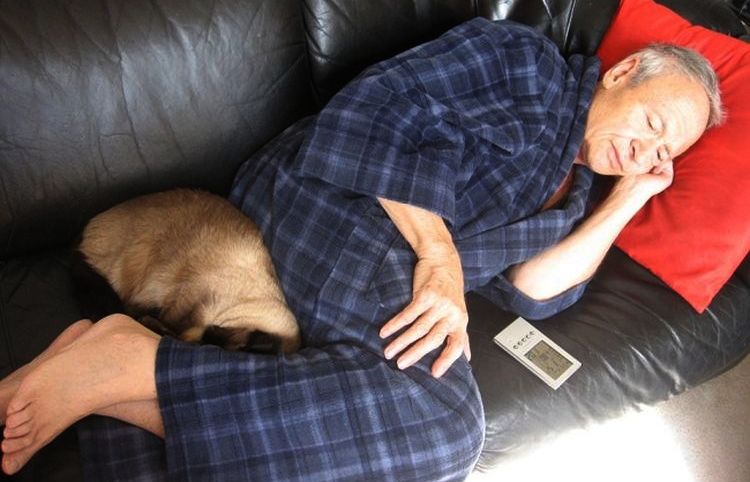
Everyone knows that cats love to warm themselves near radiators, on stoves, couches and other warm objects. The instinct for self-preservation compels animals to seek a safe place to sleep to prevent hypothermia. Human body temperature is significantly warmer than room temperature. As the saying goes, it's dry, cozy, soft, and comfortable. The choice of location is also determined by the fact that getting kicked in the night is less frightening and dangerous than being accidentally crushed by someone's body, especially if the owner's build is far from ideal.
Medicinal
There are many opinions regarding the healing properties of cats. Some believe all tales of alternative medicine are complete nonsense, while others, on the contrary, are convinced of its usefulness and effectiveness. It is believed that pets can pinpoint sensitive areas on the human body and positively influence well-being.
Any inflammatory process is accompanied by an increase in body temperature, either in the general body or in the affected area. Cats accurately recognize where "first aid" is needed and will settle down in that spot. Their treatment doesn't necessarily involve only the lower extremities, but very often, the legs are the focus of a cat's attention.
Emotional
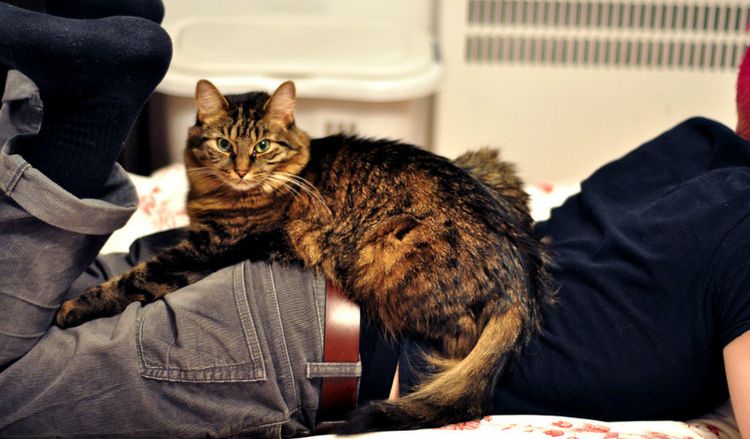
Like any living creature, cats need not only physical comfort but also emotional one. Having a pet means taking full responsibility for it—feeding, caring for it, playing with it, petting it, and pampering it. It's no surprise that cats view their owners as "mothers" and subconsciously reach out to them for more care and affection. It's precisely this desire to feel calm, safe, and secure that drives cats to seek refuge at your feet, perceiving them as the most secure refuge.

Consumer
This theory is a bit utopian, but it's not entirely without logical sense. Everyone knows how cats love to be in control and aware of everything going on in the home. They even sleep while always "on alert"—the slightest rustle and their eyes instantly open, their tails prick up. By choosing to sleep at their owner's feet, these sly little creatures kill two birds with one stone. On the one hand, they provide themselves with a warm and soft sleeping place, on the other, they're unhindered by any obstacles and can easily jump off the edge of the bed to avoid missing anything important, like the opening of the refrigerator in the kitchen or their owner's return from fishing.
Despite the claim that all cats are selfish and don't feel much affection for humans, love is still present. Otherwise, how can one understand why they are completely indifferent to and ignore some family members, while begging for affection and following others around? Sleeping at the feet of their owner is perhaps the most visible proof of their love and respect.
Tips for owners: how to ensure comfort and not disturb yourself
If your pet is interfering with your sleep but you don't want to deprive them of their closeness, you can create a separate "leg zone." To do this:
-
use a soft rug or small pillow at the foot of the bed;
-
offer an alternative next to the bed (a basket or a soft bed);
-
Monitor the room temperature so that the cat can choose other places.
Why doesn't a cat always sleep at your feet?
Some animals prefer to change their habits: sleeping on a windowsill, in a chair, or on a pillow. This is normal and is due to their independent nature. The absence of a cat at your feet does not indicate a loss of trust—it's simply a temporary change in preference.
Read also:


2 comments
Elena
I've been struggling with my cat's cystitis for two months now. I've been to the vet, and it's no use. I'm tired, and my cat is tired. What should I do?
Daria is a veterinarian
Hello! Before offering any advice, it's important to learn as much as possible about your pet, as well as review the results of any examinations and treatment plans that weren't effective. First and foremost: when did the problem appear, was it caused by stress (has idiopathic cystitis been ruled out)? Was an ultrasound performed? Was a blood or urine sample collected? Was the urine sediment examined microscopically? Was a urine culture performed, and was the isolated microflora titrated to antibiotics to ensure the most effective treatment? What medications were prescribed, including the dosage, dosage, and course of treatment? Was everything strictly followed? Has the cat had any infectious diseases? What is the cat's diet like? Age and gender?
Add a comment