
Why do cats respond to hissing sounds?
Why do cats run to the sound of hissing sounds? Are they responding to their owner's voice, or is there something truly enticing about this combination of sounds? Scientists don't have an answer to this question, but it is known that high-frequency sounds are more attractive, so even a simple "ssss" sound can lure a Russian Barsik. There are different ways to call in different countries The cats are different.
Content
Reasons
Features of cat hearing
Cats have excellent hearing, capable of detecting sounds in the range of up to 64 kHz, significantly exceeding the human hearing limit of 20 kHz. This allows them to perceive high-frequency sounds, such as hissing and whistling, more clearly. Sounds such as "s" and "sh" fall in this range, making them particularly noticeable to cats. Such sounds can remind cats of the sounds made by their prey, such as mice or birds, which awakens their hunting instincts.
The influence of maternal behavior
At an early age, kittens learn to respond to sounds made by their mother. Hissing and whistling sounds can remind them of signals their mother uses to attract attention or warn of danger. This helps cats associate these sounds with a need to pay attention or approach.
Individual experiences and associations
Cats quickly learn to associate certain sounds with specific events. If hissing sounds are accompanied by positive actions, such as feeding or petting, the cat will perceive them as a signal for a pleasant event. This is a conditioned reflex that develops through repeated experience.
Territorial behavior and communication
Cats use sounds to communicate and mark their territory. Hissing can serve as a warning to other animals or as a way to attract attention. Therefore, hissing sounds may be perceived by cats as part of their communicative repertoire, which explains their response to such sounds.
The influence of breed and individual characteristics
Some cat breeds, such as Siamese and Balinese, have more sensitive hearing and may react more strongly to hissing sounds. Individual characteristics, including temperament and level of socialization, also influence a cat's response to certain sounds.
Hunter's Instinct
According to one theory, the hissing sound a person makes when saying "kis-kis" attracts cats because it resembles the "conversation" of mice. Therefore, the furry hunter immediately recalls its natural instincts, even if it has never been outside, and runs after its prey.
This sound also resembles the rustling of leaves or the hissing of another cat. Most often, cats turn intrigued upon hearing the hissing sounds. However, some owners note that their cats ignore the "ks-ks-ks" and respond only to their own name or command. This is one of the reasons why the hissing theory is not considered fully proven.
So what's the matter?
Different countries have their own way of calling a cat:
- Americans have kitty-kitty (although we hear kiri-kiri).
- In Israel - kisses, kisses.
- In the Czech Republic – chi-chi.
- In France - just a minute.
- In India, they make sounds similar to the natural "meow".
- In Italy - michu-michu.
- In Holland - pus-pus.
- In Korea - nabiya-nabiya.
- In Serbia - mats-mats.
This proves that the call that makes a cat come running is a habit that develops in kittenhood. Until a kitten learns to recognize its name, its positive emotions are associated with the sounds that precede treats, petting, or interaction with its owner. The mother cat responds to this same sound, and the kitten sees that this is correct and imitates her.
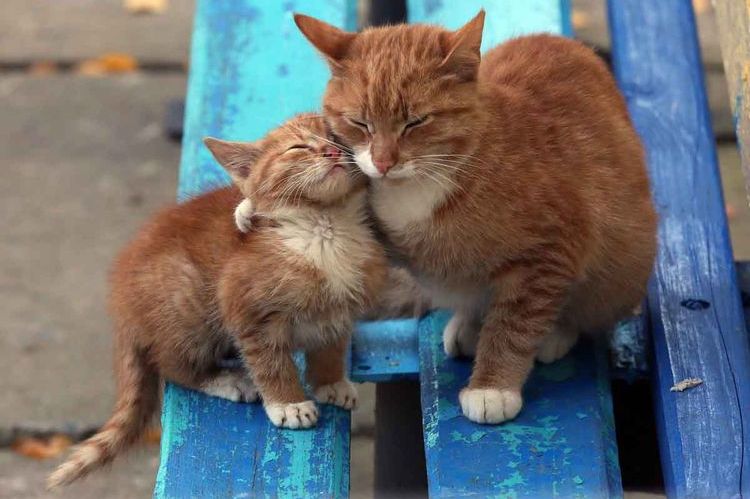
But if from birth you call a furry baby only by name, then as an adult, the combination of sounds “kitty-kitty” will not interest him, and he will come only when he hears the familiar “Murka” or any other name given by the owner.
What are cats called in different countries?
In Russia, the most common names are Murka, Kuzya, and Barsik. These nicknames are most often given to mixed-breed cats, as well as in rural areas. Urban pedigree cats often receive complex and unusual names.
Fact! It's easier for a cat to remember a name if it's short, no more than 2-3 syllables. If you can add a hissing sound to it, your pet will likely respond to the name you give him.
Persian cats are often called Perseus or Peach, while Siamese cats are often called Siam or Sin. Maine Coons are given the majestic names Zeus and Caesar. Sometimes they are given funny nicknames like Sausage, Candy, and Toffee. Among foreign names, the most common are Charlie, Alice, Jack, and Max. Some owners are guided by their furry friend's color: Gray, Ginger, and Turtle.
Americans prefer to name their cats Max, Tiger, Smokey, Oliver, Sammy, Oscar, Milo, and Buster. American cats are also named Molly, Lucy, Bella, Cleo, and Kitty. Read about the most interesting nicknames for cats on our website. gray cats, as well as for black cats and male cats.
The English will name a female cat Augusta, Beatrice or Wendy, and a male cat Vincent, Gary or Chris.
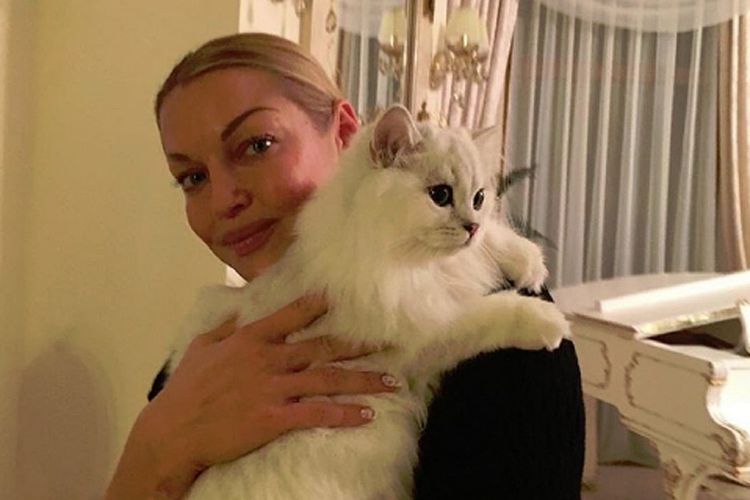
Interesting! John Travolta named his cat Barry, and Bill Clinton named it Socks. Nicolas Cage chose Lewis. Armen Dzhigarkhanyan named his furry friend Philisoph, and Anastasia Volochkova named him Georges.
The Japanese will name the cat Aiko, which means beloved, Akira - bright, Asa - dawn, Mai - dance, Ren - lotus, Haru - spring.
When does a cat start responding to its name?
How quickly a cat begins to respond to its owner's rewards depends on how often it is spoken to. It's important to remember that if you only use the phrase "kitty-kitty," the cat may not come running to its name.
It usually takes about two weeks for a kitten to respond to a call. You can let it know it's done the right thing by giving it a treat after it comes. However, scolding the cat by name is not recommended. This will cause the cat to associate it with trouble. Some owners find that the name or the call to come is remembered more quickly if spoken in a gentle voice.
Retraining an adult cat to respond to a different sound or name is more difficult. Patience is required. Always use the same call to call her to eat. Pet and praise her when she responds. A game will help her remember her name. To do this, attract her attention with a mouse and call her. When she comes running, say her name again and pet her.
Changing the call from "kitty-kitty" to "kitty-kitty" is not recommended. It's also not recommended to shorten a name once it's been spoken. Cats perceive specific sound combinations and become confused if they change.
A cat doesn't care what you call it. For them, the shorter the name, the better. Therefore, the combination of sounds the owner chooses to call their furry companion isn't all that important. The main thing is to stick to the choice, address the cat affectionately, and they'll come to any call.
Read also:
- Why does a cat lick a person's hands?
- Why do cats wash themselves so often?
- Why do cats sleep at their owners' feet?



Add a comment