
Cats don't taste sweet: why?
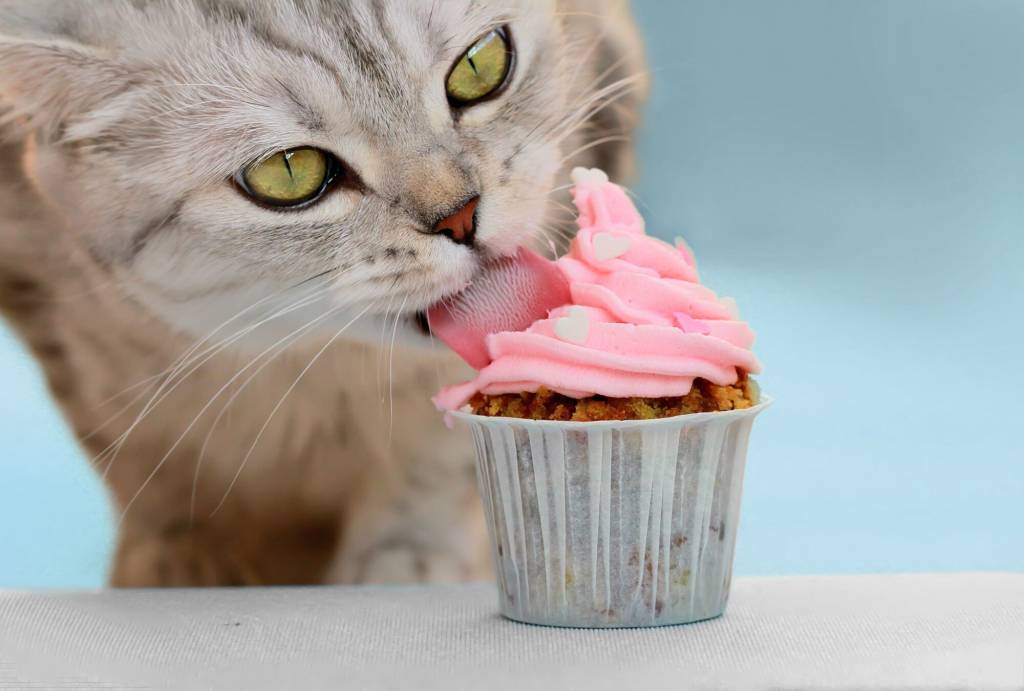
Cat owners are well aware that their furry companions can sometimes be real gourmets and refuse to eat. Many owners assume their pet is simply being picky. But the underlying reason for this eating behavior may be that cats have no sense of sweetness. Because of this, cats mistake cream with sugar for regular milk.
But why does this happen? American scientists from the Monel Sensation Center in Philadelphia believe that cats are unable to taste sweetness due to certain genetic and evolutionary biological mutations.
We can distinguish between the tastes of sweet and bitter foods. However, some carnivores are completely devoid of sweetness. Among them are domestic cats. Why do these animals retain the receptors that detect bitterness, which is primarily found in plants? A team of scientists led by Gary Beauchamp thoroughly investigated this question. The results of this study can be read in an article in the scientific journal Plos One.
Content
Studies of taste receptors in animals
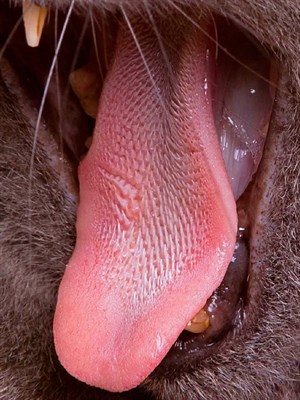
Researchers have proven that domestic cats are unable to taste sweetness in various foods. Although cats nominally have sweet receptors on their tongues, they have lost their function as a result of a mutation in the T1R2 gene. Scientists believe this occurred because cats primarily eat meat. Wild cats, such as cheetahs, lions, spotted hyenas, and tigers, also lack a sweet taste. Seals and sea lions also lack a sweet taste. However, cats and other carnivores can distinguish between other tastes, such as sour, salty, bitter, and umami.
The sensation of umami is caused by monosodium glutamate. This substance is found in pork, beef, chicken, and other foods. As many as 12 genes responsible for bitter taste receptors have been found in pets. Scientists decided to test the response of these genes to bitter substances. To do this, they transplanted these genes into cultured cells. The experiment showed that at least seven genes are responsible for bitter taste perception in cats. Unfortunately, the scientists did not have enough cultured cells to test the remaining five genes.
Number and types of taste sensations
Cats have approximately 470 taste buds, while humans have about 9000. They better sense bitter, sour, salty and especially umami — the taste of meat. Umami receptors are encoded by the same proteins as in other mammals, but in cats they are adapted to specific amino acids (ingredients of meat).
Peculiarities of perception of bitter taste
The researchers then compared the perception of bitterness in cats with that of other carnivores, as well as omnivores and herbivores. They found 15 receptors in dogs, 14 in ferrets, and 13 in polar bears. The herbivorous giant panda has slightly more bitter taste receptors on its tongue than its domestic counterpart, namely 16. This part of the study clearly and unambiguously demonstrated that the sensation of bitterness is in no way related to the amount of plant matter consumed by the animals.
Why cats don't need sweets
-
For carnivores, meat is their primary source of energy. Sugar played no role in their diet.
-
The loss of sweet taste buds is evolutionarily justified and does not reduce the ability to obtain food.
-
Maintaining bitter taste receptors is important for avoiding environmental toxins.
Do cats even sense sweetness?
The most accurate formulation of such an answer is: no, they don't feel itEven if a cat tries something sweet, it doesn't "taste" sugar the way we do. But sometimes it seems like it "loves" it. Why is that?
Why are cats still attracted to sweet foods?
Although cats don't have a sweet tooth, they may be attracted to other ingredients:
-
oily texture, especially in dairy products, ice cream, butter cream;
-
amylomorphic protein aroma, which evokes a response in the umami receptors;
-
instincts, aimed at experimentation, especially at an early age.
Behavior dependent on odor and texture
Taste perception is influenced not only by taste receptors but also by smell. Cats' sense of smell is 9-16 times stronger than humans'. Therefore, smell can be more attractive than sweetness. Many cats enjoy dairy products not for the sugar, but for the fats, proteins, and texture.
The harm of sweet treats
Even if a cat has no sense of taste, sweets are harmful to it:
-
increases the risk obesity, diabetes, liver diseases;
-
may cause indigestion, diarrhea;
-
artificial sweeteners (xylitol, aspartame) are even toxic to cats.
It is important not to give even “potentially safe” sweets, as fat and protein can lead to further weight gain and problems.
Practical recommendations for owners
If you are asked “do cats taste sweet?” or “do cats feel sweetness?”, answer this way: they don't feel, but may be interested in other product properties. To avoid feeding mistakes:
-
do not offer CHOCOLATE, candy, cookies - not even a piece;
-
treat me specialized cat treats format of standing textures;
-
Pay close attention to the ingredients - avoid sugar, artificial additives, lactose;
-
Do not use milk, only cat treats or special low-fat products.
Table: Comparison of taste sensations in cats and humans
| Taste | In humans | The cat |
|---|---|---|
| Sweet | + (Tas1r2 & Tas1r3) | – (Tas1r2 no) |
| Salty | + | + |
| Sour | + | + |
| Bitter | + | + (very sensitive) |
| Umami | + | + (meat-oriented) |
| Spicy | + (but not enough) | - (don't feel the spice) |
Conclusions
"The results of our work will delight cats and their caring owners," says study participant Jiang Peihua. "We discovered that cats can taste different types of bitter foods. This knowledge will help improve the composition of dry cat food and eliminate unnecessary ingredients."
The reason cats don't taste sweets is due to a lack of the necessary gene and an evolutionary adaptation. However, the sensation of texture, smell, and fat can create the illusion of sweetness. Owners should remember that even without a sweetness perception, foods containing sugar and dairy are harmful to a cat's health. This unique characteristic underscores cats' distinctiveness as carnivores and their preference for rich, protein-rich, and meaty flavors.
The study's results showed that cats are completely indifferent to various sweets. Their fussy eating habits are explained by the presence of various bitter taste receptors on their tongues. The study's findings will also help cat owners choose a diet that satisfies their pets' discerning tastes, and cat food manufacturers improve the quality of their products.
Read also:


Add a comment