
Why do cats lick each other?
Licking is a favorite activity for cats, regardless of breed or gender, devoting 30 to 50% of their active time each day to it. Today, we'll take a closer look at why cats lick themselves, as well as each other, their owners, and even their pet dogs. What does this process mean in cat language?
Why does a cat lick itself?
Cats are very protective of their fur and strive to keep it clean. This desire is genetically determined and operates instinctively.
Interesting fact! There are also "messy" pets, in whom this instinct is not expressed for whatever reason, but this is quite rare.
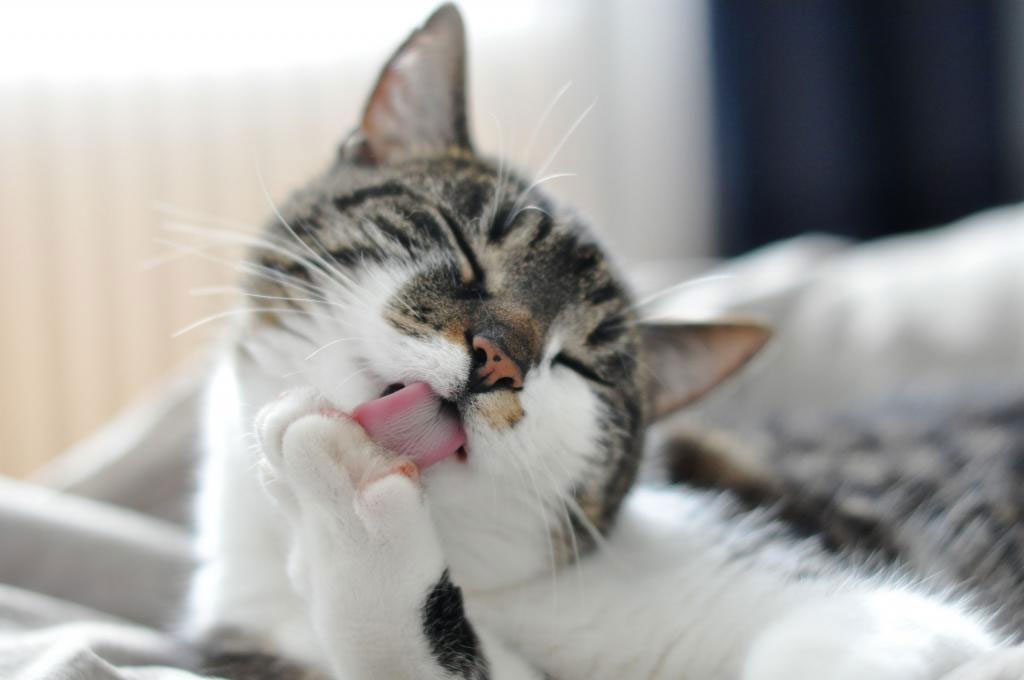
Cats lick themselves daily and receive many benefits from the process:
- The beauty of wool. Cats use their tongues to comb out dead hairs, remove excess undercoat, and, of course, clean all vital areas, from the tips of their paws to under their tail. This "grooming" allows the animal to maintain a healthy and shiny coat without bathing, distributing sebum throughout the hairs.
- Maintaining your scent. Cats are predators, so nature has instilled in them the desire to quickly get rid of any foreign odor that could scare off prey.
- Massage. The process of licking improves blood circulation in the skin.
- Pleasant sensations. The procedure definitely brings a pleasant sensation to cats (the body produces endorphins). While their fur is being cleaned, the animals feel calm and peaceful.
- Cooling the bodyOn hot days, cats lick themselves with their tongues to improve airflow into the lower layers of their fur and ensure more efficient heat dissipation.
Licking wounds is highly discouraged. Nature tells animals to remove the source of discomfort, but if left unchecked, they may lick the wound, which will increase inflammation, prolong the healing process, and even lead to infection.
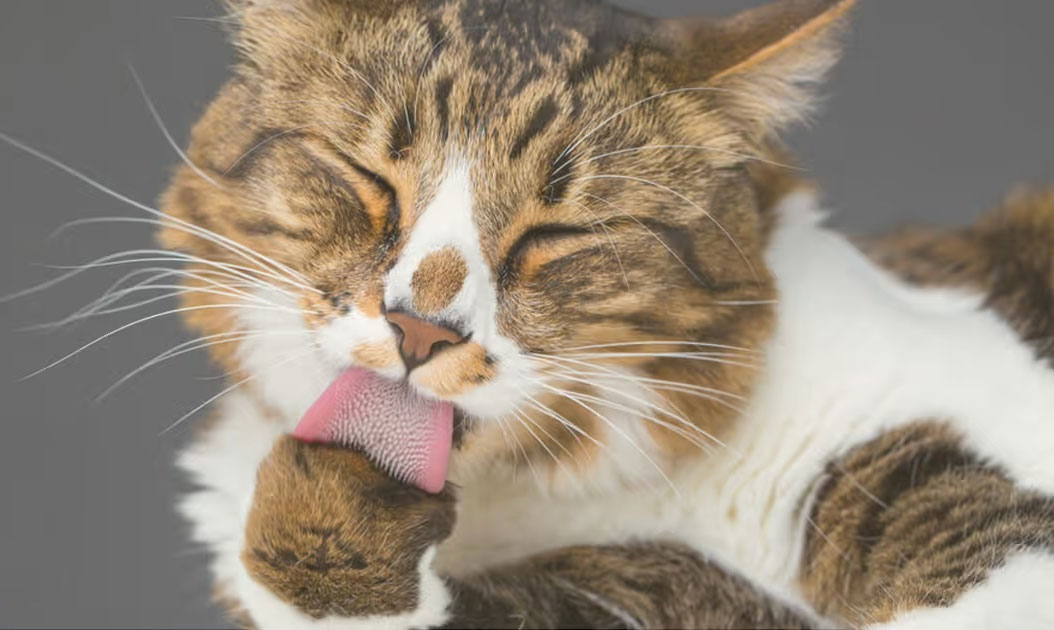
Interesting fact! The pattern and structure of a cat's tongue are unique. The bumps covering its surface are shaped like hooks curved inward, creating the "sandpaper" effect we feel on our skin when in contact with it.
This tongue is designed not only for combing fur but also for holding onto captured prey more firmly. They also assist in chewing food.
Why do cats lick each other?
It's common to see two adult cats living together licking each other's ears, heads, or faces. To understand why cats lick each other and other family members, it's important to understand what this behavior means in cat language.
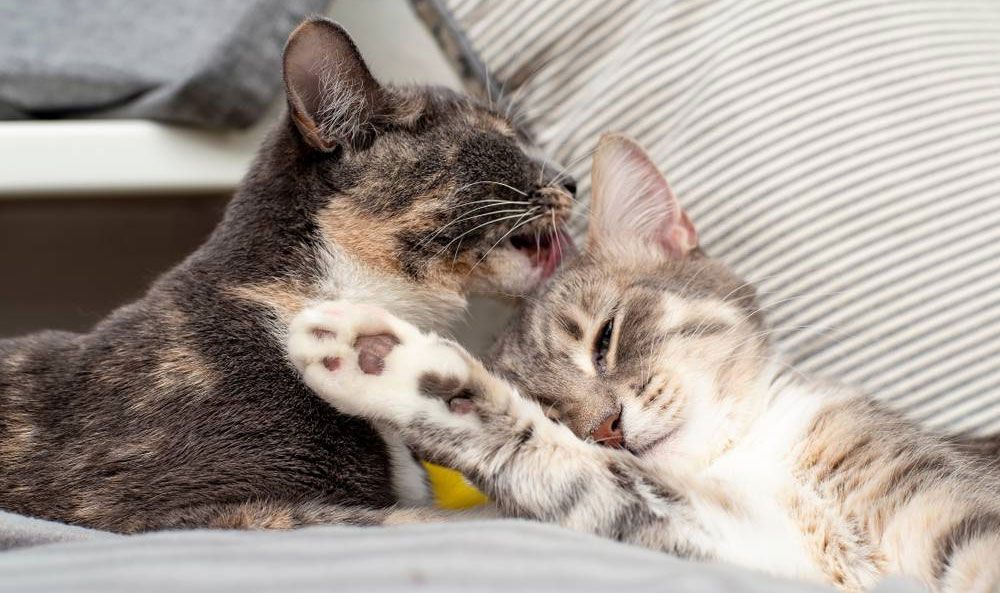
- Maternal instinctThus, a mother cat instinctively licks her kitten immediately after birth, cleaning its fur. Mother cats also regularly lick their kittens under the tail, thereby stimulating intestinal cleansing.
- Social connectionsScientists consider the process of licking other animals living in close contact with cats as one way of marking their close circle with their scent (a kind of "friends vs. non-friends" identification).
- The desire to pleaseYes, cats understand perfectly well that this process can bring pleasant sensations and happily share positive emotions with each other.
- Show of affectionBy licking their owner, a new kitten (someone else's), or another pet (including a dog) that has just arrived, cats demonstrate their affection. This may be a sign of acceptance or a demonstration of affection and care.
- HierarchyOwners are often puzzled as to why cats aggressively groom each other and then fight. The secret is that grooming another cat can be a sign of dominance or even hidden aggression. In this case, you'll notice that the "subordinate" cat will tolerate the "training process" with little pleasure, or will resist and bite the one attempting to establish dominance.
When licking may be unwanted
If your cats are constantly grooming each other, try to pay attention to their behavior and figure out what it means. If they're simply grooming each other and enjoying it, there's no need to worry.
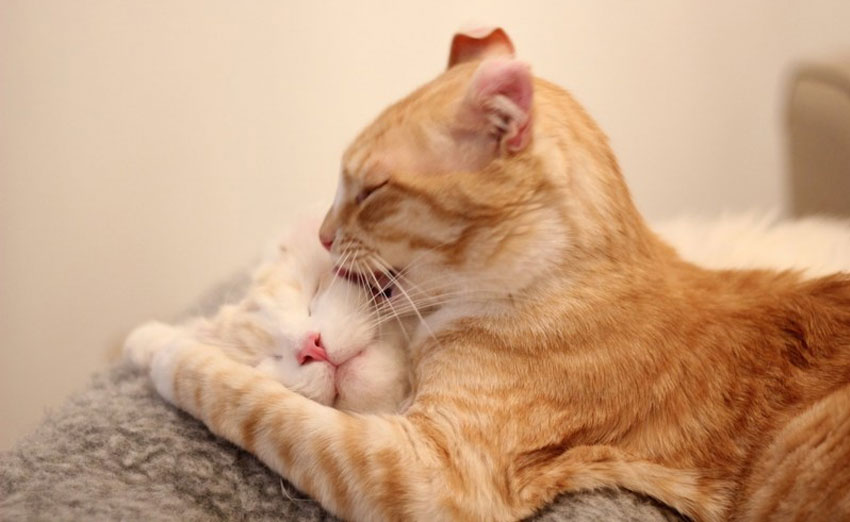
Causes for concern may include:
- licking wounds (on yourself or another pet);
- excessive licking, leading to the accumulation of large amounts of hair in the intestines;
- the appearance of areas of sparse hair on the body;
- special interest in the area under the tail (in cats this may indicate inflammatory processes);
- aggression, when cats first lick and then bite family members who do not want their attention.
If you notice your cat grooming excessively, appearing tense, nervous, or focusing on a specific area of their body, consult a veterinarian. This symptom may indicate itching or pain in the area, the onset of a skin disease, growths, subcutaneous parasites, or other causes that are sometimes difficult to determine without the help of a specialist.
Read also:
- Cat chewing wires: why and what to do
- Where did cats come from and how did they appear?
- Do cats and dogs taste sweet?


Add a comment