
Why do cats trample us with their paws?
When pondering the question of why cats knead us, many people draw the wrong conclusions. We tend to "humanize" our pets, endowing them with non-existent qualities and explaining their behavior with psychological reasons typical of humans. Yes, they too can love and hate, they too can be bored and happy, but ultimately, the main stimuli in a cat's life are instincts and reflexes.
Content
Why do cats massage with their paws?
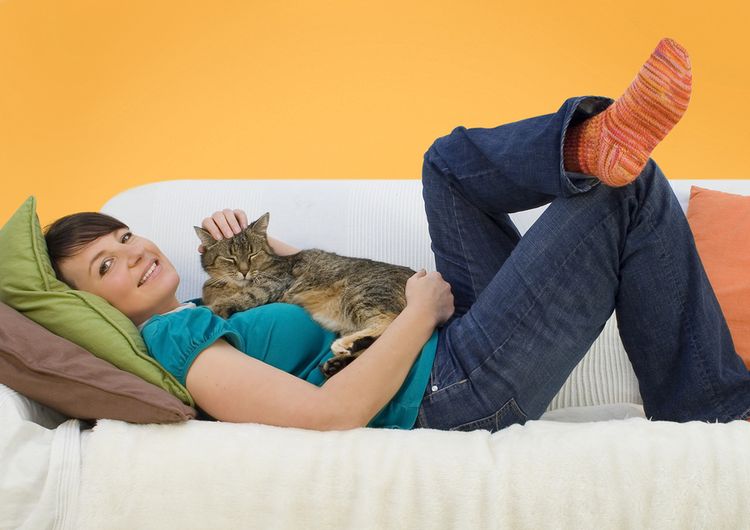
Rejoice, human! If you've been blessed with a cat massage, you can confidently join its family. We often make the unilateral decision to accept a furry animal as a full-fledged member of our family. Only the animal doesn't know it and continues to live on its own, as felines do in the wild. But when it suddenly sits on its owner's lap and begins methodically kneading it with its paws, seemingly entering a state of nirvana, the barrier is broken. The cat has accepted a human into its family!
Mom, give me some milk!
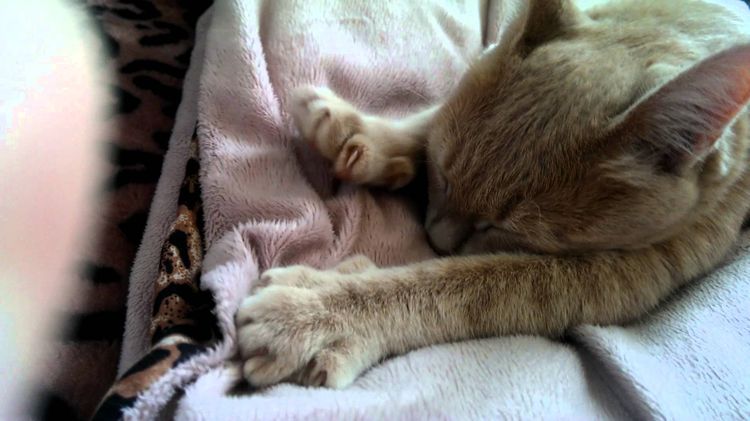
This is precisely the name for one of the most important reflexes a kitten is born with. A blind newborn kitten uses its scent to locate a nipple and begins to rapidly move its paws. It nudges its mother's belly, then gently scratches. Knowing nothing about the rules for stimulating lactation, it already makes full use of them. It's only natural that this kitten will be the most well-fed, healthy, and strong.
Now you know why your cat massages you with her paws. She considers you her mother. Or rather, the being on whom her life depends. She'll be incredibly happy if you stroke her fluffy back, because in her early, blind cubhood, her mother would lick her baby as it crawled in for dinner. Now, the adult animal meditates on your lap, safe, well-fed, and licked—that is, petted.
This is mine!
There's a theory behind this curious behavior. Knowledgeable cat lovers have long noticed that cats have a habit that's not very aesthetically pleasing by human standards. mark territoryThis behavior is typical only for males. But marking objects, paths, and bedding with their scent is also common among females. Does it seem like your cat is being affectionate when she snuggles up to your legs? No, she's marking you. This hypothesis answers the question: why do cats knead blankets or the dog that lives in the same apartment with their paws? Interestingly, the reflex is one, but it has many applications.
Mating dances
Observant cat owners know that cats sometimes hold their beloved companion by the scruff of the neck and passionately massage her back with their front paws. This is another way this reflex is used—to convey information: "You are mine, I am yours, now will be happiness!" Analyzing this situation, we find another answer to the question: why does a cat knead its owner with its paws? It wants to be with him. It feels good, and it communicates its deep feline love.
Checking the rookery
Many animal lovers have noticed that dogs diligently scratch their bedding before lying down. This behavior is also genetically programmed. If you don't scratch, you won't wake up. In the wild:
- need to hide;
- bury oneself;
- drive away snakes, ticks and beetles.
Perhaps cats also check their "bed" for stability and pest-free conditions when preparing for sleep. But why then isn't this always done? And even if they do test it by stamping, they often don't lie down in that spot. The conclusion is that this theory is incorrect.
Misconceptions
Sometimes "experts" in cat psychology explain their behavior by saying that by massaging something or someone, they experience psychological relief, and their bodies produce endorphins. But wait, when a person experiences pleasure from food, affection, or sex, doesn't the happiness hormone also occur? This explanation puts the cart before the horse, confusing cause and effect. The actual kneading of the paws is caused by pleasant feelings, joy, and not the other way around. You might as well say that Barsik purrs in order to become happy.
Don't believe it when, when asked why cats knead us and purr, they tell you about therapeutic massage. Yes, the warmth of a loving kitty is healing, relieving spasms and even nervous tension. Yes, she often chooses painful, feverish spots to cuddle and warm up. But cats perform their "massage" not on their owner's problem areas, but wherever they feel most comfortable.
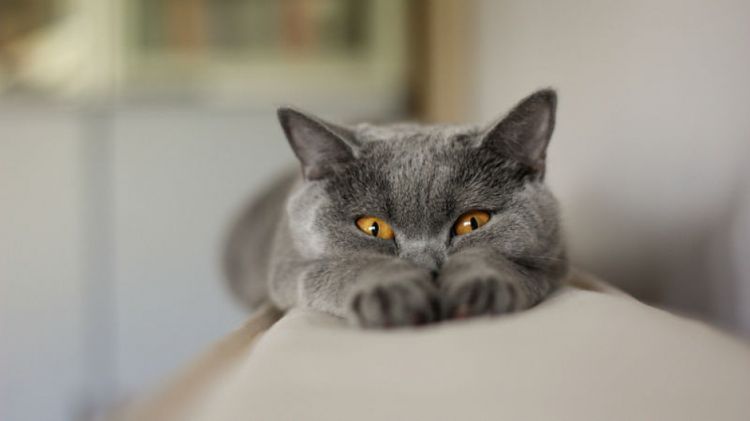
Observing cats at home, we notice that, while they are sensitive to and select warm spots, they are completely indifferent to the softness of their sleeping surface. Therefore, the hypothesis that they trample their future sleeping area to make it softer can also be discounted.
Interesting facts
An interesting experiment was conducted unintentionally and accidentally at one of the catteries. A rare breed was being bred, and the mother cat refused to nurse her litter. Six blind newborn kittens were divided into two groups. Three were nursed by a diligent lab technician. She wrapped each kitten in a napkin to protect it from getting dirty, picked it up, and fed it milk from a nipple.
The second group was fed by a trainee. He simply placed three bottles sideways on the bottom of the box and went about his business. After two months, a difference in the kittens' physical development became noticeable. Those kittens who received food without exerting much effort, without moving their paws, or massaging the bottles, were not viable. The sad conclusion of the experiment demonstrated the benefits of the reflex. Among other things, it strengthens the kittens' muscles and develops their physical development.
Read also:
- Why do cats bring their prey to their owners?
- Why does a cat bite when you pet them?
- Why you shouldn't hug cats


1 comment
WomensNews
Surely every cat owner who observes their pets has noticed something interesting or mysterious in their behavior. One of the most common questions that preoccupies these animals' owners is why they often paw at people while purring loudly. What does this mean? What is the reason for this?
Add a comment