
Why do cats eat grass?
Why cats eat grass, and which ones they can and can't—that's what we'll discuss today. Many cat owners are surprised when they first notice their pet plucking grass or houseplants. And their surprise is understandable: a carnivore to the core, who should be eating only meat, suddenly starts acting like a herbivore. What's the reason for this behavior, and why does a kitten need to eat grass, just like adult cats?
Content
Reasons why cats eat grass
There's no definitive answer to the question of why cats eat grass, and scientists still debate what motivates these graceful predators to indulge in unusual foods. Several main theories have been put forward regarding why these animals eat grass. grass to:
- Eat;
- Cleanse the stomach;
- Get the necessary vitamins and microelements;
- Prevent indigestion.
Each of these assumptions has its justification, but some don't stand up to scrutiny. Let's take a closer look at each option.
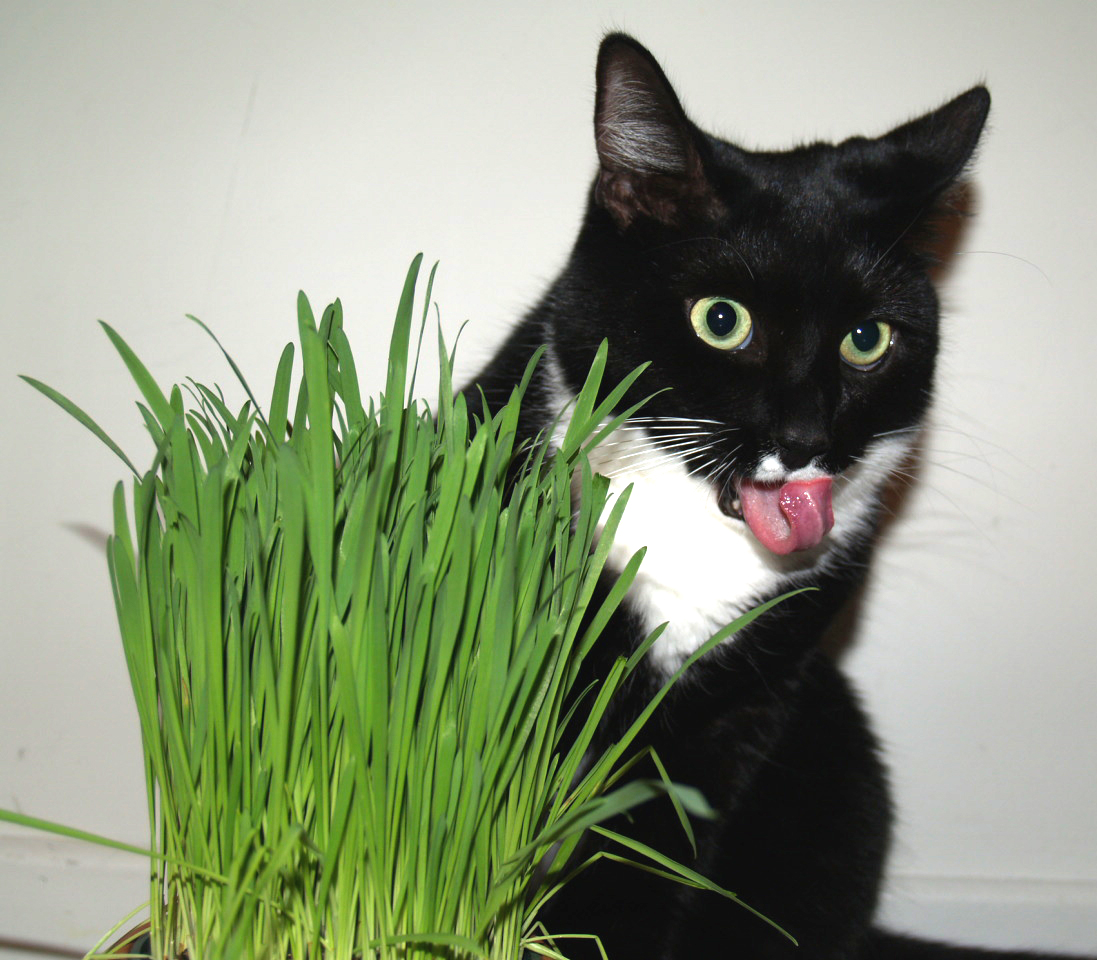
Grass-fed
One of the most obvious misconceptions, yet still widespread among people, is that cats can't eat grass because they simply lack the enzyme needed to break down plant fiber. Simply put, they are physically unable to digest and assimilate grass. Therefore, it's clear that the idea that eating grass is a source of satiety is complete nonsense.
Gastric cleansing
This option deserves more attention. It's known that in the wild, cats don't butcher their prey, which is natural, but eat it whole. This is how feathers, fur, and other indigestible remains of their prey enter the animal's body. To remove these inedible remains, wild cats eat grass, the stems of which irritate the esophagus and stomach, causing them to regurgitate the undigested remains.
Herein lies the answer to the question of why it's important for cats to eat grass: even though your pet doesn't eat birds or mice, they frequently lick themselves to keep their fur in good condition. It's during this self-cleaning process that excess hair ends up in their stomach, where it accumulates in balls. To somehow rid themselves of this "garbage," a domestic cat, obeying their instincts, tries to eat grass.
Obtaining vitamins and microelements from grass
It's partially true that cats chew grass to obtain valuable nutrients. By chewing the stems and young shoots, cats obtain a significant amount of foliar acid, a substance very rich in vitamin B. Young grass that has just sprouted is especially rich in this component. Grass contains virtually no other beneficial substances, and even if some plants do contain them, they are in very small, valueless quantities.
Many cat owners will argue that their cat receives a complete, balanced diet and hardly needs grass as a source of trace elements or vitamins. Answering the ever-popular question of why it's important for kittens to eat grass, it's worth mentioning instincts: your pet may be getting enough vitamins from their food, but their natural instincts compel them to seek out grass and eat it with particular zeal.
Preventing indigestion
This explanation for why cats eat grass is also likely viable: fiber in the intestines helps pass undigested food particles, thereby facilitating digestion. However, we can't confirm this for certain, nor can we refute it.
Another reason to eat grass
Finally, it's worth noting another reason why it's important for kittens to eat grass, one not included in any of the above: in this way, your cat is fulfilling their natural nature, obeying instincts. This means they most likely do this unconsciously, following the call of nature, and therefore punishing them for spoiling plants or vomiting is absolutely unacceptable: this is an uncontrollable process, and the cat itself is unable to suppress or stop the urge—nature itself dictates the necessary actions.
It's important to be understanding of your pet's needs and strive to provide them with the best possible living conditions. Then you'll receive love and affection in return, something no other pet can offer.
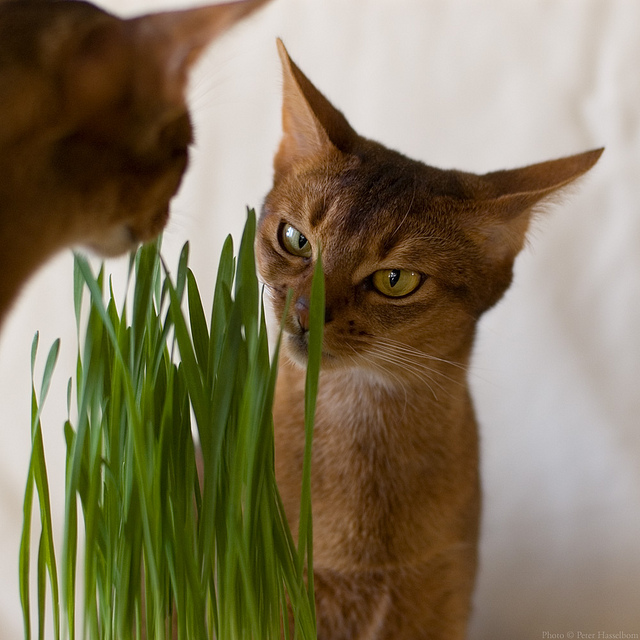
What grass can you give to cats?
So, which herbs are safe to feed to cats, and which aren't? Let's take a look.
Thanks to the development of the pet products market, ready-made grass growing kits specifically for cats are now available. These kits consist of a mixture of soil with wheat, barley, or oat seeds, placed in a special container. By following simple instructions, you can easily grow fresh, lush grass for your cat any time of year.
If you prefer to grow your own grass and don't trust mass-produced products, the best solution is to sprout wheat or oats—cats especially enjoy their young sprouts. Also very popular with cats is mint – Cats eat any part of this plant with great pleasure, so if you love your furry friend, it’s worth growing a few mint bushes for him.
It's also worth remembering that if you don't provide your cat with grass, your pet will likely start eating your houseplants and flowers. To avoid these problems, you should regularly provide your furry friend with succulent grass.
However, not all plants are beneficial—some are even dangerous and can cause serious health problems for your cat. These include all bulbous plants, lilies of the valley, calendula, violets, all types of poppies and geraniums, daffodils, henbane, and philodendron. If you have a lot of these plants in your garden or yard, you should carefully monitor them to ensure your pet doesn't eat them, as this can have severely negative consequences.
Read also:
- The effects of valerian on cats—we're looking into the issue.
- What to do if a cat is ruining everything in the house?
- Food for cats with sensitive digestion


Add a comment