
Why do cats wash themselves so often?
Cats are rightfully considered one of the cleanest animals on the planet. They spend almost a quarter of their lives grooming themselves. So why do cats groom themselves so often? There are several explanations.
Content
Main reasons
Many of you have noticed that cats are perhaps the only animals who are willing to devote all their free time, not sleeping or playing, to grooming. There is no single answer to why cats groom themselves so often. This natural cleanliness has several underlying causes.
Genetic memory
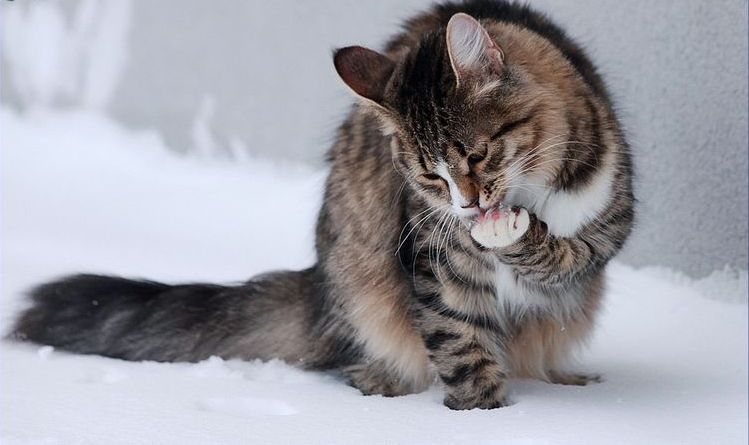
The first and most important reason is the instinct inherited by domesticated cats from their wild ancestors. All cats are predators by nature, willing to sit motionless for hours, lurking in ambush while hunting. To prevent potential prey from detecting their scent, cats lick their fur every half hour.
For the same reason, cats always wash their faces with their paws after eating. After all, in the wild, predators' faces are often stained with the blood of their prey after a meal.
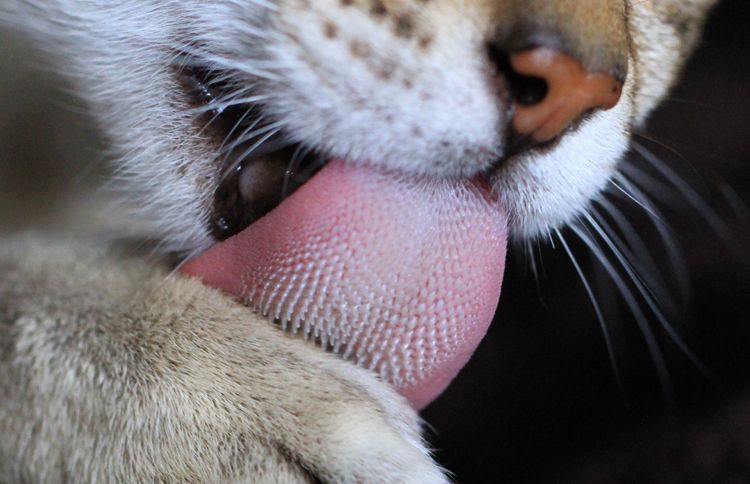
A cat's tongue has a rough surface. This allows for easy removal of dead hair, cells, and other debris from the fur during grooming.
Personal hygiene
Cats are extremely clean creatures. They are intolerant of foreign odors. This is especially evident when, after being petted by humans, they begin to lick the area intensively. This accomplishes two goals at once: keeping their fur in order and removing foreign odors.
Cats' natural needs also always end with a grooming ritual. They diligently clean themselves with their tongues, using their front paws to help remove any dirt stuck to their fur.
Cats spend the most time grooming in the fall and spring, when the shedding season is in full swing. They use their rough tongues to help remove dead hair from their bodies.
It's noteworthy that male cats wash themselves significantly less often than female cats. This is explained by their greater laziness and even a certain sloppiness.
Body thermoregulation
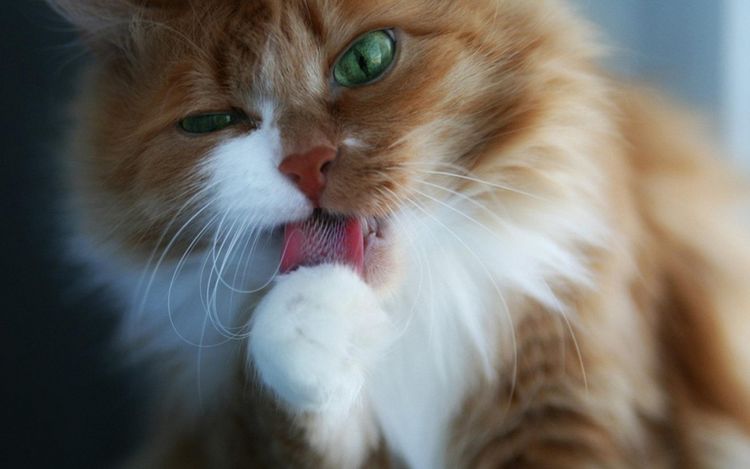
One of the main reasons why cats wash themselves so often is the need to form a moisture-repellent layer on their fur, which will support the process of thermoregulation.
Frequent grooming activates glands located at the base of the hair follicles that produce sebum. This oily secretion creates a moisture-repellent barrier that effectively protects the fur from moisture and temperature fluctuations in the environment.
In winter, grooming helps animals stay warm, and in summer months, it increases the space between hairs, allowing fresh air to reach heated skin.
Complacency
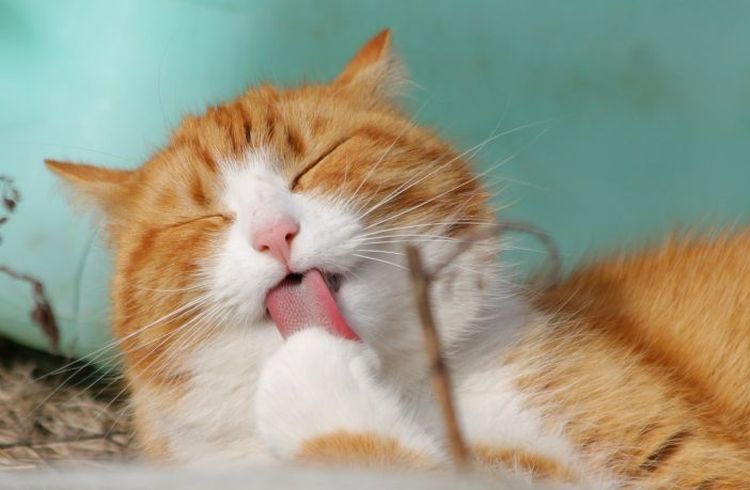
Animals also experience the urge to immediately groom themselves when they're experiencing stress. This most often occurs when they move in or when a new pet arrives.
The effect of leisurely licking is comparable to that of a relaxing massage. When an animal is nervous, its body temperature rises. Moistening its fur with the tongue helps bring it back to normal.
Showing concern
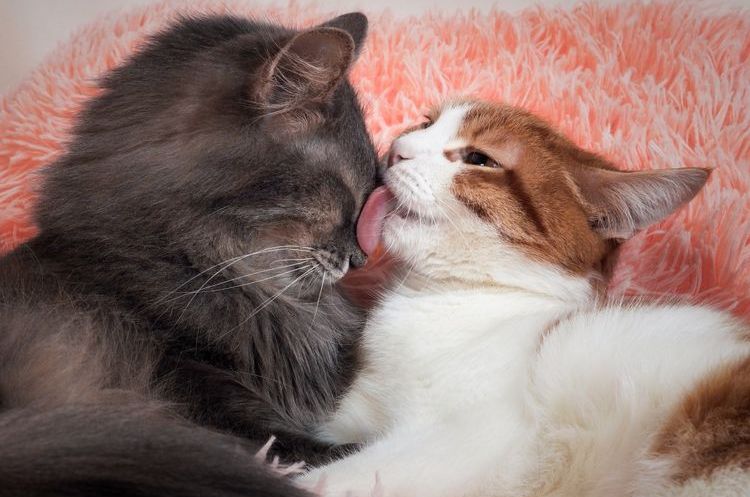
Almost all cats get along well with other pets, including dogs. By licking their fellow cats and "neighbors," cats express affection and love. It's a unique form of communication.
Mutual grooming between cats living in the same house is a clear indicator of a happy relationship. Moreover, during this mutual grooming, cats typically target the most difficult-to-reach areas—the neck and head.
As for a mother cat licking her kittens, this water treatment isn't just for hygiene reasons. By running her rough tongue along their body, they activate receptors, stimulate breathing, and normalize blood circulation. A mother licking the anogenital area of her kittens stimulates defecation and urination.
Moreover, cat saliva contains components with an antiseptic effect. Treating newborns with saliva promotes faster healing of birth injuries.
Why do cats stop licking their fur?
Grooming is a natural habit for cats. Therefore, if you notice your cat has stopped grooming itself, take a closer look. A refusal to groom regularly may indicate a number of health issues:
- inflammation of the gums or teeth;
- excess weight that prevents the animal from reaching all areas of the body;
- arthritis of the joints, causing painful sensations when changing body position;
- excessive stress, against which the animal simply forgets about the regular procedure.
The opposite situation also occurs, when cats begin to lick themselves excessively. This unusual behavior may indicate allergic reactions that cause discomfort, or the presence of parasites.
How a Bengal cat washes itself: video
Read also:


Add a comment