
Why don't cats like water?
Owners of small furry creatures often wonder why cats don't like water, covering scratches from bathing their pets with brilliant green paint. They're just as terrified of the next bath as their pet, anticipating the next bite and the amount of stress they'll suffer. They don't understand why cats are afraid of water, since from a human perspective, bathing is a pleasant and healthy way to spend time. Let's dispel all the myths and find out what cats really think about water and what causes them to behave inappropriately during bathing. So, why are cats afraid of water?
Content
The truth about cats: are they afraid or not?
It's safe to say that cats aren't actually afraid of water. Moreover, they swim well They're also capable of swimming for long periods of time if necessary. It's a safe bet that anyone who owns an aquarium has seen their cat paw at a fish. While they often dislike water and swimming, this has nothing to do with fear.
Bathing is stressful
Cats prefer to observe rather than interact. When placed in this situation, the animal experiences negative factors. First, the pet is forced into contact with its owner and is also forced to undergo a meaningless bathing procedure. How can one wonder, then, why cats don't like water when their owner doesn't realize they can clean themselves? So, they become stressed, waiting for these absurd procedures to end.
Note: Cats react negatively to any source of water, such as rain, because not only does it add a "wet" sensation, the noise is disorienting. They are also wary of dew and, if forced to walk through it, do so with quick but cautious steps. Some studies suggest this is because dew on their sensitive whiskers is unpleasant.
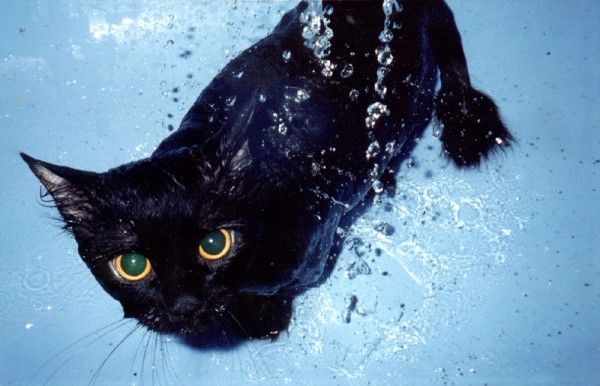
Thermoregulation disorder
A cat's fur acts as a kind of air cushion, acting as a thermal insulator. It's only thanks to its fur that a furry cat feels comfortable in cold winters and hot summers. Furthermore, when wet, its skin temperature drops by 5-7°C. While dogs shake themselves off immediately after bathing to remove excess moisture, cats don't do the same, so they take much longer to dry. A warm, dry towel is the only solution, as the faster the cat dries, the faster it will calm down.
Wet fur loses its protective properties, leaving your pet without its natural defenses. Understandably, this isn't a pleasant feeling.
Historical and evolutionary reasons
Domestic cats descended from steppe and desert ancestors who had little or no contact with large bodies of water. Unlike dogs, which were used for hunting and often interacted with water, cats survived in dry climates and had no need to swim.
Cats also have thick fur that takes a long time to dry after getting wet, creating a feeling of cold and discomfort. For animals living in deserts and hot regions, wet fur could even pose a threat to survival.
Sensory features and perception of water
Water alters the scent of surrounding objects and the cat itself. Animals that rely on their sense of smell experience stress when their familiar environment suddenly "changes scent."
Furthermore, the sound of running water and glare on the surface create additional stimuli. Cats' vision is designed to perceive movement and glare particularly acutely, and an unexpected reflection or splash of water can cause fright.
Risk of overheating
This same air cushion protects the cat from overheating. It prevents the sun's rays from penetrating its fur. A dog doesn't mind a swim, as it can cool down later by breathing, but a cat can't do that.
Increased body odor after getting wet
Despite being domesticated for a long time, these animals' ancient hunting instincts still resurface. Cats are predators by nature, but unlike dogs, they don't chase their prey, but rather lie in wait patiently, trying to avoid attracting attention until they strike at the perfect moment. As their wet fur gradually dries, their body temperature rises and their natural scent intensifies, which can repel prey. Therefore, the animal instinctively feels unprotected and remains irritable for some time after contact with water.
Use of detergents
When detergents are used during bathing, they strip away the natural oils that protect the fur from breakage, and the animal's natural instinct tells it that a degreased coat is not good. Furthermore, detergents contain fragrances, and cats and humans perceive odors significantly differently due to cats' more developed sense of smell. What seems like a pleasant aroma to us can be unpleasant and irritating to a pet. Even special shampoos purchased at a pet store may not be to their liking, as they leave an unpleasant odor on their skin. For this reason, cats begin licking themselves immediately after bathing to remove this unnatural and unpleasant odor.
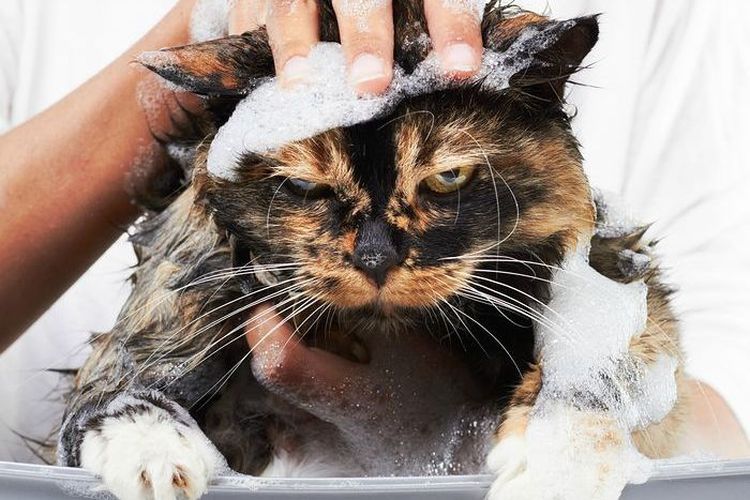
Contrast shower
When you pick up your pet, you always feel the warmth radiating from them. This is because cats have a higher body temperature than we do, meaning the water temperature when bathing them needs to be hotter than we're used to. For a pet, this is like washing them in ice-cold water. How many people do you know who would be grateful for a brutal, icy shower and stand silently, not trying to escape? A cat's skin receptors, like those of any other warm-blooded creature, perceive this as violence. And if they're hitting you, you should run.
Cats don't particularly like the smell of perfume, especially if it's rubbed into their fur. For these little predators, the scent is similar to the smell of fertilizer for us. Imagine if you started lathering your lady with something similar. You'd hardly get away with scratches and a disapproving look.
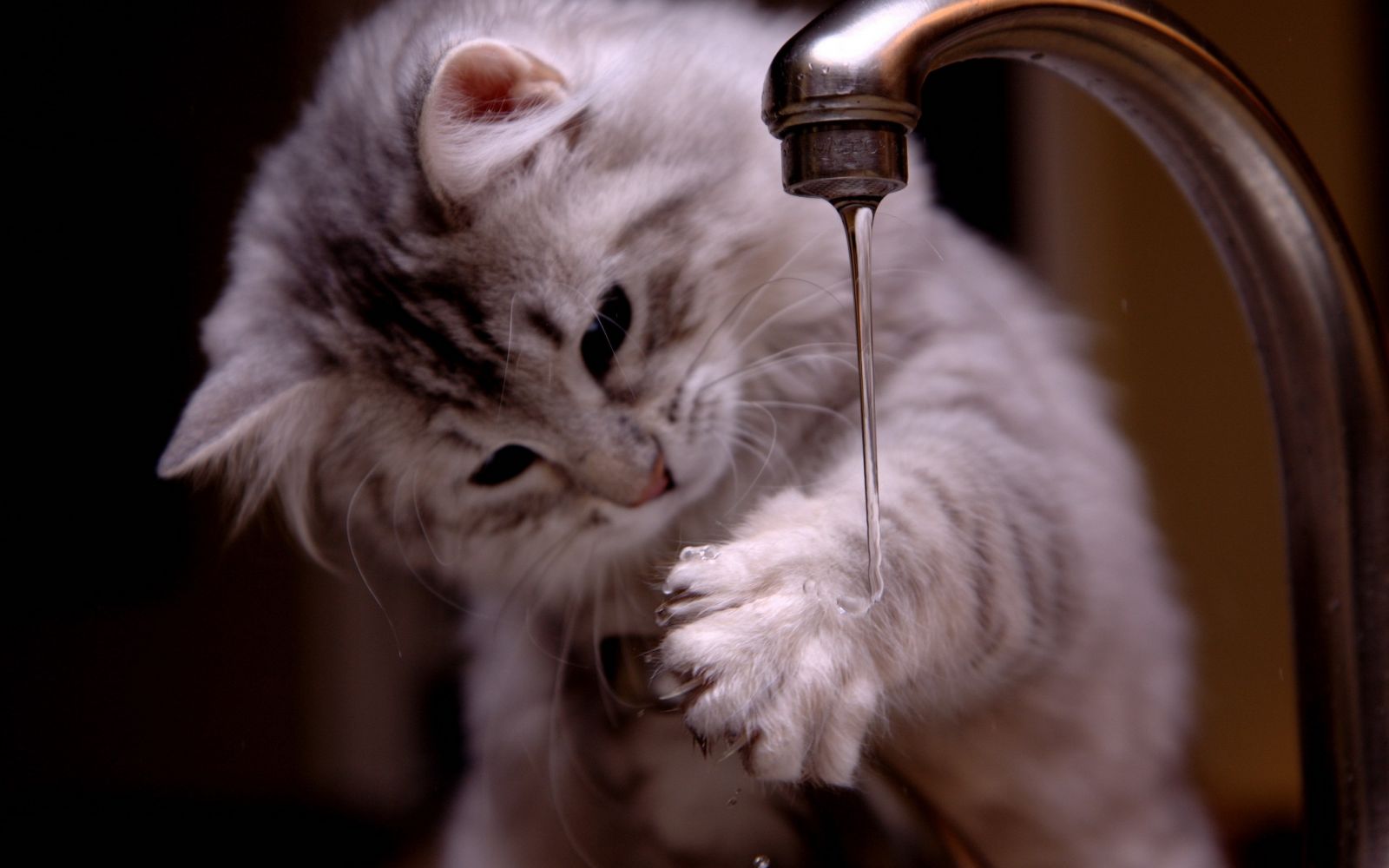
Possible attack
From this perspective, a cat isn't afraid of water, but of its own scent. After all, an animal can be not only a hunter but also potential prey for a larger predator. And the scent of wet fur in the animal kingdom is like a flag, calling the participants to a rallying point. Besides, wet fur needs to be licked, which distracts attention and makes it possible to miss a potential enemy.
Bacteria
A cat that falls into water begins to lick itself. All the dirt and germs from its fur end up in its stomach. Furthermore, a warm, moist environment is ideal for microorganisms to thrive. Some zoologists believe that cats' fear of water stems from an intuitive understanding of these consequences of bathing.
Aquatic wild cats
For someone who recently forced a cat underwater, it may seem incredible that feral cats aren't bothered by most of the aforementioned reasons for their fear of water. They aren't afraid of germs, odor, or the potential for disruption to their body temperature.
Take the spotted cat, for example. If you told a viverine that some people think cats are afraid of water, it would be quite surprised. After all, this small predator not only loves to splash around, but also dives deep, swims underwater, and hunts fish. For this reason, the viverine is also called the fishing cat.
Yes, your pet isn't a wild animal that fears nothing and does everything to survive. But they're not as timid as they might seem. And if you're wondering why a cat is afraid of water, the answer might lie not in the animal, but in you. Imagine yourself in the place of a proud, free, sometimes even arrogant animal, roughly grabbed and soaped with an unfamiliar-smelling substance. And you're being held by the scruff of the neck, like a mischievous kitten. What kind of love for water can we possibly be talking about here? There's no fear of it either. there is fear to relive the humiliation received during water procedures, nothing more.
How to Train Cats Not to Be Afraid of Water
You might ask, is this even possible? Yes, but it will take time and a few little tricks.
First, turn on the water in the bathroom slightly.
Pets are naturally curious creatures. So after a while, the cat will visit the bathroom to investigate the curious gurgling sound. This is her first step.
This will take days, and if you don’t mind wasting water, give your pet time to get used to the bath.
As soon as the cat realizes she's not being watched, her sense of self-preservation will fail her. Therefore, don't interfere with her in this process, much less help her. Otherwise, she'll leave, possibly forever.
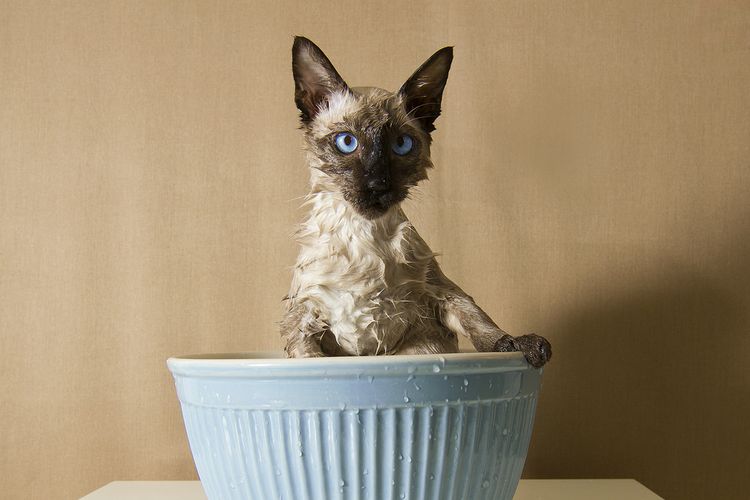
Table: Different situations and a cat's reaction to water
| Situation | The cat's reaction | Probability of fear |
|---|---|---|
| Filling the bath | Retreats or runs away | High |
| dripping faucet | Watching with interest | Low |
| Trying to swim without habit | Resists | Very high |
| Games with a small stream of water | Can touch with paw | Average |
How to bathe
There's no urgent need to bathe a cat, as they're naturally clean animals that keep their fur clean on their own. However, in some cases, it may be necessary, for example, after a walk outside in rainy weather or after the appearance of an unpleasant odor.
A cat's attitude toward bathing is often based on its first encounter: if the encounter with water wasn't the most pleasant, which could be the owner's fault, then fear of bathing is guaranteed. Often, the owner doesn't provide the opportunity to "make friends" with water and simply holds the pet in the bath by force, sometimes even yelling at it. If you don't want to repeat these mistakes, you should know: How wash cat, who is afraid of water. With enough patience and care, you can accustom it to bathing. It's best to start accustoming it to bathing at an early age so that in the future, the cat won't be afraid. If you need to buy an adult cat, it's important to make the experience as pleasant and comfortable as possible.
Preparing for bathing
Before you start washing, you need to carry out some preparatory procedures:
- shortly before water procedures, trim the claws to avoid severe scratches in case of resistance from the animal;
- You can call an assistant, since sometimes one pair of hands is not enough to calm and wash the cat;
- prepare water at a comfortable temperature (about 37-39°C): it should not be too hot or, conversely, too cold;
- To begin with, you can use a shallow basin with a small amount of water (3-4 cm deep), throw in a favorite toy or something that will attract attention.
- Place a rubber mat on the bottom, as animals feel uneasy on wet and slippery surfaces;
- Place cleaning products (suitable for the age and coat of your pet) and a soft towel nearby;
- Play with your cat before washing it so that it remembers the positive emotions before the bath.
Tip! When preparing, you can repeat the "code" phrase "let's go swimming," adding your pet's name, so that they develop a positive reaction to the bath in future sessions.
Bathing procedure
Once the necessary items are prepared, you can begin washing:
- While stroking the cat and saying soothing words, wet its paws and carefully lower it into the basin. While doing this, distract it with a toy and gradually wet its fur. Never throw or push the animal into the water!
- Avoid using a high-pressure water jet or shower, as the loud sound of running water will frighten the animal. It's best to use a ladle for watering.
- When all the fur is wet, gently rub the shampoo into the coat until it lathers, then rinse with clean water.
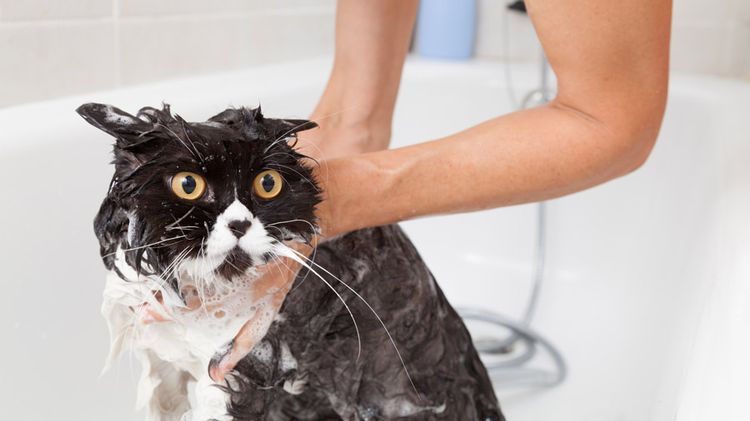
- It is important to ensure that water does not get into the eyes, nose and ears, so it is not advisable to wet your head.
- During the washing process, you need to constantly praise your pet and repeat the “code” phrase.
- Gradually, if there's no negative reaction, you can increase the water depth in the basin and move on to a larger bathtub. In the latter case, it's advisable to place a wooden partition on the sides to provide your pet with an escape route.
- If, despite everything, the cat scratches, struggles, and meows loudly, it is best not to resort to violence, so as not to provoke the development of a stressful situation.
- After bathing, you should immediately wrap your pet in a towel and dry it off so that it doesn't freeze or catch a cold.
Cats are cautious animals and won't rush into the water with the same enthusiasm as dogs. However, care, patience, and a gentle attitude will be the key to success and will help acclimate your cat to bathing and make it a more enjoyable experience.
Which cats like water?
There are exceptions to the rule in almost every aspect of our lives. The love of bathing among some small predators is one of them. For example, the owner of a Maine Coon, or even a regular Siamese, might be surprised if asked why their cats don't like water. After all, they know their pets run to the bathtub themselves. And there are quite a few breeds that enjoy water. Some well-known ones include:
- Bengals.
- Norwegian Forest Cats.
- Kurilian Bobtails.
Given all of the above, we can conclude that cats aren't afraid of water. The key is a smart approach to water treatments. Then, bathing will become a tolerable, if not beloved, activity for your pet.


Add a comment