
Why do cats stick out the tip of their tongues?
Many owners have noticed how cats sometimes stick out the tip of their tongues (whether sleeping or awake), but not all novice breeders know why this happens, and how to determine the line between normal animal behavior and pathology indicating the development of a disease.
Content
Normal behavior
There is no need to panic, even if your pet often “sticks out his tongue.”
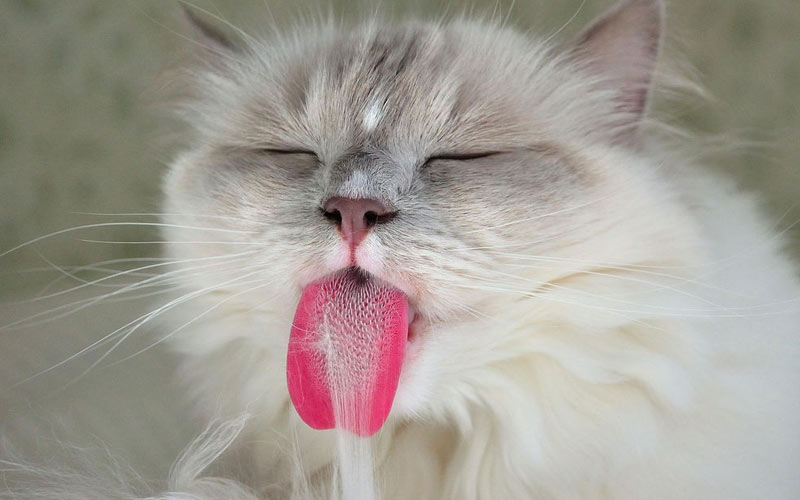
Although the animal's tongue should normally be completely in its mouth, there are situations when its appearance is completely normal and is not a cause for concern.
Breed characteristics
For many breeds with a brachycephalic (flattened) muzzle, a protruding tongue tip (in the absence of other symptoms) is normal. These include:
- Exotic Shorthair;
- Persian;
- British Shorthair;
- British Longhair;
- Scottish Fold;
- Scottish Straight;
- Himalayan.

Thermoregulation
A protruding tongue after physical activity is more typical in dogs, which use this method to regulate body temperature. Cats have a slightly different thermoregulatory mechanism, and the tongue plays virtually no role.
Cats rarely stick out their tongues due to overheating, as, unlike dogs, they limit their activity in hot weather.
Problems with the jaw or teeth
Medical conditions—crooked teeth, missing teeth, gum disease, tumors—can prevent the mouth from closing completely. Consequences: the tongue remains partially exposed. This is common in older cats.
Complete relaxation
A cat may stick out its tongue while sleeping. This happens because, when the muscles are completely relaxed, the animal's lower jaw drops, and the tongue involuntarily protrudes. It's worth noting that most cats don't find this behavior bothersome at all.
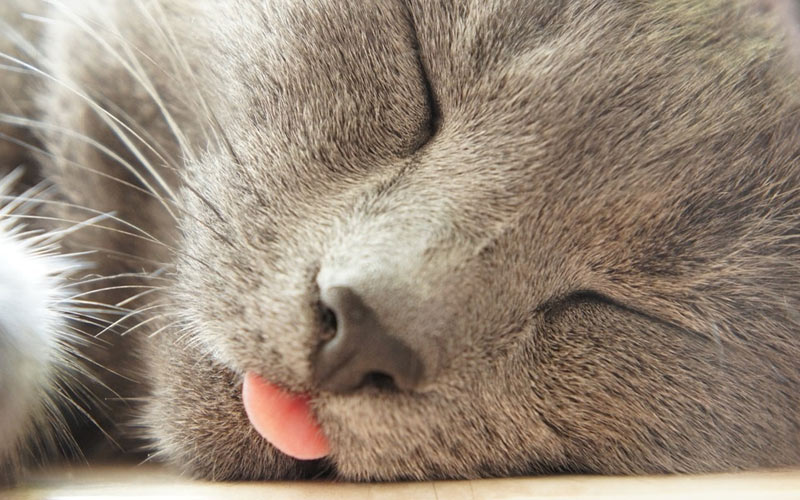
If you disturb your pet's deep sleep, he will most likely hide his tongue.
Malocclusion
Although bite deviations cannot be considered normal, treatment is only carried out if the disorder causes discomfort to the animal or interferes with eating.
With a number of bite disorders, the tongue can easily pass between the upper and lower teeth, showing on the outside, and this is considered a normal variant that does not affect the cat's health and well-being.
Medical causes: infections and neurology
Constant tongue protrusion, especially when accompanied by coughing, nasal discharge, or heavy antlers, indicates respiratory infections, static electricity, neurological pathologies, stomatitis, and tumors. In such cases, a veterinary examination is essential.
Passion
Just like people, cats can lose control of their tongues when they're engrossed in something. You might catch your pet with their tongue hanging out:
- interrupting the licking process with his appearance;
- when the cat hunts;
- while observing something tasty on the table or in the hands of the owner;
- catching a cat doing something forbidden (for example, gnawing on something tasty on the table).
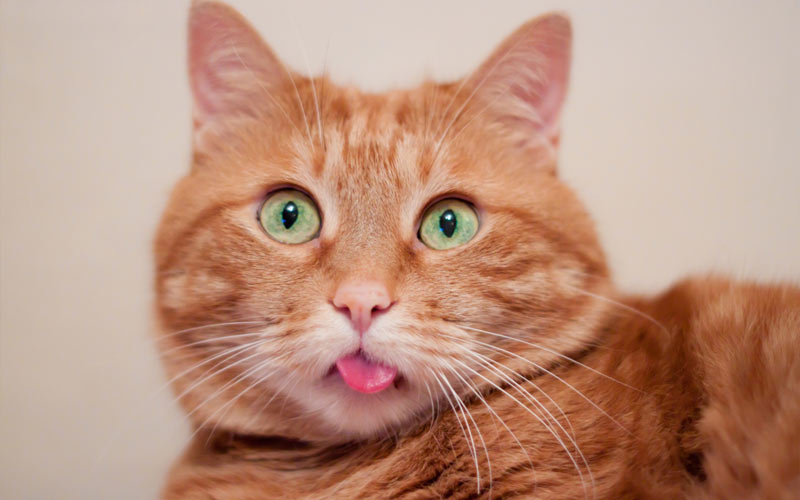
As a rule, the cat simply freezes in surprise, leaving the tip of its tongue sticking out, or simply forgets to retract it for a while, being greatly enlarged by something.
Pathologies requiring treatment
As you can see, cats often stick out the tip of their tongues, and in most cases this is not a cause for panic, but when combined with a number of other symptoms, it may indicate health problems.
So, let's figure out when it's time to show your pet to the vet as soon as possible.
Heart disease
A cat may stick out its tongue if it has cardiomyopathy, ischemia, hypertension, heart failure, and many other cardiovascular diseases.
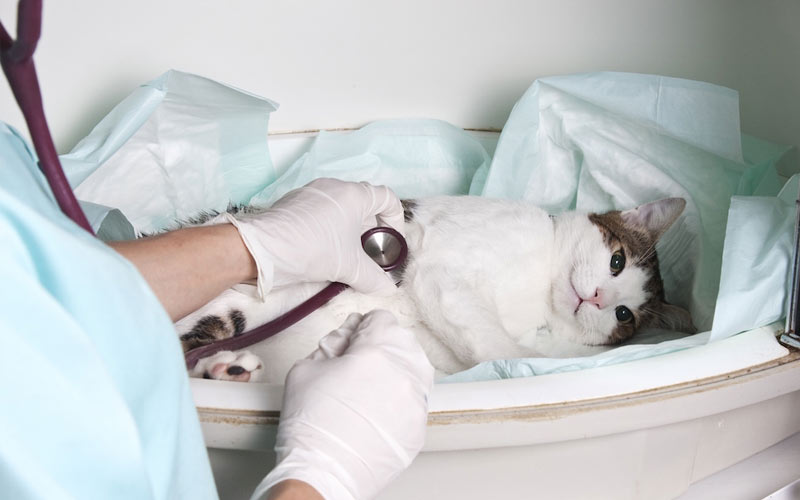
Heart failure is a serious condition that can cause pulmonary edema in pets. While many other illnesses can go unnoticed by owners, the symptoms of heart failure are difficult to miss:
- increased heart rate;
- shortness of breath and abdominal breathing;
- bluish tint of the gums and tongue;
- lack of appetite;
- loss of coordination and paralysis of the hind legs.
Kidney disease
The most frequently diagnosed condition is renal failure, the symptoms of which give the following picture:
- shortness of breath and protruding tongue;
- ammonia smell from the mouth;
- intense thirst;
- digestive disorders (diarrhea, vomiting);
- frequent urination;
- swelling in the abdominal area;
- weight loss;
- deterioration of the coat condition.
Diseases of the oral mucosa
The cat may also stick out its tongue when stomatitis or gingivitis.
The causes of inflammation can be very varied, so for proper treatment, it is necessary to identify the pathogen and select a medication that specifically targets the virus, fungus, or bacteria that is causing the illness.
Symptoms:
- redness of the mucous membrane (partially or completely);
- ulcers on the mucous membrane (not always);
- protruding tongue and excessive salivation;
- bad breath;
- soreness of the mucous membrane and, as a result, the animal’s refusal to eat with constant thirst;
- increase in temperature.
Respiratory diseases
Cats, like humans, are susceptible to colds. A common rhinitis (runny nose) or viral infection, if left untreated, can develop into bronchitis or pneumonia.

The following symptoms will indicate that you need to show your cat to a veterinarian as soon as possible:
- heavy breathing with coughing and wheezing;
- discharge from the nose and eyes;
- refusal to eat;
- voice change;
- apathy;
- temperature;
- digestive disorders.
Other diseases
Of course, this is far from a complete list of conditions that can cause a cat to constantly stick out its tongue. This symptom can also be observed with:
- stressful conditions (a visit to a clinic, the onset of labor, the arrival of a new animal in the home);
- entry of a foreign body into the respiratory tract;
- jaw injuries;
- tumors (benign and malignant);
- allergic swelling of the tissues of the larynx and tongue;
- various poisonings;
- disruption of brain function.
Table: Possible causes and when to sound the alarm
| Situation | Explanation | Should you be worried? |
|---|---|---|
| Relaxation (or blep) | The brain forgets to remove the tongue after sleep, an injection, my | No, if he quickly removes his tongue |
| Flehmen odor analysis | Catalysts – Smells via Jacobson's Organ | No, it's a normal reaction. |
| Remains of wool/food | Trying to swallow or clear the tongue | No, if it disappears after cleaning |
| Overheating, thirst | Relieving overheating | Be careful, if used frequently, monitor |
| Missing teeth / Brucke's teeth | The tongue hangs out due to changes in the jaw | It's worth checking with a vet. |
| Infections, neurology, stomata | Accompanied by serious symptoms | See a doctor immediately |
| Senile muscle weakness | Language does not return completely, cognitive signs | Contact us for an assessment of the condition |
What to do: advice for owners
-
Study the behavior: if the situation is short-term and without symptoms, calming down is enough.
-
Make sure your cat is drinking and not overheating: in hot weather, provide several bowls of water and cool places, especially for long-haired cats.
-
Maintain oral hygiene: brush teeth, remove food, and monitor changes in food intake.
-
If the tongue is constantly stuck out or there are accompanying symptoms (drooling, difficulty breathing, changes in appetite), consult a veterinarian for diagnosis.
-
Older cats: Check oral health and muscle coordination more frequently and consult your veterinarian about treatment options.
Conclusion
Important! Only an experienced veterinarian can make a diagnosis, so if you suspect your pet has any of the above conditions, be sure to take them to a specialist.
Assumptions can be confirmed or refuted only by conducting the necessary tests, as well as performing a number of diagnostic procedures (ultrasound, ECG).
By delaying a visit to the clinic, you can waste precious time, and by self-medicating without an accurate diagnosis, you can further aggravate your pet's condition.
Also watch the video for advice from a veterinarian:
Read also:
- Herpes in cats: symptoms and treatment
- Salivation in cats
- Kitten pooping blood: causes and what to do


Add a comment