
Why does a cat shake its head and ears?
Continuing to analyze what a pet's behavior can indicate, let's consider why a cat constantly shakes its head and ears, and also scratches the auricle or the area around it until sores appear.
Content
Ear diseases in cats
Frequent ear shaking is a sign of significant discomfort in this area. Ear problems in cats are considered one of the most common problems seen in veterinary practice. Inflammation, itching, pain, and other discomfort in the ear can occur in both kittens and adults, regardless of gender and age.
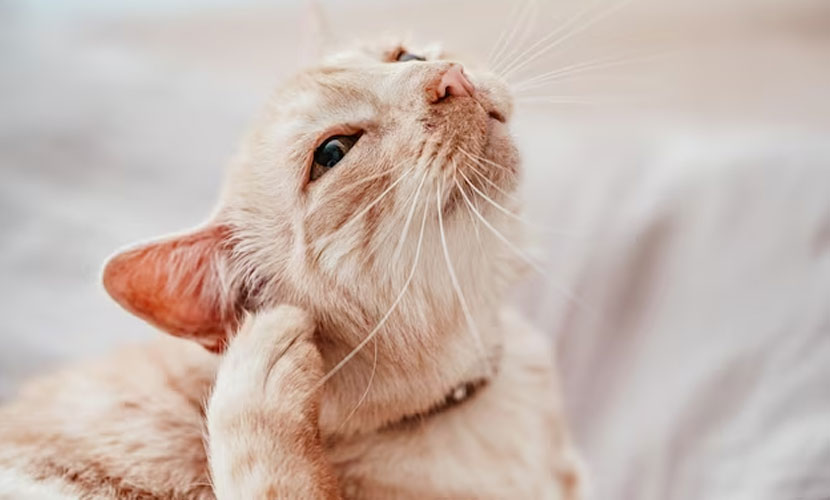
General symptoms
A healthy cat's ears are almost clean, with a small amount of light yellow discharge and no specific odor.
The following symptoms indicate that your pet has an ear problem:
- the cat shakes its head, sometimes tilting the sore ear down;
- if you stroke or scratch the area of the inflamed ear, it presses the shell hard against your hand;
- the cat frequently and intensely scratches its ear, injuring the skin and leaving scratches;
- There may be discharge from the ear canal (varying in intensity and consistency depending on the type of problem);
- Inflammation is most often accompanied by the appearance of a specific odor from the ear;
- When trying to clean the ear canal, the cat may resist, experiencing pain;
- the pet often licks itself and makes swallowing movements (not after eating or drinking) - this happens due to unpleasant sensations that arise not only in the ear, but also in the throat area due to deep inflammation (the organs are interconnected);
- Severe inflammation can cause an increase in temperature and general depression of the animal.
By observing these symptoms, you can, with a high degree of probability, understand why your cat is shaking its head and ears, but to understand what exactly is causing the inflammation, discomfort, or pain in the ear area, a diagnosis in a veterinary clinic is necessary.
Causes of inflammation
The inflammatory process itself is caused by viruses, bacteria or fungi, but the causes of predisposition to ear diseases can be due to:
- congenital anomalies in the structure of the auditory canal and inner ear;
- excessive secretion of earwax, which may be a congenital problem or occur as a result of a disease;
- injuries (as a result of the owner’s careless actions when trying to clean the ears or as a result of a fight);
- incorrectly selected care products;
- peculiarities of keeping (water gets into the ears when bathing, the cat often gets too cold, the pet's ears are not looked after at all or are cleaned incorrectly);
- benign or malignant neoplasms that can occur, including in the ear canals.
Types and characteristics of ear diseases
By understanding why your cat is shaking its head, you may realize that the animal's discomfort is caused by damage to the auricle (the outer part of the ear), the ear canal, or the inner ear.
Diseases of the auricle
If you notice that your cat is itching the outer part of its ear, you may suspect the following problems:
- injuries (if a kitten plays carelessly with its peers, it may damage the auricle with its claws, the scratch will become inflamed, which will cause discomfort);
- insect bites (ticks and fleas are especially dangerous, although bee, horsefly, or mosquito bites can also cause discomfort);
- fungal infection (a gray coating on the skin, profuse peeling, hair loss, or bald spots may indicate a fungal infection of the ear);
- An allergic reaction usually manifests itself in the form of a small rash that causes severe itching in the animal, and the outer skin may not be affected.
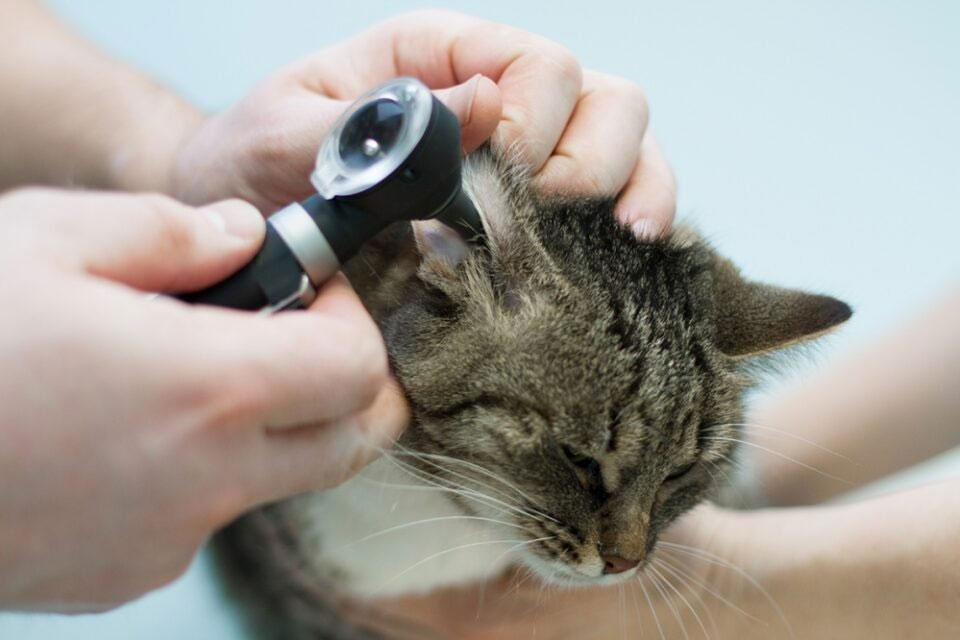
Treating any inflammation in the auricles is easier than treating conditions in the ear canal or middle ear. The key is understanding the cause and choosing the appropriate treatment.
External otitis
The inflammatory process in the area of the auditory canal is called external otitis.
The disease begins with:
- itching or burning sensation in the ear,
- an increase in the amount of sulfur secreted (the mass may acquire a deep orange hue and contain blood or pus)
- swelling that is difficult to see externally;
- the appearance of a characteristic sweetish smell, which can be heard by leaning towards the cat's ear.
If otitis externa is left untreated, the inflammation will worsen, and the resulting tissue swelling may block the ear canal, causing the itching to develop into quite intense pain. Nearby lymph nodes may also become inflamed.
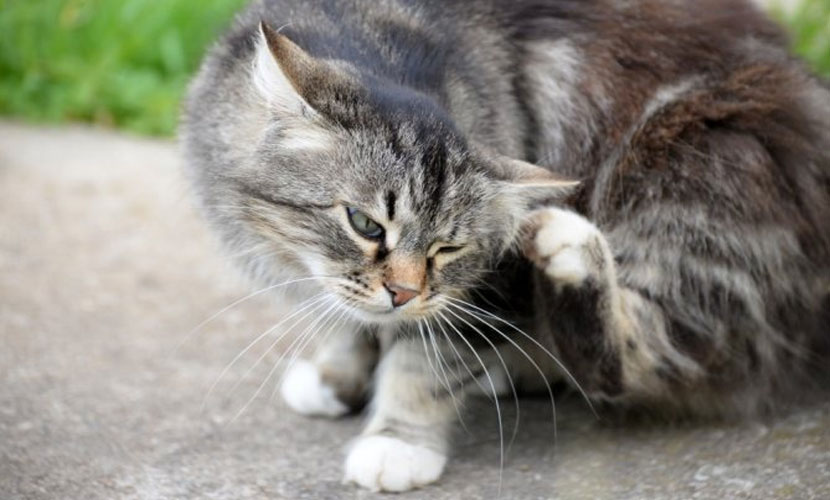
At the initial stage, the animal will constantly shake its head and press itself against the owner's hand when trying to scratch its ear, but in advanced otitis, any touch to the ear and the area below the auricle will cause acute pain, so the cat will twitch when any attempt is made to apply pressure or clean the ear canal.
If the owner doesn't notice the problem in time and doesn't figure out why the cat is shaking its head, otitis externa may become complicated and the cat will have to be treated for otitis media or purulent otitis.
A doctor diagnoses otitis based on observations and laboratory analysis of the discharge. It is important to correctly identify the causative agent in order to select the appropriate treatment.
- At the initial stage, a course of local therapy (ear drops with antibacterial, anti-inflammatory and analgesic effects) can help.
- At later stages of the disease, complex therapy with systemic antibiotics is indicated.
Otodecosis (ear mite)
Ear mites can also cause inflammation in the ear canal.
From bacterial infection otodectosis The mite can be identified primarily by the color of the discharge. Brown discharge, similar to coffee grounds, can be seen in ears infested with mites.
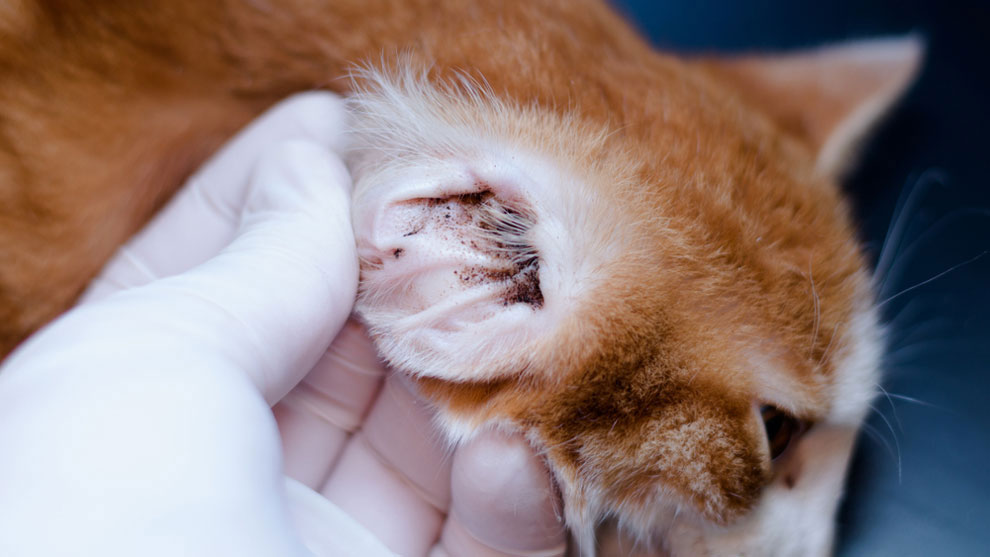
Otherwise, the symptoms are very similar, since the tissue damaged by the tick is quickly affected by bacterial flora, which is fraught with the same complications as with otitis externa.
Inflammation of the middle ear
Otitis interna occurs when the inflammatory process affects the eardrum and deeper areas.
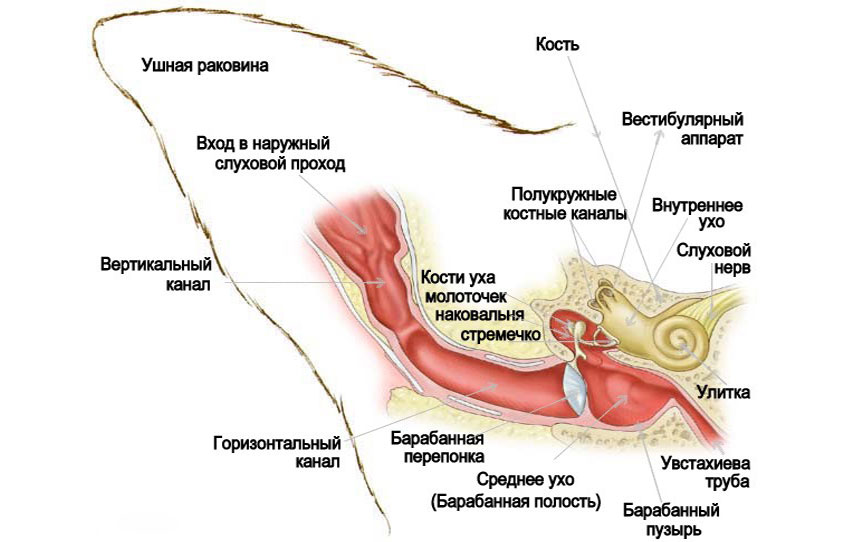
In addition to acute pain, cats with inner ear inflammation may experience loss of coordination when shaking their head. This indicates involvement of vestibular receptors located in the middle ear.
If left untreated, the eardrum may become infected and rupture. This process is irreversible, and even after treatment, the cat may lose hearing in the affected ear. Without systemic antibiotics, the prognosis in this case is poor, as the inflammatory process can spread to brain tissue and cause death.
When self-treatment is acceptable
Veterinarians recommend refraining from self-medication until a definitive diagnosis is made. Misdiagnosing the cause of a pet's illness can lead to owners treating a completely different condition, which can often lead to worsening the pet's condition and developing complications.
At home, only basic measures are acceptable: treating the animal for fleas and carefully removing dirt, water, or any shallow foreign objects. Antihistamines can also help relieve allergic reactions, but it's recommended to consult a veterinarian before using them. A specialist will advise on safe dosages and further treatment.
To combat parasites, you can use flea drops, tablets, or sprays, supplementing the treatment with bathing and a special shampoo. It is recommended to dispose of the infested animal's personal belongings.
It is important to remember that antiparasitic treatment must be administered to all pets that have been in contact with an infected animal.
Earwax can be softened with saline solution or special ear lotions. Typically, a few drops are placed in each ear three times a day for a week. If there is no improvement, consult a veterinarian immediately.
Removing a foreign object is only permissible if it is located close to the entrance to the ear canal. If it is deeply embedded, there is a high risk of damaging the eardrum. For the same reason, cleaning the ears with cotton swabs is not recommended. To remove moisture and surface dirt, it is better to use a cotton pad carefully rolled into a tube.
Prevention
The best prevention of ear diseases is:
- regular ear cleaning;
- use of anti-inflammatory lotions;
- scheduled treatment against parasites;
- conducting regular medical examinations;
- attentive attitude towards your pet and analysis of the slightest changes in its behavior;
- Contact your veterinarian when the first symptoms of anxiety in your animal, as described above, appear.
Important! If inflammation symptoms have already appeared, do not self-medicate, as the consequences of improper treatment and wasted time can be dire.
Advice from veterinarians
Read also:
- My cat is hiccupping: why and what to do
- Depression in cats: does it happen and how to treat it
- Cats Hiding in Dark Places: Reasons and What to Do


Add a comment