
Why does a cat sleep with its owner's head on its pillow?
Many cats love to sleep on a pillow next to their owner's head. There are several reasons for this habit, including a sense of comfort, security, and even a sense of leadership. Usually, this behavior doesn't bother pet owners. But sometimes, people have to take steps to eliminate excessive attachment to ensure a sound sleep.
Content
Reasons for a special attachment to a pillow
Cat owners often believe that cats sleep on their owners' heads out of deep affection. However, animal psychologists believe that in most cases, a love of a pillow is driven by instinct or discomfort. To understand why pets sleep on heads, it's worth taking a closer look at the reasons behind this behavior.
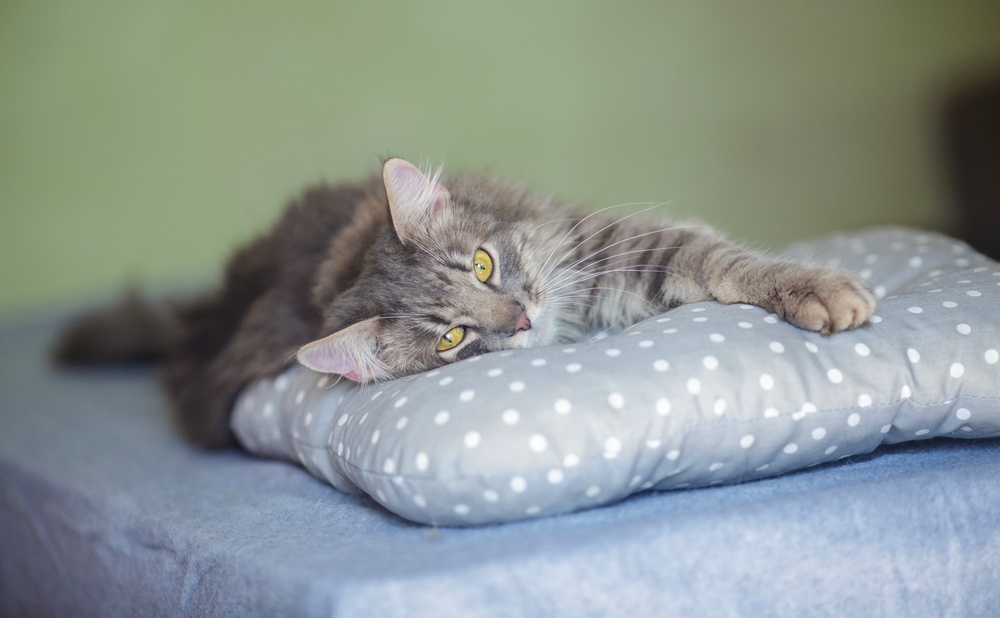
Looking for a warm spot
Cats have a slightly higher body temperature than humans. Their owners' usual room temperature may not be comfortable for them. Therefore, cats seek out the warmest spots and often lie in boxes, under blankets, or on cabinet shelves. They are often attracted to heat-producing appliances, such as a television, laptop, or an open, cooling oven.
The pillow on which a person sleeps retains heat well and is a very comfortable bed for cats, since the heating continues throughout the night.
Desire for comfort
Sometimes cats choose very unusual places to rest, such as the bathtub, the kitchen sink, or the shoe rack. It's hard to understand why these places seem so comfortable to a pet. In the case of a pillow, the reason is more obvious—it's the softest part of the bed, making it the most comfortable to lie on.
In anticipation of danger
Even domesticated animals retain a natural instinct to seek out the most secure spot where they can safely avoid danger lurking while sleeping. A small kitten seeks the protection of its mother, while an adult cat relies on humans. It's possible that when anxious, an animal instinctively reaches out to its owner and lies as close as possible.
This habit doesn't necessarily manifest itself as sleeping near your head. Seeking protection, a cat may nestle at your feet, curl up along your back, or crawl under the covers.
Qualities of a leader
Among cats, there's a strict dominance system: the higher the status of an individual, the higher the perch they climb. If there are several cats in a house, it's easy to identify the leader—they'll always tower over the other pets, sitting or lying in a position with a clear view of the entire room.

It's possible that the cat's choice of pillow allows it to assert its dominance over its sleeping owner. Although the pillow isn't as high, the cat is still above the human's head.
It's definitely love
Some animals are truly capable of developing a strong attachment to their owners. They typically follow their owners around the house with their tails, love to sit on their laps, and feel homesick when their friend is away for long periods.
Cats are tactile creatures that crave touch. They show their affection by snuggling close to their owner and licking their skin. But when a person sleeps, their entire body is covered with a blanket. The only exposed part is the head, where the loving pet prefers to nestle.
There is a belief that a cat lying in your head neutralizes bad thoughts and drives away bad dreams.
How to eliminate a habit
Many cat owners find it touching to look at photos online of cats sleeping near their owners' heads. However, this habit can pose a health and even life-threatening risk:
- A large cat takes up almost the entire pillow. As a result, a person sleeps in an unnatural position, which can lead to spinal curvature, osteochondrosis, and circulatory problems.
- If an animal looms overhead and periodically assumes its most comfortable positions, the owner's sleep is disrupted. This problem leads to chronic sleep deprivation and decreased concentration.
- It's especially dangerous when an animal sleeps in a small child's bed. A heavy cat can crush the infant, causing suffocation by pressing its entire body on the child's head.
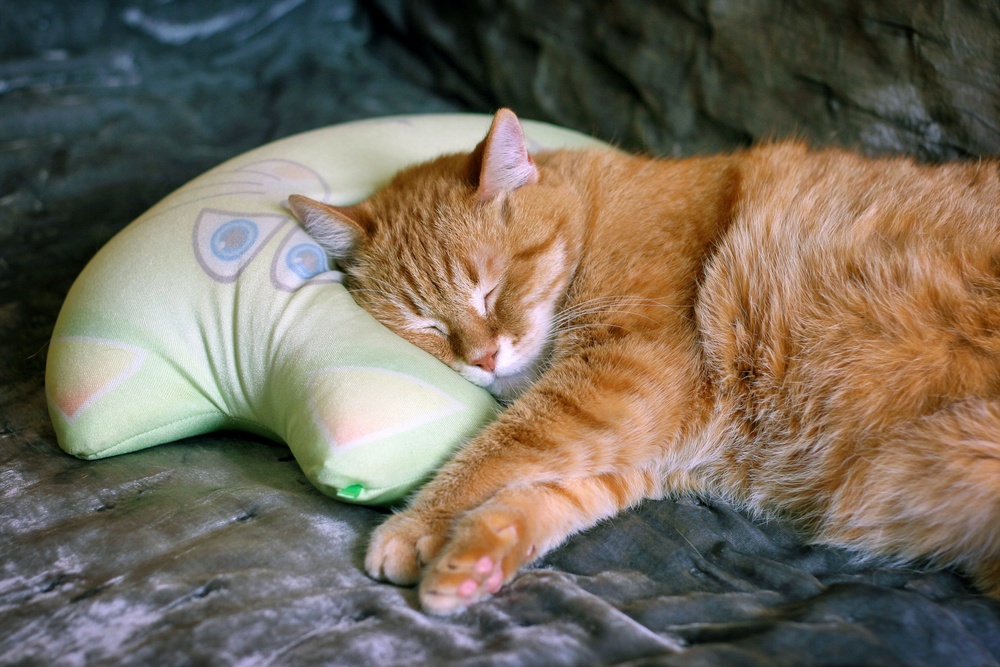
There are several ways to get rid of this problem:
- Before getting into bed, close the bedroom door tightly. At first, your pet will protest by meowing and scratching, but gradually they'll get used to it and find another comfortable place to sleep.
- If your nerves are getting the better of you and your cat refuses to budge, consider using repellents—products with an unpleasant scent. Simply spray the area behind the door to make your cat forget the way back to the bedroom.
- You should compare the softness of your owner's pillow and your cat's bed. The latter is likely less comfortable. Sometimes, buying a new bed, like a comfortable sofa or a soft mattress, is enough to discourage your cat from using your bed.
- It's important to regularly remove hair from your pet's bed. Cleaning is recommended every 1-2 weeks to maintain your beloved pet's comfortable sleep.
If a cat sleeping on a pillow doesn't cause any particular problems for its owners, there's no reason to worry. On the contrary, both you and your pet will feel calmer, sleep more soundly, and bond even stronger.
Read also:
- Why does a cat follow its owner around?
- Why do cats respond to kitty-kitty?
- Why do cats look out the window?


Add a comment