
Why does a cat constantly lick itself?
If your cat is constantly grooming itself, it's important to determine the cause of this inappropriate behavior. It's possible that your pet is licking itself frequently because of a medical condition that requires veterinary attention. Normally, pets spend a considerable amount of time grooming themselves, but their grooming routines are not intrusive and don't cause irritation or skin damage.
Content
Natural grooming
A healthy cat grooms itself meticulously—observations show that hygiene procedures consume approximately 30-50% of their non-sleeping time. There are several natural reasons why pets lick their fur.
Purity
The surface of a cat's tongue is covered with small, stiff bristles that remove dead hair, food particles, and dirt. Licking can be compared to the essential grooming routine for humans.
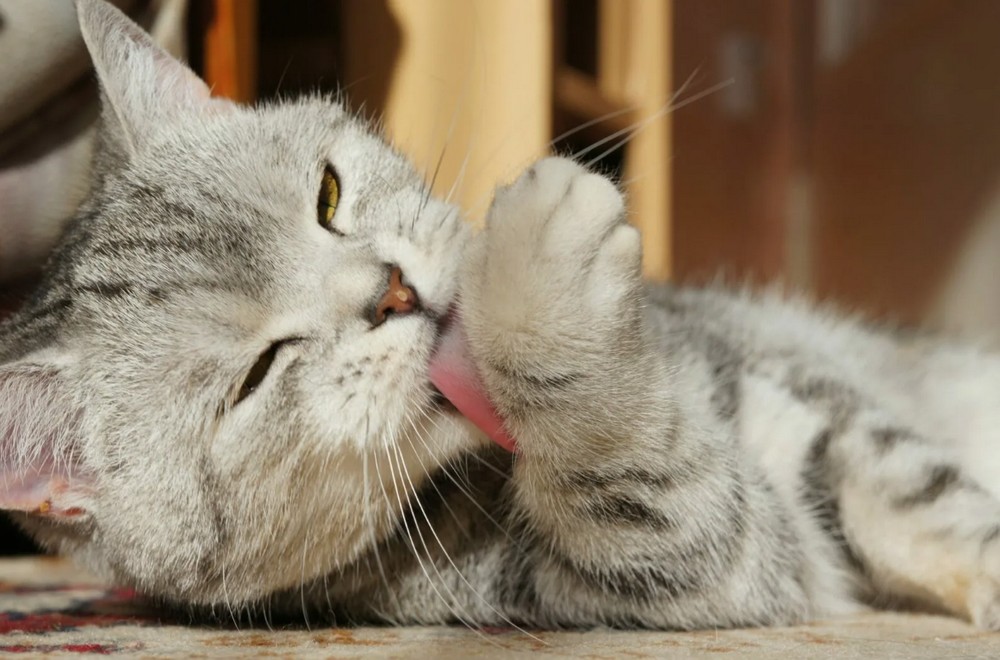
This type of hygiene is especially important for long-haired breeds. If a Persian cat doesn't devote sufficient time to grooming, their fur will quickly become matted. The fur is especially prone to matting on the back between the shoulder blades, where the animal can't reach with its tongue.
Smell
Every pet has a unique scent, produced by glands. By grooming itself, a cat spreads its scent throughout its body, making it recognizable to other animals. Petting a cat leaves a trace of human scent on it. Therefore, after being petted by its owner, pets may also spend a long time grooming themselves—they need to restore their natural scent.
After eating, a cat instinctively washes the scent of food from its face for two reasons. As a predator, it must remove all scents that might give it away during a hunt. As potential prey for a more dangerous animal, it improves its camouflage by removing the enticing aroma of food.
Pleasant memories
A mother cat licks her kittens immediately after birth. The kittens quickly understand that grooming is associated with pleasurable sensations and, as adults, constantly experience this need. The connection between grooming and affection is confirmed by the cat's licking of its human. In response to petting, she often licks her owner's hands.
Reaction to water
Most cats dislike bathing—they don't enjoy wet fur. Therefore, they diligently dry it, resorting to vigorous licking. Forced bathing can sometimes be one of the most unpleasant procedures. In recent years, veterinarians have increasingly advised that bathing isn't necessary—cats are quite clean creatures and will keep their fur clean without the use of shampoos and gels.
Sexual hunting
Washing their genitals is a natural behavior—it removes feces and urine particles after using the litter box and helps the anal glands function. However, during heat, cats lick so vigorously under their tails that a bald spot or skin irritation may develop in the genital area. This problem occurs in sexually mature male and female dogs that have not been mated. Veterinarians recommend spaying immediately after the first heat to prevent the desire for sex from becoming ingrained.
Thermoregulation
Cats don't have sweat glands, so they struggle to cope with heat. To reduce their body temperature, they lick their fur. This process moistens the hairs with saliva and causes them to bend, allowing air to reach the skin.
Nervous irritation
Licking helps calm a cat after a conflict with its mates, when it's unwilling to play, or when it's sleep-deprived. Licking a cat's fur increases the release of pleasure hormones called endorphins. Licking promotes relaxation and relieves stress-related tension.
However, excessive licking can be a cause for concern for owners. It's possible that the animal is experiencing significant discomfort or pain, requiring veterinary attention.
painful condition
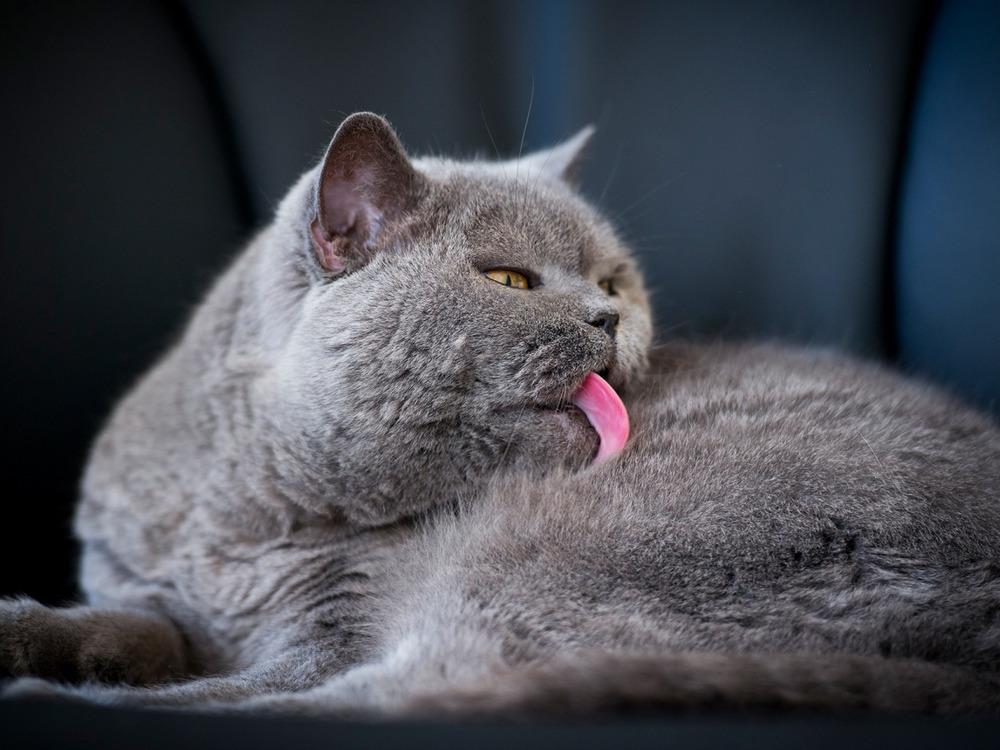
Depressed behavior, including a lack of self-grooming, is often described in descriptions of various feline illnesses. However, pets often exhibit increased activity during illnesses—not just licking themselves, but also meowing loudly, biting their skin, and plucking hair. If this behavior occurs, owners should closely monitor their pet, and if necessary, consult a veterinarian for the prescribed treatment.
When action is needed:
- The cat is biting its fur and experiencing irritation. Ectoparasites, such as fleas, are often the cause of this inappropriate behavior. The problem is easy to resolve—veterinary clinics and specialty stores sell effective medications and collars to rid pets of insects.
- The cat is actively licking under its tail, rubbing its bottom on the floor, and losing or gaining weight. This behavior may be caused by severe anal itching caused by helminthiasis. Sometimes, worms are clearly visible in the feces. Treatment is with anthelmintic medications, but it is advisable to undergo a veterinary examination before using them. Unlike skin parasites, helminthic infestations are contagious to humans, and treatment is necessary for both the animal and its owner.
- The pet doesn't just lick, but bites and scratches the skin until it bleeds. Large bald patches with signs of irritation appear on the body. The cause of this problem is allergic reactions and stress. If the animal is extremely nervous due to a change in environment or the arrival of another pet, it should be given sedatives prescribed by a veterinarian. In the case of allergies, the first step is to change the food.
- Atopic dermatitis also presents with itching, skin rashes near the affected area, and hair loss. The disease is caused by inflammation, and treatment requires careful medication.
All problems associated with excessive grooming can be avoided by paying close attention to your pet's health. Regular visits to the vet for preventive checkups, deworming treatments 3-4 times a year, and providing a comfortable environment to help reduce the risk of stress are essential.
Read also:
- Why does a cat sleep with its owner's head on its pillow?
- Why do cats smell delicious?
- Why does a cat chase its tail?


Add a comment