
Why is a cat a nocturnal animal?
Many cat owners are bothered by their pets' activity at night. When the rest of the family goes to bed, the cat starts scurrying around the apartment, rattling toys, and "hunting" for parts of your body protruding from under the covers. Then, it sleeps for half the day, waking up only to eat and relieve itself.
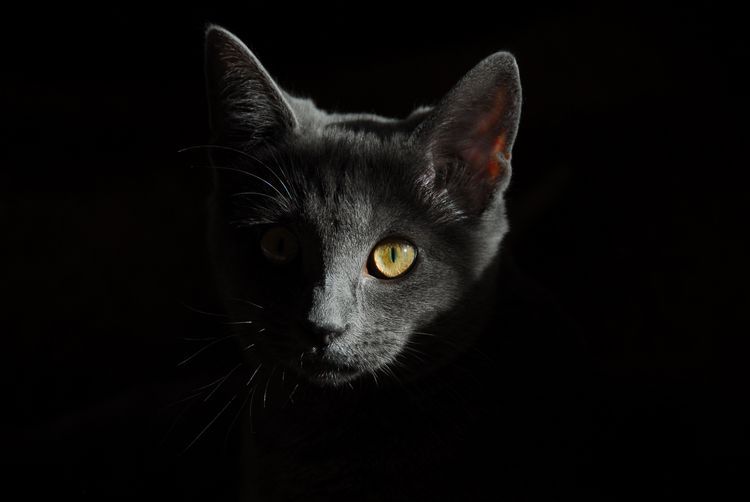
The reason for this behavior isn't that your pet is spoiled or mischievous; it's simply that her circadian rhythm differs from ours. Like her relatives—the panther, lynx, puma, tiger, lion, and leopard—the cat (Felis) is a nocturnal predatory mammal.
Content
Characteristics of cats as nocturnal animals
The different circadian rhythms of animals on our planet are the result of evolution. Through the process of natural selection, physiological and behavioral traits beneficial to each species were reinforced. Here are a few examples.
Birds of prey from the accipitridae and owl families hunt the same prey and in the same territory, but at different times of day. Therefore, they successfully share an ecological niche without competing with each other. Lions prefer nocturnal hunting because the antelopes and zebras, their primary prey, sleep at night. they can't see in the darkA nocturnal lifestyle is typical for many rodents, as most of the animals and birds that prey on them are active during the day. Wild cats hunt small ground-nesting birds and small mammals. In the dark, it's easier to sneak up on sleeping prey, and cats have a number of anatomical features to help them do this:
- Very good hearing and sense of smell.
- The ability to move completely silently, as cats have a flexible body and the claws on their paws can retract.
- In relation to their body size, cats have the largest eyes of all domestic animals, and their field of vision is almost stereoscopic, 20° wider than that of humans.
- The pupil of a cat's eye is vertically oval in shape, and its iris can contract, regulating the amount of light entering the eye.
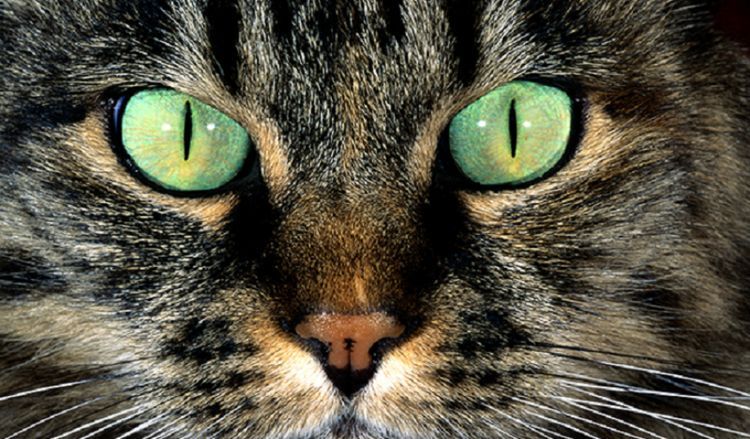
In the cat's retina, there are 25 times more rods than cones, the photoreceptors responsible for twilight vision. This allows cats to distinguish objects even in very low light, although they cannot see in complete darkness.
A cat's normal lifestyle
A domestic cat, if allowed to roam freely, has a daily routine roughly similar to that of its wild ancestors: nocturnal hunting for sleeping birds and mice that have come to feed in barns and granaries, eating the prey, and then a morning grooming session. After this, comes daytime sleep, which can last 12 hours or more, sometimes without even breaks for snacks or toilet breaks.
In a city apartment, a cat's life cycle—hunting (playing or other activity), eating, grooming, and sleeping—remains consistent, but its timing is somewhat disrupted. Temporal orientation can be altered by:
- artificial lighting in the evening,
- closed curtains in the morning,
- feeding regimen,
- lack of opportunity to get enough sleep during the day.
Feline experts say that short-haired cats are more prone to nocturnal activity, so living in a city apartment, where noisy games and active activities are unacceptable at night, can be a heavy burden for them. Long-haired cats are more tolerant of the mandatory nighttime rest, and in this regard, they cause much less trouble for their owners.

Is it possible to change a cat's "breed"?
A cat, through constant interaction with humans, becomes attached to its owner and may adopt some of their habits, including sleeping at night rather than during the day. This behavioral change can be accelerated by providing your pet with daytime activity. Then, by bedtime, exhausted from interaction and play, it won't disturb you at night.
Another way to "provoke" a cat to sleep at night is to feed it well in the evening: after a hearty meal, everyone loves to sleep. Overly eager pets can benefit from a product called Bayun CatHowever, some cats recognize it in food and refuse to eat food laced with the "sleeping pill."
And perhaps the most effective way to prevent nighttime awakenings is to train your pet to stay out of your bedroom, not only at night but also during the day. Your cat will quickly learn that this is not its territory. Set up your cat's sleeping area in another room, and leave a few soft toys there at night to entertain it, along with a bowl of water and some food.
Read also:
- Why do cats hiss?
- History of cat domestication
- How cats are called in different countries around the world


Add a comment