
Why does a cat go bald?
A healthy cat has a beautiful, thick coat that shines in the sun and sheds naturally. Thinning hair, whether uniform or patchy, always has its causes and indicates pathological processes occurring in the cat's body. To restore the coat to its normal condition, it's first necessary to determine the cause of the cat's baldness.
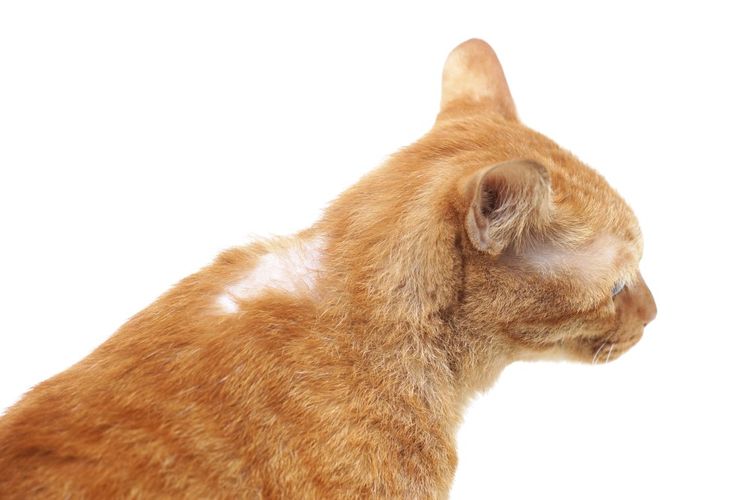
Signs and symptoms
To understand the cause of baldness, it is necessary to determine how intensively this phenomenon is progressing and what accompanying symptoms have appeared in the animal.
The main signs are as follows:
- uniform thinning of the coat all over the body;
- bald spots on the belly, face, paws, ears, at the base of the tail or all over the tail;
- redness and peeling of the affected areas;
- itching;
- signs of anxiety (constant licking of inflamed areas, nervous wagging of the tail, etc.);
- pustules, ulcers, bumps or blisters on bald spots.
Identifying these symptoms requires immediate veterinary attention, as hair loss can quickly worsen.
Main factors
The problem of baldness in cats is equally relevant for both sexes; baldness can occur at any age and be a consequence of non-pathological factors or a certain disease.
Natural causes
These factors don't require intervention, as the situation stabilizes and the animal's condition returns to normal immediately after their removal. A consultation with a veterinarian can help understand these factors, but sometimes more detailed testing and diagnostics may be necessary.
Age
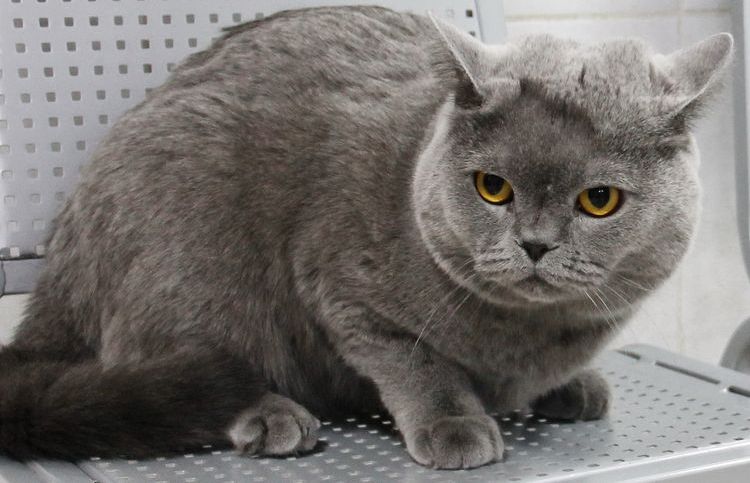
Age-related baldness is always more pronounced in short-haired cats with dark fur, as the bald spots are clearly visible due to the light skin color. The areas above the eyes are the first to become bald, but there is no redness on the skin, which is typical of pathological processes.
There are two age peaks when cats go bald. The first occurs between 14 and 20 months of age, when the coat structure changes as the shedding process progresses. The second stage occurs in older animals with weakened bodies. A natural decline in immunity and a deteriorating metabolism can trigger accelerated hair loss, which will likely never return to its previous state.
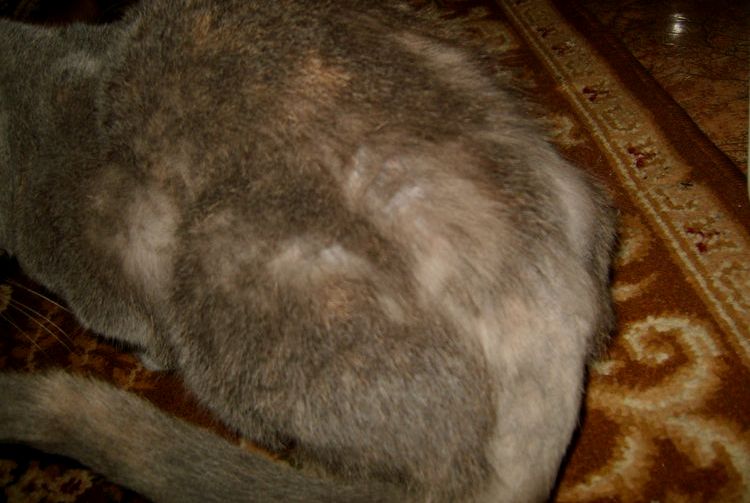
Pregnancy and breastfeeding
Sometimes, during pregnancy and nursing, a cat loses a significant portion of her fur. This is caused by both hormonal changes associated with the impending or ongoing motherhood, as well as an insufficient supply of essential nutrients, vitamins, and microelements used up during milk production.
Once you stop feeding, your pet will become smooth and fluffy again. Your veterinarian will likely prescribe maintenance vitamin therapy, which will help things improve even more quickly.
Consequence of taking medications
A pet may experience hair loss after taking certain medications. This side effect is uncommon, but it should be taken into account. Medications that cause such skin reactions are most often antimicrobial or antibiotic. Substances that can worsen hair loss include:
- cephalosporins;
- sulfonamides;
- penicillin.
Reaction to intramuscular injections
A localized patch of baldness often appears at the injection site. This reaction can occur even 2-3 months after the procedure. This symptom is sometimes accompanied by a regular lump and hyperpigmentation. This condition resolves on its own within 2-3 weeks.
Stress
After a severe emotional shock, moving, a change of owner, or other stress, a cat may begin to lose hair. In such cases, hair loss occurs evenly across the entire body, but once the animal's emotional state is restored, the hair loss stops. To speed up this process, a specialist will recommend sedatives.
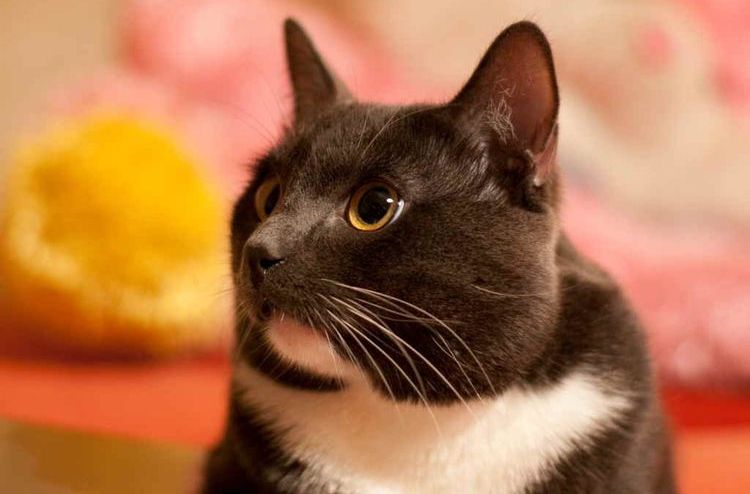
Solar dermatosis
It appears as crusty patches on bald spots in the ears and nose. It occurs in response to sun exposure and is common in light-colored and white breeds. It resolves more quickly if the pet is kept in an environment where it is less exposed to direct sunlight.
Diseases and pathological causes
Identification of such factors requires laboratory tests, followed by drug therapy or surgical intervention.
Adenitis
Adenitis is more common in males. It manifests as crusty lesions on the ears and scalp. A characteristic sign of adenitis is that the hair in the affected areas can be easily pulled out, and the animal shows no signs of pain or discomfort.
Relief can be provided by using special cat shampoos, which will slightly slow down the progression of the disease at the time of diagnosis.
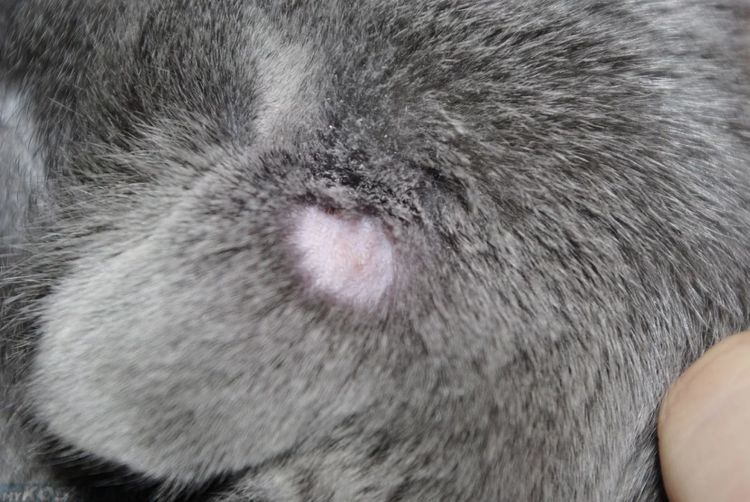
Allergy
Allergic reactions, such as partial hair loss on the back, tail, and face, can occur to certain types of food, materials, cleaning chemicals, or pet grooming products. These reactions may be accompanied by itching, redness, and bumps on the skin.
Allergy tests are performed to identify the cause. Treatment includes taking antihistamines, and in case food allergies a partial or complete change in diet will be required.
Hyperthyroidism
It manifests as hyperthyroidism with excessive production of hormones. Diagnosis includes mandatory hormone testing. Symptoms include intense licking of balding areas, which leads to increased inflammation in the affected areas.
Treatment involves radioiodine therapy or surgical removal of the enlarged portion of the gland.
Fleas or ticks
The presence of parasitic insects can cause not only itching but also hair loss. In the initial stages, this may be unnoticeable, but as the disease progresses to a more serious stage, symptoms worsen.
Based on the histological examination, the veterinarian will prescribe synthetic pyrethroids to get rid of bald spots.
Folliculitis
The infection affects the hair follicles, causing hair loss. The largest lesions of folliculitis are found on the head, neck, and face of the cat, and may later spread to the back, abdomen, and base of the tail. The condition is accompanied by severe itching.
To detect infection, a skin scraping and biopsy are taken, after which long-term antibiotic treatment is prescribed.
Erythema multiforme
There may be several reasons for the development of erythema multiforme:
- infection;
- reaction to medications;
- oncological diseases, etc.
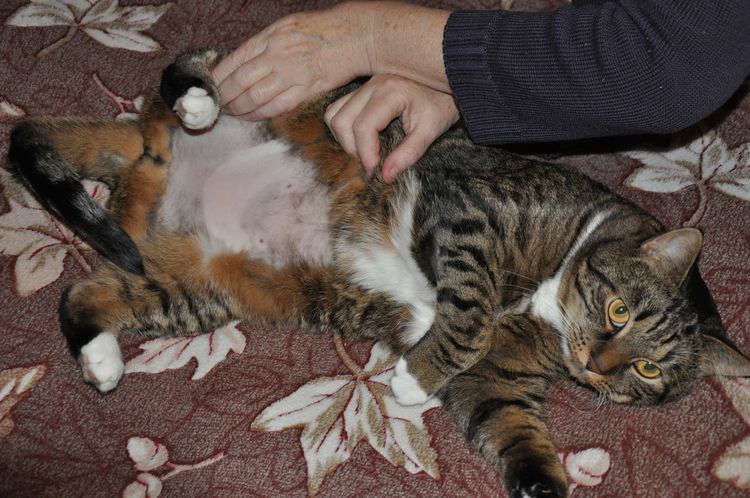
The cat is losing hair on the face around the mouth, on the ears, in the groin area and armpits. Blisters and ulcers, the temperature often rises and apathy occurs.
After diagnosis, treatment is prescribed aimed at eliminating the underlying disease and restoring normal skin and hair.
Read also:
- Cat food and pastes for hair removal
- The cat is losing hair in clumps, leaving bald spots.
- Scabs on the neck and head of cats


Add a comment