
Why did my cat start peeing everywhere?
What should you do if your cat starts peeing everywhere, ignoring the litter box? She's been litter-trained and was going there regularly just "yesterday," but now she's suddenly changed her ways and started eliminating in the wrong place. Running around the apartment with a rag wiping the floors, or constantly re-washing laundry and hiding clothes in closets—frankly, the prospects aren't very bright. And scolding the animal isn't helpful either—they'll be doing it deliberately, out of spite. Therefore, to solve the problem, you first need to understand its causes. And there can be many. Let's discuss the most common ones.
Content
Health problems
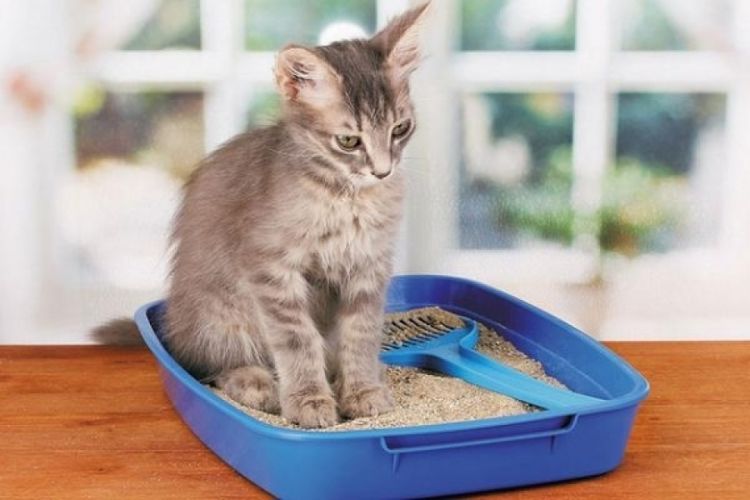
Various genitourinary and gastrointestinal diseases can easily cause a cat to urinate anywhere. Many breeds are genetically predisposed to urolithiasis, especially if fed cheap dry food. It's easy to tell if urination is causing your cat pain. They become restless and nervous, hesitate to approach the litter box, and meow pitifully. When jumping into the litter box, they urinate sparingly, squatting on their hind legs and pressing against the sides of the box. Or, conversely, they try to urinate in an unnatural standing position. The latter is typical during flare-ups of cystitis.
Over time, the animal develops an association between the litter box and pain. This means it needs to find another place. The choice falls on something soft, cozy, and safe—for example, bedding, sofa bedspreads, pillows, carpets, etc. Urinary incontinence can also be associated with sphincter dysfunction, as well as constipation and anal cysts, which can trigger pain.
In addition to the above reasons, problems with urination may be associated with the following factors:
- liver and kidney diseases;
- dysfunctions of the digestive system;
- infectious diseases;
- inflammatory processes of internal organs;
- allergic reactions to certain foods;
- neurological disorders;
- progressive rheumatoid arthritis, etc.
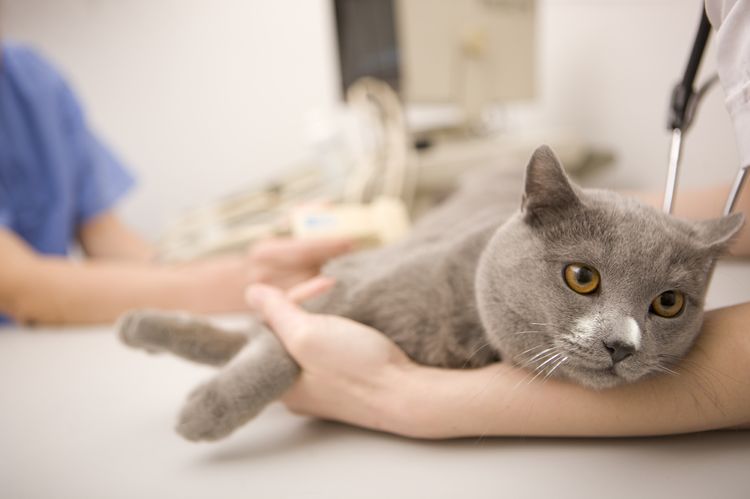
In any case, if you suspect any health issues, you should consult a veterinarian for appropriate diagnostics. Typically, blood, urine, and stool tests are taken, as well as an abdominal ultrasound, to establish a diagnosis and prescribe a treatment plan.
Designation of territory
At 6-8 months of age, male cats reach sexual maturity, and their reproductive instinct manifests itself with characteristic signs: loud meowing and guttural cries, behavioral changes (excessive affection or aggressiveness), and territorial marking. Animals use urine as a way to attract a mate and signal their willingness to mate.
Soiling furniture, curtains, clothing, the owner's slippers, and other household items indicates the onset of mating season. Females secrete pheromones to alert males of their readiness to mate, while males repel other cats, signaling that they are off-limits. The marking process occurs as follows: the animal approaches a vertical surface (wall, door, furniture) with its backside, raises its tail, and, with vigorous movements, leaves a foul-smelling trail on the surface.

Going against nature and trying to stop a cat from doing this is futile, so no amount of training or persuasion will help persuade a cat to stop peeing anywhere. In this situation, there are three possible courses of action:
- Fulfill your natural instinct and mate the animals. This makes sense if you have the opportunity to rehome the kittens later or sell them if the parents are purebred. It's important to remember that frequent matings undermine the female cats' health, while male cats only temporarily stop marking the apartment.
- Castration/sterilization. This surgical solution is a fairly common method of contraception. The procedure involves removing the sex glands, which suppresses or completely stops the animal's sexual activity. It is performed under general anesthesia at a veterinary clinic. After surgery, you no longer need to try to stop your cat from urinating inappropriately—they lose interest in the opposite sex, become docile, affectionate, and do not mark the house.
- Hormonal medication. There are many pros and cons to this method, so the decision to use oral contraceptives is made individually by the cat owner. Spaying may be contraindicated due to the animal's advanced age, various injuries, and health issues.

Important: Be aware that hormonal treatments can cause mastopathy and malignant tumors. As an alternative, veterinarians recommend bio-sterilization, which is a one-time injection of hormones into the cat's body. The procedure lasts for 9-12 months, after which it is repeated.
Behavioral factor
One of the reasons a cat may avoid the litter box is a feeling of aversion to it. Since cats are naturally very clean and fastidious about personal hygiene, the slightest violation of toilet organization can have fatal consequences.
The cat will develop a reflexive behavior pattern, and isolated "mistakes" will develop into a persistent habit of wandering around. What might she dislike, and what should she do?
- Type of fillerFor some unexplained reasons, cats respond well to some litters, while completely ignoring others, regardless of brand or price. Other possible causes include pellets sticking to their paws, having an unpleasant odor, causing allergies, and so on.
- The size and shape of the litter box. For example, it might be too tight, uncomfortable, or have sides that aren't high or low enough. Some cats prefer round boxes, refusing to pee in standard rectangular ones.
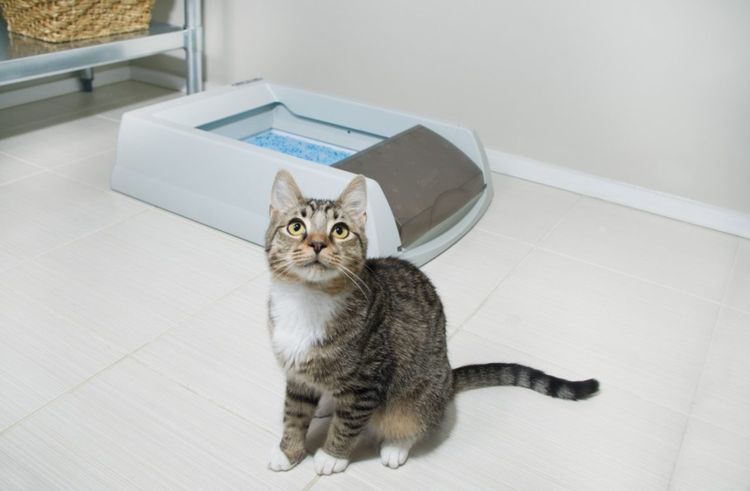
- Litter box instability. If the container wobbles and is unsteady on the floor, it causes anxiety in the animal, causing it to try to quickly finish its business and jump out of the box. Subsequently, the self-preservation instinct kicks in, and the pet seeks another place to eliminate.
- Litter box placement. The appearance of a washing machine, broom, new furniture, and other irritating objects in the bathroom causes discomfort, and in some cases, even fear, entering the room. The pet becomes nervous and chooses a more secluded area to "sit."
- Dirty litter box. Cats often refuse to use a litter box that is uncleaned (or, in their opinion, inadequately cleaned).
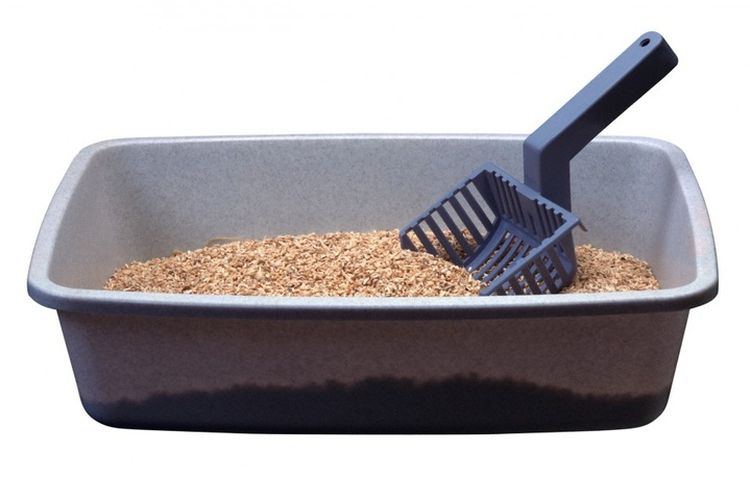
In such cases, you need to be patient and try to create the best possible conditions for your cat to go to the toilet. Here are some effective recommendations:
- Place several litter boxes with different types of litter next to each other, along with one completely empty one. They should be different in size, shape, and side height. Observe which one your cat chooses, and once it's used regularly, discreetly remove the other containers. Cats often prefer fine-grained litter that flows freely—they can dig in it before urinating.
- Use two trays at the same time: the cat will pee in one and poop in the other.
- Buy closed litter box or make your own structure from a cardboard box with a slot for entry.
- Clean the litter box thoroughly after each use. To eliminate odor, wash cat accessories under cold running water rather than warm or hot.
- Provide 24-hour access to the litter box. The bathroom door should always be open or partially open to allow your pet to easily reach the litter box.

Other reasons
There are many other factors that can cause stress in pets, leading to the urge to defecate in inappropriate places. Among the most likely reasons for a cat urinating inappropriately are the following:
- A response to disrespectful behavior from owners. For example, if a cat is forced into a litter box, grabbed roughly by the scruff, has its nose poked into an "improperly" made puddle, is yelled at, or is left alone at home for long periods.
- New people (a small child, relatives, friends) appear in the family, drawing a large share of attention. The pet has no choice but to start misbehaving, thus diverting the attention of the household.
- Relocation. Cats take a long time to adapt to new living conditions, so they need to be retrained to use the litter box.
- Apartment/house renovations. The animal is constantly nervous and reacts to the situation in a peculiar way, such as urinating inappropriately.
- Substitution of associations. Some household objects can remind a cat of a litter box (flower pots, shoe boxes, furniture drawers, etc.) and provoke "illegal" behavior.
How to stop a cat from going past the toilet
If your cat starts peeing anywhere, veterinarians recommend:
- Thoroughly wash soiled areas with disinfectants. Animals have an excellent sense of smell, so the lingering odor will attract them to repeat the mischief.
- Place strong-smelling spices (pepper, cloves, cardamom) or orange peels in problem areas. The pungent aroma should discourage the cat from urinating inappropriately.
- Apply double-sided tape to the floor, furniture, table, and other household items your pet is interested in. This will make your pet uncomfortable and afraid of walking on sticky surfaces, which will discourage them from marking their territory.
- Place the cat's food bowl where it usually goes to the bathroom. Animals are naturally wired to urinate and eat in different places.
- Use special sprays sold at pet stores. They discourage cats from defecating outside the litter box.
- Wipe the cat's face with a cloth, then wipe the area where it defecates with the same cloth. When approaching the area where it "misdeeds," it will smell its own odor and be reluctant to urinate there.
- During extended absences, leave a spare litter box. If the main litter box becomes so dirty that the cat begins to ignore it, she can switch to a clean box.
And the most important thing to remember is no physical violence or harsh treatment. Physical force can have the opposite effect, and the animal will simply resort to revenge. Give more affection, attention, and patience, and it's likely that the cat will quickly accept the established rules and try not to break them.
Read also:
- How many times a day should a cat pee?
- How to litter train a male or female cat
- How to stop a cat from pooping anywhere


108 comments
Anastasia
Hello, my cat is one year old. Before, she would go to the litter box on principle, even if she only went there a few times. At one point, she started going past the door, even though there are two litter boxes and they are all clean. We sprinkled powder in the toilet as before to get rid of the smell of urine. Everything was fine, but now we don’t understand what’s happened.
Svetlana
You wrote about me. This morning our cat started meowing, I woke up, looked at the clock and told him to hold on for half an hour. To which he jumped onto the bed and started peeing right on me. Reflexes, you say? Yes, yes. I spoil him, but my husband is strict with him. We sleep in separate rooms. He doesn't even go into his. And with me, it's just like that. Apparently, I'm not an authority figure for him.
Dinara
Why did my cat start going to the toilet in random places?
Tatyana Shmonina - veterinarian
Hello! There could be several causes, ranging from stress to genitourinary issues. In such cases, I first recommend a urinary tract ultrasound and clinical and biochemical blood tests.
Dinara
Hello. Our cat is 13 years old. We've never had any problems with him. We bought him a smart litter box. Now he goes everywhere, including to his smart litter box, wherever he wants. The litter box is always clean because it automatically cleans itself. We've tried different types of litter, but it's all to no avail. What should I do?
Tatyana Shmonina - veterinarian
Hello! I need to have my blood tested, have a chemistry panel, have a urine test, and have an ultrasound of my genitourinary system.
Anastasia
Hello, we have a 3 year old spayed cat who started peeing in our shoes. There are no health problems. She used the litter box for three years without any problems, but now it seems like she has started to make fun of us. She started peeing in our shoes all the time. She once peed behind the washing machine and once in the closet. Thank God, it was on the very bottom shelf where there are no things at all.
I don't see any way out except to give her away, just to be on the safe side.
I don’t understand the reason for this behavior. We lived with her for 3 years without any problems. She was a smart cat. It’s not clear what happened to her.
Victoria
We had a similar situation: she started peeing in the dog's bed. We bought a large litter box and a new bed for the dog. She deliberately sat down in front of everyone and peed. Out of anger, I sprayed my perfume on the bed, and since then she hasn't gone there anymore. Maybe she's started realizing she smells like her owner.
Igor
Hello everyone! I have the same problem. After a year and a half, my cat started urinating wherever she wanted. She used to go to the toilet normally. She's not a tomcat.
Anna
The cat is 9 years old. For the last two weeks, he's been peeing in the corners. The litter box is always clean.
Daria is a veterinarian
Hello! Check your pet for urinary tract infections. Rule out cystitis and urolithiasis. It's also important to rule out idiopathic causes, such as stress-related illnesses. For example, new family members/pets, moving, renovations (even at neighbors'), loud noises, a new litter box or litter, and so on. Cats are extremely sensitive creatures, and they're not particularly resilient to stress. Something in their normal routine has changed, and that's it, stress and illnesses are right there.
Sayyid
My cat pees in the litter box but poops everywhere except the litter box. Why? Help.
Daria is a veterinarian
Hello! Have you tried using a second litter box or cleaning the existing one? Some cats are extremely clean but can't use the same litter box or if it's dirty. It's possible the box is too small and the cat feels uncomfortable in it. It's also important to determine whether the cat is doing this on purpose or out of desperation. Perhaps they're doing it in flower pots. Another thing: what does the litter box look like? What kind of litter is it? Does it have a grate? Some cats are simply obsessed with burying their waste and don't like using an empty litter box. Or the box is in a high-traffic area, making it difficult for the cat to relax, so they hide in corners and defecate there.
Alexi
Hello! My cat will be 12 months old in April. Before that, he used the litter box just fine and didn't poop. Now, when I come home from school, there's a puddle... and in the same spot! He usually goes in there, starts screaming, and starts scratching like crazy. If I startle him, he runs away. What's the matter? I bought a special spray at the pet store, and he likes the smell.
Tatyana Shmonina - veterinarian
Hello! Put a potty in that spot. If that doesn't help and the urine continues to leak everywhere, you'll need to have your urinary system examined (complete a complete blood count, biochemical analysis, and ultrasound).
Kat
Hello, my cat is about a year old, not yet neutered, and I've had no problems with the litter box until recently. He's started peeing in the corners, even though the litter boxes are always clean (there are two of them, a large one and a regular one). We also have an adult female cat and a male cat in the apartment, both neutered. I'm taking him to get neutered in a few days.
Daria is a veterinarian
Hello! This could be territorial marking. But if this continues for a long time, even after neutering, this behavior will persist and be repeated. Moreover, even after neutering, hormone levels in the blood remain for a long time, gradually decreasing. Therefore, even after neutering, some behaviors will persist.
Elena
Hello! Our cat is 5 months old. We got her when she was 2 months old. She was litter-trained. She knew where to go, etc., from the very first time. She never gave us any surprises. Then she got an upset tummy (for the first time in her life) and did her business in the bathroom. The litter box itself is next to the bathtub. Now, she constantly jumps into the bathtub, trying to paddle and do her business. Currently, I constantly fill the bathtub with a small amount of cold water and keep the litter box clean. But she regularly tries to jump into the bathtub. She's not particularly afraid of water; we have a Chausie. Any advice on how to wean her off this?
Daria is a veterinarian
Hello! If an animal has been doing something repeatedly and there are no consequences, it will be extremely difficult to break it. A cat is not a dog, it won't be trainable, and it won't listen to the "no" command. There's only one solution: change the location of the litter box and close the bathroom door. But then it might start going to the kitchen sink. A friend's cat got used to going to the kitchen sink; she had four litter boxes in different corners, and different litter, but she still only went to the kitchen. It got to the point where, when we closed the kitchen door, the cat would sit and scream outside the door, and as soon as the door opened, she would run to do her business, even in front of the owners.
Alla
Hello, my cat is 8 months old and recently started peeing everywhere: on the table, in his shoes, in the corner, in the closet, but he also uses the litter box—he's trained. Is this something he's marking? Is it time to neuter him, or is it his personality? Haven't had an ultrasound yet?
Daria is a veterinarian
Hello! Yes, it's likely that the maturation and territorial marking phase has already begun. If this becomes a habit, even neutering won't help break this pattern. He'll continue to do it. The longer a cat marks, the higher the risk of it becoming ingrained.
Marina
Hello. We adopted a cat, now an adult. He's smart and very willful. Now that we have kids, he's started peeing everywhere. I understand he's stressed. But how can we stop him from marking everywhere? The stroller, the baby's things, our bed, the toys, and the shoes are just too much to handle.
Daria is a veterinarian
Hello! Has your cat been neutered? If not, then this is simply marking HIS territory. It's just jealousy. In this case, even neutering may not help. Yes, the amount of marking may decrease, but the longer it goes on, the more ingrained this behavior becomes. And the animal will continue to perceive it as normal behavior. It's necessary to wash everything off, which is far from easy, and try using sedatives for the animal (cat Bayun and other homeopathic remedies, Feliway, gabapentin – this one is not easily available, only by prescription, and it's very strong, so it should be used with caution and only under veterinary supervision).
Robert is an astrologer, psychic, homeopath, and ruler.
Cats don't have behavioral reflexes. They can't feel resentment or jealousy. Any deviations from the norm should always be viewed primarily as health issues. If the cat is an adult, then all the problems associated with old age are obvious. Or, they serve as a clear example to everyone else of where their territory ends and the cat's begins. Hitting, scolding, and using various means are usually futile. They even defecate where they eat if they are unhappy about something: encroachment on their habitat, competition, or poor health.
Tatiana
My 11-year-old Scottish Fold cat has started peeing on the sofa. He's not neutered, but he uses the litter box, pees when petted, and sometimes just jumps on the sofa and pees. What should I do?
Daria is a veterinarian
Hello! You should take your pet for an ultrasound. Rule out urinary sphincter weakness (whether the animal is urinating fully or only dribbling). It could be age-related or hormonal. If there are no health issues, then it could be a behavioral change. Look for triggers in the cat's environment: new pets, tenants, visitors, renovations, new furniture, strange odors, noises, or anything else. Cats are very sensitive to stress. Any change in their normal environment is stressful. But first, examine their health.
Tatiana
My cat is 7 years old. She's litter-trained. I also have a 13-year-old male cat. He's doing fine. I had to go away for a month on business, and the neighbors were looking after them. The cat started peeing not in the litter box, but on my shoes on the shelf and on the couch. The neighbors didn't know what to do about it. Before leaving, I covered the couch with blankets to prevent scratches, and that saved it; the fabric layer was enough. However, I had to throw out some of the shoes, and it looks like the laminate flooring will have to be replaced. I've now treated the area with chemicals, but she's peed there again. I'm not sure what to do anymore.
Daria is a veterinarian
Hello! It's possible this all started due to stress. Cats are very unstable creatures, and any deviation from their usual routine is stressful for them. It's important to rule out idiopathic cystitis (caused by stress). Pay attention to the amount of urine, its color, and its odor. Try giving your cat a calming medication (available at your veterinarian), and carefully inspect the litter box for any changes (placement, litter).
Elena
Hello! Our cat is 11 years old. He used to pee (and yes, pee), at least occasionally. My mom and I spend days agonizing over rags and laundry, but lately he's gone crazy. He's lost three sofas, two armchairs, two rugs, a computer case, a monitor, a keyboard, absolutely all the shoes, clothes, pillows, blankets... Over the years, we've tried both good and bad, but we've really run out of strength. We've calculated the losses, which are already in the hundreds of thousands. We love him, but we're exhausted, and it's too late to neuter him. What should we do?
Daria is a veterinarian
Hello! It's all over now. If a cat starts marking everything, he'll mark everything. Was it stressful? New people? New pets, maybe? Renovations? Some other stress? I'll just have to take it to the doctor and have his urinary tract examined (ultrasound, blood and urine tests). Rule out an inflammatory process.
Tatiana
No one's written about this, but since you're in such a serious situation, I've come up with this idea. Buy a large cage for your dog, for example, at the L'Amur store in the Garden City shopping center in Lakhta. There's probably a tray underneath. Put the cat in there, along with some food and a litter box. Set a boundary for the area. Open the cage only when you want to hold him or pet him. Maybe he'll understand and stop peeing.
My cat pees both in the toilet and nearby. She poops on the floor because she doesn't want to get her paws dirty or spill litter.
Elena
We have two Canadian Sphynx cats: one (a neutered male) has been with us for eight years, and the other (a spayed female) has been with us for two years. Each cat has their own litter box. For a year, there were no problems, but for the past six months, problems have started cropping up, and they've started going to the toilet on a mat. We've tried everything—special products, seasonings, and essential oils—but nothing works.
Cats don't get along with each other.
Olga
Good afternoon. I have a cat, a mongrel, a beauty) she is about three years old. For two of those years, she has been peeing in the hallway, on the table on the balcony, in the closet, maybe on the dog's bed, and on my bed! Moreover, I already got four litter boxes for her, and I clean them after each trip. I have already talked to her, scolded her, and washed the floors with everything, but it’s all useless. And chemicals are also difficult! I treat her after her, but the dog has allergies! I’m ready to throw her out! I’m exhausted! I have allergies myself, in fact.
Daria is a veterinarian
Hello! If the animal has no health issues (a genitourinary ultrasound confirmed this, blood and urine biochemistry are normal, and the animal is spayed), then it's only a bad temper. Outdoor cats have a hard time getting used to litter boxes. Some eliminate wherever they want. It sounds trivial, but have you tried putting sand in the litter box? Maybe it'll make it more familiar and resemble the outdoors? However, it could also be rebellion or jealousy towards the dog. You'll have to correct the behavior either yourself (books, articles, free online videos from animal psychologists) or seek help from specialists (but it's not always easy to find a competent one; they're only found in large cities). Try outdoor sand first (but preheat it in the oven first to kill any potential parasites, bacteria, and viruses), and then try other litter for other litter boxes.
Dmitry
Good evening, my cat, Pina, is already 1 year and 1 month old. Unfortunately, he periodically goes in the wrong place, following this pattern: he'll use the litter box for a month without fail (we don't use litter), then suddenly he'll poop somewhere. Just 4-5 hours ago, he went to the toilet on my parents' bed, exactly where his father used to be. He's had this behavior before, but then I figured out the cause. I scolded him when he shuffled his paws on the floor and wall. Once he stopped, he started using the litter box all the time, and my sofa has been soiled countless times (4-5 times for sure). It's easier to buy a new one than to clean it. He's neutered, and we also live with a medium-sized mongrel dog. I can't figure out what's going on... My parents are insisting on giving him away, but I'm not particularly keen, of course. Could you tell me what to do to help him earn my parents' trust? If the dog is to blame, then what should we do (we’ve had it for a long time, so the parents’ choice is again obvious)?
If I scold him, it’s only by hitting him on the nose with my finger, so it’s unlikely that this could be a psychological problem…
You can, of course, try pouring litter into the tray, but what guarantees are there?…
Daria is a veterinarian
Hello! Cats have an instinct to bury their mess =) But now, even adding litter won't solve the problem, unfortunately. The smell from the sofa will attract the cat (it will perceive it as a large litter box, as it's filled with the smell of cat urine, no matter how much you clean it). Perhaps the dog slept on the sofa. This is the cat's way of masking the smell of another animal and marking its own (despite being neutered). If possible, it's easier to close off rooms where the cat might defecate while you're away. It's also possible that the location of the litter box isn't ideal: it's visible, inconvenient, or hard to reach, or the opposite.
Maria
Hello, my cat is two years old, a Scottish Fold. She lives with a dog. Everything was fine. After we moved, she started urinating randomly, always in the same place: the sofa where the dog sleeps, her bed, above the sofa, rags, and on her own bed. Sometimes she pees outside the litter box on the carpet we have nearby. No sprays or repellents help. We thought she was marking. We wanted to spay her, but it wasn't possible due to her health. We gave her a hormonal injection. She still pees randomly, we clean the litter box, and she uses her own litter box occasionally, depending on her mood. I don't understand the cause of this behavior or how to fix it. If stress or moving is the cause, then what should I do about it? Please advise. The furniture is not hers.
Oksana
Good afternoon. My cat is 6 years old, neutered at 6 months. Everything was fine, he decided to go to the bath or sink to do his business on his own, I then washed everything well and everyone was fine. In March, I moved for a while and he stayed with my mother in the apartment. One day, I came over for the weekend and he peed on the tiles in the hallway. Since then, he's been doing it periodically, and now he's started going there to do his business too. I don't understand what happened to him and how to stop him.
Daria is a veterinarian
Hello! Your mother likely couldn't stand your cat's use of the sink instead of the litter box while you were away. She closed the bathroom, for example, to prevent it from happening again. The cat then started going elsewhere. If your cat isn't trained to use a litter box, the chances of retraining it at this age are practically zero. You could try placing a litter box where your cat currently goes to the bathroom; perhaps it will start going there.
Alexander
Hello. What could have happened to our one-year-old cat? She always used a litter box. But now, suddenly, slippery bowls, lids on children's toy boxes, even the dustpan from a broom have been added to the litter box... The only thing we've noticed is that it started around the time she started going for walks about a month ago.
Daria is a veterinarian
Hello! Cats have a different reproductive cycle than other animals (ovulation doesn't occur without intercourse), so their heat cycles (estrus) are constant because the follicle doesn't rupture and the egg isn't released. This is the reason for this behavior. Spaying should be done promptly, as this behavior can become a habit. Even after spaying, the situation may not improve, as the cat will rely on the scent of its urine in places other than the litter box. This is especially true if the cat has a retentive ovary.
Masha
Hello, I have a British Shorthair cat, he will be 1 year old in December, he had no problems with the litter box at all, he used to go cleanly in it, but recently he started to go to the toilet outside the tray, sometimes in the tray and then not, so I washed the places where he pooped and sprayed with a special spray, he stopped pooping, started in the tray again, but now he started peeing outside the tray, well, basically the same as when he goes to the toilet, sometimes in the tray and then not, and he sits in the tray for a very long time when peeing, what could be connected with this? Please tell me!!
Daria is a veterinarian
Hello! If there are no health issues, then the cause of this behavior needs to be looked at psychologically. Some aristocrats start to act up, claiming they need two litter boxes. Yes, there are such fussy dogs: they pee in one and then defecate in the other. Or the old litter box is dirty. If they go far from the litter box, it might be too small, too high, or, conversely, too shallow. Perhaps the location has been changed. Sometimes the litter box is washed after cleaning with products with a strong, pungent odor. What about castration?
Alexey
Good afternoon! Our cat is almost two years old. He uses a litter box for both pee and bowel movements. Everything is fine, but once or twice a month he inevitably pees either in the closet, on the curtains, pillows, or bags. We've taken him to the vet, a frequent visitor, and had all the tests done, but the doctors say he's fine. He's neutered, but he screams constantly, especially at night, very loudly and protractedly, like cats scream when they're going out. We don't abuse him, we don't yell at him, and we certainly don't physically punish him. Please advise what we should do.
Alexandra
Good afternoon, we got a 1.5 month old kitten and we can't seem to get him to use the litter box.
Daria is a veterinarian
Hello! It's possible your kitten doesn't like the litter box itself or the litter (maybe it's hard or firm, doesn't like stepping on it, or has a strong or unusual odor). Try moving the litter box to a different location. Choose a location that's not easily accessible. Cats like to have privacy in their toilets, despite the fact that they bury their business loudly. Don't abruptly change the location of the litter box. If you plan to move it, it's best to leave one in its current location and place the other in the new location. My little one, after moving the litter box abruptly, began persistently going to the original spot.
I had to return it, and I put the second one in the toilet. But I put paper and some of the litter that would go in the litter box in the old one. Then I transferred his feces and some of the wet litter to the new litter box. He sniffed a couple of times and went to the new place without any problems. The main thing is, don't yell, don't punish, and don't hit. And everything will work out!
Karina
Hello, my three-month-old cat started peeing on a rag near the door, even though she used a litter box before. I noticed this happened after I washed the floors with flower-scented water. I'd already washed the rag with bleach, and she's peed again. What should I do?
Daria is a veterinarian
Hello! It's easier to just throw that rag away. Cat urine contains "crystals" that don't dissolve in water. They can smell even a hint of their own urine and go there again. Just don't clean the litter box with anything strong-smelling. Has the litter been changed? There are special "repellents" at pet stores: just spray it on the spot you don't want to leave marks and enjoy! Your cat won't go there anymore =)
Svetlana
Hello. I have a problem with my cat. I got a Bengal cat when she was six months old. Everything was fine for a week, and then it was like a different cat. She pees in the litter box once, on the bed once, and now she's starting to brazenly pee when I sing. What should I do? My husband will find out and kill the cat.
Daria is a veterinarian
Hello! You've adopted a pet that's too old. Bengals are naturally stubborn, and now they're in their teens. Perhaps they don't like something. Have you moved the litter box? Changed the litter? Are they experiencing any other stress? Have you tried using multiple litter boxes?
Irina
That's it, my Bengal cat has gone crazy, she's 7 years old, she pees in the bed, she's tired of washing the sheets and blankets!
Daria is a veterinarian
Hello! It's important to understand the reasons for this behavior. She hasn't been acting this way her whole life, but apparently she only started causing mischief recently. It's important to remember what preceded this change in behavior. Renovations? Moving? A new pet? Visitors? An illness? Resentment? There are indeed many possible "revenge" options; it's important to understand what triggered it. Then, think about how to solve the problem.
No more cats
I'm so fed up with this cat that's always peeing in the wrong places, how could I have been persuaded to get one at all? I wonder why she suddenly used the litter box, and now suddenly has had a couple of misfires in the last few days? Expensive food at 2900 a month, wood litter, vet checkups, you play with her, pet her, more than you would a baby, and this creature is still causing mischief and ruining my home? Men, come to your senses. Don't give in to weakness under any pretext or persuasion from your wives and children, despite all the promises that you won't be burdened in any way by keeping a cat—it's all a lie.
Elena
Recommending using duct tape is a bad idea! Many cats love to eat it. Ultimately, it's either surgery or the pet's painful death from bloat.
Maria
Good afternoon. I've been asked to look after my cat while we're on vacation. She's two years old, and they brought her home with all her belongings. At first, everything was fine. Now, after a couple of weeks, she's started peeing everywhere. My four-month-old cat is in shock. What should I do? I still have three weeks until her owners arrive, and she's started peeing on things.
Daria is a veterinarian
Hello! Initially, the cat needed to be "prepared" for the move. Sedatives should be administered in advance. There are many options, depending on the selection at veterinary clinics in your city/region. For example, KotBayun, StopStress, Fospasim, and others. This would help the visiting cat cope with the stress and prevent her from acting up on your property. Most likely, the cat is trying to claim territory and is young. Ideally, the animals should be separated somehow to prevent them from interfering, but unfortunately, this is practically impossible in real life (unless you have enough space to keep her in a separate room or on an insulated and glazed balcony/loggia).
Anatoly
I think you should poke your dog's face in urine or feces until he walks correctly.
Daria is a veterinarian
Unfortunately, this will only provoke more urination outside the litter box. It'll start out of spite. And it'll become a vicious cycle. You punish, and the animal takes revenge. And even if you stop punishing later, the animal will have this behavior ingrained in its mind.
Victoria
And you apply your advice to yourself, if you did something wrong, you also need to be rubbed in the face with it until you learn to do it right.
Zhanna
I don't know what to do. My cat is 1 year and 4 months old and has started urinating in different places. He lifts his tail and urinates...at the same time, he purrs in an abnormal tone...what should I do?
Daria is a veterinarian
Hello! Is your cat neutered? How long ago did this start?
Zhandyrbek
Zhanna, he's just aiming, cut off his balls.
Vet
Alice
Good afternoon. If a cat isn't using the litter box because of revenge, resentment, or jealousy, how can I fix the situation?
The cat's owner sometimes gets angry with him because of this and may even beat him. He often walks in front of the front door, even though there are two litter boxes in the house.
The cat is 1.5 years old and not neutered. I also have a 1-year-old female cat who is fine with this.
Daria is a veterinarian
Hello! There's no way you can fix this until the animal stops being bullied. Just think about it: if someone big was taking out their anger on you, and you couldn't respond, wouldn't you want revenge? And if at that moment someone said to you, "Oh, calm down, forgive them, don't be mad." Would you ever forget that? Unlikely. Yes, they're not people, but animals. But cats are very vindictive and vindictive. Even if a lot of time has passed since the offense, they can still do something nasty. In this case, the cat chose to poop. And now he'll poop out of spite. And soon it will become a habit if you don't stop bullying the animal.
Irina
Good afternoon. I'm currently renovating my apartment and went on vacation. My cat was staying with a friend and started marking near the litter box, even though there were two of them and they were always clean. I've now taken her home. She poops everywhere except the litter box. She poops on the new, freshly laid plywood. She even pooped on my bed. Before, I also went on vacation and left her alone in the apartment. My neighbor came to see her every day, fed her, carried her, and petted her. And then she also made a mess all over the bed and ruined the mattress. I understand that she misses her, but it's impossible not to go anywhere at all. And living with a friend in good conditions is better than in a paid pet boarding house, where the miserable animals just sit in a cage. Can you tell me how to get her to use the litter box now? I just renovated and she pees everywhere. I'm already thinking about giving her away.
Alexander
Hello! We have a 4-year-old Persian male. He's been using the litter box every other time, and recently it's like a switch flipped on him! He's started peeing everywhere (on the mattress, clothes, slippers, sneakers, the baby mattress, the floors) - anywhere but the litter box. He only uses the litter box to pee! I can't stand it anymore! I can't throw him out on the street; my heart bleeds, and no one wants to take him in!
Daria is a veterinarian
Hello! Is your cat neutered? Has he been stressed recently: moving, having someone visit that he doesn't like, or a new pet or family member? Has he been punished? Have you tried using two litter boxes? Is the litter box indoors and smelling strongly of something (like chemicals)? Has the litter been changed? Is urination painless? Is the cat trying to attract attention? This behavior is usually a form of rebellion, an attempt to attract attention. Sometimes it's a sign of a genitourinary disorder, but besides urinating outside the litter box, there may be behavioral changes and other symptoms.
Alekseevna
My bastard shits and pees next to orange and lemon peels. Next to the bowls. In the dog bed. A hundred pots, with various contents and one empty one, don't stop this bastard from shitting. She's sterilized. Pampered. But I already hate her. Today I cleaned up shit in the kitchen several times. She pissed on the dog bed. What does the bastard want???
Love
How wonderful life is for people who have no problems except one: washing and redoing floors, changing pillows and blankets, putting out 22 litter boxes with expensive litter, and buying the best cat food! People, what's wrong with you????? These are animals that can't be forced to sit on the toilet and wash their paws afterward. A cat always looks down on a person. Finally, take care of your children, grandchildren, read an interesting book, go visiting, skiing, skating... I read such "cries" and my hair just stands on end. Unhappy animals are the happiest ones!!!
Tatiana
It's heartless people like you who rush to euthanize healthy animals without any prior knowledge or care.
We teach our children kindness. And we have time to do everything else. One doesn't interfere with the other.
Christina
it just doesn't work
Lera
Hello, my cat is two years old and had no problems with the toilet at all. I asked him to pee in the sink, and he started doing it, such a smart little guy. He was. In September, we bought a washing machine, and we hooked the drain hose onto the sink faucet where he peed, for just 24 hours. Stupid! And they scared him. From that moment on, the cat broke down. He started peeing under the threshold and under my husband's chair in the kitchen. We removed the hose the next day, installed litter boxes in the areas, bought calming drops for the withers and a collar, but nothing helped.
It's already December, and the cat isn't working. He can pee in the sink and uses both litter boxes, but he keeps going on the floor, as if charmed. We praised him and gave him treats for using the toilet properly, but to no avail. Then I poked him in the toilet and threw him out the door. He complained to the neighbor about how he was being bullied. It lasted for a couple of days, and then again. And he doesn't pee at night, apparently because he's either too lazy or stinks. I walk the little one to school, and while we're having coffee or a bath, there's a puddle. My husband couldn't wait until New Year's, he says, "You'll have to decide." He uses Acana and Formina cat food. We buy the best, the kids adore him, and there are no strangers in the house. He's a Selkirk Rex. I can't even imagine being without a cat.
Daria is a veterinarian
Hello! Sorry, but you've spoiled your cat by allowing him to use the sink. It's where people wash their hands, wash their faces, and where children might drop their toothbrushes (and come into contact with cat urine). You're unlikely to disinfect the sink after each use (otherwise, the smell of disinfectants would discourage him from going there). Your cat never used to go to the bathroom where he should (even on the toilet), so now he doesn't understand why he's being punished. He doesn't care about your treats, excuse me. He's not a dog; he won't be trained. You should have punished him immediately, after the first puddle. Don't indulge him by placing litter boxes in every corner of the house where he's done his business. Treat these areas with special products (simply washing won't help; the urine smell will linger, and he'll continue to use them).
Marina
Sometimes you can't punish him, sometimes you have to shove your nose in. You decide for yourself what's acceptable and what's not. We have a three-year-old British cat. Everything was fine, but three months ago he started pooping everywhere. We didn't poke him in the nose, we just talked to him like he was a person. He sits there, listens, and pretends to understand... that he's wrong... I'll fix it. But he still does it. So, once again, I clean up, and I talk to him about how he can't do that. Then the cat attacked me, making it clear he's tired of listening to all this moralizing. The result: a bitten arm, a tetanus shot, and treatment. Now I walk past and hear him constantly hissing. What's wrong? Where did we upset him?
Daria is a veterinarian
Hello! Where did I, excuse me, say that you should shove your face in? Why is there so much aggression towards me? Just because I once wrote in the comments that you should punish, that doesn't mean I said "shove your face in." I'm always for peaceful negotiations with animals and training them! Not hitting, yelling, or poking them.
The first and most logical question: was the cat neutered? It could be a hormonal surge. Perhaps he's harboring a grudge. British cats are far from angelic in nature.
I'll share a story from my own practice...maybe you'll find it interesting. Lately, I've been noticing an increase in aggressive behavior toward owners out of the blue as pets reach 2-3 years of age. A colleague's British Shorthair attacked his wife and child, and then simply ran away. Just a couple of months later, the cat was brought in with a similar behavioral change, and the owners were worried about rabies. While collecting the patient's medical history, we determined that he was from the same litter as the colleague's pet. We called around to clinics in the city and found that almost all the cats from that litter had been seen this year with the same symptom—aggression. It seems the breeders did something wrong, leading to delayed behavioral changes. Three owners decided to euthanize their cats because the aggression had become too severe. Behavior modifications were no longer an option.
Love
I understand everything, animals are people too, etc., but people also have other things to do: work, cooking, a child, shopping, hobbies, and parents. Do you really have to drop everything and deal with the litter boxes, pee-boxes, and cat poop? Just Brad!!! Does anyone really keep an animal that pees on their bed, clothes, and shoes for many years and enjoy life? UGH.
Natasha
Good evening, we have a British straight-eared cat, she used to use a litter box for 4 years, then she got sick and started peeing blood, we took her to the vets, treated her, did tests, they said she was healthy, but she still pees blood, the food we buy is not cheap, I have already tried everything: sprays, lemon, tangerine peels and vinegar, she still goes to those places a couple of times, I could not stand it anymore, my husband poked her, spanked her butt and locked her in the toilet, the apartment stinks, I am embarrassed to call someone, I feel sorry to give her away, although I keep telling her, "Busya, we will give you away," I have no strength, I clean up after the child and also after the cat, the corners, what should I do?
Daria is a veterinarian
Hello! What kind of food? What manufacturer? What cause of hematuria (blood in the urine) did the veterinarians find? You can't hit a cat; they don't understand why they're punishing you; they'll only get more revenge. There are special sprays to discourage them from urinating inappropriately. Sometimes British Shorthairs are capricious about their litter box. It might be too small, too shallow, or they haven't cleaned it up immediately after going to the bathroom. Some British Shorthairs pee in one box and pee in another. Perhaps they don't like the location of the box. If they're constantly urinating in the same corner, replace the box there for now. In general, have your cat examined further, especially if there are recurring hematuria.
Olga
Good afternoon. I have a spayed cat in a private yard, and she goes to the bathroom outside. Lately, she's been acting strange: she only eats when I bring her to her bowl and pet her. I've also noticed a puddle in the same spot twice now—on the doorstep. She plays with him and seems perfectly healthy. Thank you in advance for your comments.
Alexandra
Hello! We have a cat named Mira, she is 4 months old, a Scottish Fold. Although she is litter trained, she can sometimes pee in the wrong place. First, about a month and a half ago, she peed in the box, and after some time, she peed on a sack of potatoes. And so it happens sometimes that the cat pees in the wrong place. And today Mira did her business in the wrong place again, or more precisely, on the shoe. And I'm worried - maybe she has some health problems or some other reason?
Daria is a veterinarian
Hello! If your pet urinates without distress, doesn't cry out (i.e., urinating is painless), and the color, volume, and consistency of the urine are unchanged, then the problem is most likely behavioral. Make sure the litter box is clean. This breed (like British Shorthairs) often dislike using the same litter box. If there's feces in the box, the animal will urinate elsewhere. Many owners have gotten the hang of it and use two litter boxes. However, if you suspect something is wrong with your pet, take it to a vet.
Kondrat
You should pay more attention to her and talk to her. Lop-eared animals are not like ordinary yard animals; they are more impulsive (talkative), are inclined to talk, and love it when their two-legged friends speak to them, ask questions, and share positive emotions with them. They will follow you everywhere if they sense your honesty and devotion. They can watch TV with you, sit under the car while you're doing repairs, sit on the washing machine while you shower, and check that you're applying shower gel correctly. In short, they participate in everything you do and will always be there, supporting you with their comments and using the prefix "mur" in their vocabulary.
Margarita
Hello! My cat is 15 years old. Recently, he started peeing everywhere. He used to use the litter box regularly. Now he pees either in the litter box or anywhere else. He can pee on the floor, or on the couch. Anywhere. He also periodically howls. He's not neutered. What's wrong with him?
Daria is a veterinarian
Hello! You need to take your cat for an examination. A bladder ultrasound, urine, and blood tests are needed. First, rule out cystitis and urolithiasis (if the cat is howling, it's likely they're experiencing pain when urinating). Then, rule out simple urinary incontinence due to decreased muscle tone or sphincter weakness (the cat's fussiness is concerning; simple incontinence shouldn't cause pain). Treatment will be determined after the examination. Self-medication is dangerous, as it can lead to "going down the wrong path" and worsening the situation.
Kondrat
He's bored singing songs. You're not paying attention to him. It seems like you expect him to be silent, and emotions aren't abolished. My first cat and my second, both unneutered, also sang songs when you were in a good mood. Don't you feel like singing? Try giving him more attention. They're cats, even though they're older. They also want to play and chase butterflies. Let's get some vitamins. This will boost their energy. Let some flies into the house, let him chase them like a distraction.
Taya
Hello, my cat started peeing everywhere. At first, she only peed in the nursery, and we ran to wipe it up with a rag. Then she started peeing in hidden places, like the far corners under the bed. Then she started peeing in various spots in the hallway, then in the living room, the bedroom, and now she's even peeing on the mattress and blankets. Coming home, she starts trying to find a puddle, but it's not always easy. When she's out for walks, she also takes small poops, like a goat's, and also everywhere. We've tried everything except neutering, but I'm exhausted. Sometimes I even want to get rid of her, but then I calm down, it's just a shame. It's just hell, the whole apartment stinks.
Daria is a veterinarian
Hello! Well, then, get her neutered. However, the behavior you described sounds more like some kind of revenge. Is she being punished? Is there jealousy? Has another pet arrived or is there one? Has a child been born recently that's now hogging all the attention? Think about whether anyone has been abusing the cat before all this, and whether you're giving her any flak for these puddles. But take her to the clinic and have her neutered. She might calm down, but if the whole apartment already smells, she'll likely get used to peeing in those same areas. These areas need to be treated with a special product to eliminate the odor and discourage the urge to pee there again.
Natalia
Hello! Our cat also pees everywhere, and we don't even know what to do?! It's probably too late to neuter him, he's two years old! I assume he's jealous. Our cat is pregnant, and we're paying her attention, maybe a little more. Before, when he was alone, this didn't happen until puberty. He started peeing on the furniture. We found him a female cat, which helped for a while, but then it started happening again! Now I don't know what to do, and we have a female cat, and we spoil him and pay attention to him...♀️
Daria is a veterinarian
Hello! Who told you it's too late to neuter at 2 years old? That's nonsense =) They bring in 5-year-olds and 7-year-olds! If there are no contraindications (heart or lung pathologies, allergies to medications), then neutering is safe! A 2-year-old is essentially still young (not a teenager, but not yet an old man). So if he's marking, take him to the clinic and have him neutered.
Elena
My cat has started peeing everywhere. This never happened before. She was a wonderful, smart cat for four years. Now she's been asking for a cat for a month and a half, then she'll rest for a week, then she'll howl for a week. Maybe that's the reason too.
Daria is a veterinarian
Hello! Yes, she can urinate during heat. It's her nature to lure a male into her territory. The solution is to neuter her and forget about the endless howling about a love that never happened =) And it would be a good idea to get an ultrasound done; it's not normal for a female cat to go on estrus so often and spend so long waiting for a male cat. Could there be ovarian cysts? Have you used any contraceptives before (like a sex barrier, contrasex, or something else)? Has she ever mated before? Has she had kittens? What's her age?
Kondrat
Well, yes, that's a solution, and we'll save money and deal with the animal's screw-up. There's another hidden problem: for some reason, they don't explicitly mention it: the animal will need special food, unlike regular feeding. For a whole year, negligent doctors treated the cat, prescribing yet more tests and endless procedures. They treated him perfectly, as they say, saving us from unnecessary money. In the end, four veterinary clinics refused, each citing their own misguided beliefs. As the saying goes, "a doctor from God" means "God forbid."
Elena
Hello. Please help me figure out my problem. We got a cat, we have children at home, and I wanted a cozy environment where the children could be close to animals. Everything was fine until he was a year old (we got him when he was 2.5 months old). He regularly used the litter box, didn't climb on the tables, and ate only his own food. Then everything changed, and it's terrible. My house has never smelled like this. I'm writing this and I'm practically in tears. Cleanliness is a big deal for me; I feel physically uncomfortable, and I'm scared because I don't want to be held hostage by a cat in my own home. I've tried everything except castration. We planned to have him castrated, and we will. Honestly, I didn't want to turn the cat into a house vegetable. But there's no other option.
He's literally pissed all over the house. He only goes in the litter box for bowel movements, no poop. But the urine... The cat is healthy, no urinary issues. He started with the children's beds; we've already changed the mattresses twice. We've thrown out an incredible number of pillows, and switched only to synthetic ones so that they can at least be washed. He just stands there and waits until we put fresh bed linen on, and 5 minutes later there's a puddle. And with his tail raised, he proudly runs off, like, "Here you go." I tried to resolve everything peacefully: I changed, washed, washed, wiped, toilet paper, and took the urine-soaked paper to his litter box. I changed the litter box, and now he has a whole house there, and I put a second one on the balcony. NO, it doesn't work. He's peed on the keyboard, the monitor, all the tables, the hallway is completely encumbered with all the decorative pillows and stuffed animals. We clean it up, but he finds new places. Just yesterday evening he climbed onto the table, I told him - peach, no. He looked at me, left. And 20 minutes later, almost in front of me, he poured such a hole, spilled all over the documents, for the sake of the child.
I decided to change tactics and talk to him harshly, I don't care, I start scolding him and then... he lunges at me. He scratched my leg until it bled. I locked him in the room and started yelling. These attacks started to happen often. If I say something to him like "Ouch, oh, Peach, you did it again," his tail starts wagging, getting ready to attack. I have to leave and lock him in. This can't go on. I'm the boss here. I can't adjust my life to a cat. He pees on everything: the children's backpacks, towels if they fell on the floor, things, jackets, everything. He pees in every basket in the house, even in candy. I already want to kill him. My question is: how can I show him that I'm the dominant one? I understand that they are self-willed creatures. But you can teach a rabbit to smoke and raise children, but we can't cope with some kind of pisser.
Daria is a veterinarian
Hello! So neuter him! Before your cat gets into the habit of constantly peeing everywhere. The smell of cat urine isn't easy to remove. And in unneutered cats, it's downright "killer" due to its special secretion. This is simply marking territory. Or, alternatively, he's taking revenge for something. Perhaps he was punished, yelled at, or insulted. That's why he's taking revenge, peeing out of spite where you spend a lot of time and will definitely notice. The longer you delay neutering, the harder it will be to break this bad habit.
Margarita
Hello! My cat has suddenly pooped on the bed twice. He pees in the litter box and leaves the poop either on the floor next to the box or on the bed. Everything was fine for a few months after we moved in—and then, lo and behold! What could be causing this, and what should I do now?
Daria is a veterinarian
Hello! Was your cat punished before the first such misbehavior? Were there strangers in the house? Is the litter box cleaned and the litter changed regularly? Perhaps the litter is different? Is the litter box uncomfortable or has the location been changed? Have you tried using two litter boxes (some cats need separate boxes for small and large "businesses")? Is this a sign of protest or revenge? You need to look for the cause in your (or your guests, relatives, or roommates') attitude toward the animal. Now you need to buy special sprays and treat the areas where the cat has pooped. Otherwise, the smell will start to influence the same spots. Eventually, it will get used to it. You won't be able to untrain it later.
ABOUT***
Hello! My cat started peeing wherever he wants. Will he stop after castration or will this continue?
Daria is a veterinarian
Hello! Has your cat started urinating or marking? These are different concepts. If your cat is marking, neutering will help. But if your cat is urinating, you need to look for a problem with incontinence. It's possible your cat has an inflammatory process, causing incontinence. In that case, you should take your pet for an ultrasound. It's also important to know how old your cat is and how long ago this started. If your cat is young (under a year old or just over a year old), it's most likely marking territory—a normal male instinct. If there are no contraindications (for example, heart or respiratory problems, or allergic reactions), the problem can be resolved very quickly and easily.
Natasha
P.s. Moreover, he doesn’t mark, but rather pees, in large puddles, on the table, on the sofas, on the furniture.
Natasha
Good afternoon
My cat is two years old. He'd occasionally pee in the wrong place, but this time it's become a complete disaster. He started peeing everywhere, including in the litter box. He's ruined everything. My husband and I are sleeping on the floor because both sofas have been taken apart and dry-cleaned. He used to avoid climbing in the kitchen, but now he's climbed all over the tables. Please help, give me some advice.
Daria is a veterinarian
Hello! Is the cat neutered or not? Take him for an ultrasound to check his bladder and kidneys. If there's no inflammation, then you need to look for a psychological cause for this behavior. Has the cat been abused? Has there been any stress? Perhaps you recently moved or got another pet (or, conversely, disappeared). Perhaps someone came over with another animal, or an avid cat lover was visiting (leaving a scent on the furniture, and the cat is trying to mark it). What is he feeding? How is he drinking (a lot, often)? Is his urine bloodless? Perhaps you should also have that tested to see its specific gravity and what's in it.
Kate
Place the cat's food bowl where it usually goes to the bathroom. Animals are naturally wired to urinate and eat in different places.
My cat does exactly that: he eats and pees there.
Elena
Here, my monster too!!!!
Alice
Hello, I have a question and a big problem. I have a 10-month-old male Donskoy Sphynx. Before that, he used a litter box just fine. But when he reached puberty, he started not only marking corners but also peeing everywhere. We also have an adult female cat (not neutered). She often chases the young male.
We tried moving the litter box to his favorite spot, but it didn't help. He pees everywhere, even in places he's never gone before. He pees very often and a lot, but occasionally he'll visit the litter box. He screams loudly before making a puddle, and sometimes he pees almost while walking.
What could be the reason? The cat looks absolutely healthy and playful.
Dasha is a veterinarian
Hello! Well, first of all, marking territory (especially if there's another pet in the house) is normal for an animal. It's showing where its territory is. There are also "nasty" cats who deliberately urinate outside the litter box to attract their owners' attention or to express protest/displeasure at not being the only pet. But then there's another issue: urinating while walking.
Secondly, you say he's screaming. Therefore, it's essential to get him examined. Get an ultrasound, a urine test, and a complete blood count and biochemistry profile. If everything comes back normal, then it's time to consider neutering. It's possible he's screaming not because of pain, but simply to get attention. But it's best to check your pet's health to prevent the illness/inflammation from becoming chronic, leading to a relapse with any weakening of the immune system or a cold spell. I can't say for sure whether it's cystitis or urolithiasis. If I were to write sparingly and frequently, he'd be screaming constantly, and there could be traces of blood. But again, I can't say anything for sure without test results and an ultrasound. And, sorry, recommending treatment without a diagnosis is not my style (for fear of harming the animal).
Vera Ivanovna
Should I see a vet urgently? Kidney stones or cystitis?
Yana
Why do you explain the cat's behavior as if it were a person?
"will do evil," "takes revenge," "does mischief by drawing attention to himself"♀️
But cats are physically incapable of doing this!
Also tell me that they have a secret plan to take over the world in their heads..
It's very unpleasant when such things are said by a veterinarian, who is supposed to understand animal psychology and teach ordinary owners how to properly understand their pets.
If a child or another animal appears in the house and the cat starts to poop, it's not revenge, not resentment, not an attempt to pull the blanket of attention over itself, the cat is simply scared, protecting its territory, or perhaps it is worried about health problems... Cats are very smart, but they are still guided by instincts and reflexes.
Alexi
It's entirely possible. Siamese, for example, are the most vindictive. They understand everything perfectly well. I had a Persian; if you didn't feed him on time, he'd pee on the bed. That's just how they are...
Add a comment