
Why is the raccoon called that?
Raccoons, members of the canine family, impress with their irresistible presence, agility, and beauty, and are increasingly popular among pet lovers. The raccoon genus (Procyon) includes four species, two of which are named for their habitats, one for their distinctive diet, and the last for an unusual behavioral habit. Why is the common raccoon so named?
What kind of animal is a raccoon?
Raccoon species (Cozumel, Guadalupe, crab-eater, and raccoon) differ little in appearance. They are similar in appearance and build, but smaller in size. living in America kakimitsli, coati (nosuhi), kinkajou and olingo.
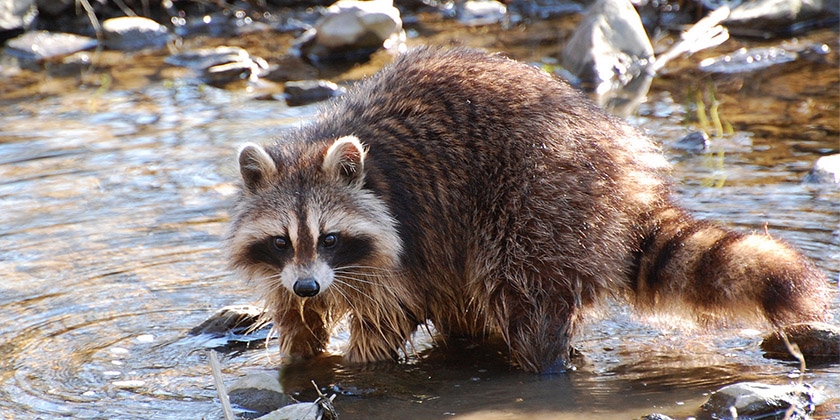
The most numerous species of Procyon is the raccoon, also known by the amusing name "raccoon." This small predatory mammal measures 45-60 cm in length and weighs between 5 and 12 kg. The raccoon has a compact, stocky build, short limbs, and front paws with flexible, human-like toes, while the hind paws have feet that rotate 180 degrees.
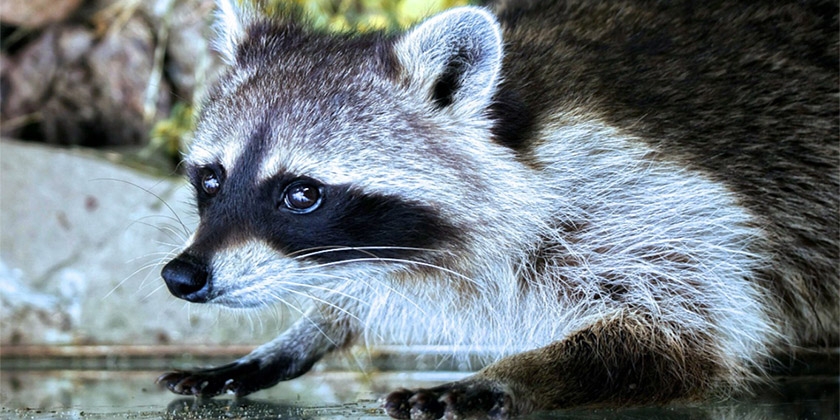
These animals have a very funny face: a dark stripe runs from the forehead to the tip of the nose, and dark circles, resembling glasses, surround the eyes. Overall, it looks like a bandit's mask. This animal's fur is medium-length, but with a very thick undercoat, and its coloring is most often dark gray or brown. The tail is bushy, decorated with dark and light stripes, and resembles a traffic cop's baton.
Raccoons make their homes in tree hollows, usually near bodies of water and swamps, and often settle near populated areas, raiding farms and homes. Their proximity to humans helps them feed themselves and satisfy their insatiable natural curiosity.
The raccoon sleeps during the day and emerges to hunt at night. In the spring and early summer, its diet consists primarily of fish, amphibians, small rodents, insects, worms, and bird eggs. As autumn approaches, this omnivorous animal switches to a plant-based diet consisting of fruits, berries, acorns, and nuts.
The raccoon is brave, cunning, and very curious. Due to their pugnacious nature and the large number of stronger predators, raccoons live no more than 5 years in the wild; in captivity, they are much more life expectancy - 15-20 years.
Why do raccoons wash their food?
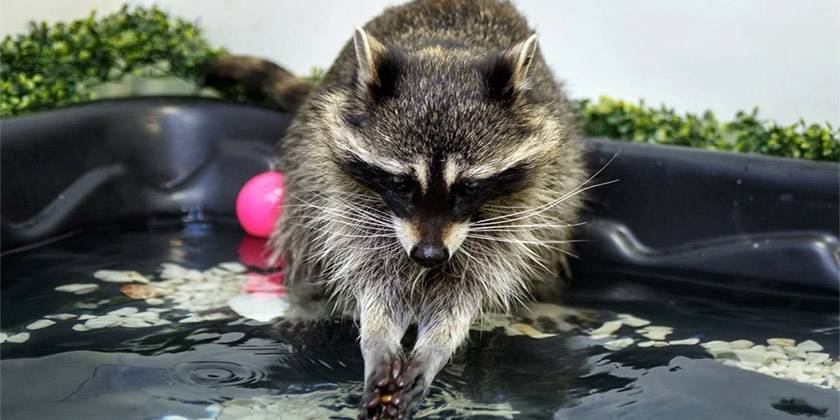
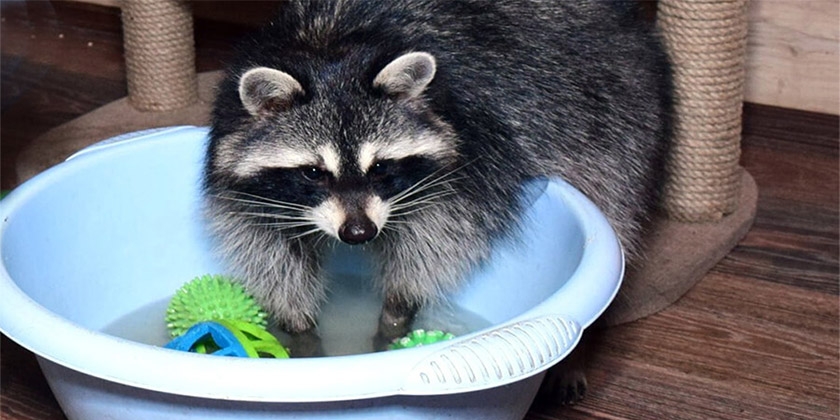
The raccoon is called a "washer" because of its habit of "washing" its food before eating. This behavior has long been known, and is reflected in the animal's name—Procyon lotor (Latin for "washing bear"). These behaviors are innate, a reflex ingrained by its usefulness, and are so strong that they persist even in captivity, even when there is no need to wash.
These furry "washerwomen" rinse everything they can snatch in water: towels and handkerchiefs soaked for washing, even their owner's formal attire. You can find many amusing videos online of raccoons energetically and expertly "washing" slippers, TV remotes, or brand-new smartphones.
Video: Raccoon washing
Zoologists believe there are several reasons for the development of this behavioral reflex. First, raccoons eat whatever they can find or catch. Their diet is especially rich in prey that lives in or near water. This prey is usually dirty, and raccoons rinse off any silt, dirt, and sand before eating by rinsing.
The second reason a raccoon rinses its prey is to monitor its prey for signs of life. Often, a found or captured rodent or frog will pretend to be carrion to discourage the hunter from eating it. And when the raccoon dips the carcass in water and begins soaking it, the bluff is immediately detected: the prey "comes to life" and tries to fight back. However, raccoons also enjoy carrion, and foul-smelling food scraps found in the trash are a delicacy for them, consuming them without any ill effects.
Raccoons also rely more on touch than sight, and when examining an object, they carefully probe it. Their forepaws are similar in structure to those of humans and are very sensitive. However, because they are forced to use them for walking, the skin on their "palms" becomes rough. In water, the skin softens and becomes more sensitive, and by touching objects, the animal receives tactile information on matters of interest, such as what it is and whether it can be eaten.
Read also:
- What do raccoons eat?
- How much does a raccoon cost?
- What is the difference between a raccoon and a raccoon dog?


Add a comment