
Why are commuter trains called dogs?
Have you ever ridden your dog to your dacha? Your neighbors probably have. And it wasn't at the North Pole or at a dog race, but somewhere in the Moscow region. In the slang of the 1970s and 1980s, "dogs" were ordinary commuter trains.
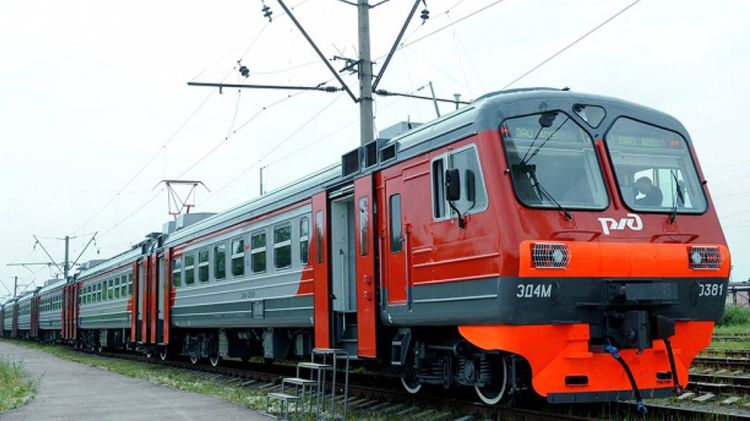
What is the connection?
No one knows for sure why this particular animal became the second name for commuter trains. You won't find such a substitution in literary speech (if we're talking about classics), as it's essentially slang. A look in the dictionary reveals the primary meaning of the word "dog" as "commuter train, suburban, service, freight, something that travels by rail." The secondary definition is "a subway car, commuter train, or train used for illegal graffiti."
Philologists put forward the following theories as to why the electric train is called a dog:
- Students traveled from city to city on commuter trains. It was a kind of travel stop, using a change of train, only on rails. Cheap and fast, and most importantly, with adventure. Students are credited with coining this slang term. Why did the word "elektrichka" become a dog, and not a horse, which has accompanied humans for centuries? Perhaps it all stems from the similarity between a northern dog sled and a train: the animals are harnessed in pairs, and the entire train consists of 8-16 animals running in a single file. Incidentally, in the northeast, sleds are called "potyag," which means "train" in Ukrainian (though "potyag" in those parts means "belt").
- The second version stems from the expression "like fleas on a dog." Anyone who has ridden commuter trains will understand this, as the carriages are packed daily with people so tightly that it's hard to breathe. People also resemble fleas because they rush to catch their train every day, afraid of being late for work.
- The third explanation for why commuter trains are called dogs is based on an analysis of animal behavior. They, especially males, won't miss a single tree while out for a walk. The same goes for a train, which stops at every station and way station.
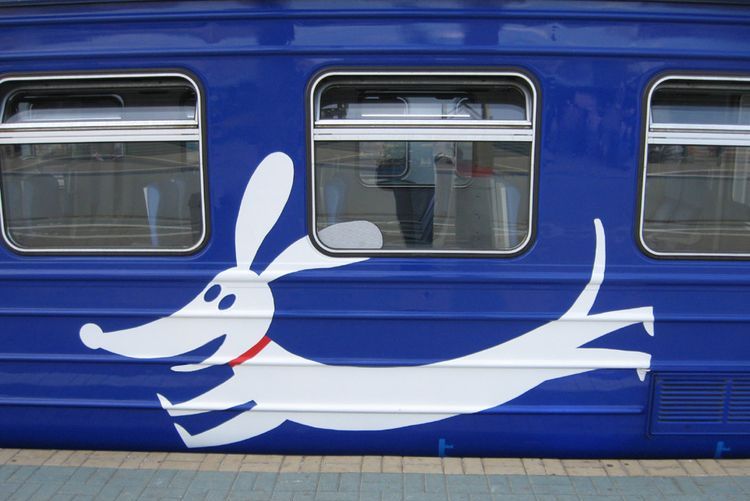
- As a version, one can also accept the analogy between a dog's squeal and the screeching of a train's brakes.
- Fifth, don't forget about the ticket inspectors. Electronic tickets are commonplace these days, but in the 1970s and 1980s, poor students tried to avoid being seen by a "lady" (that's what the ticket inspector was most often called). But a ticket inspector truly had a dog's life: you'd argue so much in a day and track down so many fare dodgers like a bloodhound that you could be completely exhausted.
Distribution area
Students from St. Petersburg and Moscow were the most likely to ride dogs. Moreover, the closer to the Northern Capital, the less often you heard this slang. St. Petersburg residents preferred "electronic."
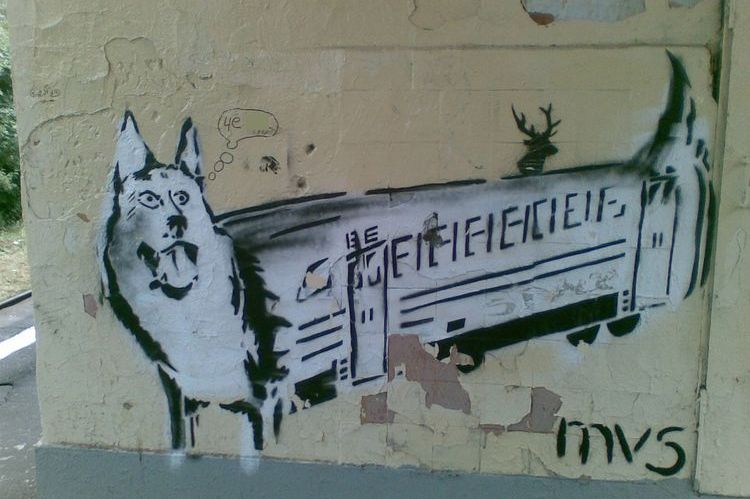
Some researchers put forward another theory, citing the riddle "Long, green, smells like sausage" as evidence. In the 1970s, everyone knew it was a commuter train. But why is it associated with Moscow? The answer is that a train ran from the capital to Ryazan, and enterprising Muscovites used it to carry sausage with them to the hinterlands. And in the USSR, they certainly knew that even dogs wouldn't eat sausage.
This theory is also acceptable, if not for one thing. Sevastopol slang includes the expression "Riding on the Horned Sausage," where "sausage" refers to the ladder at the back of a trolleybus.
The connection between dogs and commuter trains continued. In football fan slang, someone who frequently used this mode of transport to get to matches became known as a "dog trainer." The slang was even immortalized in the DDT song "Noch-Lyudmila": "You fly to Moscow on dogs, to Gorbushka on iron wolves."
Read also:


1 comment
Victor
The sausage in the back is not on the trolleybus, but on the tram.
Add a comment