
A Cat's Belly Is Dense: Causes and What to Do
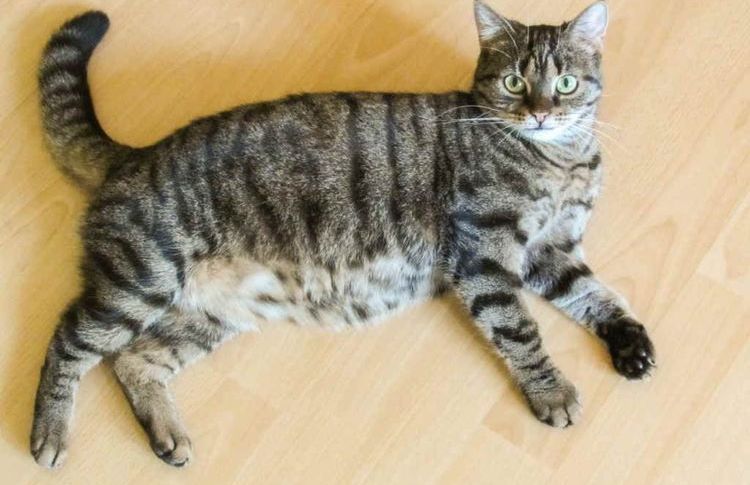
A hard belly in a cat should be a concern for owners, as it's a common symptom of digestive problems and a reason to visit a veterinarian. However, in some situations, a hard belly is a natural occurrence.
Content
Natural causes
A natural explanation for these changes is the mother's pregnancy. In late pregnancy, the uterus enlarges, causing the abdominal muscles to tense. The tense peritoneum protects the kittens from injury. After birth, the peritoneum remains firm for several hours, after which the muscle spasms subside and the wall returns to its normal state.
Sometimes a cat's tummy can be caused by fear caused by its owner's touch. Not everyone enjoys physical contact; some experience stress in this situation. It's best to leave your pet alone to allow it to calm down.
If the hardness and tension do not subside within 24 hours, the animal’s behavior has changed, and pathology is possible.
Pathologies
Pathological causes of a hard belly include:
- worms;
- constipation;
- flatulence;
- peritonitis;
- abdominal abscess;
- injuries;
- purulent endometritis;
- biliary colic;
- poisoning.
Worms
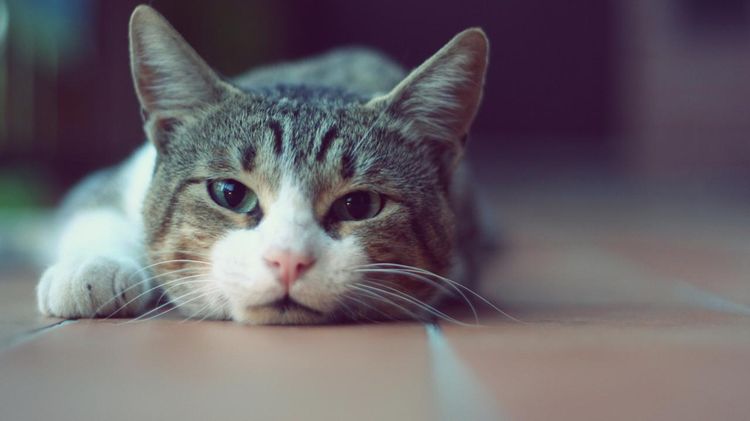
Helminth infestation causes intestinal inflammation, constipation, and intestinal obstruction. These conditions lead to painful intestinal distension, accompanied by abdominal wall tension. With a large number of parasites, cats experience general weakness, dull fur, watery eyes, and vomiting.
Worms They are excreted through vomit and feces, and an unpleasant odor is felt from the animal's mouth. Helminthic infestation is treated with antihelminthic suspensions and tablets, and in severe cases, a veterinarian will prescribe a comprehensive treatment.
Constipation
A common cause of constipation in cats is an unbalanced diet, individual intolerance to certain foods, and poor quality food.
Sometimes owners mistake it for constipation intestinal obstructionObstruction is a serious condition that cannot be cured with laxatives. It is accompanied by severe vomiting and weakness, and the abdomen becomes distended, hard, and steadily increases in size.
The first thing owners should do is seek qualified help, get an ultrasound or X-ray, and undergo treatment. Without veterinary care, the pet will die.
Flatulence
Gases accumulating in the body put pressure on the diaphragm, making breathing difficult and causing bloating. The abdomen is hard and tense, and the animal becomes restless, meowing, seeking a secluded spot, avoiding people, and resisting handling. A characteristic symptom is loss of appetite.
There are many reasons for flatulence:
- individual milk intolerance;
- digestive problems;
- high content of fish and grains in the diet;
- worms.
First, it's important to accurately determine the underlying cause of the bloating, and then choose a treatment. Pain can be relieved with painkillers.
Peritonitis
At peritonitis The peritoneum is constantly irritated, and the mucous membrane becomes inflamed. This results in a tight abdomen. The cat develops a high fever and severe pain, sometimes accompanied by vomiting.
Peritonitis is a complex disease, and treatment depends on its form. Bacterial peritonitis has a more favorable prognosis, with a survival rate of 50-60%.
If a cat is diagnosed with the infectious form, the prognosis is poor. Treatment in this case is aimed at relieving pain and supporting the animal's immune system to prolong its life.
Abdominal abscess
Abscess An abscess is a subcutaneous lesion caused by an infection. In cats, it sometimes appears after surgery.
The danger of an abscess is that it can remain hidden for some time. Eventually, perforations form in the intestines, causing the abdomen to swell and become painful to palpation. In this case, only a veterinarian can determine the cause of the cat's distension. Surgery may be necessary.
Injuries
Blunt trauma to the peritoneum often manifests itself undetected, with a dense, distended abdomen being the only symptom. It's advisable to consult a doctor to rule out internal organ damage and bleeding. Blood in the stool and urine, dull fur, a cloud over the cat's vision, and lethargy indicate internal bleeding.
Purulent endometritis
Purulent endometritis (pyometra) is an inflammation of the uterus, diagnosed only in females. There are several causes of this pathology:
- infection in the uterus or birth canal;
- uncontrolled mating;
- hormonal disorders.
With pyometra, a cat's abdomen becomes enlarged and hard, and there is constant thirst and frequent urination. Vomiting sometimes occurs.
The disease progresses rapidly and can be fatal. In most cases, surgical treatment is necessary. As a preventative measure, veterinarians recommend supervising matings or spaying the animal.
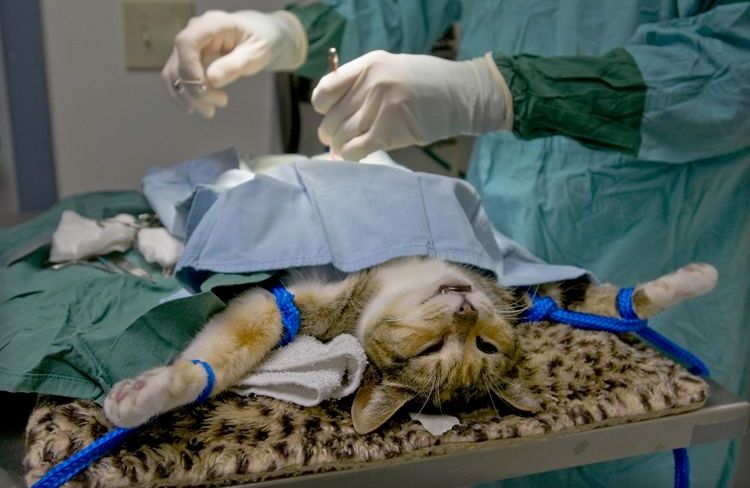
Biliary colic
Biliary colic causes severe pain and suffering for pets. The abdominal wall hardens. Biliary colic can be caused by stones or excess bile. If the body produces three times more bile than required for digestion, it thickens and causes discomfort for the animal.
Poisoning
In severe cases of intoxication, the intestines become irritated, leading to spasms and tension in the abdominal muscles. Poisoning is accompanied by diarrhea and vomiting, conditions that exacerbate the irritation. As a result, the cat's stomach becomes hard.
Some owners try to alleviate their pet's condition by performing gastric lavage. However, this should not be done in cases of severe poisoning. Self-medication will only worsen the condition.
Read also:
- Hepatopathy in cats: what it is and how it is treated
- My cat's sides are swollen: causes and treatment
- Cholangitis in cats: treatment and symptoms


Add a comment