
Russian Blue catteries
The first Russian Blue cattery appeared in Russia (or more precisely, in the Soviet Union) in the late 1980s. The precise origins of the breed itself are unknown. However, it is certain that it received its name in 1935. Breed standards were established around the same time.
Due to World War II, the breed was almost on the brink of extinction. To save it, enthusiasts crossed blue cats with Siamese, but this led to no good.
It wasn't until the 1970s that the original appearance of these animals was restored. After that, Russian Blue cats gained recognition in Europe and America, and in the 1990s, they began to attract enormous interest in Russia as well.
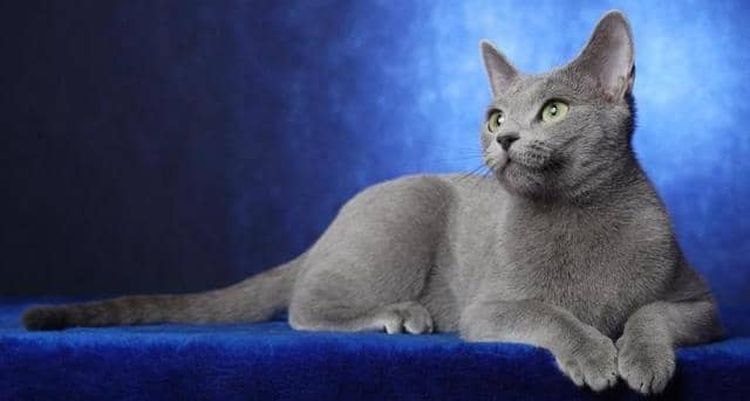
Russian Blue cats are recognizable by their luxurious, shiny coat. It always has a glaucous undercoat, and the tips have a distinct silver sheen. The coat is so thick that the skin is barely visible through it. Furthermore, Russian Blue cats are distinguished by their perfect proportions. Their small, muscular body appears quite graceful. A graceful neck culminates in a wedge-shaped head. Soft whisker pads, erect ears, and huge emerald-green eyes make these cats irresistible.
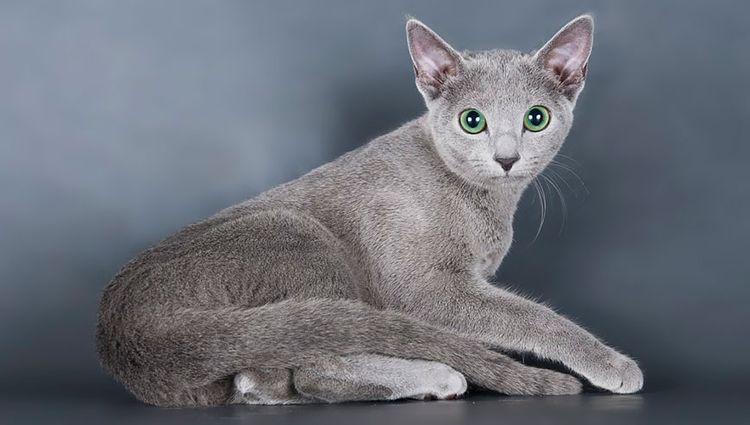
There are currently four types of Russian Blue cats:
- American;
- classic;
- European;
- Nibelungs (longhaired).
Content
What is a Russian Blue cattery like?
Every such cattery aims to breed these magnificent animals. This means providing optimal conditions for the production of offspring, ensuring they have robust health, a positive temperament, and a conformation that meets breed standards and surpasses their ancestors in show scores. According to the rules, even someone who owns just one purebred cat can register a cattery. Catteries register to gain greater credibility in the eyes of the breeder community and their clients. Furthermore, this step helps protect the cattery's name from being used by scammers for profit.
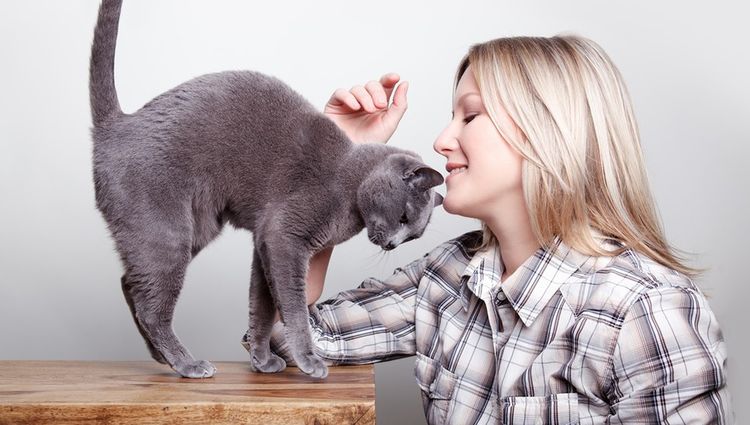
A pedigree cattery, at least in Russia, is most often an ordinary apartment or house. And the cats live there as true members of the family. Few can afford a separate, heated space with enclosures for male, female, and kitten cats.
Breeding facilities for these magnificent animals exist in many major Russian cities. The largest concentrations, of course, are in St. Petersburg and Moscow.
Russian Blue cattery in Moscow
Moscow has over a dozen catteries that specialize exclusively in breeding blue cats (they're called monobreeds). Almost all of them are registered with the World Cat Federation (WCF), but there are still some differences between them. Information about several of these catteries may help you make the right choice.
Blue Grace
This Moscow-based Russian Blue cattery exclusively breeds the European variety. It was registered with the WCF in 1995 and is also a member of the Korgorushi felinological organization. The cats raised here are classified in the Bird and Show classes, possessing an engaging, vibrant personality and meeting the breed standard. The cats raised here have won prizes and awards at international and domestic shows. Blue Grace is owned by Larisa Makagonova. The cattery can be reached at 84991722220. The physical address and other useful information can be found on its official website: http://bluegrace.narod.ru
BLUE DALI
The goal of this cattery is to refine and consolidate the breed's qualities, producing high-quality female and male cats. The cattery focuses on both preserving the classic type of this breed and working with the current European type.
Kittens from this cattery are well-trained and often win at shows. Here you can find an excellent pet for yourself or your family. The cattery is owned by Alexandra Lvova. Contact us at +79067207532 and visit our website at http://golubyedali.ru.
Bluepet
The cattery is part of the Sirius felinological organization. Oksana Semenova, who is a certified felinologist instructor and breeder of the European-type Russian Blue cat breed, owns the cattery.
Bluepet's cats boast excellent pedigrees, perform well at international cat shows, receive high marks from judges, and win prestigious championship titles.
The animals live in wonderful conditions at the nursery—they are treated like family members. They are self-sufficient, well-trained, and have stable, normal psyches. They are charming and harmonious pets who make wonderful companions for anyone. To contact the nursery, please call 89152160363 or visit http://bluepet.ru.
BOHEMIA
The BOGEMIA cattery was registered with the WCF on April 30, 2007, under official number 070094.77. The cattery is also a member of the RosKosh felinology club.
BOGEMIA specializes in breeding Russian Blue cats of the European variety. The cattery's foundation is formed by cats imported from the Old World. Their extensive pedigrees include lines from the Netherlands, Austria, Germany, the USA, the Czech Republic, Poland, and Russia.
BOGEMIA's mission, in addition to raising awareness of these animals, includes careful selection, that is, breeding cats that closely approximate the breed's ideal. Particular attention is paid to the physical, psychological, and genetic health of the pets. This requires serious work in selecting breeding pairs, including bloodlines.
The nursery's director is Natalia Shevtsova. The phone number is 84996108783. The website (which, by the way, also has a mobile version) is http://bogemia.ucoz.com
Russian Blue cattery in St. Petersburg
There are slightly fewer single-breed catteries in St. Petersburg than in Moscow. But there's certainly plenty to choose from.
Hyperborea
The Russian Blue cattery "Giperborey" in St. Petersburg is perhaps the most well-known in the "northern capital." It has been in business for over 20 years, but was only registered with the WCF in 2014.
Over the years, the cattery has produced three European champions. The number of other titles earned by cats from here is countless. Cats from the Hyperborean cattery have ancestors from various European countries and the United States.
Every new owner of a Russian Blue kitten from Hyperborea has the opportunity to consult with them for life on any pressing issues related to the proper care and upkeep of their cat.
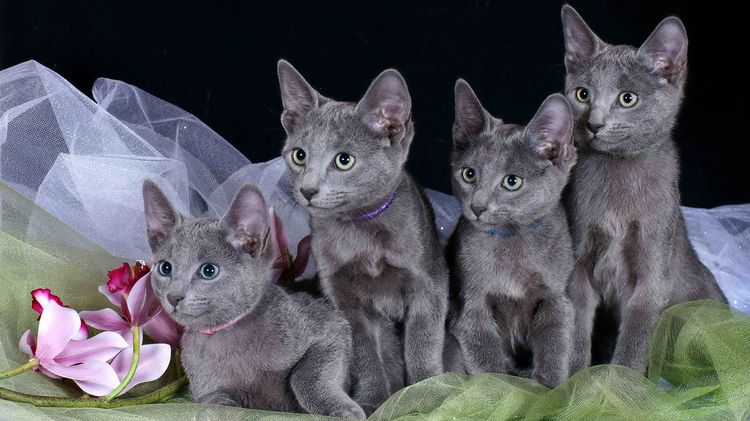
Along with the kitten, the new owner receives its birth certificate and a veterinary passport with a vaccination record. If the kitten is over four months old, a microchipping certificate is also issued. The owner can also obtain a pedigree from the cattery (subject to approval by the breeder). It's worth remembering that to relocate a kitten to another city or country, a certificate from a veterinarian, Form No. 4 or No. 1, is required.
Today, cats from "Hyperborea" live not only in Russian homes, but also in Spain, France, Germany, Finland, Switzerland, Great Britain, Estonia, South Korea, etc. This eloquently testifies to their international recognition.
The owner of the nursery is Elena Anatolyevna Vorobyova. Contact phone number: 88123163573, website: http://giperbory.ru.
"Rus"
"Rus" is one of the oldest catteries of this type, not only in St. Petersburg but also in the Russian Federation. Founded in 1990, it is a member of the Bastet cat club. "Rus" offers purebred Russian Blue kittens to everyone. Kittens are always available for sale or reservation. The cattery's owner, Natalia Kudryavtseva, can be reached at 89533542797.
North Star
This cattery has been operating since 2000, is registered with the WCF, and specializes in breeding the Russian Blue and Nibelung cat breeds.
The nursery's key objectives are to produce healthy animals that meet the standard in terms of natural characteristics, to create new families and lines, and to expand and improve the genetic pool of the domestic population of these breeds. To achieve these ambitious goals, the nursery works closely with its domestic and international colleagues.
Severnaya Zvezda is run by veterinarian and geneticist-biologist Tatyana Bogacheva, and felinologist Elena Khrzhanovskaya. Contact numbers: +7 921 774 4095 (Elena) or +7 911 836 2241 (Tatiana). The website is http://nibelung.webstolica.ru.
Read also:
- Russian Blue cat
- Peculiarities of caring for long-haired and short-haired cats
- Furminator for cats: what it is, how to choose and use it


Add a comment