
Pyro-Stop for dogs
Piro-Stop for dogs and farm animals is a product that effectively combats blood-borne parasitic diseases in animals. If your pet isn't treated promptly, there's a high risk of losing them. Without treatment, the animal will die within a few days.
Blood-borne parasitic diseases are most frequently recorded during the warm season: from the first snowmelt in spring until the first frosts in autumn. However, outbreaks are more common in spring (April to June). piroplasmosis (acute), but significantly fewer animals become ill from August to the end of October. This is due to the activity of ixodid ticks, which carry pathogens that cause blood-borne parasitic diseases. Piroplasmoses develop due to the active reproduction of protozoan parasites from the order Piroplasmida, which destroy blood cells (erythrocytes).
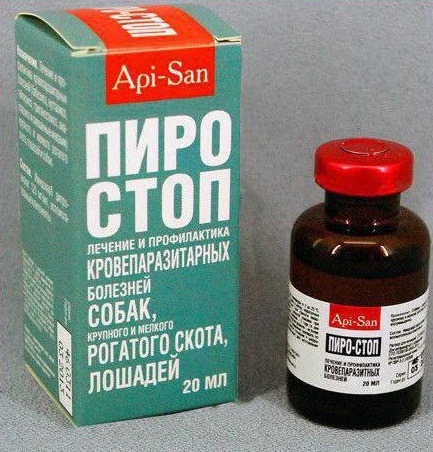
If the diagnosis is confirmed, the veterinarian will prescribe treatment. The most effective medications are those containing diminacene aceturate. Previously, Berenil and Azidin were used. Veriben and their powdered analogues. The inconvenience was that these medications had to be diluted. And overdosing on them is extremely dangerous, as it can cause seizures, vomiting of bile, and even blindness, beginning with retinal edema.
Currently, a ready-to-use (liquid) product, Piro-Stop, is used in veterinary medicine for dogs, cats, and farm animals. It is a 12% sterile solution of imidocarb dipropionate, used for both intramuscular and subcutaneous injections.
Content
Indications for use
The primary purpose of Piro-Stop is for the prophylaxis and treatment of piroplasmosis and other tick-borne diseases. These include:
- Francaillez.
- Theileriosis.
- Nuttalliosis.
- Anaplasmosis.
- Babesiosis.
- Ehrlichiosis.
- Mixed invasions.
Piro-Stop is indicated as a preventative measure for animals in regions with high disease rates. It is also recommended for dogs at risk of tick attacks and, consequently, blood-parasitic infections. This applies to dogs that are frequently walked in parks and forests, go hunting or to the countryside, or move to the countryside. Therefore, this product can be an alternative to antiparasitic drops or collars.
Frequency and dosage are determined based on the intended purpose of use. For effective prevention of tick infestations, a single application at the beginning of spring and summer or 24 hours before travel is sufficient.
How does Pyro-Stop for dogs work?
The active ingredient (imidocarb) inhibits inositol, which is essential for the parasite's survival. A lack of inositol disrupts the formation and, consequently, the subsequent utilization of polyamines by protozoan parasites. As a result, the piroplasms die.
As auxiliary substances per milliliter there are:
- 9 mg benzyl alcohol;
- 10 mg polyvinylpyrrolidone;
- 30 mg propionic acid;
- up to 1 ml of water for injection.
In terms of hazard classification, Piro-Stop is classified as a moderate Class 3 substance according to GOST. This means that by adhering to the recommended doses and application schedules, the likelihood of mutagenic and embryotoxic effects can be minimized. In rare cases, irritation at the injection site may develop.
Instructions for use
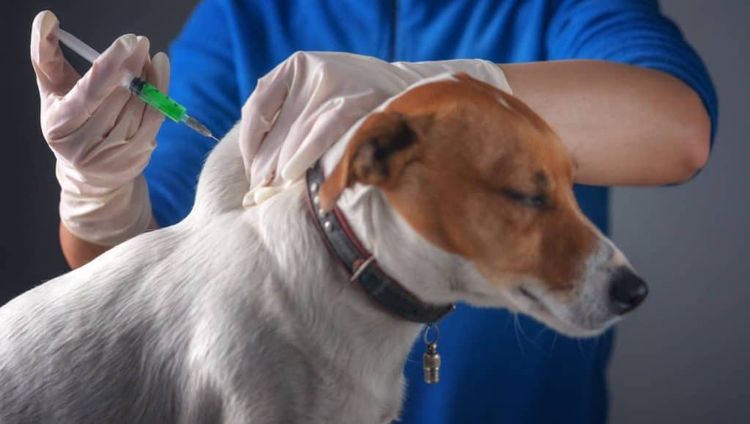
As mentioned above, Piro-Stop for dogs is administered subcutaneously or intramuscularly. Therapeutic (therapeutic) concentrations in the animal's blood are reached after 18-24 hours. The drug remains in the blood for one and a half to two months, which helps not only kill all blood parasites but also builds a kind of "immunity." If the dog is bitten again during this period, the imidocarb circulating in the blood will protect the animal. The active ingredient remains in the kidneys and liver during this time.
Despite this long-term accumulation, when used correctly and in the absence of allergic reactions to individual components, no side effects are observed. There is no danger to pregnant females. However, there are a few nuances to keep in mind when using Piro-Stop for dogs:
- The first 15 minutes after the drug is administered, the dog must remain in the veterinary clinic. This is to ensure that the drug does not cause anaphylactic shock (allergy). If the veterinarian notices symptoms of an allergy, medications (most often atropine 1%) will be administered immediately to relieve the attack.
- To avoid problems in the next 24 hours, it is necessary to administer an antihistamine (for example, suprastin) along with Piro-Stop.
- After two days, you should return to the veterinary clinic. First, the veterinarian will examine your pet to check for any complications. Second, you will need to have another blood test. If piroplasms are detected again, a repeat injection of Piro-Stop is required at the same dosage (no need to increase it).
- If you have a large dog, it is recommended to inject no more than 2.5 ml into one place, as the injection is very painful.
- If it comes into contact with skin or mucous membranes, wash these areas thoroughly with soap and water (for mucous membranes, do not use soap).
- This product should be used exclusively as an injectable solution. Accidental ingestion by an animal requires immediate veterinary attention. It is important to present the original bottle with the label or the manufacturer's instructions at the appointment. There are no specific antidotes to counteract the effect of this solution.
Now about the dosage. The Piro-Stop dosage for dogs is 0.25-0.5 ml per 10 kilograms of body weight. If the drug needs to be repeated after a few days, it must be administered at a different site (on the other side). The exact dosage for treatment and prevention is determined by a veterinarian based on the animal's examination, the severity of the disease (if infected), body weight, and individual characteristics.
Features of use
Piro-Stop injections should be performed by a veterinarian to ensure prompt first aid if complications develop. Performing the injections independently without proper experience may result in side effects. A rapid test is usually performed before the procedure, which determines the need for the solution.
It is important to follow the instructions, not exceed the recommended doses, or administer repeat injections before the time period prescribed by your veterinarian. The active ingredient remains in the body for up to two months, which corresponds to its optimal therapeutic concentration. Premature repeat administrations carry the risk of exceeding the maximum permissible concentration and developing side effects.
Contraindications
Contraindications for Piro-Stop injections in animals are:
- individual hypersensitivity of the body to the components of the solution;
- simultaneous use with products containing organic chlorine, phosphorus and cholinesterase inhibitors;
- administration of the solution earlier than 4 weeks after vaccination with a live vaccine against anaplasmosis or babesiosis;
- administration as a prophylactic to weakened individuals.
For animals prone to drug allergies, it is essential to monitor their condition immediately after administration of the solution.
Side effects
Provided the procedure is performed correctly according to aseptic technique, local inflammatory reactions are usually not observed. In rare cases, hyperemia and painful swelling at the injection site may occur. These reactions usually do not require specific treatment and resolve without further intervention within 1-2 days.
Increased individual sensitivity or exceeding the recommended dosage may result in the development of the following side effects:
- increased or irregular breathing without physical exertion;
- increased heart rate (bradycardia);
- frequent urination and defecation;
- increased salivation and lacrimation;
- allergic reactions;
- muscle tremors;
- anorexia;
- increased sweating.
In cases of cardiac or respiratory failure, a subcutaneous injection of atropine sulfate at a concentration of 1% is administered immediately. If other side effects occur, symptomatic therapy is administered, including desensitizing agents to reduce the body's sensitivity to Piro-Stop.
One of the possible side effects of Piro-Stop is intoxication. This occurs due to the massive death of blood parasites and the destruction of red blood cells in severe cases of infection. For such cases, intensive therapy is recommended, including sorbents, hepatoprotectors, and intravenous electrolyte solutions.
Price
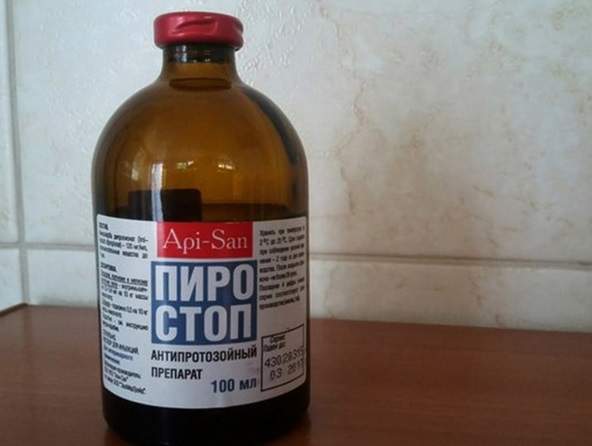
The medication is available in 100 ml dark (brown) glass bottles and in small 10 ml and 20 ml ampoules. If you need to administer the medication to your dog once, it's best to use the small ampoule, as the larger bottle must be broken open within 28 days after opening. The 100 ml bottles are most often purchased by veterinarians at clinics because they can use them before the expiration date. An unopened bottle has a shelf life of 2 years from the date of manufacture.
The price for 10 ml varies depending on the veterinary pharmacy's markup. The average price is 520 rubles.
Reviews
Alexander:
"I decided to take my dog camping. It wasn't until I got home that I noticed ticks on her. We immediately went to the vet. They removed the ticks and treated the bites. But the vet recommended a preventative injection—Piro-Stop for dogs. He explained what would happen if the dog had piroplasmosis. Naturally, I decided not to take any chances. The injection was quite painful, and the dog yelped. The vet told me to monitor her well-being and behavior. A week later, we went for a checkup. There were no signs of the disease. The blood tests were perfect. Now, before going for a walk, I use a tick spray and collar, and upon returning home, I carefully examine the dog."
Valeria:
"I noticed a change in my Newfoundlander's behavior: he became weak, started vomiting, his temperature rose, and his appetite practically disappeared. But what scared me most was the blood in his urine. I immediately called the vet to my home. He carefully examined Laila and discovered ticks gorged on her. I hadn't noticed them myself due to her thick fur. Based on the obvious symptoms, the vet suspected piroplasmosis. He immediately administered Piro-Stop for dogs and started an IV. He came back for a couple of days and administered the IV. He took the ticks home with him and said they had found parasites. I believe it was only thanks to Piro-Stop and the vet's prompt and competent action that my pet was saved."
Daria:
"The collar didn't save us. I found ticks on my Lab. I'd read a lot about piroplasmosis, so I didn't wait for symptoms to develop. We immediately went to our "family" veterinarian, and I explained the situation. The ticks were removed and sent to the lab. The results were quick: one of the ticks was a carrier. I was scared for my beloved pet, but the vet reassured me that there was an excellent medication that could kill these parasites and protect the dog for a couple more months. He gave her an injection of Piro-Stop for dogs. That day, the dog wasn't feeling well; the injection site was slightly swollen. The vet said it wasn't serious, but if she didn't improve by the morning, they'd have to hospitalize her. Luckily, everything cleared up after the night. No more discomfort, and no symptoms of piroplasmosis. It's a wonderful medication, truly magical. If it weren't for it, I would have lost my friend. “And we changed the flea and tick protection products to stronger and more expensive ones.”
Read also:


4 comments
Euphemia
My 14 month old German Shepherd died. I treated him with Bars tick drops at the beginning of spring. The vet said the drops were wearing off and almost 3 weeks had passed and I needed to administer Pirastop. The dog was large, so we administered 2.5 ml and half a cube of diphenhydramine. He had a hard time with it in the evening, but in the morning it seemed to be the same as always.
On the 10th day, shortness of breath and pulmonary edema began. The dog died suddenly. Was it an overdose of pyrastop or was everything treated incorrectly? Help! I'm confused and wondering if he was poisoned. Before death, there was foaming and a single episode of vomiting.
Daria is a veterinarian
Hello! Pulmonary edema is almost always a manifestation of an allergic reaction. However, if 10 days have passed since the injection (and the animal has not received any other injections or medications during these 10 days), it is not anaphylactic shock. Anaphylactic shock usually develops very quickly (almost instantly). There's no need to blame yourself.
The only thing that's confusing is, why was PiroStop administered? Was there an indication (tick bites + a confirmed diagnosis from a blood smear)? Or did the doctor instruct me to administer the injection for "tick prevention"?
Anonymous
But this drug didn’t help us, we lost our beloved family member...
Daria is a veterinarian
Hello! My condolences on the loss of your pet. However, you likely sought help too late, when the clinical picture was already clear and the illness had been going on for several days. If you seek help immediately and administer the full treatment plan (not just Pyro-Stop, but also IVs and symptomatic therapy), the chance of recovery is almost 100%.
Add a comment