
Pyrenean Mastiff
The Pyrenean Mastiff embodies all the best qualities of a guard dog and companion. Large, strong, reliable, easily trained, good with children, robust, and low-maintenance.
Content
History of origin
The Pyrenean Mastiff is a very ancient breed that nearly became extinct in the 20th century but was revived. Today, it is gaining popularity in its homeland and other countries. The breed developed in the Pyrenees during the Kingdom of Aragon, which is why Spain is now recognized as its birthplace. It is difficult to say exactly when shepherds first began using dogs of this type. There is virtually no reliable data available to trace the breed's earlier history.
The ancestors of the Pyrenean mastiff were always used only for guarding flocks, never for hunting. They were particularly ferocious toward strangers, as they lived in sparsely populated mountainous areas, but they obeyed their shepherds unquestioningly.
Until the mid-20th century, several types of mastiffs existed in Spain. Each had its own name, but the Pyrenean Mastiff was distinguished long before the first breed standard was established in 1890. The disappearance of wolves, the decline of other predators, and economic difficulties led to a decline in the population of these large herding dogs. They were no longer needed, and there was no point in feeding an extra, not small, mouth. Only a few Pyrenean Mastiffs remained on isolated farms.
In the 1970s, the breed gained attention. In 1977, the Pyrenean Mastiff Club of Spain was founded, bringing together breeders. In 1981, the Royal Canine Society of Spain approved the standard. The breed was recognized by the International Cynological Association in 1982. Today, the Great Pyrenees family includes: Pyrenean Mountain Dog, Spanish and the Pyrenean Mastiff. But one cannot fail to mention Pyrenean Shepherd, which has worked alongside these large molossers for centuries.
Appearance
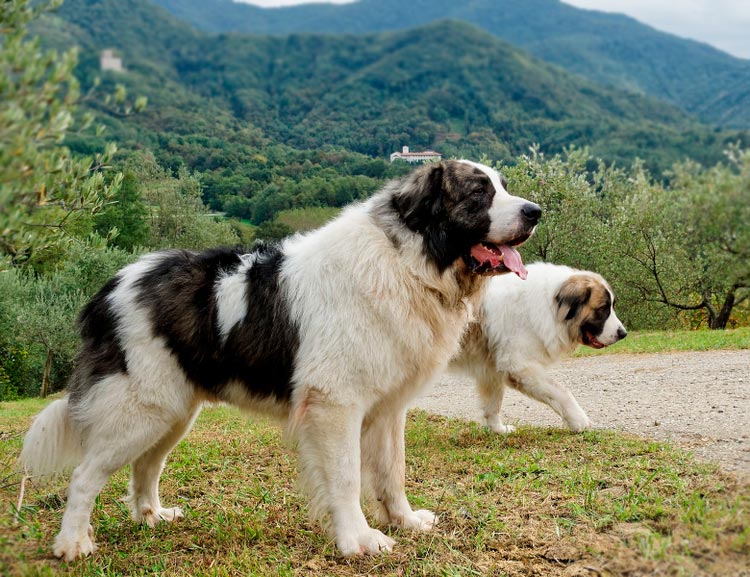
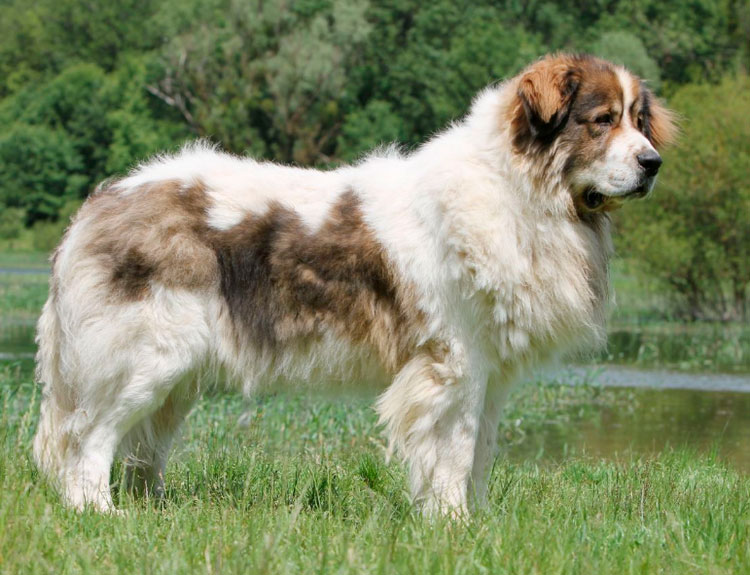
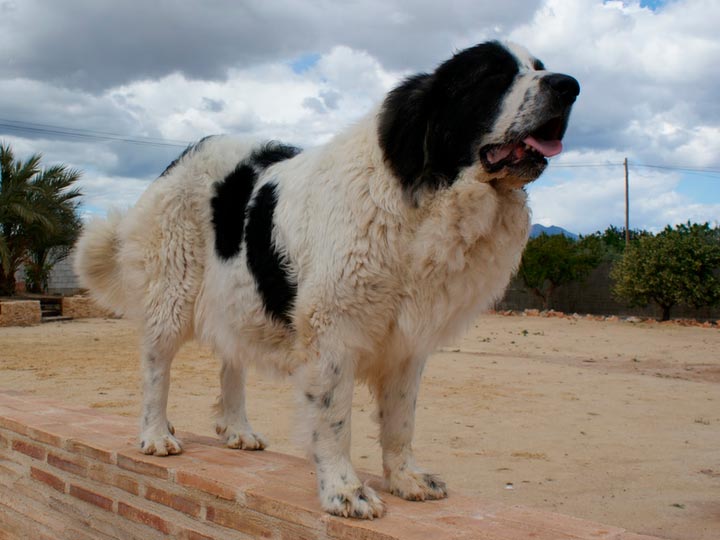
The Pyrenean Mastiff is a very large dog, above average in size, with a harmonious build, moderate proportions, and strong bone structure. The coat is not excessively long. Despite its size, the Pyrenean Mastiff should not appear sluggish or heavy. The height at the withers for males is not less than 77 cm (30 in); for females, not less than 72 cm (28 in). Weight typically ranges from 55-75 kg (121-165 lbs).
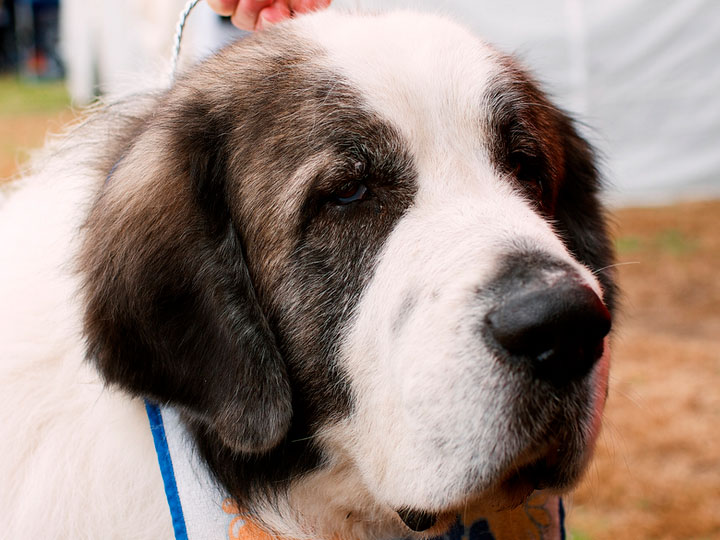
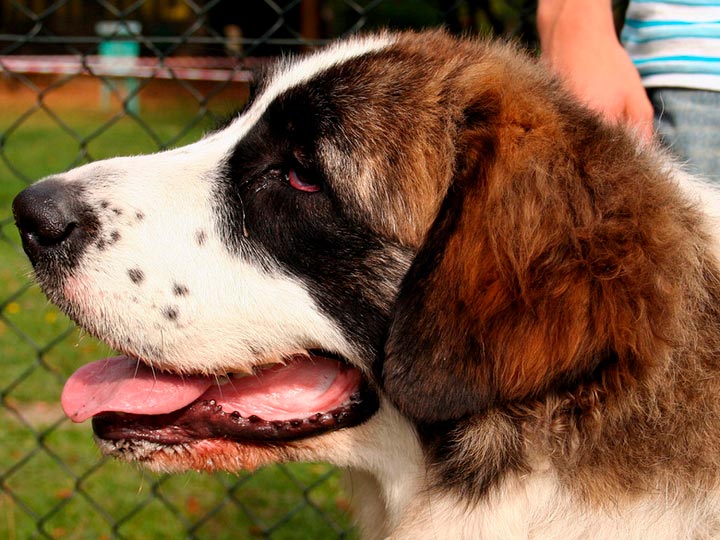
The head is large and strong. The width of the muzzle at the base is approximately equal to the width between the temples. From the side, the head appears deep. The width of the skull is equal to or slightly greater than the length. The stop is visible, not abrupt. The muzzle has a straight bridge of the nose, triangular in shape, tapering towards the tip, but not pointed. The wide and large upper lip covers the lower lip without a gap or sagging. The lower lip forms a pronounced angle. The mucous membrane is black. The bite is scissor-like. The teeth are strong and white. The eyes are almond-shaped, brown in color, small, with black pigmented eyelids that fit tightly to the eyeball. When at rest, the lower eyelid slightly reveals the conjunctiva. The ears are medium in size, triangular in shape, hanging, set at eye level. Previously, they were traditionally docked.
The neck is broad and strong, shaped like a blunt cone, with loosely hanging skin and a double, clearly defined dewlap. The body is rectangular, strong, yet mobile and flexible. The topline is horizontal. The withers are well defined. The back is muscular and strong. The loin is long, wide, and gradually tapers. The croup is strong, wide, and sloping at an angle of 45 degrees to the horizontal. The height at the withers is equal to the height of the croup. The chest is deep and wide, with a prominent sternum. The abdomen is moderately tucked up, the groin is deep. The tail is set high, thick at the base, and mobile. When at rest, it hangs down to the hocks, with the last third curved like a hook. When moving, it bends like a sabre with a clearly defined hook at the end. The legs, when viewed from the front, are straight, parallel, with visible muscles and tendons; the forearms are 3 times longer than the pastern. The hind legs are muscular, powerful, and well-angled. The paws are oval, with the hind legs slightly longer than the front ones.
Pyrenean Mastiffs are ranked fourth among the largest dogs in the world, but they are distinguished by their light, sweeping trot and agility.
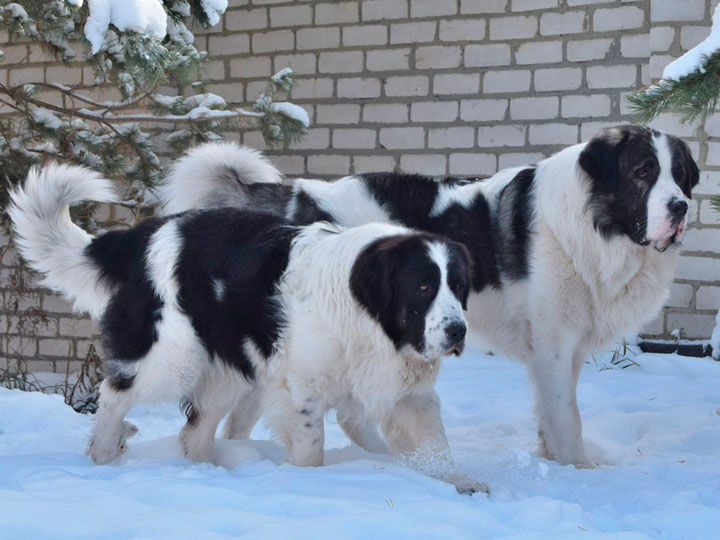
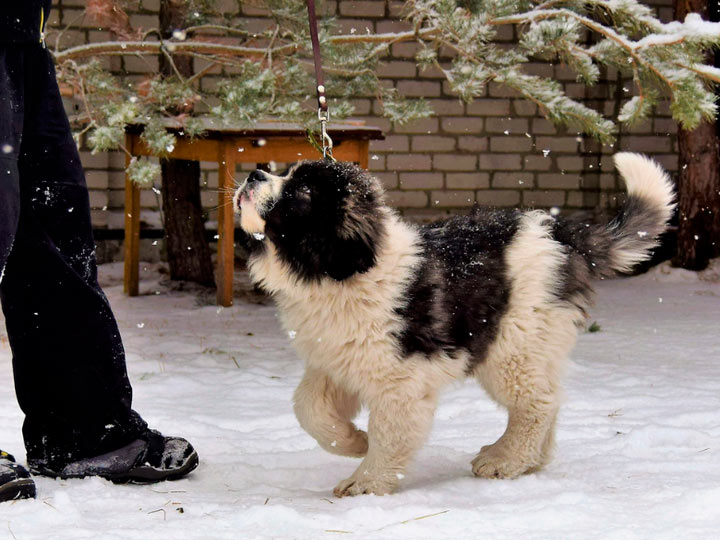
The coat is double, with a dense, thick guard hair of moderate length. In the central part of the body, the hair is 6-9 cm long. The neck, shoulders, belly, back of the legs, and tail are covered with longer hair. The guard hair is stiff. The coat is white with a distinct mask. Clearly defined markings of the same color as the mask may be present. The ears are always spotted. The tip of the tail and the lower third of the limbs are white. The most preferred color is pure white with markings of moderate gray, intense yellow, brown, silver-gray, black, light beige, marbled, or sandy.
Character and behavior
The Pyrenean Mastiff is a working dog, unspoiled by mass breeding, a reliable guard dog and devoted companion. Calm and friendly with family members, it sees only one person as its master, but obeys everyone in the household with approximately equal frequency. It is very gentle and careful with children, tolerant of their antics. It would be no exaggeration to call the Pyrenean Mastiff noble. It behaves boldly and courageously, never retreating from danger, yet aware of its strength and superiority over other dogs. It is not aggressive, but if necessary, it will bravely engage in combat. This is rarely necessary; usually, its appearance alone, coupled with its deep, chesty bark and lively expression, is enough to deter any ill-wishers. The Mastiff loves all family members, including walks and games, but will not constantly demand attention and can be left to its own devices for long periods.
Despite its apparent stolidity, the Pyrenean Mastiff is quite agile and agile when needed. It possesses exceptional intelligence and is often independent in its decision-making regarding protection.
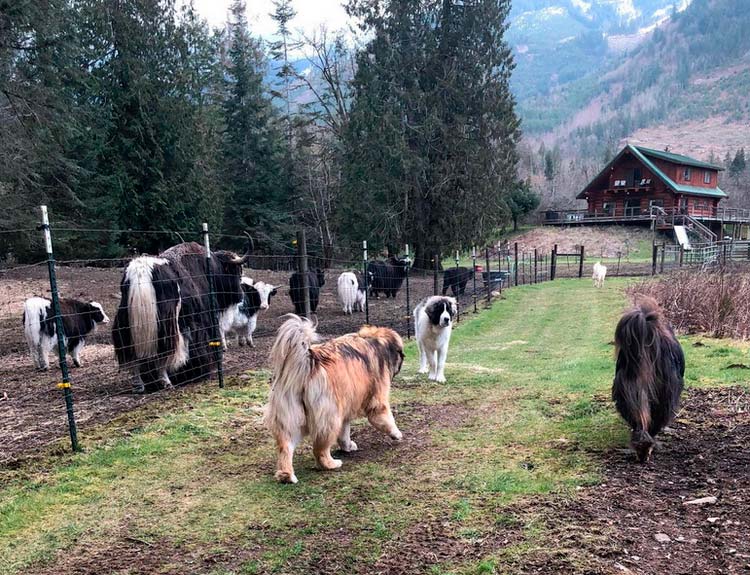
Modern Pyrenean Mastiffs have lost their wolfhound qualities but remain excellent guard dogs. During the day, they rest, calmly observing the goings-on. At night, they become vigilant, alert guards who will not allow intruders into their territory. They remember all animals and farm workers, considering them part of the property. They get along well with other animals, especially those they have grown up with. Conflicts between dogs of the same sex are possible.
Education and training
The Pyrenean Mastiff is easy to train. Short, regular sessions are sufficient. An adult Mastiff can be trained for about 20 minutes every other day. Basic training is usually sufficient. Guarding and protection skills are innate and only occasionally require minor correction.
When raising a Pyrenean Mastiff puppy, it's important to remember that this is a large dog with a naturally independent nature. A hierarchy must be established early in the relationship. Pyrenean Mastiffs are moderately dominant and accept human leadership relatively easily.
Content Features
The Pyrenean Mastiff is not suited to city or apartment life. This is a large dog that requires its own territory. A private home with a large yard is ideal. However, the dog should not be confined to a crate all the time. Drooling is moderate during normal times, but quite profuse when excited.
Great Pyrenees are very large and require adequate exercise, especially when young. A dog living in a spacious yard and free to roam with other dogs will have plenty of exercise. This exercise is replenished through playtime and physical activity while exploring the yard. If the dog is alone, walks outside the yard and regular playtime with its owner are essential.
Care
Grooming a Pyrenean Mastiff is very easy, especially if you acclimate it to grooming procedures at an early age and brush it at least weekly. Bathing is typically done every two to three months. In some cases, bathing may be required more frequently, and less frequently in winter. Puppies should have their nails trimmed every three to four weeks, and adult dogs should have their nails trimmed as needed. Eyes and ears should also be kept clean. During warmer months, it's recommended to perform a full weekly inspection of the coat and skin for redness, bald spots, and parasites.
Nutrition
It's commonly believed that large guard dogs, such as the Pyrenean Mastiff, are so hardy and undemanding that they can practically live off the land, but this is a dangerous misconception. Proper nutrition is essential, especially during the period of active growth and development, up to 1.5 to 2 years of age.
Pyrenean Mastiffs rarely suffer from allergies, but they are prone to gastric torsion, so owners should be aware of preventative measures for this condition.
Owners can choose between natural or prepared dry food. Homemade meals consist of one-third meat and meat products, the remainder consisting of grains, vegetables, and fruit. Fermented milk products are added as tolerated, and fish and eggs are added. The approximate amount of food a dog needs is calculated using the formula: weight (in kg) x 0.7 - 15%, divided by the number of feedings per day to obtain the approximate portion size. The bulk of meat products are given in the evening. During cold weather, the calorie and fat content of the daily ration is increased by 50-70%, allowing for comfortable survival in cold weather. Growing puppies are required to receive supplements to support the development of the musculoskeletal system. Subsequently, vitamin and mineral supplements are administered in courses. Feeding puppies has its own specific requirements; consultation with a veterinarian or breeder is recommended.
Health and life expectancy
The Pyrenean Mastiff is considered a healthy breed. Most dogs are free of genetic diseases. Hip dysplasia is rare. They are prone to gastric torsion, musculoskeletal disorders, and ophthalmological problems in adulthood.
To maintain the health of the Pyrenean Mastiff, it is important to provide the dog with a balanced diet, good living conditions, regular deworming, and timely vaccinations. Life expectancy is 11-12 years.
Choosing a Pyrenean Mastiff Puppy
The Pyrenean Mastiff is rare in Russia. The majority of its population is concentrated in Spain and France. A significant number of dogs and breeding facilities are located in the Baltic states.
Prospective Pyrenean Mastiff owners should decide in advance on the desired gender, color, and intended use of the dog. Do they plan to participate in shows, breed, or simply want a guard dog and companion? Males are generally more dominant, while females are better suited for families with children. For breeding or showing, it's best to choose a juvenile; it's difficult to recognize a champion in a 2-3 month old.
Choosing a breeder is equally important. An experienced dog trainer will be sure to advise you on which puppy is best suited in terms of temperament and appearance, and will provide recommendations on raising, training, and other matters.
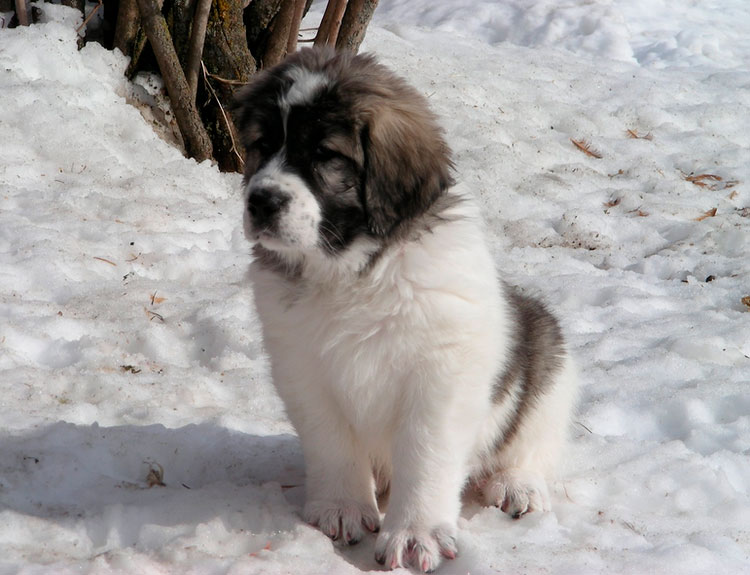
It is recommended to pick up puppies no earlier than 2.5 months. Attention is paid to their appearance, compliance with the standard, and living conditions. Free-range is encouraged. Feeding is always assessed. A balanced diet for mother and puppies is the key to future health. Each puppy must have a tattoo and a puppy card, which is later exchanged for a pedigree and a veterinary passport with notes on preventive measures and vaccinations. It is also necessary to evaluate the mental state of the parents, or at least the mother. Her appearance after whelping and nursing will reveal the breeder's attitude towards their dogs.
Price
A purebred Pyrenean Mastiff puppy in Russia typically costs around 70,000 rubles. The puppy's gender, the value of the sires, the breeder's geography, and many other factors play a role. In Europe, the average price of a Pyrenean Mastiff is 2,000 euros.
Photos
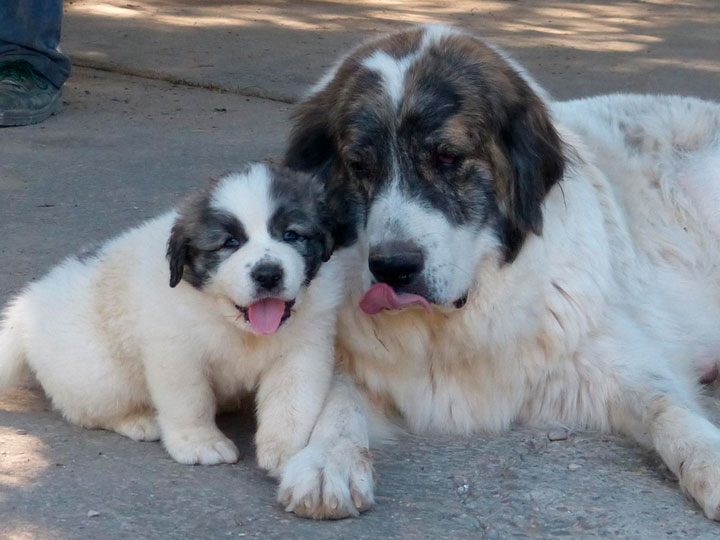
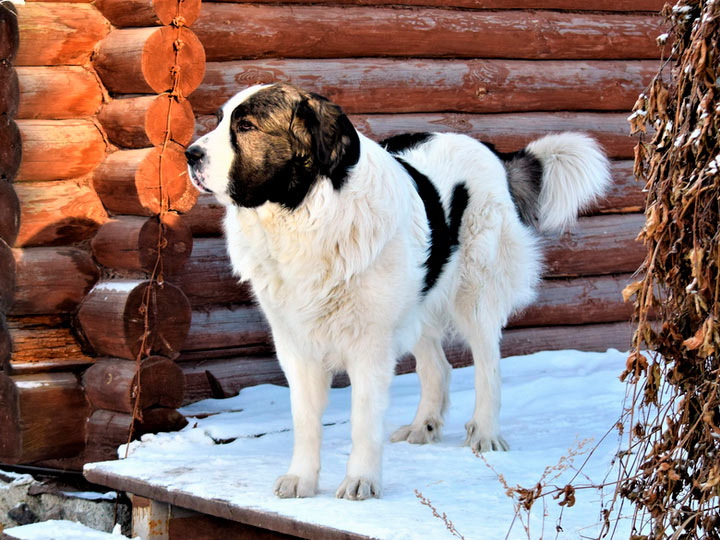
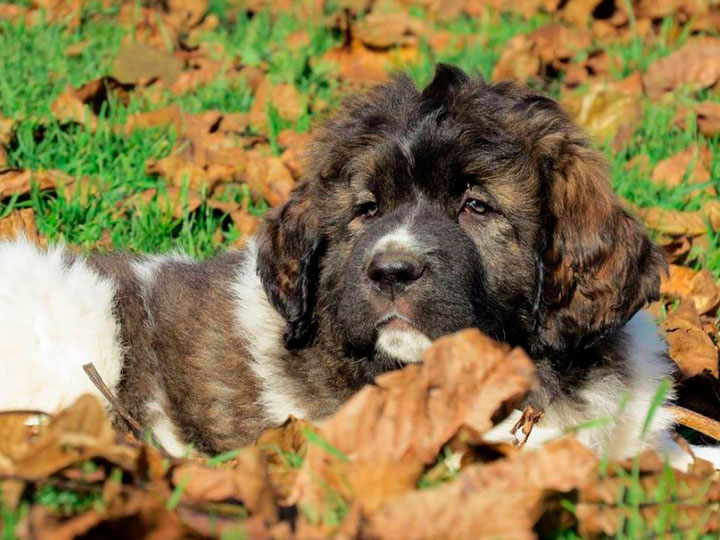
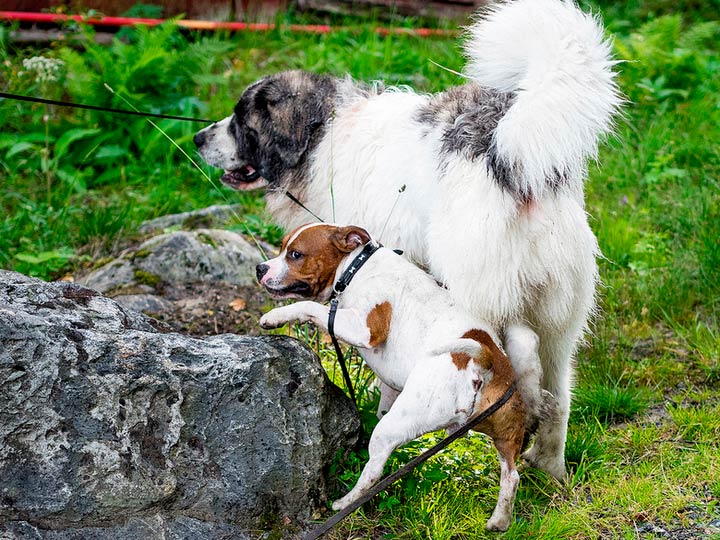
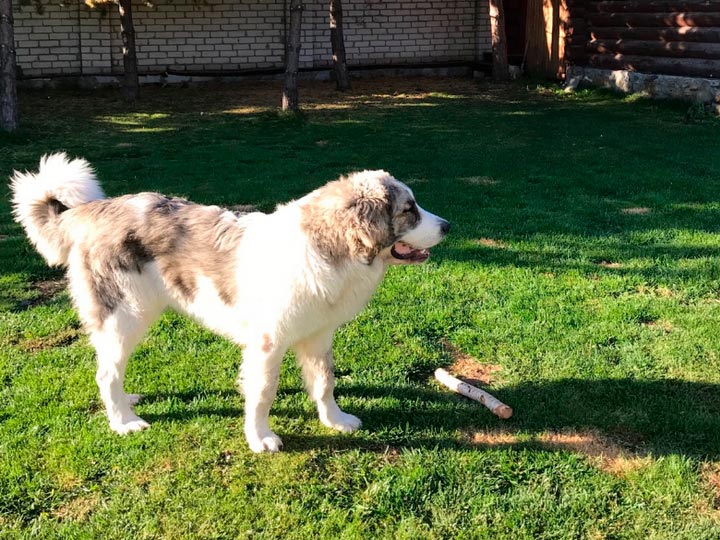
The photographs in the gallery show Pyrenean Mastiffs of different sexes, ages and colours.
Video about the Pyrenean Mastiff dog breed:
Read also:
- Landseer is a dog breed
- Tosa Inu (Tosa Ken, Japanese Mastiff)
- Cirneco dell'Etna (Sicilian Greyhound)


Add a comment