
Pyrenean Shepherd
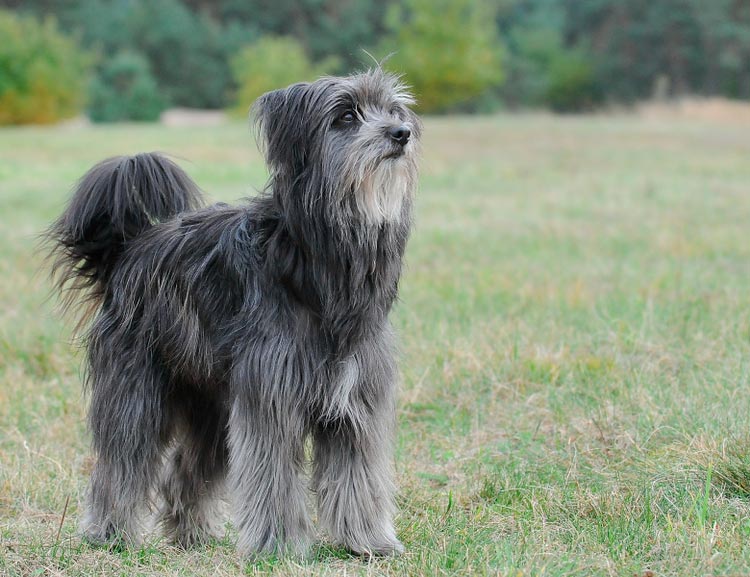
The Pyrenean Shepherd is a small French herding dog breed developed in remote mountainous areas to herd sheep. Energetic, playful, highly intelligent, and cunning, the Pyrenean Shepherd is a talented herder and a vigilant guard dog, always on alert. Today, as in the past, it is used for farm work, but it is also a wonderful athlete and devoted companion.
Content
History of origin
The breed's origins are lost in the mists of time. It is known that the Pyrenean Shepherd has been found in the mountains of southern France since time immemorial. Medieval accounts of life in the Pyrenees also mention dogs, the constant companions of shepherds, and their images can be found in engravings, lithographs, and paintings dating back to the 16th century.
Isolation played a significant role in the development and maintenance of the breed type. Cattle breeders in the French Pyrenees primarily used two types of dogs: large white dogs guarded the herd from bears, wolves, and lynxes, while smaller dogs served as a "human fence" for the livestock and as an "alarm," warning of intruders or extraneous noise with a loud bark. For centuries, the Pyrenean Shepherd population remained consistently high. Nature selected the strongest dogs for health, and humans selected them for work ethic. The dogs varied in phenotype, but eventually their appearance was harmonized, and two types emerged: long-haired and smooth-faced. After the First World War, the French Pyrenean Shepherd Club was founded to preserve the breed. The first standard was written in 1926.
Some Pyrenean Shepherds arrived in North America in the 19th century along with imported sheep. There, their abilities were highly valued and they were used to develop the Australian Shepherd (Aussie) breed.
Purpose
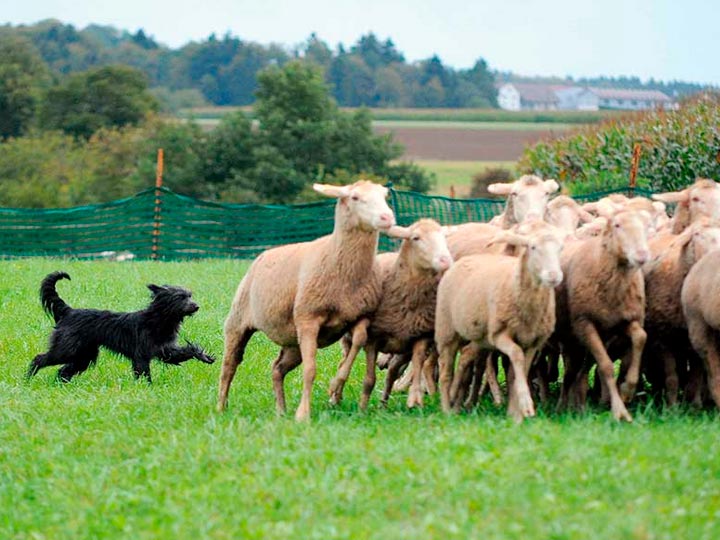
The Pyrenean Shepherd was bred to manage flocks of sheep under the direction of a shepherd and serve as a guard dog. On the farm, it is practically universal, always nearby to assist with daily chores. In the modern world, where traditional uses are less in demand, the shepherd's functions have expanded significantly.
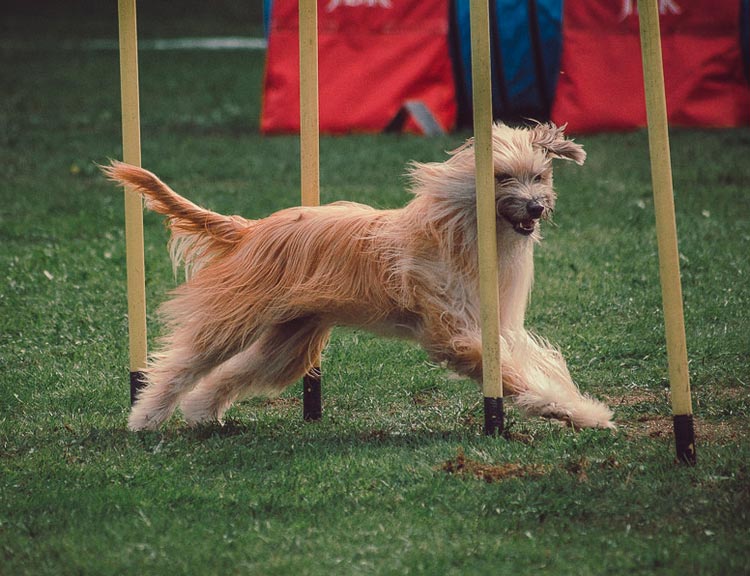
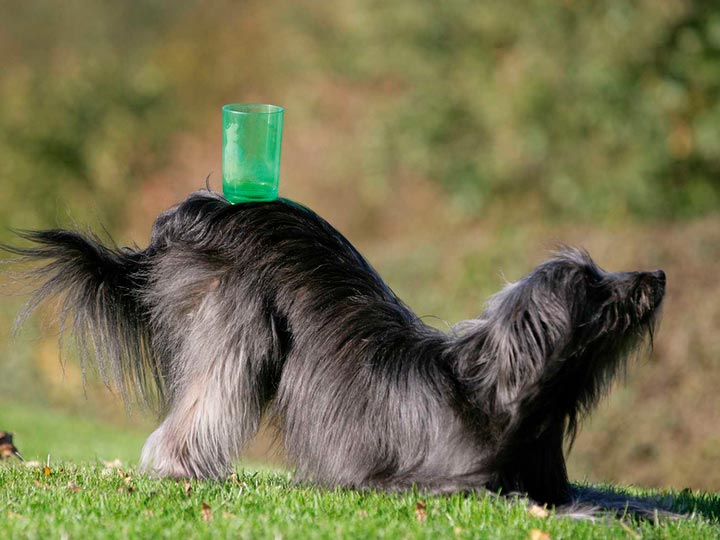
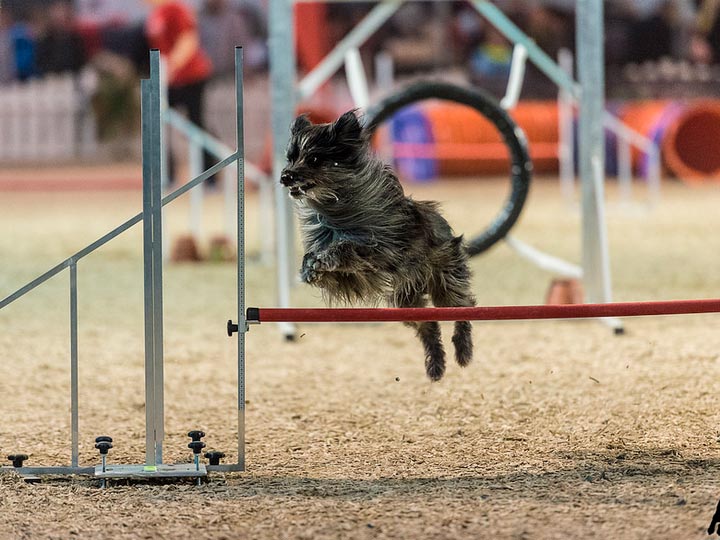
Long-haired Pyrenean Shepherds distinguished themselves during World War I. They served as couriers, bloodhounds, Red Cross medics, and participated in rescue operations. French soldiers said they were the smartest, most cunning, most capable, and fastest of all the dogs used in the war. Modern Pyrenean Shepherds participate in a variety of sports, including agility, rally, canicross, flyball, obedience, and even dock dog (diving). Pyrenean dogs are trained as scent dogs. In France, they have been used repeatedly in rescue operations. In America, several Pyrenees are certified canine therapy dogs.
Video of a Pyrenean Shepherd (performing at a freestyle championship):
Appearance
The Pyrenean Shepherd is a small dog with fairly long legs and a slightly elongated build. The height at the withers for males is 42-48 cm, and for females, 40-46 cm.
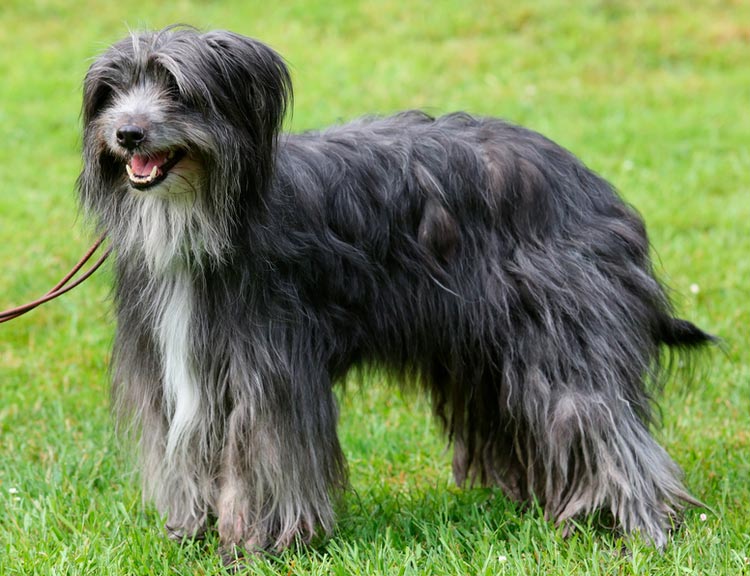
Pyrenean Shepherds are divided into two types: long-haired and semi-long-haired, also known as smooth-faced. Each variety has its own standard. The dogs are virtually identical except for a few characteristics.
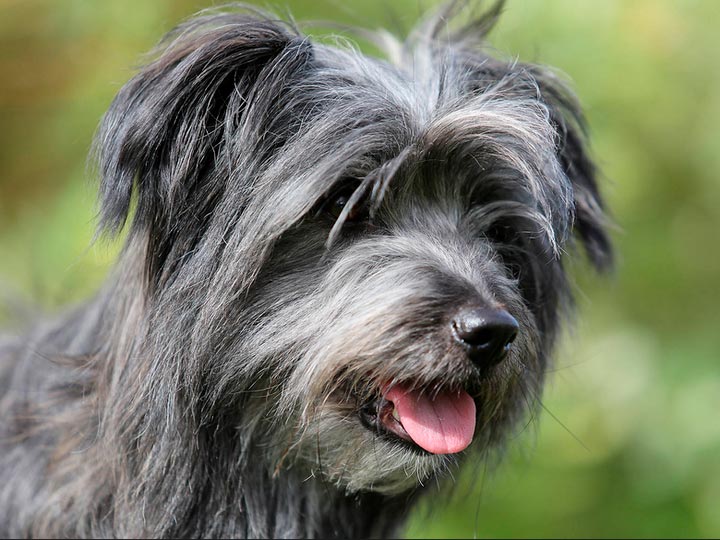
The length and width of the skull are almost equal. The stop is barely noticeable. The ratio of the muzzle to the skull is 2:3. The head is wedge-shaped, but not pointed. The bridge of the nose is straight. The nose leather is black. The lips are black or heavily blackened, completely covering the lower jaw. A scissor bite is acceptable; a level bite is permitted. The eyes are almond-shaped, dark brown, and expressive. In blue merle dogs, lighter eyes are acceptable. The ears are short, moderately wide at the base, triangular, thin, hanging or semi-erect, and very mobile. The ears were previously cropped.
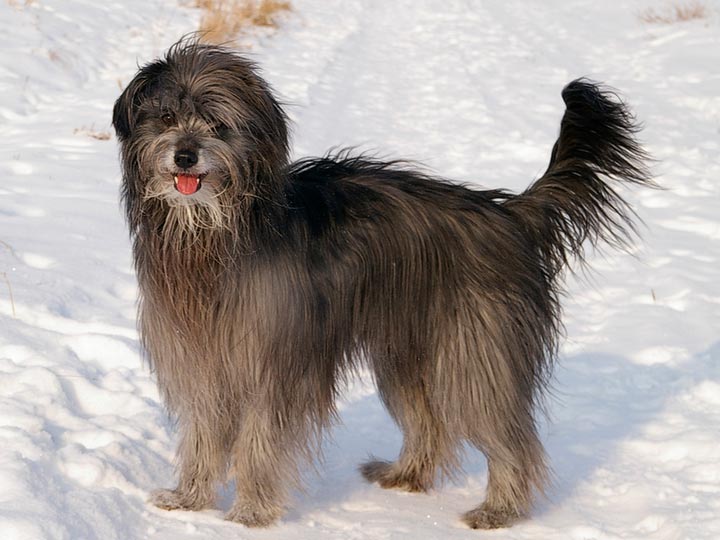
The neck is rather long and well set. The skeleton is strong, but not coarse. The muscles are dry. The length of the body is greater than the height at the withers. The length of the foreleg to the elbow is more than half the height at the withers. The back is long. The withers are well defined. The loin is slightly arched and short. The croup is short and sloping. The chest is moderately developed, reaching to the elbows. The tail is short, set low, with a hook at the end. It may be docked in countries where this is not prohibited. A congenital bobtail is also tolerated. The legs are strong, dry, with feathering on the back side. Dogs with semi-long hair do not have feathering on the back of the thighs.
Some Pyrenean dogs have hair on the back of the body and thighs that is matted into dreadlocks, resembling cords. bullets or flatbreads Bergamasco.
The skin is often spotted, regardless of color. The coat is long or semi-long, dense, straight or slightly curled. It is dry on the front of the body, while the back is denser and fluffier. The texture is somewhere between sheep's and goat's wool. The mixture of hard and soft wool causes mats, called braids or layers, depending on their length and shape. The hair lies in the opposite direction across the entire muzzle, as well as on the cheekbones and sides of the head. The eyes are always open. Colors:
- Fawn with or without black inclusions;
- Gray of various shades with or without white inclusions;
- Blue or blue marble (harlequin);
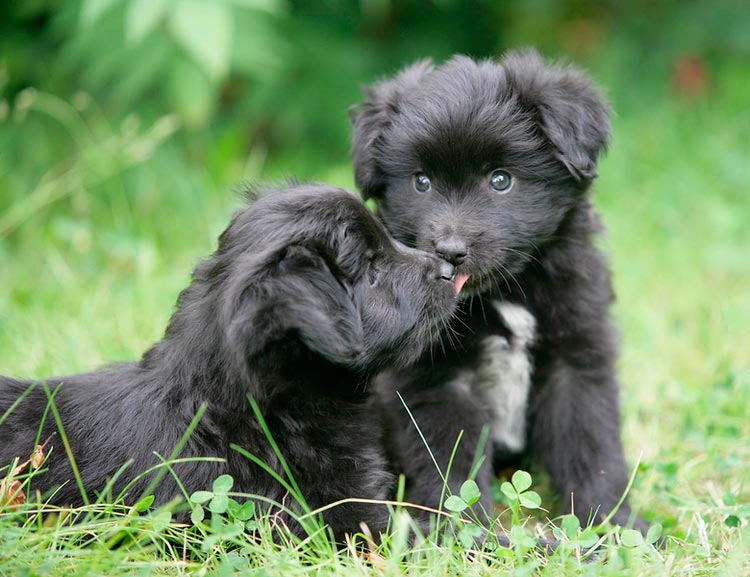
- Black or black with white markings;
- Tiger.
Character and behavior
The Pyrenean Shepherd's breed standard describes it as a very spirited, cunning, and active dog. Owners also note its courage, resourcefulness, initiative, and devotion to its owner. Everything it does is voluntary. Only a close bond with its owner allows it to channel its energy and raise an obedient dog. It is suspicious of strangers. It has a strong guarding instinct, but is not aggressive. It is prone to excessive barking. It is sensitive and stubborn, especially when young. This must be taken into account when training it.
The Pyrenean Shepherd is good with children, but doesn't show much affection for them, viewing them as fellow dogs or playmates, and therefore won't listen to a child's commands. With good socialization and a well-developed herding instinct, it can watch over children and protect them, keeping them within its designated area. It is very attached to all family members, but sees only one person as its master. It gets along well with other pets and is capable of working in a team with larger dogs. Conflicts with dogs of the same sex are possible.
Education and training
The Pyrenean Shepherd is a highly intelligent dog that is relatively easy to train. Best results are achieved by beginning training early, devoting significant time to training regularly, and establishing a close bond with the dog. Pyrenean Shepherds typically work with only one person, whom they consider their master. They may ignore commands from others. They exhibit a tendency toward independence and can be stubborn and willful, especially when young.
The more time a Pyrenean Shepherd spends working with its owner, rather than simply being walked on a leash, the more obedient it will be. Early socialization and training in basic obedience commands are crucial; these, along with proper behavior, should become an integral part of the dog's life. Pyrenean Shepherds are recommended to engage in some kind of sport: herding, retrieving, agility, or at least receive good training in basic commands.
Content Features
The Pyrenean Shepherd is more of a rural than a city dweller. However, it is also a dog of its owner, meaning it will be happy even in a big city, as long as its owner takes it everywhere and provides it with sufficient physical and mental stimulation. Left alone for long periods of time, whether in an apartment or a yard, the Pyrenean Shepherd develops bad habits or becomes destructive.
Given the breed's purpose, its endurance, and agility, it's clear that a typical 15-20 minute walk twice a day isn't enough for a Pyrenean Shepherd. This active dog needs plenty of time outdoors to burn off pent-up energy. Of course, much depends on training. A dog raised on a farm is ready to run all day, following the flock, while a city dog will tire more quickly.
Care
The Great Pyrenees requires little grooming. Haircuts are not common. Its appearance should remain rustic, slightly shaggy and tousled. However, some owners who don't show their dogs prefer to trim their coat short in the summer. Standard grooming procedures include:
- Weekly combing;
- Bathing as needed (usually once every two to three months);
- Weekly cleaning of ears and teeth;
- Keeping the eyes dry and clean. If individual hairs on the muzzle get on the cornea and irritate it, they should be carefully trimmed.
- Nails are trimmed to the optimal length as they grow. Additionally, Pyrenean Shepherds often have single or double dewclaws, it is important for the owner to monitor the growth of the claws on them.
Show grooming is minimal. A shepherd's coat should be clean, free of mats and burrs, and dreadlocks on the back of the body and hind legs are permitted, provided they are clearly separated and groomed. Nails should be neatly trimmed, and teeth should be clean.
Nutrition
Pyrenean Shepherds follow standard dietary recommendations. They eat relatively little and rarely suffer from food allergies or digestive problems. Many breeders consider high-quality commercial dry food to be the best option, choosing it based on the dog's size, age, and taste preferences. Unlike homemade food, it doesn't require additional vitamin and mineral supplements or dietary adjustments. You can prepare your dog's food yourself if desired. One-third of the daily diet should consist of meat and meat products. For an adult dog, this is approximately 2-3% of its body weight. The rest consists of cereal, vegetables, and fruit. Drinking water should always be freely available.
Health and life expectancy
The Pyrenean Shepherd is considered a healthy breed. Most dogs boast strong immunity, endurance, and adaptability to various climates. Hereditary genetic diseases are rare:
- Hip dysplasia;
- Patellar dislocation;
- Epilepsy;
- Eye diseases;
- A congenital heart defect called patent ductus arteriosus.
The lifespan of Pyrenean Shepherds is usually 13-14 years., but for many representatives of the breed this is far from the limit.
Choosing a Pyrenean Shepherd Puppy
Those seriously considering buying a Pyrenean Shepherd will likely have to buy a puppy in France or from a kennel in other European countries, such as Sweden, Switzerland, or Italy. In the CIS countries, the number of Pyrenean Shepherds is limited, and not all owners are breeders, so puppy ads are rare. Furthermore, in Russia, the Pyrenean Shepherd is often called Pyrenean Mountain Dog, which makes it even more difficult to find the little shepherds.
In Europe, the easiest way to find a puppy that meets your requirements (for herding, shows, breeding, sport, etc.), your desired gender, and color is through national breed clubs, where they can provide contact information for good breeders and all the necessary information about choosing a puppy.
Price
The price of a Pyrenean Shepherd puppy in Europe typically ranges from €800 to €1,200. Puppies from parents who have achieved success in the show ring or from well-socialized young dogs with initial training for herding can cost significantly more. Price data for the CIS countries is unavailable due to the small number of dogs.
Photos
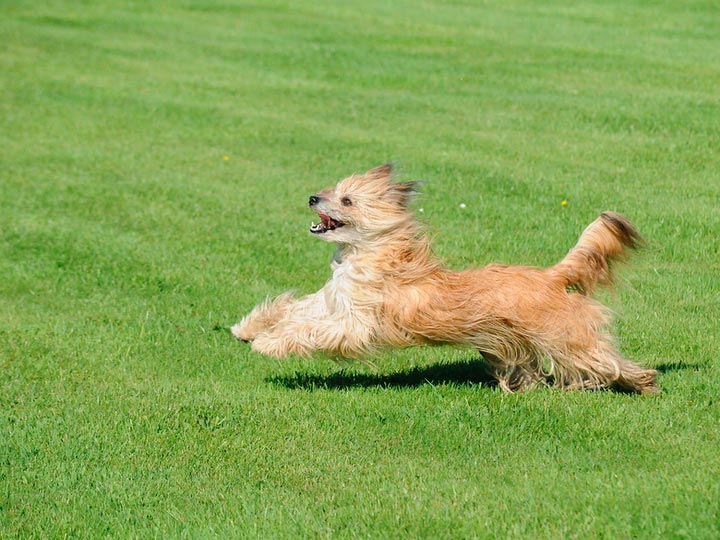
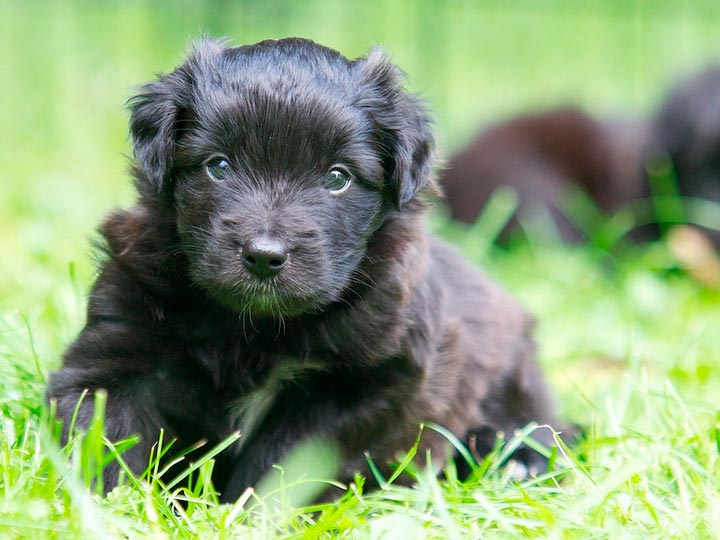
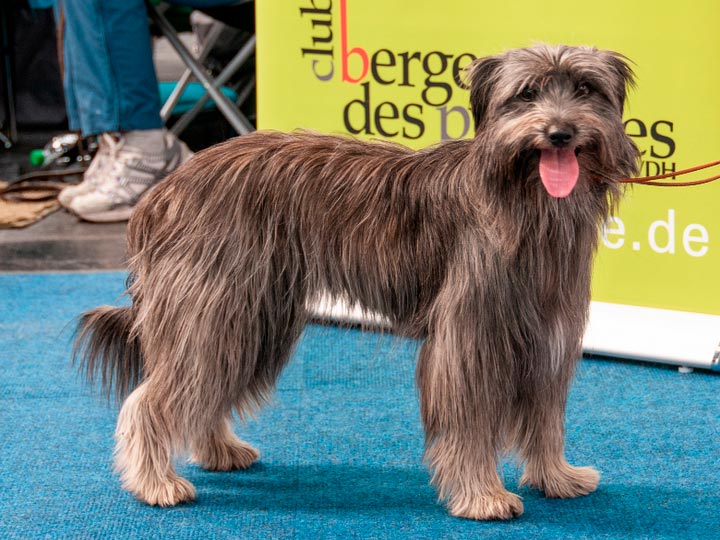
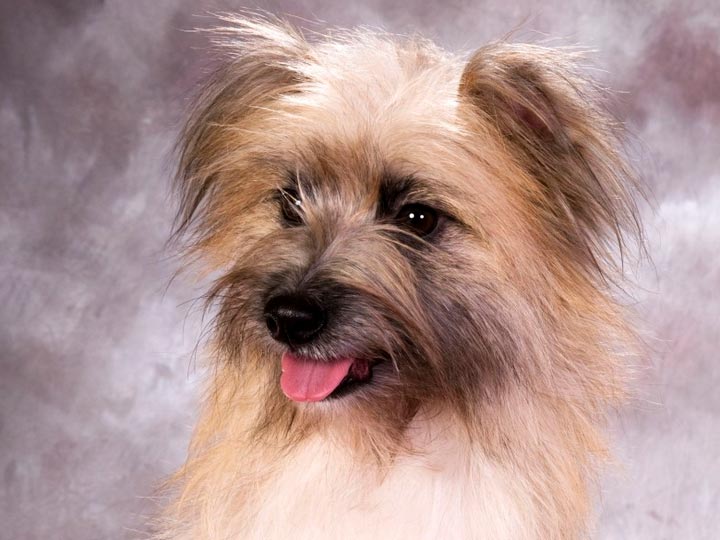
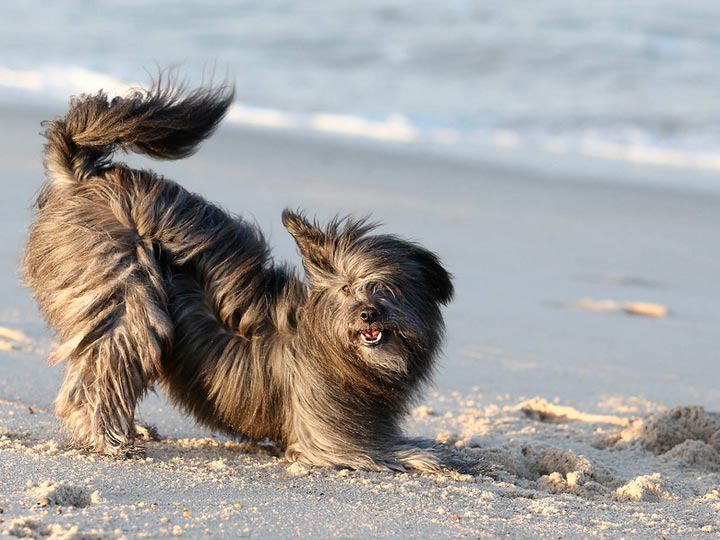
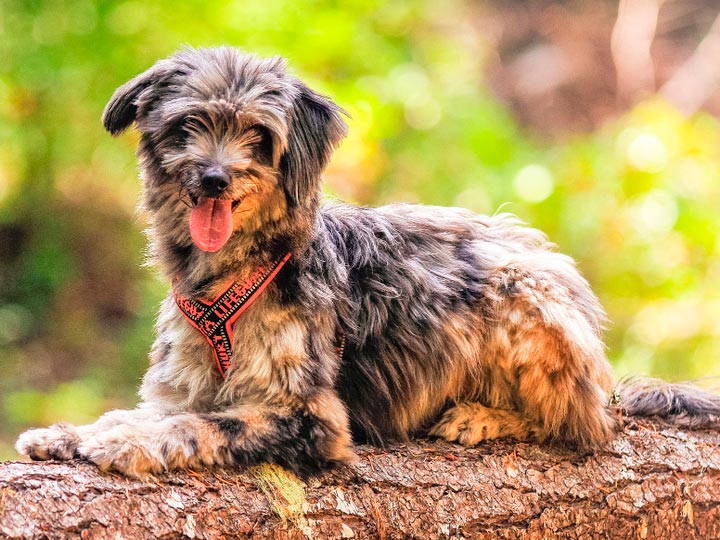
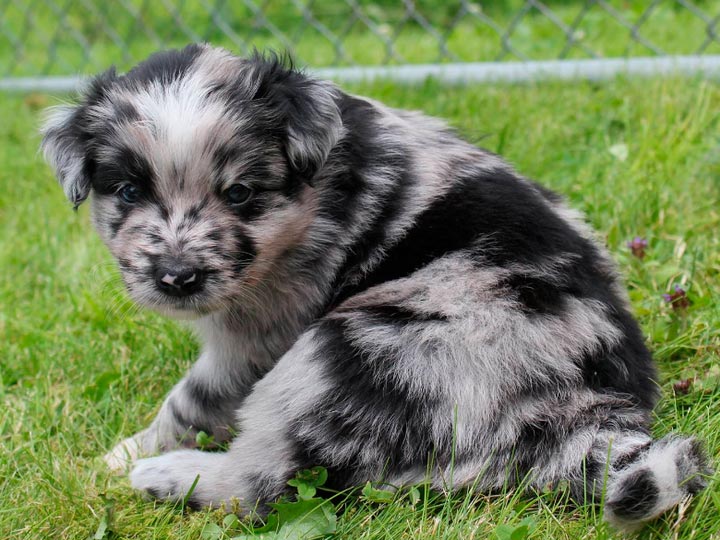
The gallery contains photos of adult Pyrenean Shepherd dogs and puppies.
Read also:


1 comment
Lily
Yesterday I was at the clinic with my dog and was very pleased with the doctor's attitude towards my Misha. The doctor did a very thorough ultrasound examination and treated my pet with love. I recommend this clinic. I thank Professor Muromtsev for his team and wish him success in his development.
Add a comment