
Pyometra in dogs
Reproductive system diseases in animals often go unnoticed. Pets won't complain about the specific area of pain. However, some diseases are life-threatening. One such condition is pyometra in dogs—a purulent inflammation of the uterine lining. Without timely detection and proper treatment, you could lose your beloved four-legged friend.
What causes pyometra in dogs? What are its typical symptoms? What treatment is needed for purulent inflammation of the uterine lining?
Content
Causes of pyometra development
There is one reason for the development of pyometra in dogs: hormonal imbalance, which leads to the activation of pathogenic microflora (pathogenic bacteria).
Hormonal imbalances are disrupted both during puberty (before the first heat) and during the heat itself. Contributing factors can include tumors, inflammatory processes in the reproductive system, and the use of hormonal medications (even a single dose can trigger changes in the body).
Few people realize that it is precisely the drugs that suppress the desire to reproduce and suppress the desire of animals that trigger hormonal imbalances.
Sometimes pyometra is caused by excess progesterone production. This hormone is responsible for maintaining pregnancy and promoting mammary gland growth. It shouldn't be produced in a non-pregnant female, but if ovarian disease is present, its levels will surge. As a result, mucus begins to form in the uterus, the organ stretches, and the cervix closes (as during pregnancy). This mucus provides an ideal breeding ground for bacteria, leading to pus formation.
Pyometra in dogs often develops after giving birth, when the uterine lining is injured, making it easier for microorganisms to enter.
Risk factors
- Frequent pregnancies;
- false pregnancy;
- no history of pregnancy in the animal at all;
- pathological childbirth;
- overweight;
- age over 4 years;
- non-spayed female dog;
- ovarian diseases;
- endometritis (inflammation of the uterus);
- poor living conditions or feeding.
Symptoms of pyometra
Before discussing the most common symptoms of pyometra in dogs, let's look at the different forms.
Open form
It's easier to diagnose than the latent form. Therefore, owners notice their pet has purulent endometritis more quickly. The open form is characterized by digestive problems (vomiting, diarrhea) due to intoxication. Thirst also increases due to dehydration (especially if diarrhea and vomiting are severe). An increase in body temperature is recorded, as with any purulent inflammation. The animal experiences weakness, loss of appetite and desire to go for walks, and weight loss.
But what a pet owner will definitely notice with an open pyometra is purulent discharge (greenish, yellowish, streaked with blood) with an unpleasant odor from the genital tract. The dog will constantly lick itself because this discharge causes discomfort.
Closed form
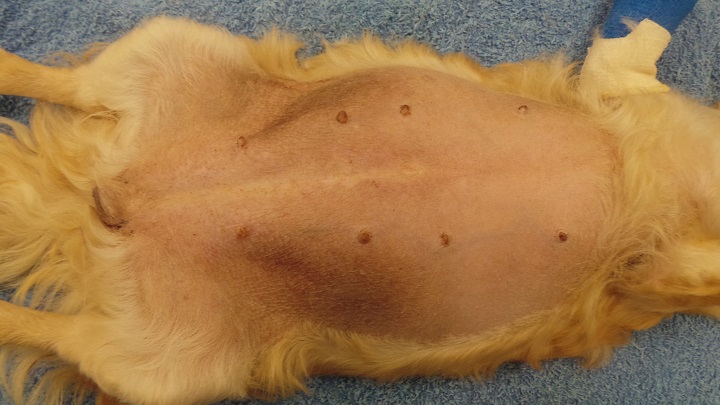
In the closed form, the cervix will be closed. The pus accumulated inside the uterus will not drain, so it will be difficult to notice any discharge from the genital tract. The main symptoms of closed pyometra in dogs include a fever above 40 degrees Celsius and a distended abdomen due to accumulated pus. The fever will alter the dog's gait (it will become unsteady), the dog will be weak and lethargic, will refuse to eat, and will lie down and whine more.
Some owners, noticing their dog's swollen belly and a change in appetite, begin to suspect that they'll soon be welcoming a litter of puppies into the home. However, when gently palpating the abdomen (otherwise, it's possible to rupture the organ and leak pus into the abdominal cavity), a liquid-like substance is felt. The pet will begin whining, fidgeting, and otherwise feigning pain.
The latent form is the most dangerous. In some cases, it can kill your pet in less than 24 hours. Therefore, if you notice any changes in your pet's behavior or well-being, consult a veterinarian immediately.
Dog treatment
Treatment for a dog with pyometra begins immediately after diagnosis. To make a diagnosis, a veterinarian simply collects a medical history, palpates the abdomen, examines the vagina, and takes a cervical swab to detect purulent deposits. A pelvic ultrasound is performed to determine the extent of the lesion. Based on this, the veterinarian decides whether to use medication or surgery.
Unfortunately, medication is rarely used. It's only used for the initial stage of the disease. The veterinarian will prescribe a course of antibiotics. After completing the treatment, a follow-up examination will be mandatory. They will likely recommend spaying the female dog to prevent recurrence.
Surgery is the most common treatment. Removal of the uterus and ovaries helps save the animal's life. Even after pyometra removal surgery, dogs are prescribed antibiotics. They will need to be monitored by a veterinarian for a period of time to rule out complications (kidney damage may occur if the condition remains untreated for a long time). No complications should arise after pyometra removal surgery in dogs if all recommendations from the treating veterinarian are followed.
Prevention of pyometra
- The simplest preventative measure is spaying (not just removing the ovaries, but also the uterus). However, if the female dog isn't spayed, it's important to be aware of the risk group. These pets should be taken to the veterinarian for routine checkups and examinations.
- Ensure proper nutrition. Enrich the diet with vitamins and minerals. Balance protein, fat, and carbohydrates.
- Don't forget to take regular walks (at least twice a day). Try to maintain a routine.
- Do not administer hormonal medications without consulting a veterinarian. Do not use these medications to suppress heat or estrus, and especially not during pregnancy.
- Keep your pet away from other animals (especially strays) that could infect your pet, especially during heat when the cervical canal is open. Maintain proper hygiene, preventing contamination and matting of the fur.
- If the bitch is giving birth, ensure she is in sterile conditions. The bedding she will be on should be clean. It should be discarded immediately after birth to prevent bacteria from entering the reproductive tract. Be sure to take the dog to the veterinarian after the birth (even if you don't notice any abnormalities).
You can also ask our website's staff veterinarian a question, who will answer them as quickly as possible in the comments box below.
Read also:


3 comments
Larisa
Hello! My 11-year-old cocker spaniel has pyometra. Can she have surgery and what will be the outcome?
Daria is a veterinarian
Hello! It all depends on the severity of the disease. In some cases, medication can be tried (if the cervix is open and the pus can drain without problems). In advanced cases, surgery is the only option. There are no options. No one can predict the outcome at this age. Any number of complications are possible (especially if there are heart problems). Antibiotic therapy will definitely be necessary, but antibiotics alone won't help. An ultrasound will definitely reveal the diagnosis, and the sooner the better. A complete blood count and coagulation profile are also necessary.
Elena
Good evening, my 10-year-old terrier was diagnosed with pyometra and underwent surgery, removing her uterus and a huge sac of pus. She's been feeling very unwell for three days now. They say her liver is very enlarged! She's been on ceftriaxone and Essentiale vitamins through IVs. The doctor says there's no chance. Can you tell me what to do? We love her very much and are fighting for her, but is there a chance?
Add a comment