
Pyoderma in dogs: symptoms and treatment
Pyoderma is a skin disease caused by pyogenic microorganisms. It is classified as a zoonotic disease and can affect both animals and humans. In dogs, pyoderma can be caused by pneumococci, streptococci, and Pseudomonas aeruginosa, but in most cases, it is triggered by staphylococci. Areas with short hair or thin skin are primarily affected: the abdomen, muzzle, groin, and armpits. A special form of the disease is considered purulent pododermatitis, or interdigital pyoderma.
Reasons for development
Staphylococci are opportunistic pathogens; they are present on the surface of animals' bodies almost constantly, but can only cause purulent inflammation if there is damage to the skin or if the protective function of the skin is impaired.
The causes of pyoderma in dogs can be:
- The presence of scratches, wounds, and abrasions on the skin.
- Unfavorable living conditions, poor care.
- Unbalanced diet.
- Diseases accompanied by skin rashes (food, contact, insect allergies).
- Parasitic diseases.
- Autoimmune dermatoses.
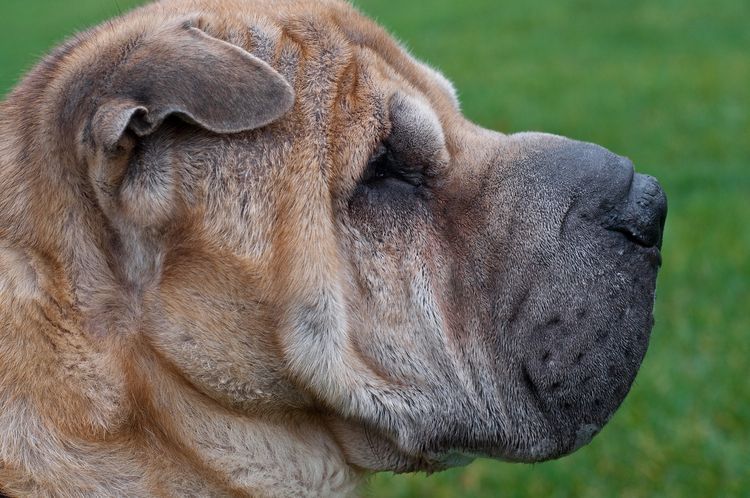
Dogs of any age can develop pyoderma, but certain breeds are more prone to it. Pugs, Shar-Peis, Neapolitan Mastiffs, Boxers, and English Bulldogs are at risk. These dogs have a large number of skin folds, so they are more likely to develop scratches and diaper rash.
Symptoms
Pyoderma is divided into superficial and deep. In the deep form, in addition to the dermis, the subcutaneous tissue and muscles are affected. The clinical picture of this skin disease is usually quite pronounced. Photos of pyoderma in dogs posted online clearly show inflamed, red skin, with rashes in the form of nodules, ulcers, scabs, or blisters with purulent exudate. Scratch marks are often visible.
Other symptoms of the disease may include:
- The emergence of a large number dandruff;
- Severe itching (the dog constantly scratches, licks or bites the skin);
- Hair loss in certain areas;
- Swelling or thickening of the skin at the affected areas;
- A putrid or musty odor emanating from the skin;
- Loss of activity;
- Poor appetite.
Important! Since many of the symptoms described are characteristic of other skin conditions, you should not attempt to treat your dog yourself. Appropriate treatment methods, including those that can be carried out at home, can only be prescribed by a doctor after conducting a differential diagnosis.
Diagnostics
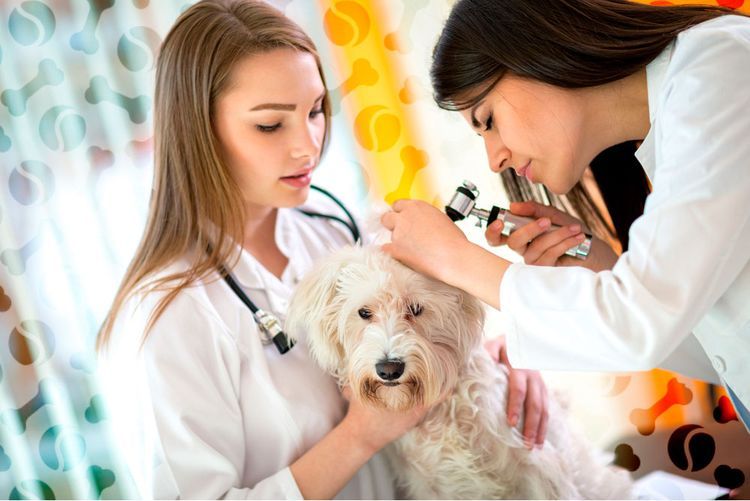
To make a diagnosis, a veterinarian will first conduct a visual examination of the dog for skin lesions and also review the owner's medical history:
- conditions of detention;
- feeding ration;
- tendency to allergic reactions;
- the presence of concomitant diseases (including those recently suffered);
- timing of vaccinations administered.
After this, the animal will be scheduled for the necessary examinations. The following are considered standard:
- Blood and urine tests.
- Bacteriological and/or cytological examination of skin scrapings from affected areas (this is necessary to identify pathogenic microflora or skin parasites). In some cases, in addition to superficial scrapings, a tissue sample for biopsy is required.
- Test analysis for the presence of fungi using a Wood's lamp (luminal diagnostics).
To select the correct medication, an antibiogram can be performed - an analysis that allows one to assess the sensitivity of a strain of staphylococcus or another pathogen detected during research to penicillins and cyclosporines.
Treatment
The treatment regimen primarily includes treating the affected skin areas with antiseptics, anti-inflammatory, antipruritic, and wound-healing agents. The hair around the pyoderma lesions is clipped before skin treatment.
How to use external medications as symptomatic treatment:
- Iodez (a veterinary drug based on iodine);
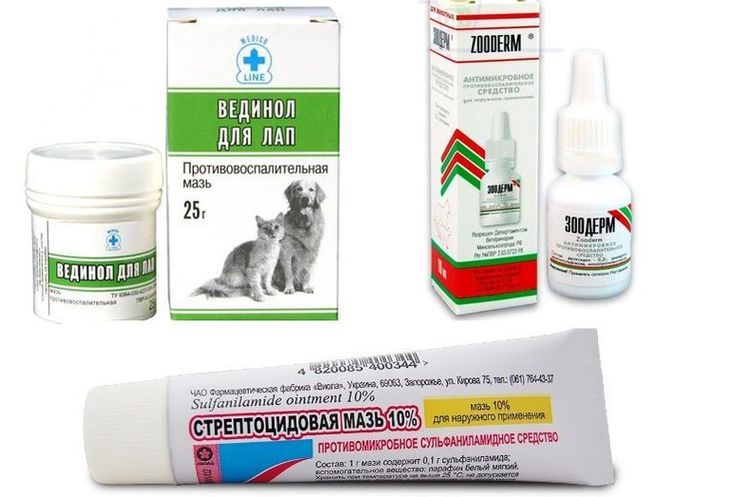
- Zooderm (antimicrobial and anti-inflammatory agent, contains diphenhydramine and dioxidine);
- Vedinol (contains pine oil and the fungicidal-bactericidal substance silbiol, has anti-inflammatory, wound-healing and antimycotic effects);
- brilliant green solution (antiseptic and disinfectant);
- Streptomycin ointment (the active ingredient is an antibiotic of the aminoglycoside group, has a bactericidal and bacteriostatic effect).
The dog is also prescribed baths with infusions of medicinal herbs, and for washing - special shampoos with antiseptics Benzoyl peroxide or ChlorhexidineAt least one-time treatment of the skin against ectoparasites is also mandatory, even if none were detected during the examination.
Special instructions. Pyoderma is contagious and can also infect humans. Therefore, when treating a dog's skin with medicinal ointments and solutions, wear protective gloves, and wash your hands thoroughly with soap after any forced contact with a sick animal.
When treating pyoderma in dogs, oral medications are almost always used. Antiviral, bactericidal, or bacteriostatic medications are used, and the doctor selects them based on the nature of the disease. These may include sulfonamides (sulfamethoxazole), macrolides (tylosin), or antibiotics that target bacteria:
- Amoxicillin (a semi-synthetic antibiotic of the penicillin group);
- Baytril (broad-spectrum veterinary antibiotic);
- Gentamicin (aminoglycoside antibiotic);
- Cephalexin (an antibiotic from the cephalosporin group);
- Lincomycin (an antibiotic of the lincosamide group);
- Amoxiclav (a combination drug that contains a penicillin antibiotic and a beta-lactamase inhibitor, which has an additional bacteriostatic effect).
A course of antibiotic therapy is usually prescribed for 2-3 weeks or more.
To strengthen the immune system and increase the body's resistance, the animal may be prescribed immunostimulants. In veterinary medicine, the most commonly used drugs are Anfluron, Maxidin, Gamavit Forte, Nutri-Vet, Canina Dog Immun Protect.
If a food allergy is the cause of a skin condition, the animal is prescribed a special diet. The offending food is eliminated from the dog's diet, and the dog is transitioned to a gentle diet for 1-2 weeks. The food should contain not only the necessary amount of nutrients (proteins, carbohydrates, and fats), but also vitamins that accelerate skin regeneration.
Statistically, the prognosis for pyoderma is favorable in the vast majority of cases. However, after recovery, especially if the disease was severe and involved large areas of purulent infection, the animal may be left with cosmetic defects: patches of baldness, discolored skin, or scars. This can be seen in photos that owners of dogs who have recovered from severe pyoderma post on social media and pet forums, captioned "before and after the disease."
Prevention
General recommendations for preventing the development of pyoderma in dogs:
- Creating favorable living conditions: a warm room, dry bedding.
- Proper care of your dog's skin and coat. Bathing it, at least periodically, with antibacterial shampoos is recommended. Human shampoos are not suitable for washing animals. Wash your dog's paws after every walk. This will prevent dirty marks on your floors and protect your pet from interdigital pyoderma.
- If you find any wounds or scratches on your dog's skin, you should immediately treat them with brilliant green or hydrogen peroxide.
- If your pet has many skin folds, it's recommended to wipe them with a chlorhexidine solution. The coat should be brushed regularly, and long-haired dogs should be trimmed in the summer.
- Feeding high-quality food is essential for preventing skin diseases. If it's homemade, the majority of it should be meat, and vitamin and mineral supplements should be included in the dog's diet two to three times a year.
Prevention of pyoderma involves keeping your dog up to date with vaccinations and protecting against skin parasites with sprays, gels, drops, and special collars. It's also important to prevent your dog from coming into contact with animals showing signs of the skin disease.
Pyoderma in dogs: video
Read also:
- Acanthosis Nigricans in Dogs: Symptoms and Treatment
- Scabies in dogs: symptoms and treatment
- Red spots on a dog's belly


Add a comment