
Pixiebob (cat)
Pixiebob The Pixiebob is a unique cat breed often mentioned in American legends. The great E. Hemingway and many other American writers also mention this breed. There are several theories about the Pixiebob's origins.
Content
History of the breed's origin
Random mutation
One theory holds that the founder of the breed is a female cat named Pixie, who had several extra toes. She gave birth to kittens who inherited their mother's polydactylism, but with a short tail, which they may have inherited from their father.
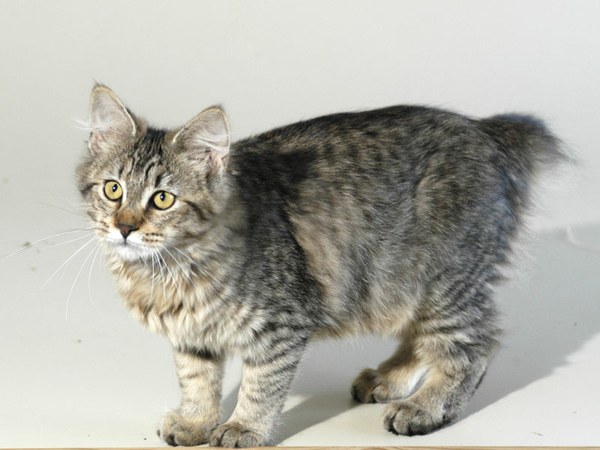
Another theory suggests that the short tail is simply a random mutation. But whichever theory is correct, Pixiebobs resemble small, gloomy lynxes in appearance.
This is a unique breed of domestic cat, and their name also has an interesting origin. In English, "pixie" means elf, and "bob" means short tail. Therefore, a pixiebob is a short-tailed elf. The pixiebob is not just an interesting polydactyl breed, but a distinct group characterized by a distinct genotype.
Breed recognition
This breed was officially recognized in 1995 in the TICA category, and since 1998 they have been eligible to participate in TICA championships alongside breeds such as the Abyssinian, Persian, and others. TICA's priority is the Pixie-Bob cat breed.
There are few representatives of this breed worldwide, and there are several reasons for this. The main reason is that the Pixiebob is considered a national treasure in the United States, so it is not recommended to export it outside the country. Furthermore, the Pixiebob does not travel well during long journeys, which is another reason for its limited popularity.
Modern Pixiebobs have retained the character traits of their wild ancestors—caution and distrust. They mature late, with litters of no more than three kittens, and only in rare cases are multiple litters seen.
At the same time, Pixie-bob cats are capable of bestowing their owners with love and devotion that can only be compared to canine loyalty.
General characteristics
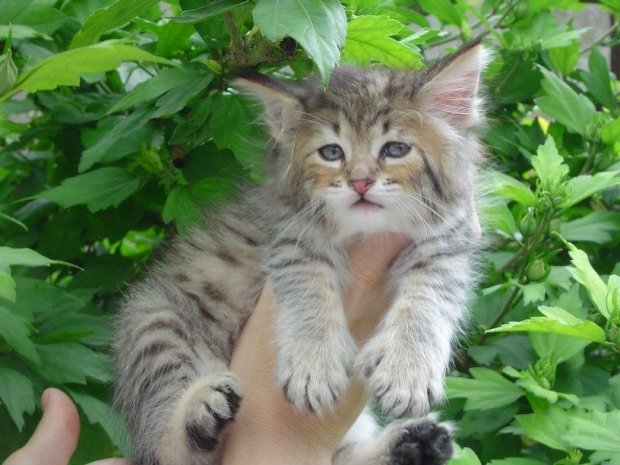
There are semi-longhaired and shorthaired Pixie Bobs.
Character
Their representatives are able to quickly adapt to a new family, becoming affectionate and docile. They jump, run, and play beautifully, love children They quickly find common ground with other pets who live with them. Despite their somewhat wild appearance, Pixiebobs are actually kind and gentle. They are not afraid of water, open spaces, or low temperatures. When a Pixiebob greets its owner, it makes interesting sounds, something between a chirp and a purr.
A cat of this breed becomes a favorite of its male owner. This is most likely due to its canine-like behavior. These cats, like many purebred dogs, are easy to train, and even with little effort, they can be taught basic commands.
Intellectuals, they are naturally endowed with a good memory and quick wit. Thanks to these qualities, they quickly grasp the purpose of tray and scratching posts, and once they've learned how to use them, they'll stick to them. If you want, you can even teach your Pixie to use the toilet, and with more diligence, flush it. The prospects, as you can see, are quite promising, considering the benefits of this venture—reduced litter costs and time saved on cleaning and disinfecting the litter box.
Appearance
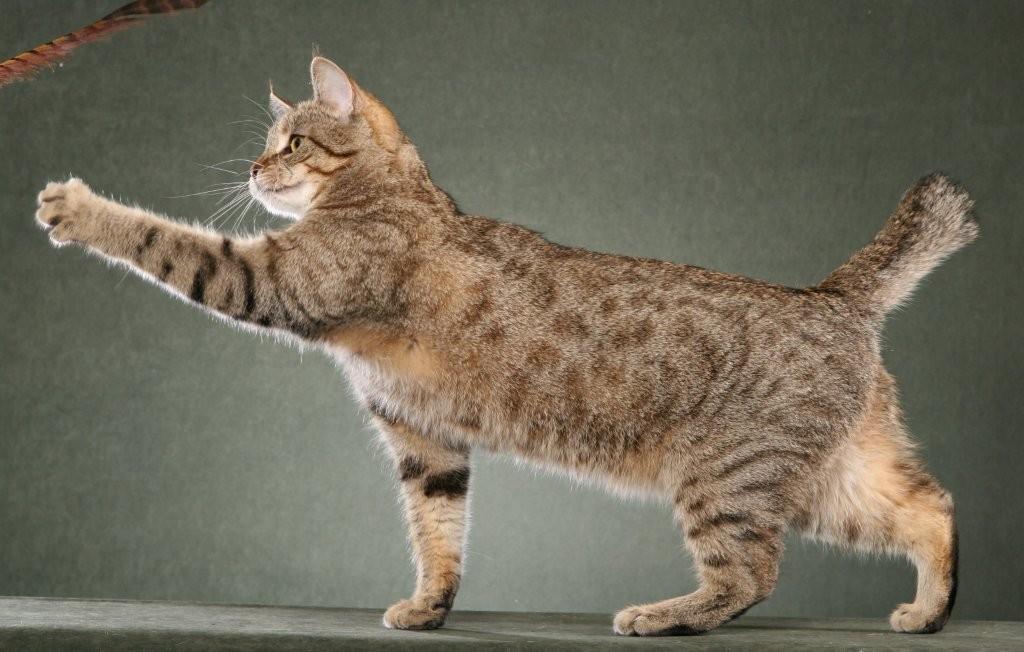
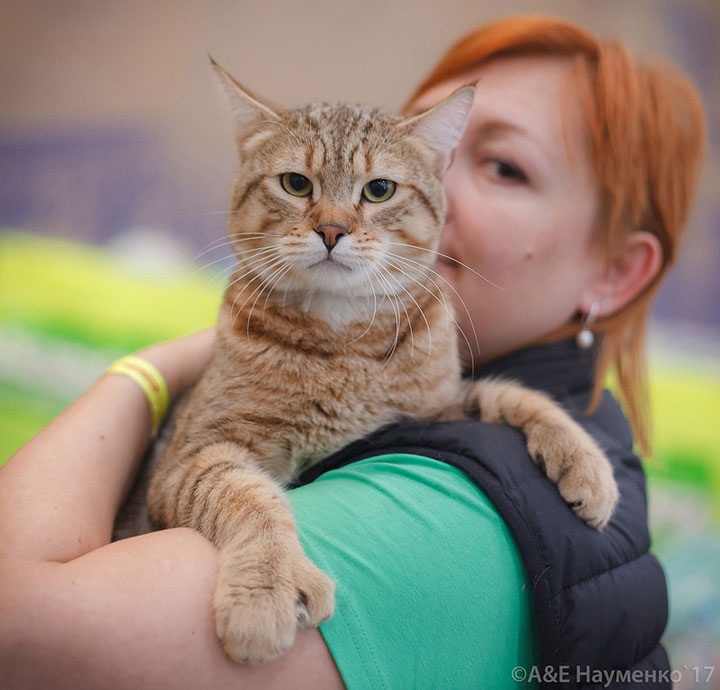
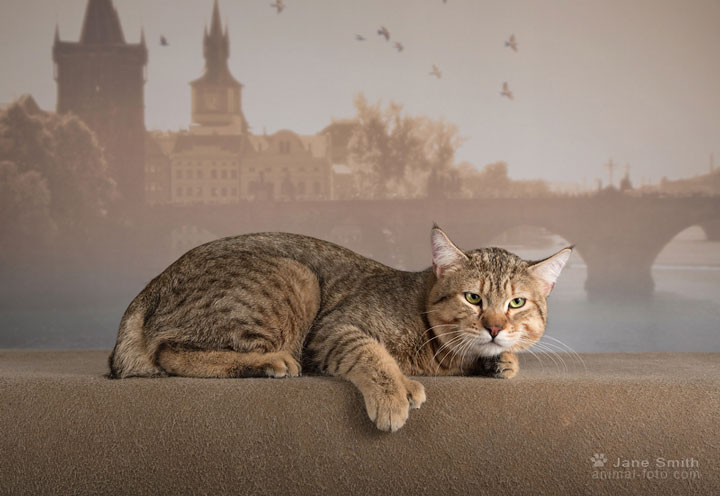
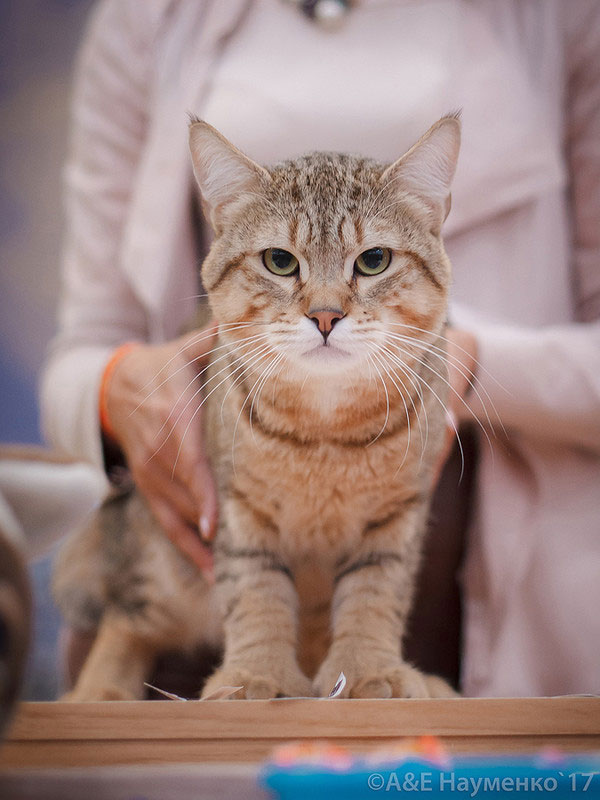
Cats of this breed are quite massive and large, with males being significantly larger than females. Their bodies are elongated, with well-developed muscles and heavy bones. They are characterized by a deep, powerful chest and a slight arch in the back just below the shoulders.
Their legs are massive, with their forelimbs slightly shorter than their hind legs. Their paws are large and round. They have a short, low-set, straight tail, sometimes with a kink. Its length can range from 2.5 to 15 cm. Their heads are large and elongated, with a rounded forehead and prominent brow ridges. Their noses are wide and large, and in some breed members, they can even be upturned.
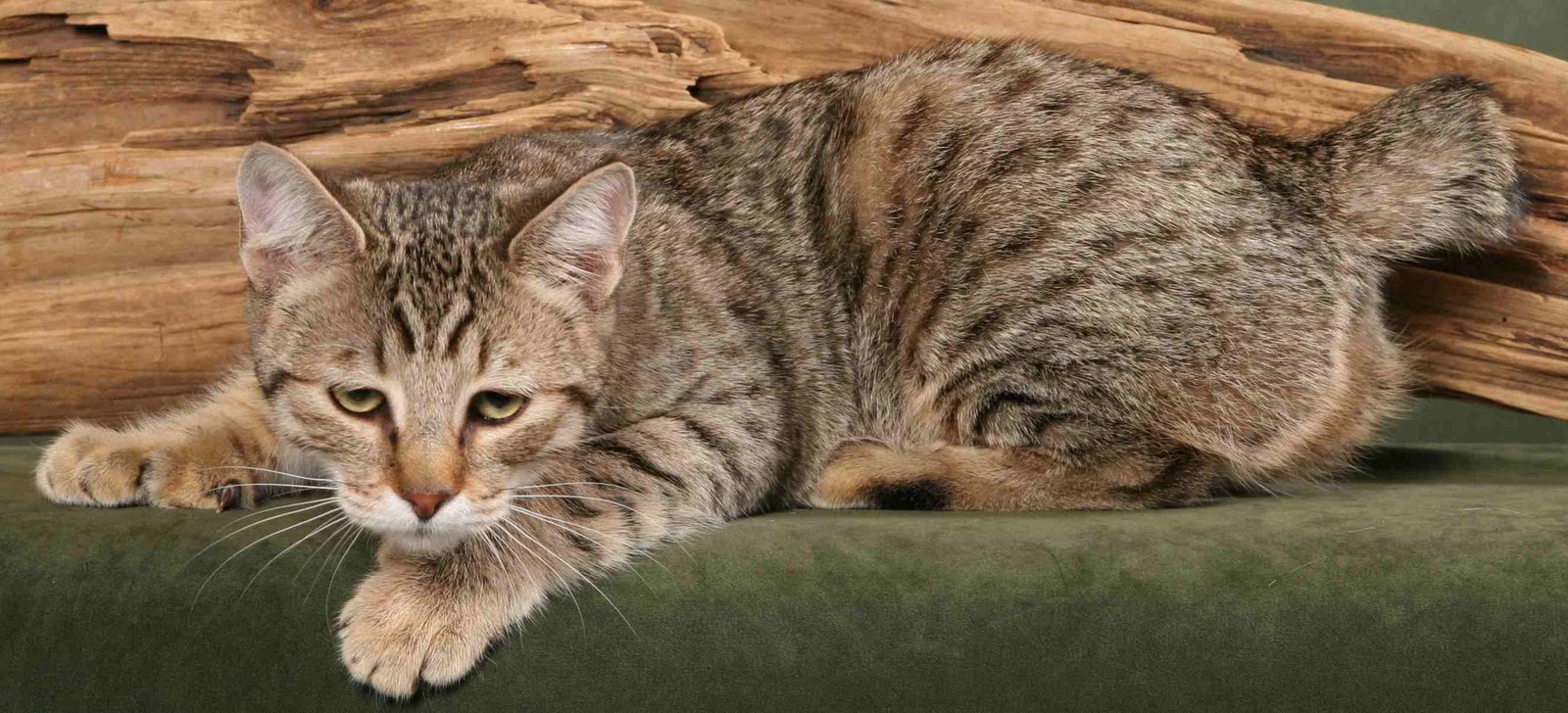
The ears are wide at the base, with rounded tips, and set slightly back. Dark tufts can usually be seen on the ears, which is what makes the cats so distinctive. lynx-likePixie-bobs have short, thick necks. Their eyes are almond-shaped and medium-sized. Their color can be green, golden-yellow, or yellow-green. Their fur has a special property: it's luminescent.
Shorthaired cats have a loose, loose coat. The fine undercoat is soft to the touch. Semi-longhaired cats have a thin undercoat with medium-density fur. There is no long feathering around the neck, and the fur on the cheeks is long, forming a kind of sideburn. Pixiebobs can have agouti ticking, tabby patterns, or stripes.
Rules of care and nutrition
Pixie-bob cats are easy to care for.
Care
Grooming Pixies isn't difficult, but it does require some time and attention from the owner. Even the short coat of many members of the breed requires weekly brushing, as it is also known for its thickness and density. It is recommended to use a rubber glove with spikes, a popular furminator for removing excess hair, or a regular soft-bristled brush.
All you need to do is spend a few minutes brushing their fur, wiping their eyes with a damp cotton pad, and most importantly, doing everything possible to make them feel your love.
Pixiebobs don't need to be bathed frequently. One bath per month is sufficient. For thorough cleaning of their fur, it's recommended to use special cat shampoos.
A Pixiebob feels much more comfortable in a private home than in a city apartment—it needs space. The kittens are cared for entirely by their mother. They shed twice a year—in the fall and spring.
Nutrition
Short-tailed elves are also unpretentious in food - they are equally well suited to dry food and raw meatPixiebobs can add variety to their diet by feeding them a mouse or bird. Their diet is based on raw, lean meat mixed with porridge. Once a week, seafood, fish, eggs, and cottage cheese can be introduced. Be sure to supplement their food with vitamin supplements, bread, and fresh herbs.
Health
To date, no predisposition to serious genetic diseases has been identified in representatives of the Pixiebob breed.
To keep your pet healthy, you need to provide him with:
- proper care;
- balanced diet;
- timely vaccination.
However, if you become the owner of this rare breed, it is recommended to periodically show the animal to specialists for a preventive examination.
Love your gentle and soft friend, and he will delight you for a long time with his devotion and love.
Pixiebob owner reviews
We've scoured the internet and compiled reviews from real owners of this breed for you. Perhaps they'll help you decide whether to buy a Pixie-Bob kitten or consider other breeds.
Ivan, 34: “My sister gave me this cat when she got a part-time job. Neither she nor the poor, abandoned animal could handle the new schedule. I had to resign myself to it; I couldn’t just throw him out on the street… I’m a freelancer, and that’s what my dear Olga was appealing to when she handed me this wild-looking cat. But as it turned out later, his appearance was deceiving—Arkhip immediately showed genuine friendliness, becoming a kind of house elf for me (the kind I’d dreamed of after reading so many fantasy novels). Plus, he requires almost no maintenance. I devote almost all my free time to my beloved pet; we watch movies together, play, talk… My only regret is that he could cook too… The best cat for a bachelor is a Pixie-Bob—I recommend him!”
Natasha, 22 years old: “My beloved cat, Ada, is a Pixie-Bob. Soon after she quietly arrived in our house, she created a real hell. That’s why I named her this name, which is derived from the word “hell.” Of course, I’m exaggerating a little and I’m not at all angry with her. It was even fun, and we still have a lot of fun: she continues to delight us with her antics. She’s growing up (she’s already in her fourth year), but she hasn’t lost her childish spontaneity and playfulness. And that’s just great! Sometimes, of course, I want to give her a good thrashing, because she runs around the rooms like crazy, knocking everything down in her path, and even howls from time to time, “enjoying” her own madness. But how I love this “crazy girl” in her; no other cat after Ada will satisfy me now. "She's fun and wonderful to be with, and when I'm sad, she lies down next to me, looks into my eyes, and understands everything... Kisa listens to me like no one else could. Get a Pixie-Bob—you'll never regret it; they're the best friends in the world, loyal as dogs!"
As you can see, the Pixiebob receives very emotional and enthusiastic reviews. After reading them, you're tempted to get a friendly furry friend. Don't agree? Try rereading them.
The cost of a pixie bob
A Pixie-Bob kitten, whose price ranges from 20,000 to 100,000 rubles, is worth it, according to owners. The price is determined by several factors, including gender, a good pedigree, and compliance with breed standards. A Pixie-Bob raised in an elite cattery will cost significantly more.
Nurseries: where are they located?
If you're wondering where to buy a small lynx, don't worry – there are plenty of Pixiebob catteries in Russia. For example, in Moscow, this breed can be purchased from a cattery called "Wild Cat of Moscow."
In Ukraine, there are no catteries that specifically breed Pixiebobs. However, in Kyiv, professional breeders breed wild cats, including Maine Coons, which resemble Pixiebobs in appearance.
However, this breed isn't so rare that it's impossible to find. And if you're looking, you can always buy a Pixiebob from breeders who specialize in breeding purebred cats.
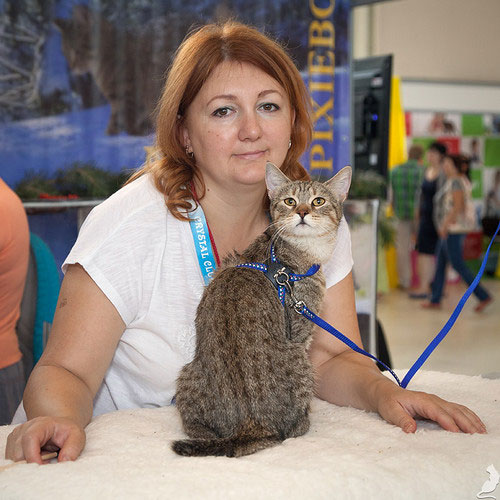
Also in some of the photos are cats from the Russpixi cattery and the breeder of this breed - Alexandra Gatz (+79261690484).
Pixie-bob kittens
Pixiebob cats don't complain about poor health, but three kittens in a litter is their limit. Frequent matings are not recommended. To ensure your pet's health remains healthy, mating once a year is sufficient. Before and after giving birth, the female has time to recuperate and accumulate vital energy.
At first, the owner needn't worry about the newborn kittens—the mother cat will handle feeding and caring for them on her own. Of course, the owner can always participate in the life of the feline family, for example, by changing the litter in the box and feeding the mother a tasty treat.
Once the kittens are accustomed to lapping from a saucer on their own, you can begin feeding them soft food. You can choose either commercial kitten food or prefer to feed natural, mashed or ground foods, such as ground meat or broth-based porridge. If you choose the latter option, be sure to add kitten vitamins to the food.
Rest assured: a grown Pixie-Bob kitten will thank you for caring for it. These magnificent animals can be the most loyal and affectionate in the world.
Moreover, a mature Pixie-Bob cat can become a good rodent hunter – his ancestors were wild predators.
Video review of the Pixiebob cat breed
Read also:


-550x418.jpg)
Add a comment