
Pungsan - dog breed
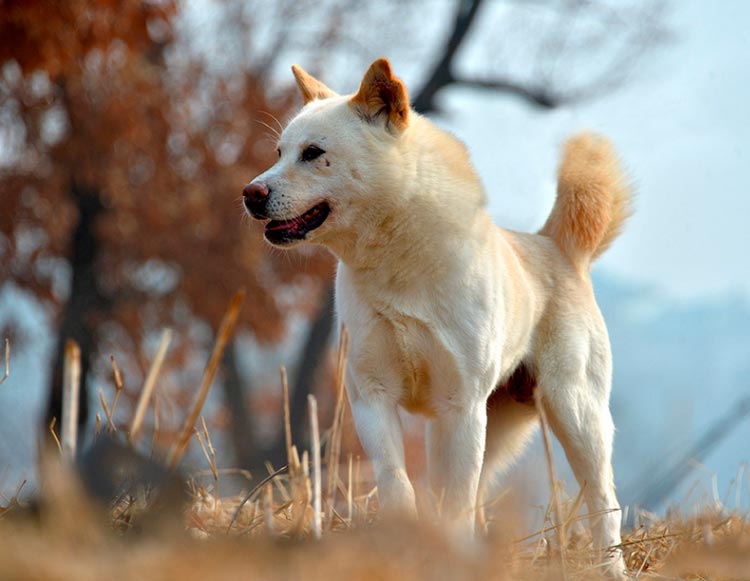
The Pungsan is a rare breed of hunting dog from North Korea. Prized by Koreans for their strength, endurance, and courage, they are used primarily for hunting large game. They are not widely distributed outside the country.
Content
History of origin
Little is known about the origins of the Pungsan dog breed. Cynologists believe the breed has been around for at least five centuries, originating during the Joseon Dynasty, which ruled from 1392 to 1897. It was likely developed by crossing local dogs with North Korean wolves.
The Pungsan breed was recognized as a national symbol of the DPRK in 1956 and is a natural treasure.The breed developed in the Yanggang Province of North Korea. Its name derives from the Pyungsan Mountains and the village of the same name, now called Gimhungwon. For centuries, these white dogs were bred by hunters. They helped people survive lean years and have always been renowned for their extraordinary endurance, courage, and strength. According to legend, they were used to hunt not only wild boar and wolves, but also Amur tigers. Due to their significant isolation, the breed has remained virtually unchanged.
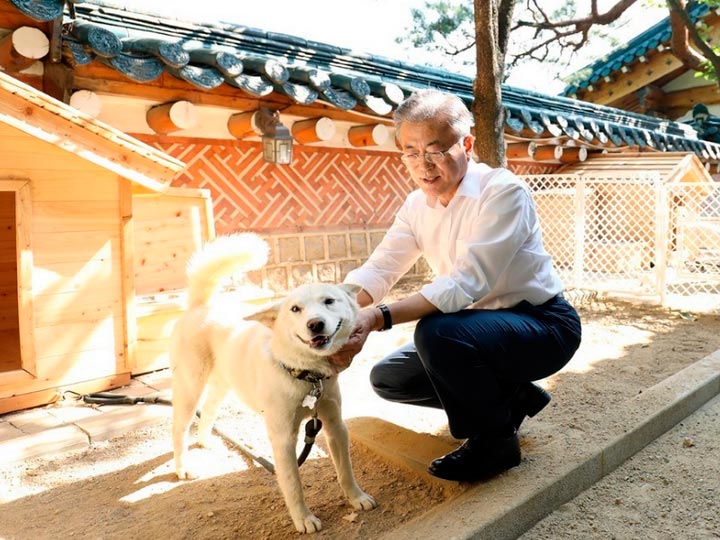
North Korean leaders have twice given Pungsan puppies to South Korean leaders.
Appearance
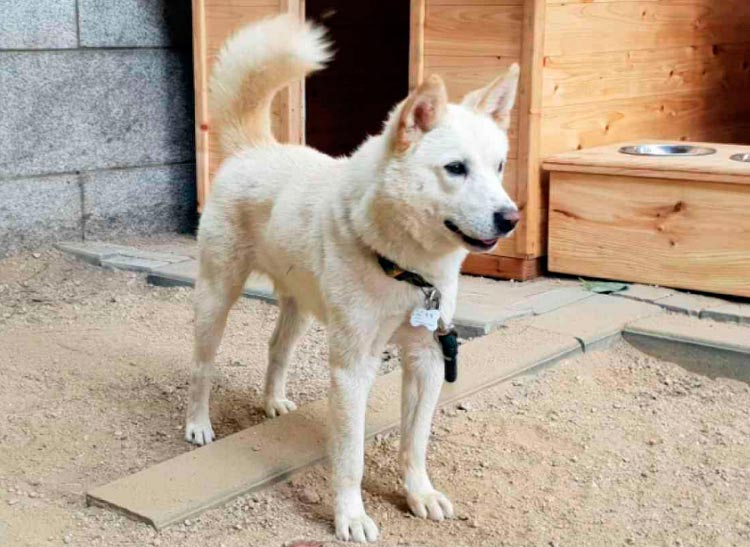
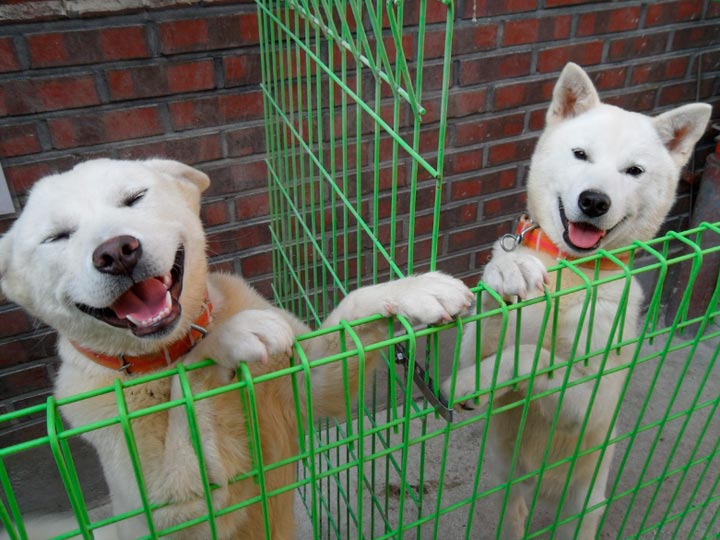
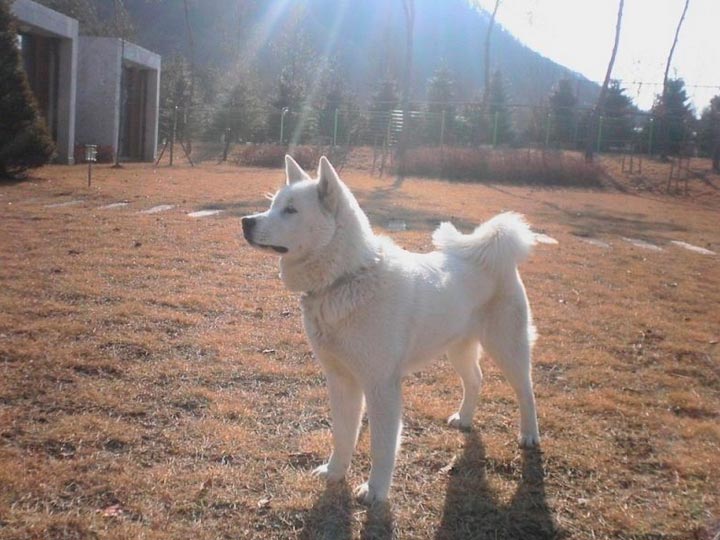
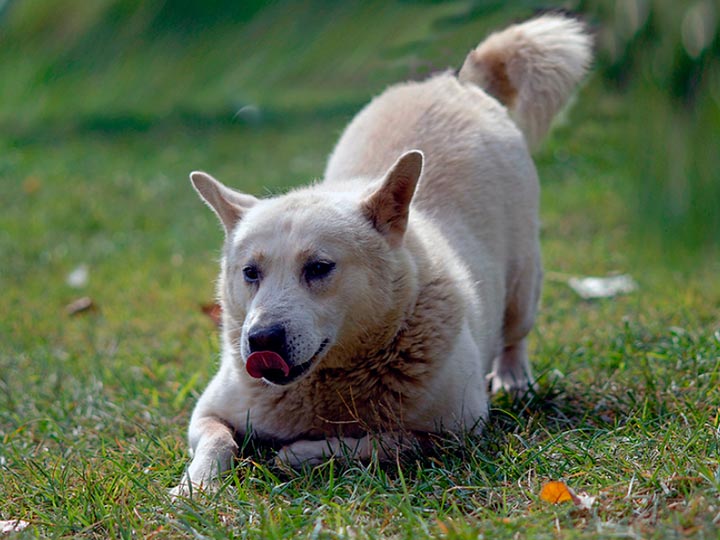
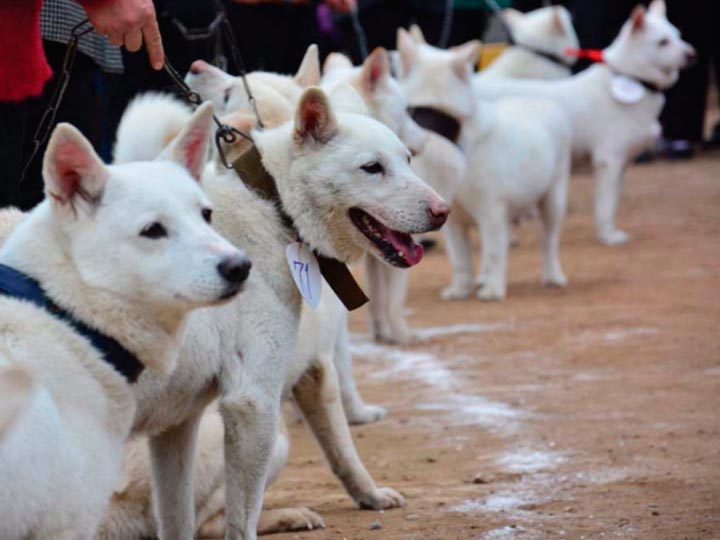
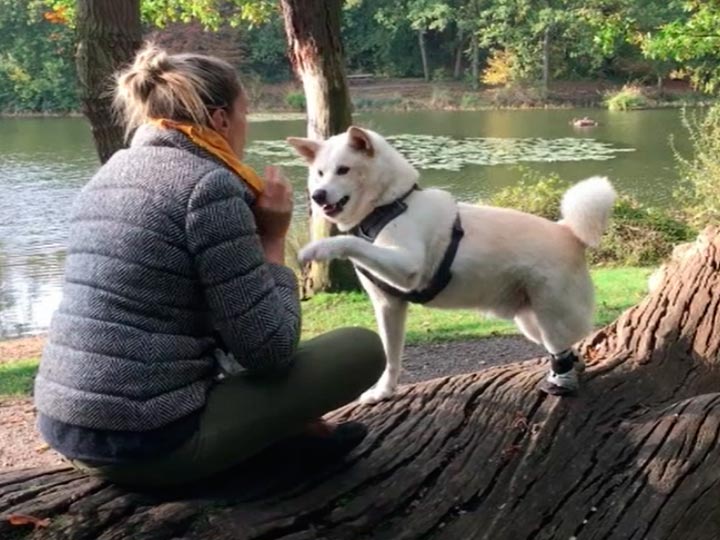
The Pungsan is a medium-sized, strongly built dog with a thick white coat. Sexual dimorphism is well-defined. Its appearance resembles another North Korean dog breed, the Jindo (Jindo).
- Height at withers: 45-55 cm.
- Weight: 14-25 kg.
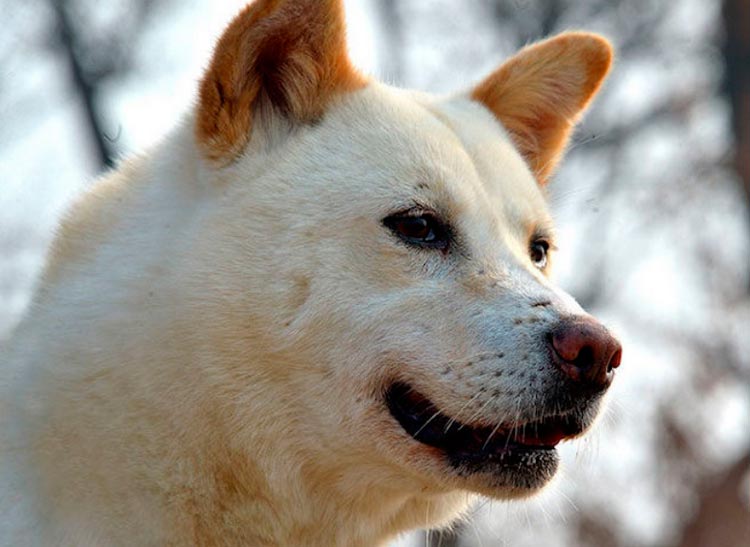
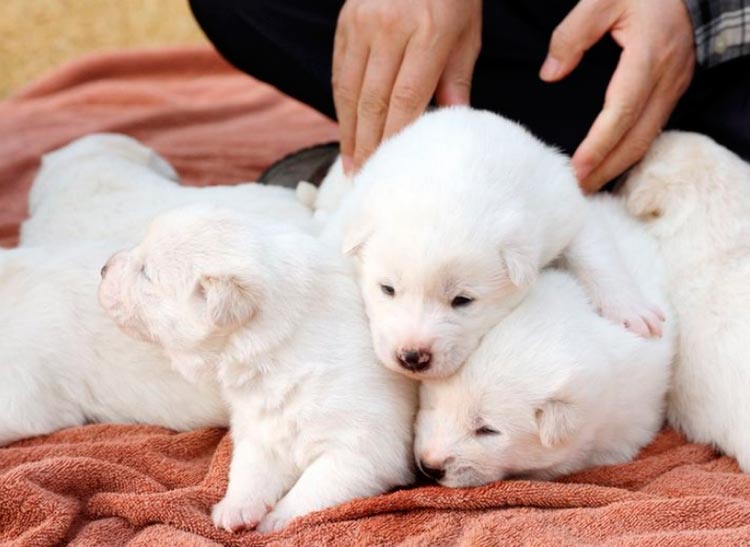
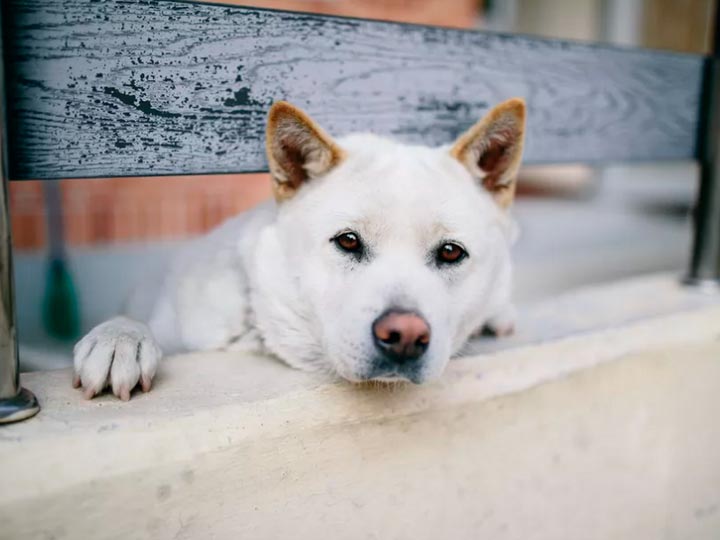
The head is proportionate to the body, with the muzzle tapering slightly toward the tip. The ears are pointed (folded forward in puppyhood, becoming more even as the dog matures). The eyes are almond-shaped, often brown. The teeth are complete, with a regular, scissor bite. Black lips form the "smile" characteristic of many Asian breeds, which can be seen in the photo. Males have noticeably larger heads. The body is strong. The tail is curled over the back and is bushy. The legs are very strong, with well-developed muscles.
International kennel clubs consider Pungsan to be more than just a local variation of the Spitz-type Siberian Husky.
The coat is very thick, usually white, though wheaten-colored dogs are less common. The undercoat is well developed, allowing Pungsan dogs to easily withstand the climate of the mountainous regions of the northern part of the country.
Character and behavior
Pungsans are strong, agile, and courageous. To this day, they are used to hunt wild boar and other large animals. Korean hunters describe them as very reliable, obedient, and intelligent companions in the mountains. Upon spotting a boar or other prey, a Pungsan will do everything in its power to hold it in place, even nipping at its legs until its owner returns. These dogs are extremely loyal and will protect their owners to the last. Old Korean folktales often feature white dogs similar to modern ones. They are described as intelligent and agile hunters, capable of defeating the Amur tiger.
In remote villages of North Korea, pungsans are not just dogs, they are people's breadwinners.
Loyalty to people and children depends largely on socialization. Hunters say their dogs require very careful training and competent education from the first weeks and throughout their lives. Otherwise, the dog may become overly dependent, aggressive, and unpredictable.
Content Features
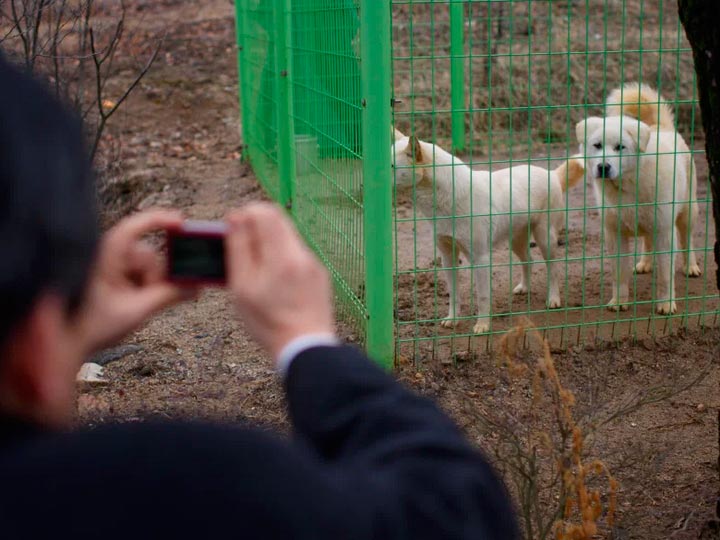
In North Korea, Pungsan dogs are typically kept in rural areas because they are quite independent and aggressive, and are not suited to city life, especially apartment living. Like many other hunting dogs, they can become severely stressed if they lack space and exercise.
By nature, they are omnivorous and have a keen appetite. However, it is advisable to feed them a balanced diet, especially when young. In North Korea, it is recommended to feed raw meat (chicken, pork, beef, etc.) to preserve their unique hunting qualities, in addition to rice. People with limited incomes usually feed their animals a mixture of table scraps.
Health and life expectancy
Phunsans are marketed as healthy, strong, and resilient dogs. Little research has been conducted on hereditary diseases. It is known that some lines are prone to lung cancer. peritonitis, cataract. Life expectancy is 12-14 years.
Buying a Pungsan puppy, price
Outside of North Korea, Pungsans are not widely distributed. A few breeders can be found in South Korea and the United States. In North Korea, quite a few hunters breed the national breed, but almost none of them sell puppies abroad, unlike breeders in South Korea. The average price for a puppy in South Korea is 70,000 rubles.
Photos and videos
You can see more photos of Phungsan dogs in the gallery.

Video about the Pungsan dog breed
Read also:


Add a comment