
Petersburg Sphinx (Peterbald)
The Petersburg Sphynx (Peterbald) cat breed is relatively young, originating in 1994 in St. Petersburg. It was then that an experiment was conducted involving an Oriental cat and a Don Sphynx.
Content
History of the breed's origin
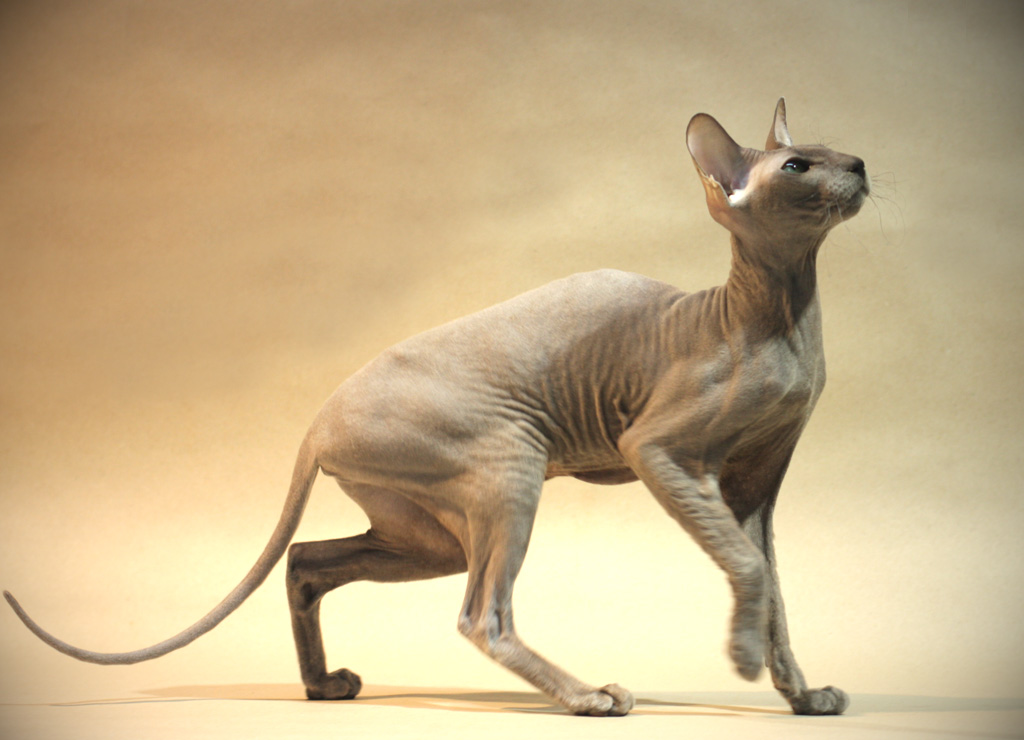
The mating resulted in four charming kittens being born in the first litter, which marked the beginning of the Peterbald cat breed's history. By 1996, the breed was recognized by one of the leading felinological organizations. Today, the breed continues to develop in the Oriental and Siamese direction—a slender body, beautiful large ears, tall legs, and an elongated muzzle.
General characteristics of the breed
Representatives of the Peterbald breed have the same list of character traits as other sphinxes.
Character
They are obedient, easy to train, friendly, and attached to their owners. They don't tolerate loneliness well and always crave companionship. However, cats are wilful individuals. If a representative of this breed is in a bad mood or has been unnecessarily offended, it's best not to approach them. This is very rare, but give your pet all your love, and you'll have a sweet kitten by your side—a calm, kind, sociable, intelligent, and loyal friend.
Appearance
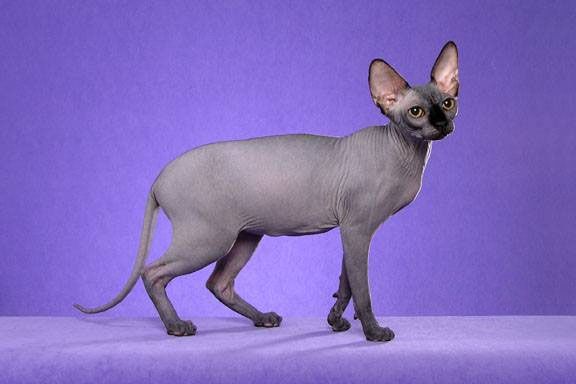
The St. Petersburg Sphynx is characterized by a long, strong body, long legs, and tail. It has an elongated head, a flat forehead, and cheekbones. Its muzzle is narrow and elongated, and its chin is level with its nose. Sphynxes have almond-shaped eyes and a straight profile. They have oval paws, long toes, and claws. The St. Petersburg Sphynx's skin is soft and thin, with visible folds. Some individuals have residual hair at the base of the ears, which can also be seen on the tip of the tail, paws, and muzzle.
Representatives of this breed have curly whiskers from birth, which is the breed's main characteristic, immediately recognizable. Their skin is very sensitive to light and can tan, become discolored, and even sweat in high temperatures. Since these breeds are hairless, their coloring appears directly on their skin.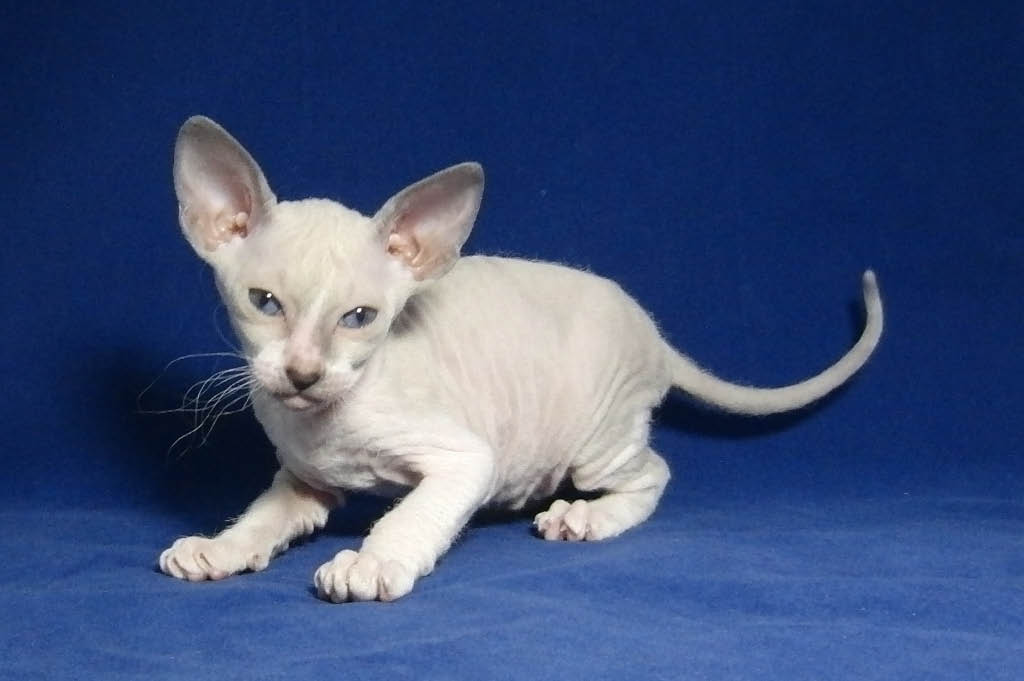
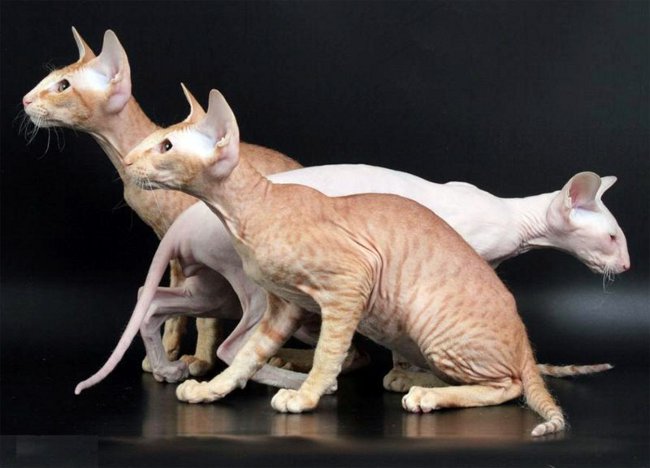
Black individuals are very beautiful, but this coloring is only found in Peterbalds with short fur (flocked or brushed). Colors that combine several colors are also possible. Most representatives of this breed are born with a small amount of fur, so only breeders of these cats can accurately determine their coloring. Peterbald Sphynx kittens are classified by skin type: hairless, velour, flocked, brush-point, brushed Peterbald, and straight-haired varieties.
Rules of care and nutrition
Before getting a charming Peterbald cat, you need to familiarize yourself with some of the differences that distinguish them from other breeds.
Care
Because St. Petersburg Sphynxes are hairless, they can easily burn their skin from any heater or radiator in your apartment, or, conversely, become cold during the cold season. They also tend to sweat, just like humans. Therefore, their bodies should be regularly wiped with a damp, soft cloth or sponge, or bathed in warm water with a special shampoo.
To prevent your pet from getting sick, make sure there are no drafts in the house and the room temperature doesn't drop below 20-25 degrees Celsius. Also, regularly clean their eyes with special solutions. And most importantly, give them lots of love—they need it. Caring for St. Petersburg Sphynxes isn't difficult, but it's important to remember their differences from other breeds. Their lack of fur means they have a different heat exchange mechanism, meaning they have a higher heat exchange rate, so they need to be fed more often than short- or long-haired cats.
Nutrition
Although the diet is no different—you can use the same premium food, or create a diet that balances all the nutrients found in natural foods. However, during colder months, be sure to increase the calorie content of the food to prevent hypothermia.
Health
Peterbalds are susceptible to a number of extremely rare genetic and congenital conditions. The most dangerous is considered to be a thymus disorder. Kittens with an underdeveloped thymus die within a few days of birth. Some color variations of the breed can suffer from genetically determined gingival hyperplasia, which can be accompanied by a weakened immune system. Another congenital condition is a shortened lower jaw. This defect does not cause discomfort to the pet when eating, but it can be accompanied by dwarfism, hypothyroidism, growth retardation, and underdevelopment of the vertebrae in the tail.
Some individuals of the breed have also been noted to have eye problems, a predisposition to vasculitis, dermatitis, and acne. Furthermore, the lack of hair in St. Petersburg Sphynx cats indicates a predisposition to respiratory diseases.
To prevent your pet from becoming hypothermic, it's recommended to provide them with warm beds and warm clothing. Love your pet, visit your veterinarian regularly for preventative checkups, and follow all care instructions.
Video review of the Peterbald cat breed
Read also:


-550x418.jpg)


Add a comment