
The first dogs in space
The first human spaceflight took place on April 12, 1961. It's still taught in schools today. Less well-known are other heroes—the dogs who fearlessly paved the way for space exploration. Sometimes they sacrificed their health, and sometimes their lives.
The largest number of space tests involving dogs were conducted in the 1950s and 1960s. The intensity of such experiments at that time was enormous, as the race was on for the first human spaceflight. The largest number of canine cosmonauts were launched in spacecraft from the USSR and China.
Content
The most suitable animals
Before humanity could cross the boundary separating the upper atmosphere and space, it was decided that animals would be the pioneers. Two candidate species were chosen: dogs and monkeys.
During the selection process, scientists discovered that monkeys were less easily trained and disciplined, often exhibiting a capricious nature and often acting restlessly and unpredictably. Dogs, on the other hand, were more willing to interact with the researchers and were less susceptible to stress.
The scientists emphasized that the dogs used for the study had to be ordinary mongrel dogs, picked up from the streets. This was because they had already undergone natural selection and were therefore endowed with excellent physical characteristics.
Purebred representatives were significantly inferior in the following characteristics:
- excellent immunity and recovery reserves of the body;
- resourcefulness and ability to learn;
- unpretentiousness in food and excellent digestion;
- devotion and desire to please people.
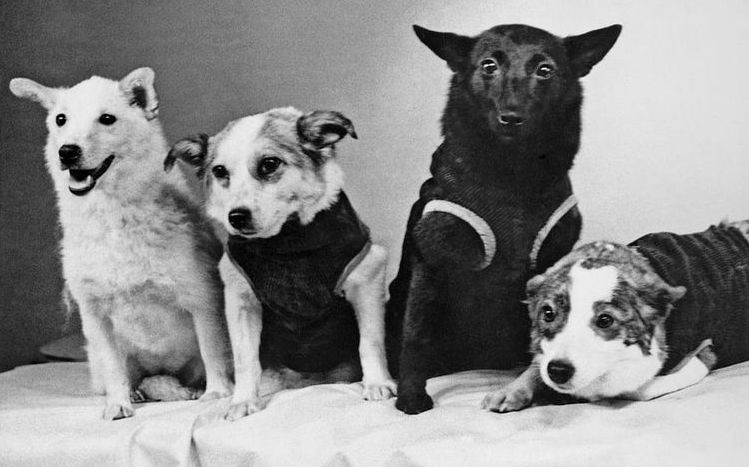
Special requirements were applied to the physical parameters:
- height no higher than 35 cm and weight up to 6 kg – this was required based on the size of the cabins in the rockets;
- short hair – necessary for tight attachment of sensors to the body;
- females - it was easier for them to develop a urine drainage system in space;
- age - from 2 to 6 years;
- White coat color - for the most advantageous appearance on TV.
The animals were launched into space in pairs to ensure that average results were obtained.
Geophysical rockets
Research into launching dogs into space on this type of aircraft was conducted in three stages:
- Altitude up to 100 km. The rocket's speed was 4,200 km/h, with tremendous acceleration and g-forces reaching 5.5 units. The animals were secured with special harnesses in trays. After reaching maximum altitude, the lead compartment with the dogs parachuted back to the ground. The experiments often resulted in minor injuries to the animals, and several times resulted in death.
- Altitudes up to 110 km. The animals ejected in spacesuits using parachutes, and sometimes only one of the two companions returned, and sometimes everything was successful. The duration of such flights did not exceed 20 minutes.
- Altitude up to 450 km. At this stage, the animals landed without ejection, in the rocket's nose compartment. Sometimes, other species (rabbits, rats, mice) joined the dogs. During one flight, the animals were under general anesthesia.
Test progress
Flight data was strictly classified. The animals were given nicknames, leading to confusion about the participants for a long time.
Dogs were paired based on their psychological compatibility and comfort level, so partners could not be swapped. One flight was in jeopardy when one of the dogs, scheduled to fly the next day, escaped during an evening walk. However, he returned the next morning and began licking people's hands with a guilty expression. The flight took place.
The scientists treated the animals with great affection: despite the fact that their diet was balanced and strictly coordinated, everyone tried to sneak their pets a tasty treat from home. Even Korolev, who oversaw all the tests, training sessions, and experiments and advocated for compliance with the prohibitions, couldn't resist the temptation to feed his pets. He took the injuries and loss of each dog very hard, not only as a setback to the advancement of cosmonautics but also as a personal responsibility to his loyal animals. Many of the pets were taken home by the test center staff after completing their missions.
Pioneer
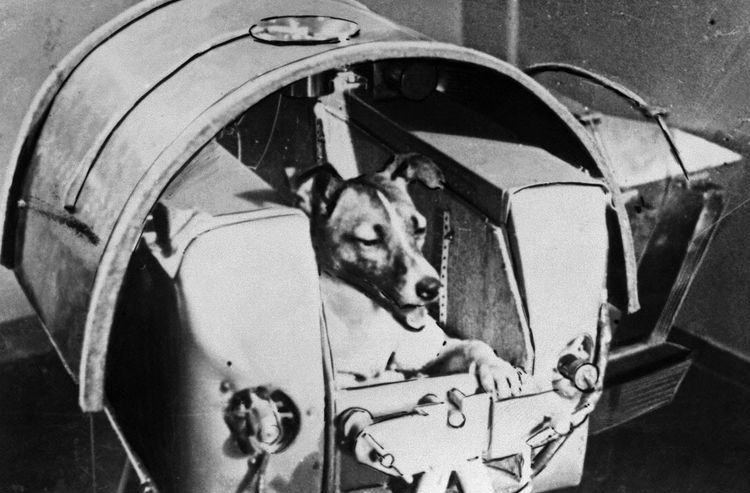
The first dog to go into orbit was a two-year-old LikeThe test center staff gave her this nickname because she barked loudly and frequently. Her real name was Kudryavka. Before her spaceflight, she was surgically implanted with breathing and heart rate monitors. She was gradually acclimated to the cabin so she would feel at home there. To achieve this, she spent a short time each day in the compartment where she would be staying after takeoff.
Before the launch, Laika was dressed in a special suit, which was attached to the equipment with wires. The wires were long enough for her to change her body position: she could stand, sit, and lie down freely.
On November 3, 1957, Laika was launched into space. Her flight was originally planned to last a week, but she died after completing four orbits of the Earth in 6-7 hours. The cause of death was overheating due to a design error. The spacecraft then continued orbiting the planet until April 1958, when it burned up in the upper atmosphere.
Laika's death was hushed up, news about her condition continued for another week, and then the media reported that the dog had been euthanized. This news caused widespread controversy and was received with grief by Western media.
Belka and Strelka
The next step in space exploration was the successful return of living creatures to Earth. The challenge lay in the animals' prolonged stay in a small space. Although the flight was intended to last about a day, the dogs were trained for an eight-day stay in orbit.
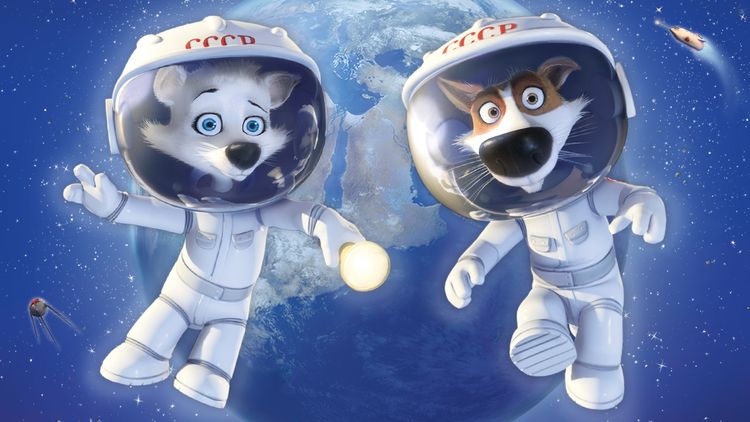
There were many contenders for this sensational stage of space exploration, but Belka and Strelka emerged as clear favorites. Belka was very active and led the way in all tasks. Strelka, on the other hand, was extremely reserved, but very affectionate and friendly.
The launch took place on August 19, 1960. Initially, after entering orbit, the animals' heart rate and respiration rates were elevated, but all indicators returned to normal within a short time. For the first time, television tracking was provided, allowing scientists on Earth to receive video from the spacecraft.
Belka and Strelka quickly recovered in space, but at a certain point, Belka's condition worsened. She began vomiting and became restless. After landing, tests showed the animals were stressed, but their condition quickly stabilized.
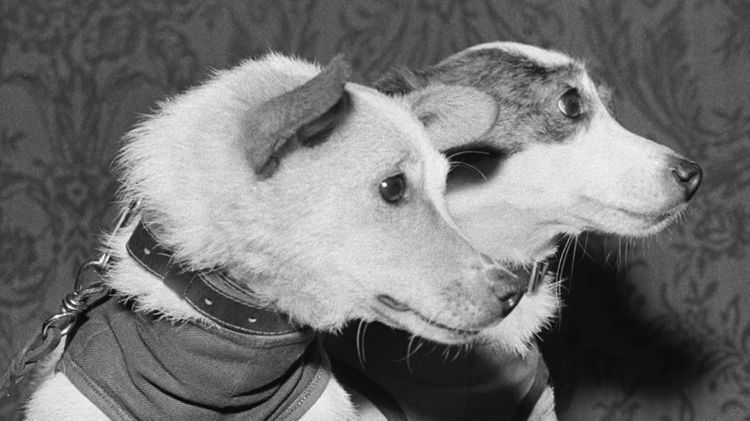
The dogs immediately became stars, their photos and videos spread around the world. The first animals to successfully return from space continued to live at the research center. A few months after her space journey, Strelka gave birth to six healthy puppies.
Both dogs lived to a ripe old age in the care of the state.
Their flight marked the final step in human spaceflight. But dog flights didn't end there. They continue today, but with new companions on board—human cosmonauts. Their presence makes it possible to study and monitor the biochemistry, genetics, and cytology of living organisms in space.
Successful missions and return to Earth
After Laika, return flights were conducted. Belka and Strelka are particularly famous—the first dogs to not only fly into orbit but also successfully return to Earth alive and well. Their flight on the Vostok 5V spacecraft in 1960 was a turning point: it confirmed that spaceflight was possible without critical damage to a living organism.
Table of main flights:
| Date | Dog names | Flight type | Result |
|---|---|---|---|
| 1957 | Like | orbital | death |
| 1960 | Belka and Strelka | orbital | successful |
| 1961–1966 | Many pairs of dogs | suborbital | successful |
Animal life after flights
Most of the dogs who successfully returned lived long lives. Strelka even became a "hero mother": one of her puppies was given to US First Lady Jacqueline Kennedy. These stories reinforced public attitudes toward animal cosmonauts as true heroes.
How were dogs' safety ensured?
Special sealed cabins, ventilation systems, and automatic feeding systems were developed for the animals. The dogs were fitted with biotelemetry sensors to monitor their heart rate and temperature. Food was provided in the form of gelatinous mixtures to prevent it from disintegrating in zero-gravity conditions.
The equipment and spacesuits were also constantly being improved: from simple suits to full-fledged protective capsules with oxygen supply systems.
The contribution of experiments to science and medicine
Research has shown that weightlessness affects the cardiovascular system, respiration, and vestibular function. Many of these findings have been applied in medicine—for example, in developing rehabilitation methods for patients after surgery and studying the effects of prolonged immobilization on the body.
These experiments also led to the development of modern rescue systems that ensure a soft landing and rapid extraction of the crew from the capsule.
Today, there are monuments to Laika, Belka, and Strelka in Russia and abroad. Their heroic deeds are commemorated in museums, and their names have become symbols of the first steps in space exploration.
Read also:


Add a comment