
Peritonitis in dogs: symptoms and treatment
Peritonitis is an inflammation of the peritoneum, the lining layer that surrounds the internal organs of the abdominal cavity. As in all warm-blooded animals, peritonitis in dogs is considered a serious and often life-threatening condition.
Content
Causes of peritonitis
Inflammation of the peritoneum can be caused by the aggressive action of natural biological elements (blood, bile, urea, gastric juice). This phenomenon can be observed in pancreatitis, when the pancreas secretes enzymes that destroy surrounding tissue.
Peritonitis can be caused by perforation of organs located in the abdominal cavity:
- the stomach, intestines, gall bladder, and urinary bladder can be injured as a result of a traffic accident, blow, or fall from a height;
- the intestines may be perforated by fecal impactions;
- In bitches, inflammation of the peritoneum can be caused by spontaneous rupture of purulent ovarian cysts or rupture of the uterus due to pyometra (purulent disease of the uterus).
Bacterial, fungal, or viral peritonitis in dogs can develop as a result of the spread of an infection from another part of the body.
This disease can also be caused by surgical complications: postoperative abscesses, infection of the surgical wound (for example, during sterilization of a dog) or penetration of infection into the abdominal cavity during peritoneal dialysis.
Forms and stages of peritonitis
The stages of peritonitis development can be divided into the following:
- Initial. The inflammation is localized, limited to a specific area of the abdominal cavity. Clinical manifestations of the disease are minimal.
- Moderate, progressive. Inflammation spreads to adjacent organs and tissues. Clinical signs of peritonitis in dogs become pronounced, with multiple organ failure and abundant exudate formation.
- Severe, generalized. At this stage, the inflammation completely engulfs the abdominal cavity, impairs organ function, and leads to sepsis (blood poisoning). This condition is very serious and can pose a high risk to the dog's life.
There are two main forms of peritonitis: primary and secondary. Primary peritonitis is caused by the spread of bacteria from an internal source of infection or by the entry of irritants from organs (bile, blood, pus) into the abdominal cavity. Secondary peritonitis is caused by infection entering the abdominal cavity through a perforation or spreading through the blood or lymph.
Clinical signs of peritonitis in dogs
Symptoms of peritonitis in dogs can vary depending on the cause and type of infection. These may include:
- Abdominal pain and tenderness. The animal may exhibit pain when touching the abdomen or when attempting to lie on its side.
- Increased abdominal volume: it may be bloated and tense, indicating the presence of fluid or air in the abdominal cavity.
- Weakness. The dog may appear lethargic and tire quickly even with little exercise.
- Loss of appetite. Your pet may refuse food or eat much less than usual.
- Digestive problems. Frequent vomiting or diarrhea, both often containing blood, are observed.
- Elevated body temperature, indicating the presence of an inflammatory process in the body.
- Difficulty breathing and rapid pulse.
- Difficulty urinating or changes in the color or odor of urine.
Diagnostics
Diagnosis of peritonitis in dogs is based on anamnesis, clinical symptoms and laboratory and instrumental research data.
Physical examination
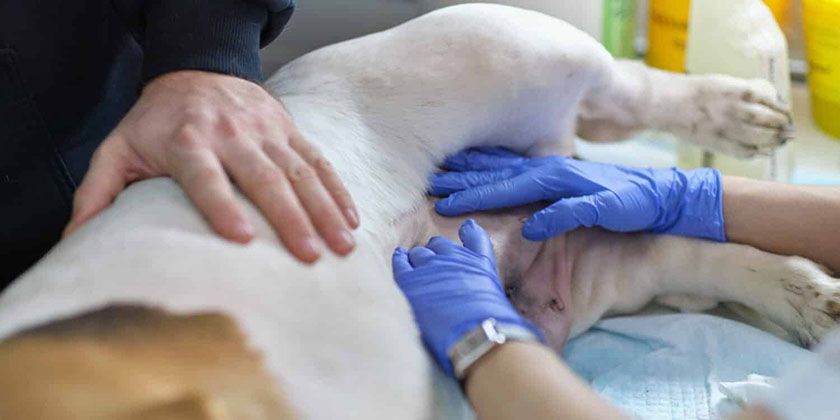
Your veterinarian will perform a physical examination of your dog, including a digital abdominal examination to determine if there is pain, signs of fluid buildup, or other abnormalities, and will assess your dog's overall condition.
Laboratory diagnostic methods
A complete blood count and urinalysis can reveal signs of inflammation and infection in your pet, such as elevated white blood cell counts or high C-reactive protein (CRP) levels. A blood chemistry panel can be used to assess organ function and identify abnormalities typical of peritonitis. A coagulation profile can be performed to assess your dog's blood clotting ability.
Instrumental diagnostic methods
Prescribed by a doctor and may vary:
- Ultrasound examination. Used to detect changes in abdominal organs and identify the presence of free fluid in the abdominal cavity.
- Computed tomography, which allows diagnosing the presence of tumors and cystic formations in the abdominal cavity, including parasitic ones.
- Laparoscopy is an invasive procedure in which a veterinarian inserts a miniature endoscopic camera connected to a monitor into the dog's abdomen through a small incision to visually assess the condition of organs or collect a tissue sample for biopsy.
- A puncture (puncture) of the abdominal cavity to obtain a sample of retroperitoneal fluid; during a bacteriological analysis of the exudate, it is possible to study the composition of ascitic accumulations, detect the pathological microorganism that caused their formation, determine its type and sensitivity to antimicrobial drugs.
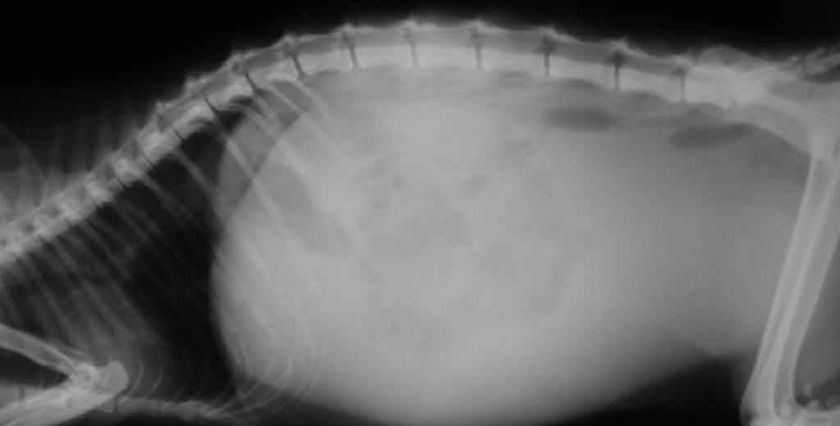
- Radiography. This examination allows one to assess the condition of abdominal organs and detect signs of infiltration.
Treatment
Treatment for peritonitis in dogs may include the following methods:
- Antimicrobial therapy. For infectious peritonitis, a dog may be prescribed a course of antibiotics, either orally or by injection, to combat the causative agent. Depending on the sensitivity of the pathogen detected during testing, these may include Amoxicillin, Clavaceptin, Enroxil, Enroclosacin, Cyclofloxacin, Cobatan, or the combination medications Trimethotopime/Sulfanilamide and Gentam (Amoxicillin/Gentamicin).
- Deworming. Anthelmintic therapy may be necessary if peritoneal inflammation is caused by parasitic worms.
- Use of analgesics and anti-inflammatory drugs. In veterinary medicine, carprofen, firocoxib, meloxicam, and NSAIDs ibuprofen and naproxen are commonly used to relieve pain and inflammation.
- Infusion therapy is the intravenous administration of a saline electrolyte solution into the bloodstream to restore water-salt balance and maintain the cardiovascular system.
- General strengthening methods. To boost immunity, your veterinarian will definitely prescribe vitamins A, B, C, E, and D, as well as immunomodulators such as Placestim, Immunal, Ribotan, and Cycloferon.
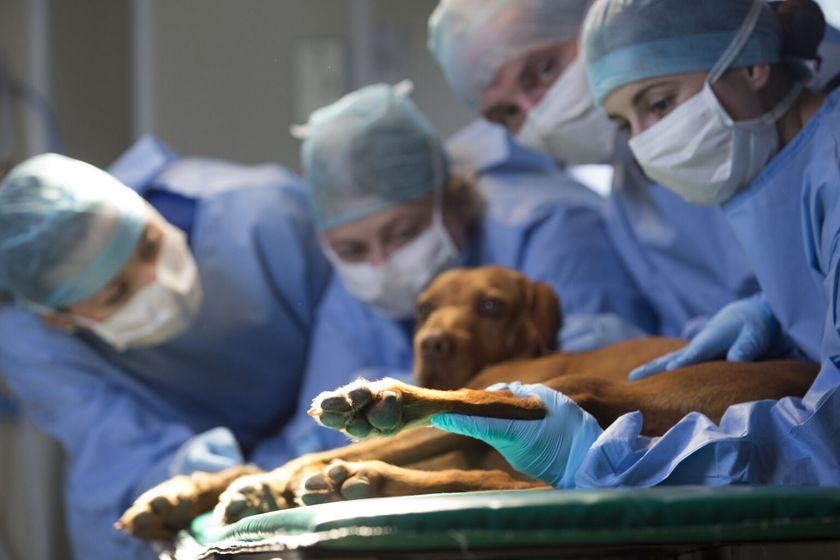
- Surgical intervention. Abdominal surgery is performed under general anesthesia in a hospital setting. It is necessary to remove and drain purulent lesions, cleanse and sanitize the abdominal cavity, and eliminate the cause of peritonitis (for example, resection of an organ completely affected by a tumor or perforation).
Treating peritonitis in dogs can be complex and requires an individualized approach depending on each individual case. It's important to consult a veterinarian as soon as possible to diagnose and successfully treat this condition.
Read more:
- My dog isn't eating and is lethargic: why and what to do
- The dog eats poorly, but is active: causes and treatment
- Bloating in Dogs: Causes and Treatment


Add a comment