
Dandruff in cats
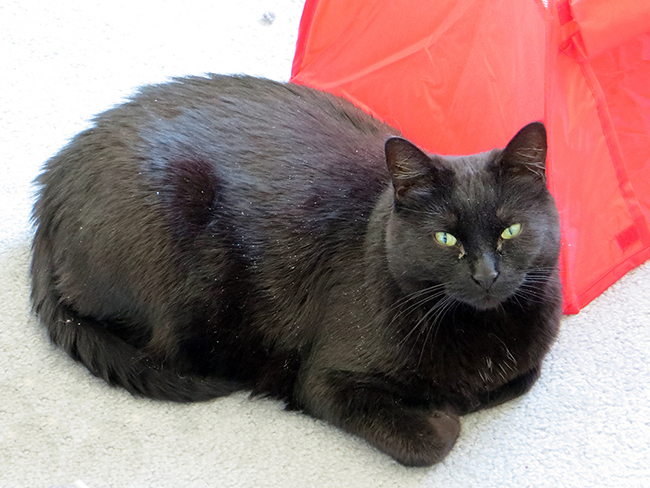
Dandruff can appear anywhere on a cat's body, but it most often affects the skin around the tail and back. To understand what to do if your cat has dandruff on its back and tail, let's take a closer look at this condition.
Dandruff is a very common occurrence in cats, as cats, like other animals, constantly shed their skin. Therefore, a small amount of dandruff is a natural process and shouldn't be a cause for concern. However, in some cases, excessive dandruff in cats can be pathological and require appropriate treatment. To understand whether cats experience dandruff and when it requires treatment, it's important to carefully consider the types and causes of this condition.
Dandruff in cats (seborrheic dermatitis) dermatitis) are conventionally divided into three types:
- oily dandruff (oily seborrhea);
- dry dandruff (dry seborrhea);
- mixed form of seborrhea.
Under the influence of various factors, a cat's sebaceous glands begin to secrete excessive amounts of sebum, in cases of oily seborrhea. Alternatively, the sebum secretion is extremely low, and skin particles flake off as dry dandruff.
Content
Causes of dandruff in cats
Why do cats develop dandruff? There are many reasons why cats may develop dandruff on their backs or anywhere else on their bodies. Let's take a look.
Dry indoor air and temperature changes. A lack of humidity in a cat's room can lead to dry skin, which can lead to flaking and dandruff. Furthermore, if a cat spends too much time in a dry room, the skin on its paw pads can crack. Therefore, during the heating season, additional humidification should be provided, and sudden temperature changes should be avoided.
Fungal infection. Any fungal skin infection (ringworm) causes excessive shedding of skin flakes. Ringworm is usually accompanied by dandruff in cats.
Presence of parasites. The presence of parasites (fleas, ticks) can also lead to dandruff. If left untreated, the parasites can disrupt the animal's sebaceous glands, causing the skin to peel excessively. Signs of this condition may include redness and irritation.
Hormonal imbalance in the body. A malfunction of the thyroid gland, which is responsible for lipid metabolism and regulates sebum production, can cause dandruff. Other hormonal imbalances in the animal's body can also trigger disruption of the sebaceous glands and lead to dandruff.
Excess weight. An overweight cat is typically less agile and unable to properly groom itself. Some areas of its body are simply out of reach. Poor hygiene also contributes to dandruff.
Allergic reaction. Dermatitis in cats causes intensely itchy, inflamed patches to appear on the skin, and the skin in these areas begins to flake, leading to dandruff. In some cases, dandruff can be triggered by an allergy to shampoos or grooming products.
Improper nutrition. Dandruff is often caused by poor nutrition. Excessive carbohydrates in the diet, vitamin deficiencies (especially vitamins A and B) and mineral deficiencies, and the introduction of new foods can all trigger dandruff in cats.
Sunburn. Aggressive exposure to ultraviolet radiation can damage and dry out the top layer of the epidermis of a cat's skin, which leads to the appearance of dry dandruff.
Idiopathic seborrhea. Sometimes, dandruff in cats is idiopathic. In this case, a hereditary predisposition to dandruff is observed, caused by excessive sebum production. This type of dandruff is virtually impossible to cure; it can only be temporarily controlled with special products and shampoos.
Cat owners are often concerned about the question: can Suprastin cause dandruff in cats? The use of Suprastin in cats is highly discouraged. Forums often feature information about using Suprastin as a sedative and tranquilizer during estrus in cats. However, it should be remembered that this drug is primarily intended for the treatment of allergies in humans. It is a strong antihistamine with a side effect of increased drowsiness. However, the drug has no effect on regulating the animal's elevated hormonal levels. Therefore, using Suprastin in cats (especially during estrus) can lead to unpredictable consequences and even acute poisoning. This drug will not cause dandruff in cats, but more serious health problems, including those affecting the nervous system, may arise.
Treatment of dandruff in cats
Since dandruff in cats can have various causes, treatment should be tailored to the underlying cause. Further in this article, we'll discuss how to rid your cat of dandruff. If you notice dandruff in your cat, don't delay a visit to a specialist. The sooner your cat receives treatment, the more effective it will be. In any case, a comprehensive approach to treating dandruff in cats is essential. Don't limit yourself to medications and shampoos alone. Improving your cat's diet and living conditions may yield the best results.
First of all, if your cat has If dandruff appears, it is recommended to completely revise the animal's diet, Specifically, it's advisable to replace your cat's usual commercial food with a higher-quality, natural-based food. Ensure your cat's diet contains a full range of essential fatty acids, Omega-3 and Omega-6, as they play a key role in normalizing metabolism and maintaining healthy skin and coat. Add sources of vitamin A (beef liver, fish oil) and B vitamins (meat products, vegetables) to your cat's diet. These vitamins have strong antioxidant properties and help maintain healthy skin and coat.
If your cat is overweight, it may be the cause of dandruff. In this case, switching to a proper and balanced diet will help solve two problems at once.
During the heating season, try to humidify the air in the room as often as possible. To do this, place containers of water around the apartment, regularly mist the room with a spray bottle, or purchase a special humidifier. Avoid allowing your cat to spend long periods near heating appliances.
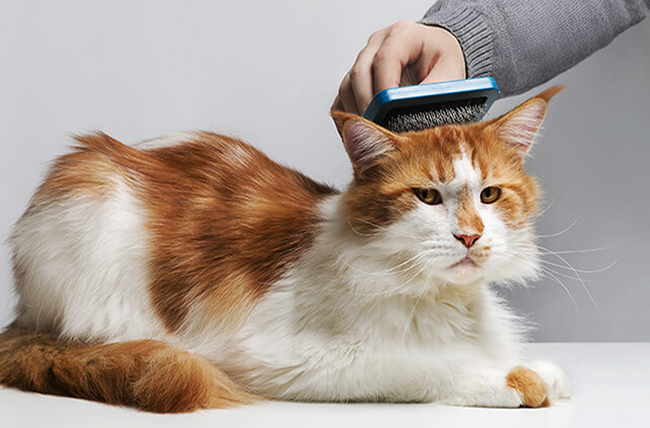
Pay special attention to proper grooming, specifically brushing. Choose a high-quality brush made of natural materials. Regular dry brushing and brushing of your cat's coat helps oxygenate the hair follicles, improves blood circulation, promotes epidermal regeneration, stimulates healthy hair growth, and, consequently, helps eliminate dandruff.
If you follow all the recommendations, your cat's dandruff may disappear on its own. However, the cause of dandruff often lies much deeper, and in such cases, special shampoos and medications are essential.
Medicines
First of all, it should be noted that the use of any medications for the treatment of dandruff in cats must be agreed upon with a veterinarian.
Please note that sometimes the appearance of dandruff can signal the presence of some serious pathological process in the cat's body, so tests and additional procedures may be required to make a diagnosis.
Depending on the cause of your cat's dandruff, your veterinarian will prescribe a specific medication to eliminate it. For example, if your cat's dandruff is caused by a fungal skin infection or parasites (fleas, ticks), the first step to eliminating the dandruff will be the use of antifungal or antiparasitic medications.
Usually, special veterinary dermatological shampoos are prescribed to treat dandruff in cats: SynergyLabs Veterinary Formula Antiseptic & Antifungal shampoo, Beaphar Anti Dandruff shampoo, Doctor shampoo.
| SynergyLabs Veterinary Formula Antifungal and Antiseptic Veterinary Shampoo with Ketoconazole |
This is a universal remedy for dandruff in cats, as well as for the itching and inflammation associated with fungal skin infections. It effectively removes dandruff and, thanks to ketoconazole, an active broad-spectrum antifungal ingredient, combats the underlying cause. This veterinary shampoo contains lanolin and aloe vera. Lanolin is a completely safe, natural product with pronounced moisturizing properties that restores the structure of the animal's skin and coat. Aloe vera has pronounced antiseptic and bactericidal properties and also promotes skin restoration. This shampoo does not disrupt the protective barrier of the cat's skin and coat, does not wash away previously applied medications, and does not contain harsh detergents or dyes. Before using the shampoo, the cat's coat should be gently combed and thoroughly wet with warm water. Next, massage the appropriate amount of shampoo over the entire body of the animal, leave the shampoo on the coat for 7-10 minutes to allow the treatment to take effect, and then rinse thoroughly with water. This shampoo is recommended to be used twice a week until the skin is completely healed and dandruff is gone. |
| Beaphar Anti-Dandruff Shampoo for Dogs and Cats |
A veterinary dermatological shampoo recommended for use on animals with sensitive and dry skin. This shampoo contains calendula oil, bergamot oil, lavender oil, salicylic acid, and dimethyl sulfone. Natural essential oils of calendula, bergamot, and lavender have moisturizing, anti-inflammatory, antibacterial, and regenerating properties. Salicylic acid promotes gentle renewal of the upper layers of the epidermis, reduces dead skin cells, and prevents dandruff in cats. Dimethyl sulfone is an organic sulfur compound that restores the protective and regenerative functions of the skin, participates in keratin synthesis, and strengthens the animal's coat, while also having pronounced anti-inflammatory and antibacterial properties. This shampoo effectively removes dandruff in cats and has a neutral pH. The shampoo can be used concentrated or diluted. Apply this shampoo to the cat's pre-wet coat, leave it on for 2-3 minutes, and then rinse thoroughly with warm water. Use as needed. Beaphar Anti-Dandruff Shampoo is completely safe and suitable for use on pregnant and nursing cats. |
| Doctor Shampoo | A veterinary shampoo designed to treat seborrhea and other dermatological conditions. The active ingredient is 3% benzoyl peroxide. Benzoyl peroxide has antifungal and antibacterial properties, normalizes sebum secretion, neutralizes inflammatory processes in the skin, relieves itching, and has a deodorizing effect. Doctor Shampoo effectively removes dead skin cells and excess sebum from the skin's surface. Apply the shampoo to the animal's pre-wetted coat, rinse, then reapply and leave it on for 10-15 minutes, then rinse thoroughly with warm water. Use the shampoo 2-3 times a week until complete recovery, as the skin becomes clogged with excess sebum and dandruff. |
Other forms of medication, such as Tropiclean Oxy-Med Coat Care Spray, can be used to treat dandruff.
Tropiclean Oxy-Med Anti-Itch Spray is a natural product containing colloidal oatmeal, wheat germ protein, vitamins B5 and E, and salicylic acid. Salicylic acid actively fights inflammation, acts as an antiseptic, prevents the appearance of flakes caused by seborrhea, and eliminates dandruff. Colloidal oatmeal and vitamin E are natural antioxidants that promote skin regeneration, relieve itching and swelling, and improve the skin's protective functions. Vitamin B5 normalizes sebaceous gland activity. This spray is recommended for application to the cat's skin and fur at the first signs of itching and dandruff.
Prices for dandruff medications for cats
This video explains how to train a cat to bathe and how to properly wash the animal:
Complications
Dandruff in cats is a consequence of a disruption of the protective functions of the skin and improper functioning of the sebaceous glands, so the appearance of dandruff is often accompanied by hair loss. Dead skin cells form a crust on the skin, preventing air from reaching the hair follicles. As a result, hair is deprived of the necessary oxygen and becomes dull and brittle. Furthermore, dandruff-affected skin creates a breeding ground for bacteria and fungi, which can cause hair loss.
Dandruff in cats can look different. Most often, it appears as small, light-colored flakes that are hard to see. But there are cases when a cat develops black dandruff, and this is a cause for concern. Black dandruff can be caused by a fungal infection, parasites, or other serious problems with the sebaceous glands. The exfoliated, dead skin flakes should normally be light and translucent, so if you notice black dandruff in your cat, you should immediately consult a veterinarian.
To summarize the above, it should be noted that the appearance of dandruff in a cat is often a symptom indicating the presence of a more serious disease in the animal's body. Therefore, when dandruff first appears in your cat, do not delay a visit to a specialist, as detecting the disease at an early stage can facilitate its further treatment.
Any questions? You can ask our website's staff veterinarian in the comments below, who will answer them as quickly as possible.
Read also:


20 comments
Gzhel
Hello! Our cat is 12 years old. She's been eating Royal Canin Renal Select cat food for chronic renal failure for two years now—prescribed by her veterinarian. She normally lives with a child, but yesterday she was brought to me for a temporary stay. I noticed dandruff on her back. She's a clean Siamese cat, small, and not overweight. What could be the problem? Is she sick? Is there anything I can do about it? Thank you.
Daria is a veterinarian
Hello! If these dry skin flakes aren't bothering your pet, don't panic. Dry patches appear because the skin dries out. Monitor your pet's drinking habits. Are you washing them too often? Cats should only be bathed when necessary (due to dirty fur or skin).
Maria
Hello! My cat has developed dandruff. She's 3.5 years old and has never had this problem before. She has no fleas, ticks, or parasites. We've been on the same diet for three years (Pro Plan for spayed cats with turkey) and Felix wet food. She doesn't eat anything from the table. The only thing we've started giving her is a little bit of Drimis treats. Otherwise, she's active and healthy, and we haven't noticed any other issues.
Daria is a veterinarian
Hello! How do you know there are no mites? Did you take her to the vet for a scraping and subsequent microscopic examination? You have a problem with her diet! One is a premium food, the other is a budget food (Felix). Essentially, the benefits of ProPlan are negated when you supplement it with a significantly less balanced food. And try changing the flavor of the food: stop eating poultry; it might be causing this effect. Sometimes you have to experiment with flavors for a long time to find the right one. My old lady ate poultry and rabbit her whole life, and she developed dandruff. I tried turkey and lamb, and the same thing happened, plus the itching. In the end, only salmon worked.
Daria
Good afternoon! My cat eats Grandorf dry food, 4 meats for charratation, and canned Chezir. He's 10 years old and was charratated at 11 months. His fur is 14 cm long. His back is covered in dandruff, although he eats normally and takes good care of it. However, we recently moved to a new apartment that was being renovated and had no humidifier. Could the lack of humidifier in the apartment cause this dandruff? (I love him very much.)
Daria is a veterinarian
Hello! The food is indeed good. But don't forget about your pet's age. Have you noticed any other symptoms besides dandruff? Has the frequency of drinking and urinating changed? Has the belly size increased? Has the skin become overly sensitive and easily damaged (brittle)? Is there any hair loss? If so, in what areas of the body? Has your cat been examined? Has a blood test been done? Has a diagnostic ultrasound been performed? Have endocrinological problems been ruled out?
Svetlana
Hello
Could you please tell me what tests I should take if my cat develops dandruff? The dandruff started three months ago and is getting worse.
The cat eats dry food "Proplan" and wet food "Felix".
Sometimes raw chicken breast, a piece of raw meat, or boiled pollock. The fur began to fade away from the skin.
The cat is neutered, he is 2 years old, he is overweight.
Maybe it's because we never wash him, which is what an elderly veterinarian advised. We've been giving him 8-in-1 vitamins for a week now, and the situation hasn't changed.
Daria is a veterinarian
Hello! The obvious answer is: change your pet's diet to a proper one! Your mashed food won't do any good; it'll cause pancreatic problems. You need to feed either commercial or natural food. And if you do, stick to one brand (super-premium, holistic, or, at the very least, premium). Felix is a budget food, like Whiskas or Kitekat—it's full of chemicals and dyes, with no vitamins or minerals. Switch your pet to a high-quality, good food, and believe me, within a month at most, their coat will shine and the excess weight will start to come off.
I got a cat that weighed 8 kg. She had dandruff, matted fur (mats, and her fur was 7-8 cm long), constant itching, and allergic otitis. We fed her Darling cat food. Six months later, she weighed 4 kg, and her fur is so shiny, I'm jealous =) And she only eats Hill's (it's very filling for her). And the monthly food cost was the same as what a friend pays for Felix (his cat eats more in one sitting than my good food in two days).
Vladimir
What's the best shampoo for washing a cat for dandruff, hair loss, and itching? Thank you.
Tatiana
Hello, my cat is 10-12 years old. I cook oatmeal with pollock. He eats green grass, sour cream, milk, raw meat sometimes, and eats dry food for about 5 days a month. Dandruff has started to appear on his back and tail. What's wrong?
Daria is a veterinarian
Hello! Well, your cat is getting older. And the diet is completely unbalanced. I wouldn't be surprised if the dry food isn't the best quality either. Adult cats shouldn't drink milk; it's practically undigested and unabsorbed. If you want to feed natural food, diversify the menu (and don't feed raw meat, as you'll be exhausted trying to get rid of parasites or treat illnesses), and avoid commercial food. If you do decide to feed dry food, choose super-premium or holistic food, and avoid natural food. Once your cat starts getting all the necessary micronutrients and vitamins from the food, the skin condition will improve.
Tatiana
Good afternoon. My cat has dandruff flakes, and hair is falling out in the areas where the dandruff is. What could it be?
Daria is a veterinarian
Hello! When examining your pet, it's important to examine its skin. The first thing that comes to mind is its diet. What are you feeding it? Are you over-bathing it (perhaps too much shampoo or soap has dried out the skin)? What treatments have you given it? Vitamins? Hair loss is due to dandruff and skin inflammation. It's also important to rule out subcutaneous mites (especially if there's itching) and skin parasites. A blood test would also be a good idea. An ultrasound would also be done to check the thyroid and adrenal glands (hormonal imbalances often lead to skin problems).
Tatiana
Hello. Could you please tell me if my cat might develop dandruff after antibiotic treatment? He's overweight and has kidney problems. He's currently taking the homeopathic remedy "Fitoelita. Healthy Kidneys." Thank you.
Daria is a veterinarian
Hello! This could be due to antibiotic treatment or even improper feeding. What are you feeding now, and what antibiotics did you give? But in your case, it's most likely related to kidney disease, especially if it was chronic and has now worsened.
Tanya
Hello. Please help. My three-month-old kitten has ear problems: a wound has appeared on the tip of his ear, slightly wet, sometimes bleeding, and it seems to be getting slightly darker. The ear is getting slightly smaller. He feels more or less fine and is eating everything. What should I do and how can I treat it? Thank you in advance.
Daria is a veterinarian
Hello! What kind of wound is it exactly? A scratch, a rip, a bite, or something else? It can't just appear out of nowhere. Something has damaged the skin on the ear. Clean it with furacilin (an aqueous solution can be purchased at a pharmacy or made at home using tablets and boiled water). There are special sprays (available at veterinary pharmacies): one is antiseptic (like Chemi-spray), the other is wound-healing (like Second Skin). If the ear hasn't been treated for fleas, be sure to do so. Trim the nails (including those on the hind legs). You can put a special collar on the neck to prevent self-injury.
Ivan
Hello, we were given a neutered male cat, probably around 9-10 years old, but not exactly. He's fluffy and about 12 kg overweight. He doesn't let you brush him, and he rarely eats when he doesn't want to be washed or trimmed. He's aggressive when stroked or petted. He has dry dandruff on his back near his pelvis, his fur is thick, and he's very difficult to touch—he lunges at it. What can I do to at least brush him out or wash him with medicated shampoo?
Daria is a veterinarian
Hello! If your cat doesn't allow you to brush them, try simply cutting out the mats. Tuck them into the sleeve of a thick jacket or pea coat so their head sticks out and their paws are in the sleeve. Trim them carefully, right down to the roots. Fur isn't teeth; it will grow back. Review their diet; dandruff is often caused by improperly chosen food. You can also give them homeopathic sedatives: Fospasim, Stop-Stress, KotBayun, and others. Take a course of treatments to allow them to accumulate. This may calm them down. Then you can wash and brush them.
Irina
Thank you very much for the information.
Add a comment